


Bitcoin Breaks a Trendline Held Since 2012 as 3-Day Drop Fuels Fresh Panic
Bitcoin Breaks 2012 Trendline as 3-Day Drop Sparks Panic

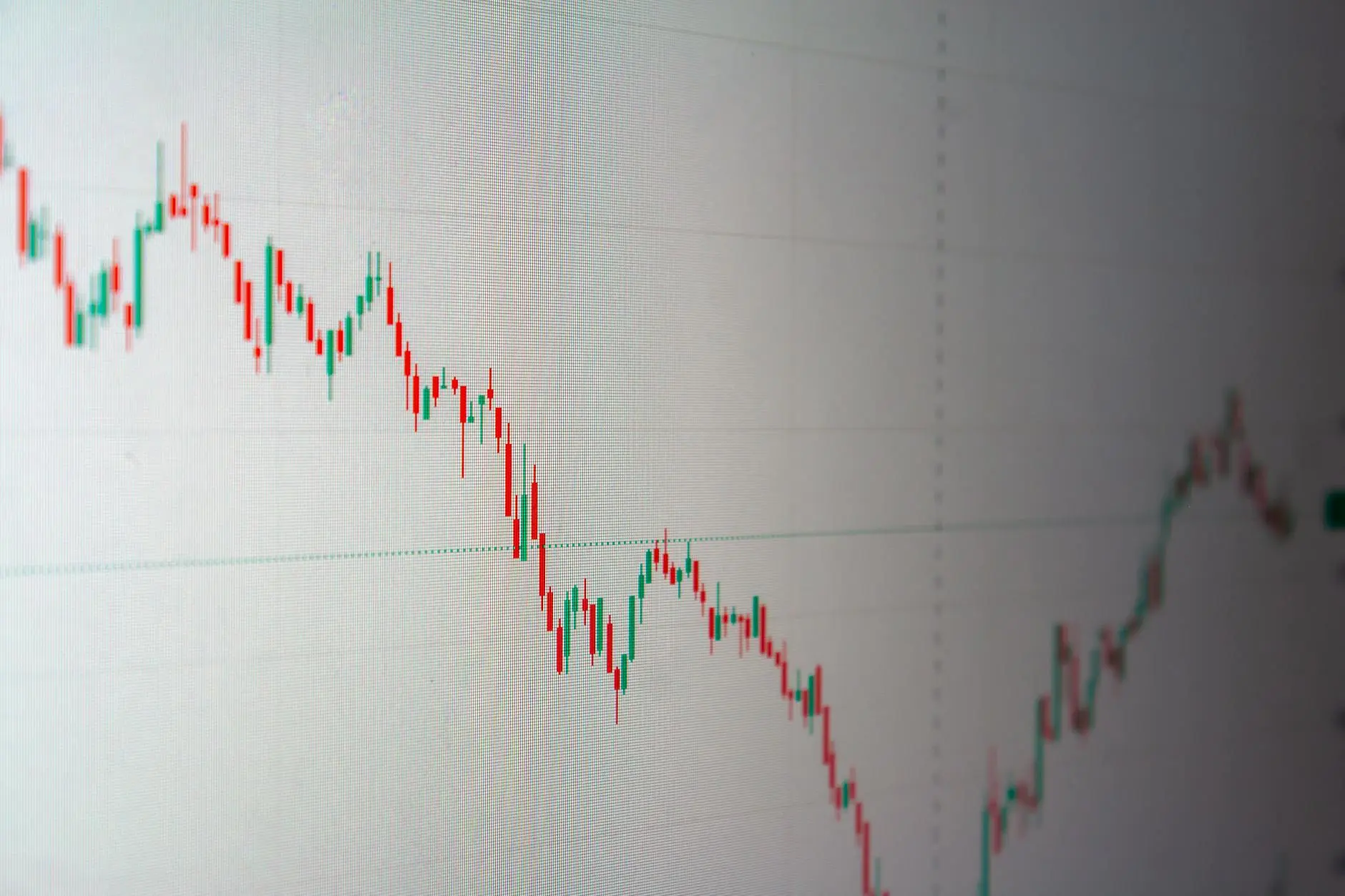
Bitcoin has broken below the logarithmic ascending support line connecting major cycle lows dating to 2011–2012 – a long-cycle reference point that survived the 2015 bear market, the 2018 collapse, and the March 2020 COVID crash – after a 10% three-day decline that did not merely test the line but closed beneath it on a sustained basis, and the configuration producing this breakdown is not cyclical sentiment noise, it is mechanical deterioration across technicals, derivatives structure, and institutional flow data simultaneously. The three-day drop is not the cause of the trendline loss; it is the mechanism confirming a structural shift that had been telegraphed by deteriorating on-chain and derivatives conditions for weeks prior. According to CoinGlass data, the move triggered approximately $1.35 billion in liquidations across crypto derivatives venues – a figure large enough to cascade through levered long positioning without yet reaching the full capitulation thresholds of prior cycle resets, which places the market in a particularly dangerous intermediate zone where forced selling has begun but exhaustion has not. The next structural reference points now in play – the 200-week moving average and the prior-cycle all-time high consolidation zone – are not speculative downside targets; they are the mechanical consequence of losing a support line that, for twelve years, defined the minimum slope of Bitcoin’s long-run appreciation curve.
The 2012 Log Support Inversion and the 200-Week MA: How the Technical Stack Compounds the Breakdown
The trendline now broken is not a routine moving average or a short-cycle Fibonacci construction – it is the logarithmic ascending support that multi-cycle analyses on TradingView and log regression models maintained by on-chain firms such as Glassnode and LookIntoBitcoin have tracked since Bitcoin’s price was measured in single digits, connecting the 2011–2012 accumulation base, the 2015 bear-market low, the 2018 capitulation trough, and the March 2020 COVID flush. Each of those prior touch points produced multi-year recoveries, which is precisely why the line’s loss carries structural weight that a typical support break does not: it removes the baseline growth floor that institutional and long-horizon models have used to define Bitcoin’s minimum expected price trajectory across complete cycles.
The inversion mechanic now operates against bulls in the standard fashion – the broken support becomes resistance, and every rally attempt toward that line will encounter a population of buyers who entered near or above it and are now underwater, creating mechanical selling pressure at the precise level where recovery momentum would otherwise accelerate. Prior CoinNews analysis flagging Bitcoin’s critical support deterioration and $65,000 downside targets identified this configuration during its early formation, noting that the convergence of the log trendline with weekly moving average clusters created a layered support structure whose simultaneous failure would remove sequential floors rather than isolating damage to a single price level. The 200-week moving average – historically Bitcoin’s definitive long-cycle bear-market floor, the level that held in June 2022 and again during March 2020 – now becomes the primary downside anchor, and its distance from current price defines the outer boundary of the current breakdown’s structural reach.
Fibonacci retracement levels measured from the most recent major cycle low to the prior all-time high place the 61.8% retracement in the zone that overlaps with the previous cycle’s all-time high – a confluence that technicians treat as the highest-probability stabilization band in a post-breakdown environment, because it combines Fibonacci mathematical significance with the psychological weight of a prior peak that took years to reclaim. Losing that band on a weekly closing basis would activate the 78.6% retracement as the next structural reference, which aligns closely with the 200-week MA depending on the precise measurement anchor – a convergence that compresses the remaining bull-case buffer considerably.
$2.43 Billion in May ETF Outflows and $1.35 Billion in Liquidations: The Derivatives Market Is Not Pricing a Bottom
The derivatives and institutional flow data confirming this breakdown is not ambiguous. U.S. spot Bitcoin ETF products recorded approximately $2.43 billion in net outflows during May – a reversal that is structurally significant because it follows a period earlier in the year when products including BlackRock‘s IBIT and Fidelity‘s FBTC were logging single-session inflow days above $500 million, establishing a passive synthetic bid that absorbed selling and suppressed volatility. The withdrawal of that bid does not simply remove a buyer – it removes the mechanical price support that passive inflow momentum generates, exposing Bitcoin’s order book to a thinner and less committed demand base at the precise moment when technical deterioration is accelerating selling pressure from the other side.
Funding rates across perpetual futures markets have flipped negative in the wake of the breakdown, signaling that the marginal speculative position is now short rather than long – a structural shift that historically precedes either a short-squeeze recovery (if spot demand materializes to trigger it) or a continued grind lower as shorts defend profitable positions and resist covering. CoinNews coverage of the broader $1 billion-plus crypto liquidation event documented the derivatives stress that accompanied the initial breakdown, noting that the liquidation cascade was concentrated in long positions – mechanically confirming that the move was not a short-squeeze or liquidity grab, but a genuine demand withdrawal event. The $1.35 billion liquidation figure, while painful, remains below the $8–10 billion single-day liquidation events recorded during the May 2021 crash and the multi-billion dollar FTX collapse week, which means the market has not yet reached the forced-seller exhaustion that typically marks cycle lows – a distinction that changes the directional implication of the current signal entirely.
On-chain data from Glassnode adds a further confirming layer: spikes in revived supply last active five years or more – wallets from the 2017–2019 era moving coins for the first time in half a decade – have historically aligned with late-cycle distribution rather than accumulation, as early adopters and miners reduce exposure following parabolic rallies rather than during deep bear phases. The simultaneous presence of ETF outflows, negative funding, long-side liquidation dominance, and long-dormant wallet movement is not an ambiguous signal – it is a multi-layer confirmation that the breakdown is structural and that the derivatives market is not yet pricing a recovery bottom.
$80,000 Is the Immediate Floor – The Cascade Below $78,000 Targets $70,000 and the 200-Week MA

The immediate floor is the prior-cycle all-time high consolidation zone in the $80,000 area – a level that carries structural weight not because it is a round number but because it represents the price at which Bitcoin spent months consolidating before the final parabolic leg of the last bull market, creating a dense cluster of cost-basis anchors for participants who entered during that period and have not yet exited. Losing this zone on a confirmed weekly close is not a tail risk – it is the base case, because the broken log trendline now functions as overhead resistance in the $85,000–$90,000 range, and without the passive ETF bid that drove earlier inflows, the mechanical sponsorship required to defend the $80,000 band is demonstrably absent.
The cascade below $78,000 activates the 61.8% Fibonacci retracement of the full bull cycle – a level that converges with the prior all-time high from the 2021 peak in the mid-$60,000 range, creating the next high-probability stabilization test. This level is not speculative; it is structural, because it combines Fibonacci mathematical significance with the on-chain realized price of a large cohort of holders who accumulated during the 2021 peak and would represent breakeven exits rather than profit-taking – producing a different quality of support than purely technical levels. Prior CoinNews analysis of weak-volume dip-buyer hesitation established that the absence of committed accumulation demand during prior recovery attempts was a leading indicator of this cascade, not a lagging one, which means the mid-$60,000 zone will arrive with already-degraded buyer confidence rather than fresh demand.
The outer bound – the 200-week moving average, currently situated in the $50,000–$55,000 range depending on the calculation date – functions as the final line for bulls on a multi-cycle basis, having held during the June 2022 bear-market low and the March 2020 COVID flush. In prior cycles, the 200-week MA has represented the threshold below which Bitcoin’s appreciation curve broke down entirely for 12–18 month periods, as occurred in 2014–2015 and again during the extended 2022 drawdown from $30,000 to sub-$20,000 levels. A test of that level is not the primary near-term scenario, but its structural significance as the outer reference point defines the full scope of downside the market must price if the $80,000 and mid-$60,000 floors fail sequentially.
The Bull Case Requires a Confirmed Weekly Reclaim of Log Support – The Bear Case Is Already Printing
The bull case is conditional on three simultaneously-required confirmations, none of which is currently in place. First, Bitcoin must produce a confirmed weekly close – not an intraday wick, a confirmed weekly close – back above the broken logarithmic trendline, which in prior instances of false breakdowns (most notably brief punctures in 2019 and late 2021) was the precise condition that separated genuine bear phases from recoveries. Second, U.S. spot Bitcoin ETF flows must reverse from the current outflow trajectory and sustain net positive inflows across at least five consecutive sessions, demonstrating that the institutional passive bid is returning rather than cycling through a temporary pause. Third, perpetual futures funding rates must normalize above flat, signaling that speculative positioning has rotated from net short back to net long – which would confirm that the derivatives market, not just spot price, is pricing a structural recovery rather than a dead-cat bounce.
The bear case, by contrast, is already printing across every data layer simultaneously: the 2012 log trendline is broken on a closing basis, ETF flows recorded $2.43 billion in May outflows following a period of record inflows, $1.35 billion in liquidations is concentrated on the long side, funding rates are negative, and on-chain revived supply from dormant wallets is spiking in a distribution-consistent pattern. Technical analysts monitoring multi-cycle log regression models have documented that sustained breaks below this trendline preceded 60–80% drawdowns from local highs in both the 2014–2015 and 2018 bear markets – and while ETF-era structural differences may compress the magnitude of any comparable move, the directional signal produced by the simultaneous failure of technicals, derivatives structure, and institutional flow data has no historical precedent of resolving bullishly without first completing a deeper reset.
The governing condition for the next move is whether Bitcoin can reclaim the broken logarithmic support on a confirmed weekly closing basis while ETF inflows reverse and funding rates normalize – and until all three bull-case confirmations materialize concurrently, the path of least resistance remains lower, with the mid-$60,000 Fibonacci confluence as the next structural level the market will be forced to price. Follow CoinNews on X and Telegram for real-time Bitcoin price updates and derivatives flow alerts.
About Author

About Author