


15 Best Decentralized Crypto Wallets for 2026 | Reviewed & Compared
Self-custody is back at the center of crypto risk management. Centralized blow-ups taught the same lesson again: if someone else holds your keys, they control your coins. For this reason, finding the best decentralized wallet for your needs is essential.
We evaluated +50 decentralized crypto wallets and identified the Top 5: Best Wallet, Ledger, Zengo, Cypherock X1, and Tangem stand out in criteria such as DeFi and Web3 compatibility, true self-custody, cross-chain support, and independent audits. These wallets, along with the rest in our ranking, offer non-custodial control, security models, broad network support, usability, and DeFi workflows.
A non-custodial or decentralized wallet gives you full control of your cryptos: you will hold your private keys without relying on third-party companies. In contrast, centralized wallets (such as exchanges or custodial platforms) store your keys on your behalf, resulting in less direct control over your assets and making your funds more vulnerable to hacks or regulatory seizures.
Key Takeaways:
- Best Overall Decentralized Crypto Wallet: Best Wallet.
- Self-Custody: You hold the private keys, eliminating the risk of failures at centralized exchanges.
- Security Types: Choose Software Wallets for DeFi/convenience or Hardware Wallets for maximum offline “cold” storage.
- Integrated Features: Modern wallets now include built-in token swapping, staking, and access to crypto presales.
- User Responsibility: No KYC or central authority exists; if you lose your keys, your funds are gone forever.
8 Best Decentralized Crypto Wallets Ranked








How We Evaluated Decentralized Wallets
Each wallet was evaluated across four weighted criteria: security architecture and independent audit history (40%), self-custody model and key management approach (25%), supported assets, blockchains, and DeFi integrations (20%), and usability across devices and experience levels (15%). Hardware wallets score higher on offline key isolation but lose points on DeFi access and onboarding friction, while software wallets gain ground through multi-chain coverage, built-in swaps, and lower barriers to entry. This weighting reflects how most users actually interact with decentralized wallets today – not just how securely they store idle assets, but how effectively they let you use them across Web3.
Top Decentralized Crypto Wallets Reviewed
The top 8 decentralized crypto wallets you are about to read about were selected based on their security architecture, custody model, supported blockchains and assets, DeFi support and integration, UX factors, recovery options, and full ecosystem. We go over their features, pros and cons, as well as other things worth noting.
1. Best Wallet: Software Multi-Chain, Multi-Wallet With Its Own Native Token
We rated Best Wallet as one of the best Web3 wallets because it is a non-custodial mobile wallet. It integrates multi-chain support, swaps, staking, buying and selling, and DeFi access all within a single interface/app.
The Best Wallet ecosystem allows you to buy crypto with low transaction fees by using bank cards, Google Pay, Apple Pay, fiat, and many other payment methods. You can also create multiple sub-wallets and manage your crypto portfolio, store, and track your assets.
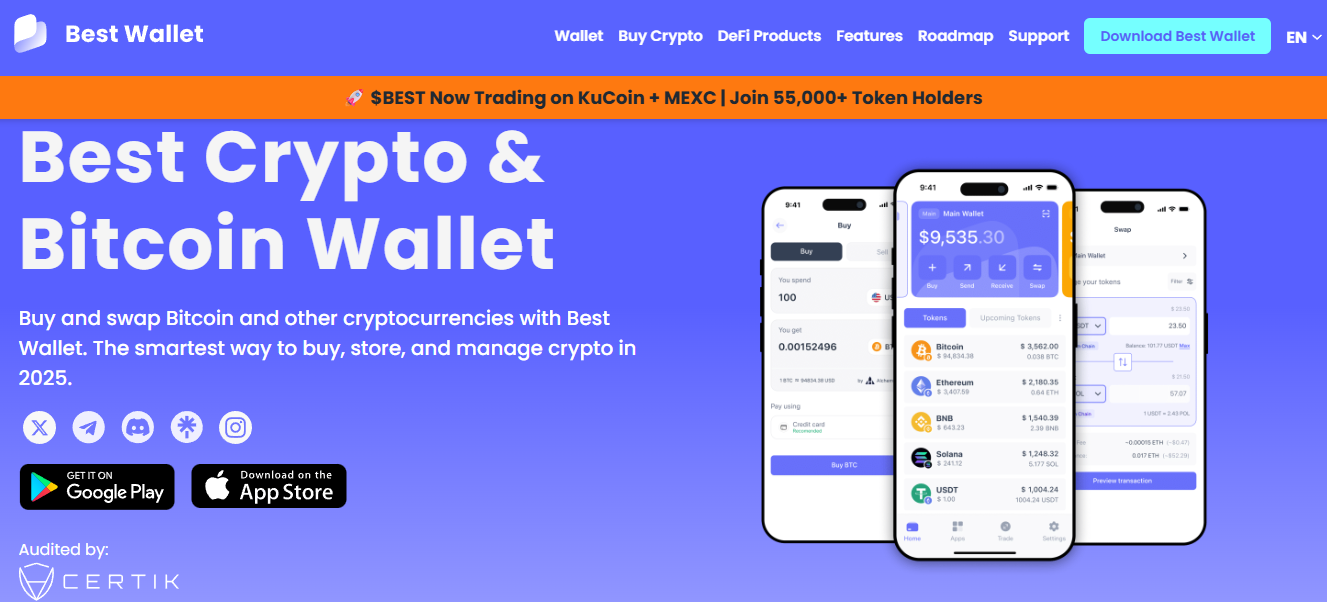
Here’s a list of features and all you need to know about Best Wallet:
| Main features |
|---|
| 👛 Wallet type & custody model: Software, decentralized (mobile app) |
| 📲 Devices: Android/iOS |
| ✅ Audited by: Certik |
| 🛡️ Security measures: You generate keys and hold the backup, personal cloud wallet backups, biometric authentication, security via passcode, 2FA (fingerprint/Face ID) |
| 🪙 Supported networks and currencies: Bitcoin, Ethereum, Solana (1,000+ coins and 60+ blockchains) |
| 💸 Payment methods: Crypto, Apple/Google Pay, credit/debit card, bank transfer, PayPal, Revolut, IACH, Skrill, Neteller (50+ fiat currencies supported) |
| 📲 dApps Integration: Integrates with apps for taxes (new), news, and market analysis |
| 🛡️ KYC required: No, sign up with just your email. |
📌Why is it in our ranking? A balanced overview:
✅ dApp support: it integrates with apps for taxes (new), news, and market analysis
✅ Presale dashboard: access the best crypto presales. Buy tokens with card or crypto.
✅ Staking via Rocket Pool and Lido
✅ Built-in swap feature (DEX) and staking
✅ Beginner-friendly interface
❌ No desktop, web app, or browser extension yet
❌ Limited utility: No fiat off-ramp option
2. Ledger: A Hardware Wallet With Companion App
Ledger is a widely used hardware wallet solution that combines strong offline key security with a versatile companion app. It has become a popular choice for crypto holders seeking cold‑storage safety without sacrificing usability.
Ledger stands out for its protection of funds against hackers and malware. Characteristics such as cold storage, PIN protection, and recovery alternatives make Ledger devices a long-term option for crypto storage. Its Secure Element chip has a lifespan of 20 to 30 years.
The companion app Ledger Live allows for relatively smooth portfolio management, staking, and token/coin diversification. Transactions are secure on both mobile and desktop devices.
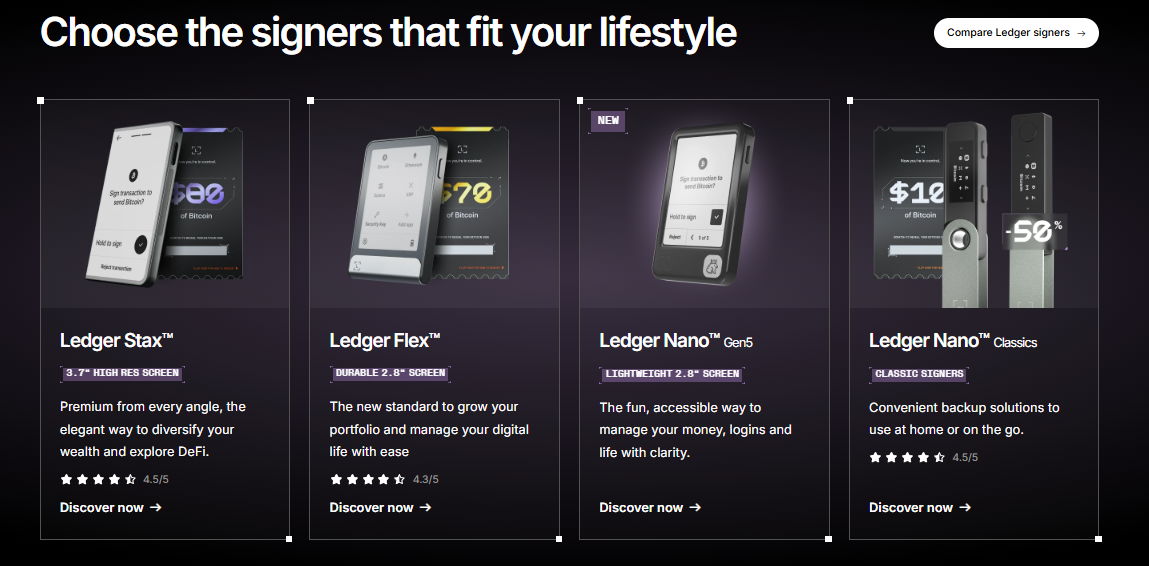
We prepared this full list of features about Ledger Wallet:
| Main features |
|---|
| 👛 Wallet type & custody model: Hardware wallet (cold storage), self‑custody with private keys stored offline on device. Multiple models (Nano S Plus, Nano X, Flex, Stax, etc.) |
| 📲 Devices: Mobile (Android/iOS and Desktop (Windows/macOS/Linux) |
| ✅ Audited by: Kudelsky Security |
| 🛡️ Security measures: Secure Element chip, Private keys never leave device; all transactions must be physically confirmed on the device. PIN protection, firmware updates, secure OS (wallet’s own OS), ability to use passphrase for “hidden wallets.” |
| 🪙 Supported networks and currencies: 15,000+ cryptos across 50+ chains |
| 💸 Payment methods: Crypto, credit/debit card, bank transfer, PayPal, Binance, other providers like MoonPay or Coinify |
| 📲 dApps Integration: WalletConnect, Ledger Extension for direct browser connection and Live Apps for DeFi interaction |
| 🛡️ KYC required: No. Only required for integrated third-party services. |
📌Why is it in our ranking? A balanced overview:
✅ Durability: 20 to 30 years
✅ Compact and practical to carry design
✅ Bluetooth connectivity (Nano X, Flex, Stax)
✅ No Ledger fees, only network charges
✅ Discounts and promotions during the Holiday season
✅ NFT and staking allowed
❌ Setup process requires PIN creation, firmware updates, and recovery phrase storage
❌ Challenging for beginner investors
❌ Prices start at almost $80 for a device
3. Zengo: Software, Non-Custodial MPC Wallet for Long-Term Storage
We rate Zengo as one of the strongest Web3 wallets because it is a non‑custodial, decentralized software wallet that replaces the traditional seed‑phrase model with more modern, user‑friendly cryptography. It removes seed phrases by splitting your key into two secure parts: one on your device and one on Zengo’s servers.
Its standout MPC (Multi-Party Computation) feature is an easy recovery kit (email + cloud-stored recovery file), with optional 3D FaceLock for extra protection, allowing you to recover your wallet even if the app is deleted.
This wallet combines multi‑chain support, crypto buying/selling, swapping, NFT and token management, and backup/recovery innovations, all wrapped into a clean app interface usable on mobile and desktop.
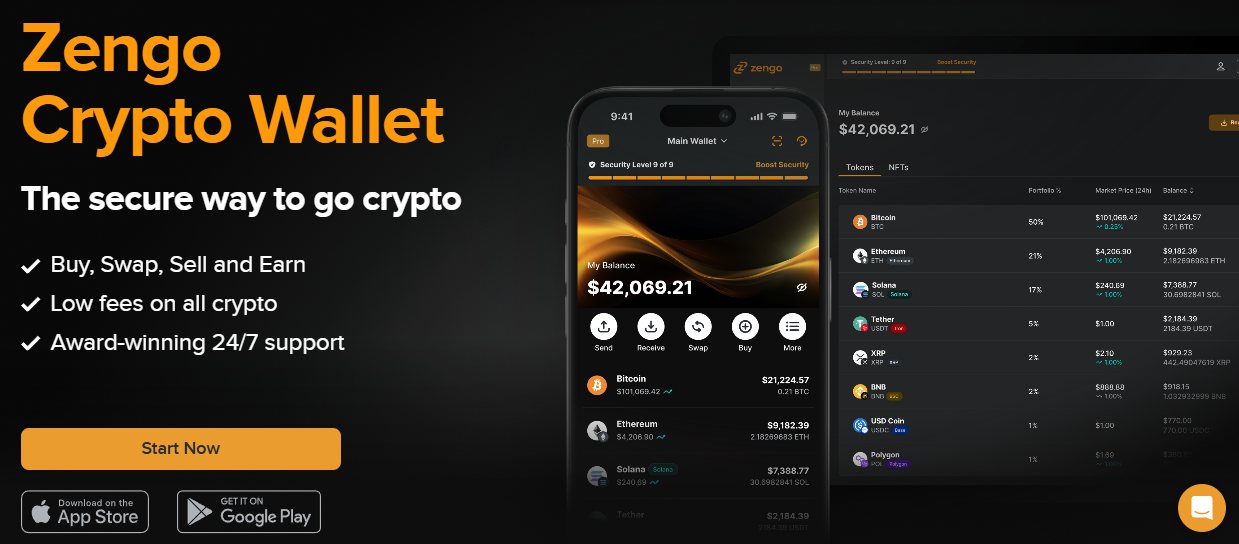
Here’s a list of features and all you need to know about Zengo Wallet:
| Main features |
|---|
| 👛 Wallet type & custody model: Software (MPC-based) |
| 📲 Devices: Android/iOS + Desktop via “Zengo Desktop” interface |
| ✅ Audited by: Certik, Kudelski, Scorpiones, AppSec |
| 🛡️ Security measures: MPC cryptography (no seed phrase), 3‑factor recovery (email + encrypted cloud “recovery file” + biometric 3D FaceLock) |
| 🪙 Supported networks and currencies: 1,000+ assets including Bitcoin, Ethereum, Solana, TRON, Polygon, Memecoins, Stablecoins, NFTs across 14 blockchains |
| 💸 Payment methods: Crypto, Apple/Google Pay, credit/debit card, bank transfer, PayPal, Revolut, IACH, Skrill, Neteller (50+ fiat currencies supported) |
| 📲 dApps Integration: Supports WalletConnect, you can connect to external DeFi apps, DEXes, NFT marketplaces |
| 🛡️ KYC required: No, sign up with your email and biometric setup. |
📌Why is it in our ranking? A balanced overview:
✅ Very strong security without seed‑phrases
✅ Clean UI, mobile and desktop support
✅ Since its 2018 launch, no wallet has ever been hacked or compromised.
✅ Pro plan with enhanced Web3 firewall, legacy transfer, and theft protection
✅ 24/7 customer support
✅ 4.8 rate in App Store and Google Play
❌ Reliance on Zengo’s server to operate
❌ MPC technology introduces a centralized element (recovery or signing might be affected)
4. Cypherock X1: Hardware, Seedless, Multi-Wallet Security & Decentralized key storage
Cypherock X1 earns a spot among the best decentralized crypto wallets thanks to its unique seedless hardware architecture. Instead of relying on vulnerable seed phrases, Cypherock utilizes a vault device, along with up to four NFC-enabled X1 cards, to split your private keys and secure them through Shamir’s Secret Sharing.
Your private keys are decentralized into 5 parts by using Shamir’s Secret Sharing. As a result, if you lose one part, you don’t lose your crypto funds. Only you can control the tamper-proof hardware. Additionally, the location where you store your hardware is entirely in your control.
It provides an additional layer of protection by allowing the vault to store private keys for software wallets as well. You can lose up to 3 parts and still have access to your assets.
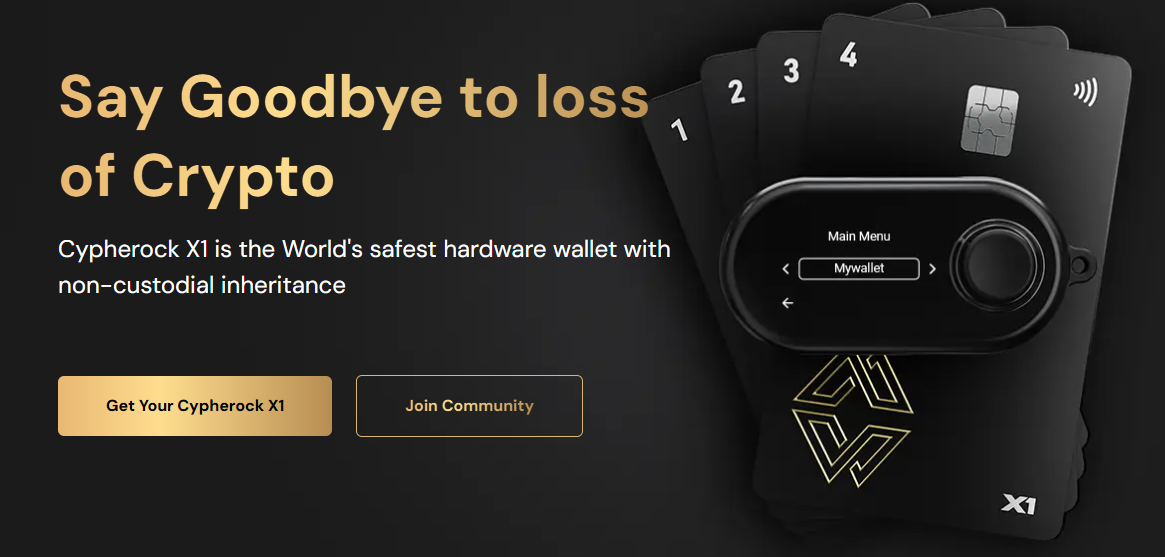
Some of the best features of Cypherock X1 Wallet are the following:
| Main features |
|---|
| 👛 Wallet type & custody model: Decentralized hardware wallet (main X1 device + up to 4 X1 cards) |
| 📲 Devices: Works with CySync companion app (mobile: iOS, Android and desktop: Linux, Windows, Mac) |
| ✅ Audited by: Keylabs |
| 🛡️ Security measures: Shamir’s Secret Sharing (no seed phrase required), EAL6+ certified secure chip, PIN protection, Tamper-proof design, 20+ years of data retention |
| 🪙 Supported networks and currencies: 9,000+ assets across 10 blockchains (It does not support Cardano) |
| 💸 Payment methods: Crypto and cards |
| 📲 dApps Integration: Access via WalletConnect |
| 🛡️ KYC required: Not required |
📌Why is it in our ranking? A balanced overview:
✅ Seedless security: Shamir’s Secret Sharing eliminates traditional seed phrase risks
✅ Multi-card redundancy: Private key shares distributed across up to four NFC cards
✅ Ease of use: Simple transaction signing, tap an X1 card on an NFC smartphone
✅ Vault device can store private keys from software wallets
✅ Multi-wallet support: Create up to 4 separate wallets, each with unique keys
✅ Best for advanced crypto investors
✅ Promotional codes during Black Friday
❌ The plastic cards feel less premium than metal ones, and the small display of the vault can limit visibility.
❌ Its security features are advanced for beginner investors.
❌ No built-in staking or swaps / Not fully open source
5. Tangem: Decentralized, Card-Based Hardware Wallet
We rate Tangem as a top-tier hardware wallet thanks to its card-based cold-storage design: a tamper-proof chip inside a card (or ring) that keeps private keys offline, combined with a companion app for easy management. Tangem supports a wide range of coins and networks, offers NFT and DeFi/dApp integration, and delivers strong physical and firmware security.
This cold wallet offers users the retention of private keys through a card or wearable ring form. The keys are generated inside the chip. The keys will never leave the card, and its tamper-proof design provides environmental protection against dust, water, or temperature.
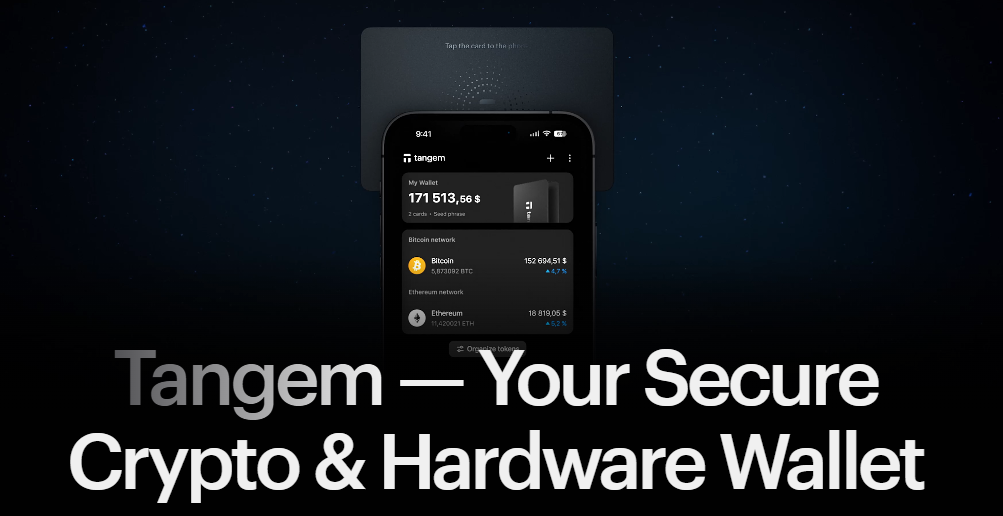
During the activation phase, the Tangem chip generates your keys offline. Then, every transaction is signed via NFC tap with no online exposure.
Tangem guarantees a lifespan of over 25 years for its products. It’s ideal for long-term holders, people often on the go, or newcomers who prioritize security and simplicity.
Some other best features of Tangem Wallet are the following:
| Main features |
|---|
| 👛 Wallet type & custody model: Hardware wallet (card or ring, cold storage) |
| 📲 Devices: Downloadable app in App Store, as Android APK & in Google Play |
| ✅ Audited by: Kudelski Security (2018) & Riscure (2023) |
| 🛡️ Security measures: Secure-element chip that stores private keys, biometric security, and access code protection |
| 🪙 Supported networks and currencies: NFTs, 16,000+ coins, across 86+ blockchains |
| 💸 Payment methods: Crypto, cards, Apple Pay or Google Pay |
| 📲 dApps Integration: Via companion app + WalletConnect (for compatible dApps/NFT markets, on supported blockchains) |
| 🛡️ KYC required: Not required |
📌Why is it in our ranking? A balanced overview:
✅ Simple UX and quick setup in 3 minutes (no cables or charging needed.
✅ App and card/ring are easy for non-expert users.
✅ Secure-element chip with EAL6+ certification, tamper-proof, resistant to water, dust, extreme temperatures, and many physical attacks.
✅ Tap card on your smartphone to approve transactions.
✅ Buy, sell, swap, and stake crypto. Use the app companion for crypto management.
❌ No desktop connectivity: Since interaction is via NFC and smartphone, there’s no native desktop or PC interface
❌ No recovery if the cards are lost
❌ Closed-source firmware
6. Trezor: Hardware Wallet designed for Long-Term, Offline Crypto Security
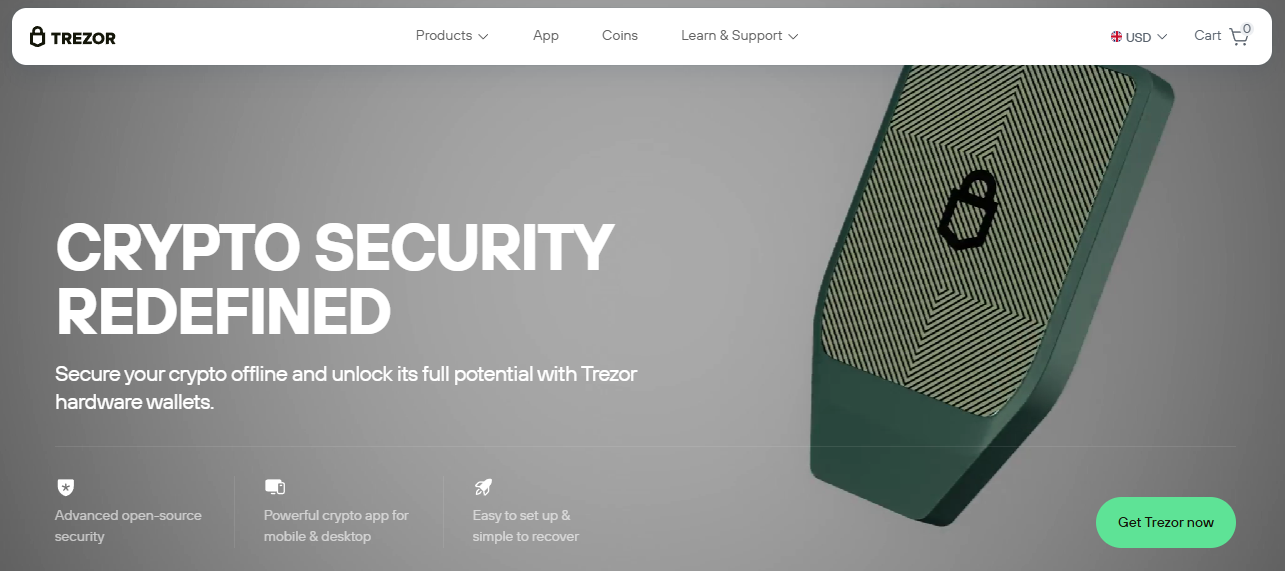
Since its launch in 2014, Trezor has become the industry standard for hardware wallets. We rate it due to its core focus on asset security through transparent, open-source design and offline key storage, which spans accessible models like the Trezor Safe 3 to the advanced Trezor Safe 7.
Being a non-custodial solution, it ensures that your private keys never come into contact with the internet, thereby protecting your assets from online vulnerabilities, malware, and hacking attempts. Additionally, Trezor incorporates multi-coin support for easy management of diverse portfolios, in-app staking to generate passive income without third-party risks, and built-in swaps for quick, safe trades.
Through the Trezor Suite app, it securely connects to the crypto ecosystem and makes fiat on-ramp purchases simple. This kind of wallet is primarily designed for users who value capital preservation over the browser or mobile wallet convenience.
| Main features |
|---|
| 👛 Wallet type & custody model: Non-custodial hardware wallet |
| 📲 Devices: Physical devices + Trezor Suite app on desktop or web for access. No standalone mobile app |
| ✅ Audited by: Ongoing reviews by firms like Ledger Donjon (for vulnerability discoveries) and community-driven open-source inspections. |
| 🛡️ Security measures: On-device offline key generation, Optional Shamir Backup (split phrases for advanced recovery); PIN/passphrase, Biometric integration, Haptic feedback and touchscreen confirmation, Secure element chip for enhanced tamper resistance |
| 🪙 Supported networks and currencies: 8,000+ cryptocurrencies and tokens across 100+ blockchains |
| 💸 Payment methods: Credit/debit cards, bank transfers via 3rd-party payments on Trezor Suite |
| 📲 dApps Integration: WalletConnect support; Integration with dApps via Trezor Suite or third-party wallets (e.g., MetaMask); Built-in dApp browser-like functionality for DeFi and NFT platforms |
| 🛡️ KYC required: Not for wallet usage, but triggered when using fiat on-ramps. |
📌Why is it in our ranking? A balanced overview:
✅ Fully open-source firmware, software, and hardware designs allow global community audits
✅ Enables splitting recovery seeds across multiple locations through the optional Shamir Backup (SLIP-39).
✅ All models incorporate EAL6+ certified and auditable Secure Elements for physical tamper resistance.
✅ Trezor Suite app enables seamless dApp integration.
✅ Layers of advanced security: passphrase-protected hidden wallets, coin control, Tor privacy routing, and FIDO2 hardware authentication
✅ Regular independent security audits, bug bounty program, and quick resolution of disclosed vulnerabilities
✅ 4.6/5 user ratings on Trustpilot
❌ Higher-end models carry premium pricing (up to $249 for Safe 7)
❌ No standalone mobile app
❌ Trezor Suite lacks NFT viewing and management, thus require third-party integrations like MetaMask.
❌No direct multi-signature support in the native Suite
7. SafePal S1: Low-Cost Hardware Wallet With Unbeatable Air-Gapped Security
SafePal S1 has established itself as the ultimate budget-friendly hardware wallet since its 2018 launch, backed by Binance. It is trusted by millions for providing top-tier offline protection against sophisticated cyber and physical threats.
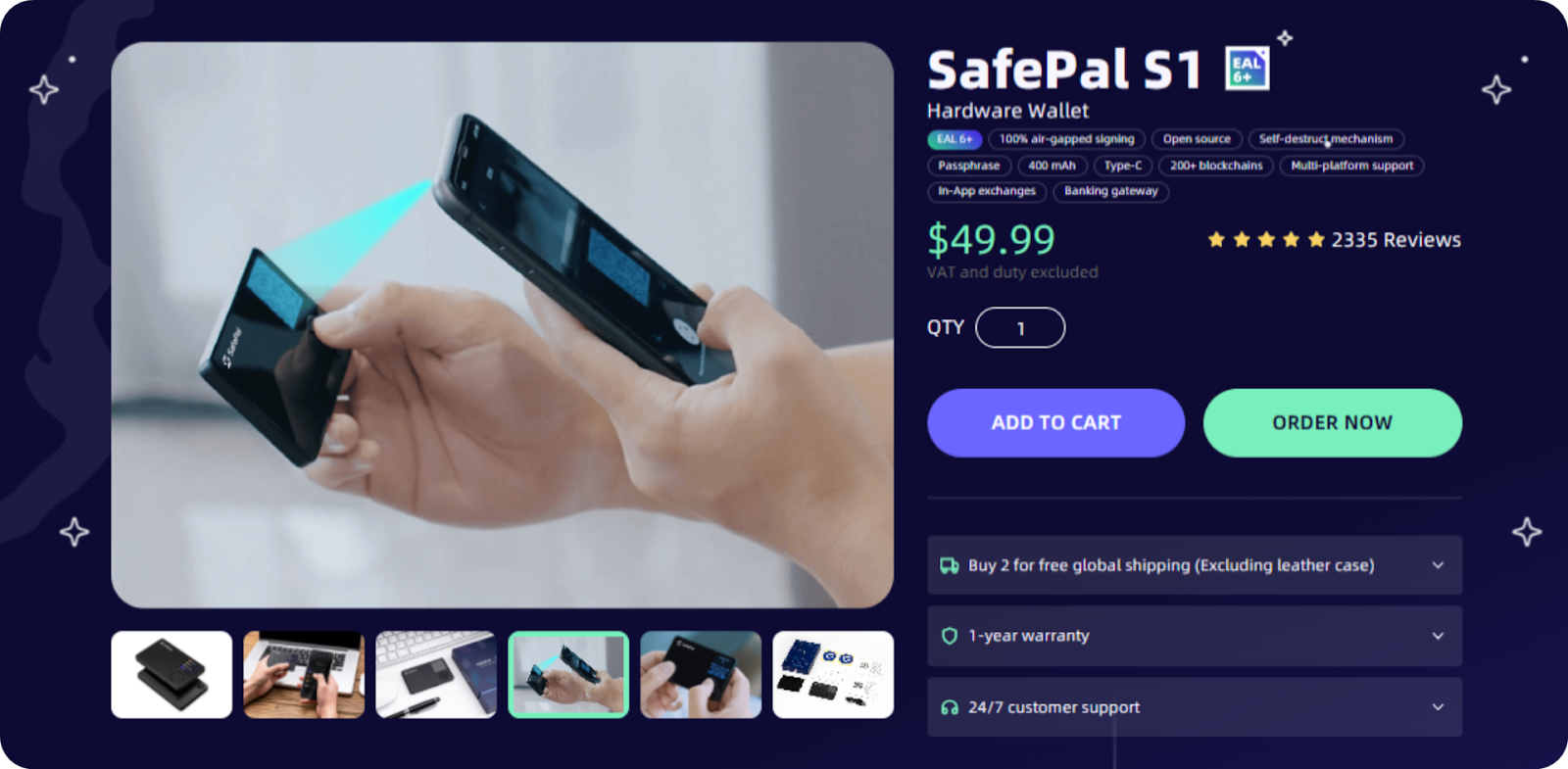
Utilizing a non-custodial model, SafePal pairs an air-gapped physical device with a dedicated mobile app for management, ensuring full control over private keys. Transactions are signed through QR code communication to ensure this (no Bluetooth, WiFi, NFC, or USB data).
It integrates seamlessly with the broader SafePal ecosystem, featuring a built-in swap aggregator, staking, a DApp browser, and an NFT gallery within its companion software. Priced at $49.99, the S1 stands as an accessible entry into the cold storage market.
| Main features |
|---|
| 👛 Wallet type & custody model: Non-custodial hardware wallet |
| 📲 Devices: SafePal S1 hardware device + SafePal mobile app (iOS/Android) |
| ✅ Audited by: SlowMist |
| 🛡️ Security measures: Offline key generation, EAL 6+ secure element, Multiple security sensors and anti-tampering self-destruct mechanism, 100% air-gapped QR code signing |
| 🪙 Supported networks and currencies: Over 200 blockchains (including BTC, ETH, SOL, BNB, XRP, ADA, TON) and all associated assets/NFTs |
| 💸 Payment methods: Cards and bank transfers via 3rd-party providers in-app |
| 📲 dApps Integration: WalletConnect support; Built-in DApp browser and cross-chain swap aggregator |
| 🛡️ KYC required: Not for wallet use. Yes, for any integrated fiat on-ramp services |
📌Why is it in our ranking? A balanced overview:
✅ Strong security foundation with its air-gapped and EAL 6+ secure element designs
✅ Physical security layers with self-destruct tamper protection and optional seed phrase steel
✅ All-in-one mobile app without compromising the hardware’s isolation.
✅ Broad multi-chain and token support
✅ Rechargeable 400mAh battery provides long standby time (up to weeks)
❌ Requires manual QR scans for transactions
❌ Plastic casing feels less durable than metal alternatives
8. Ellipal: A Fully Air-Gapped Decentralized Hardware Wallet
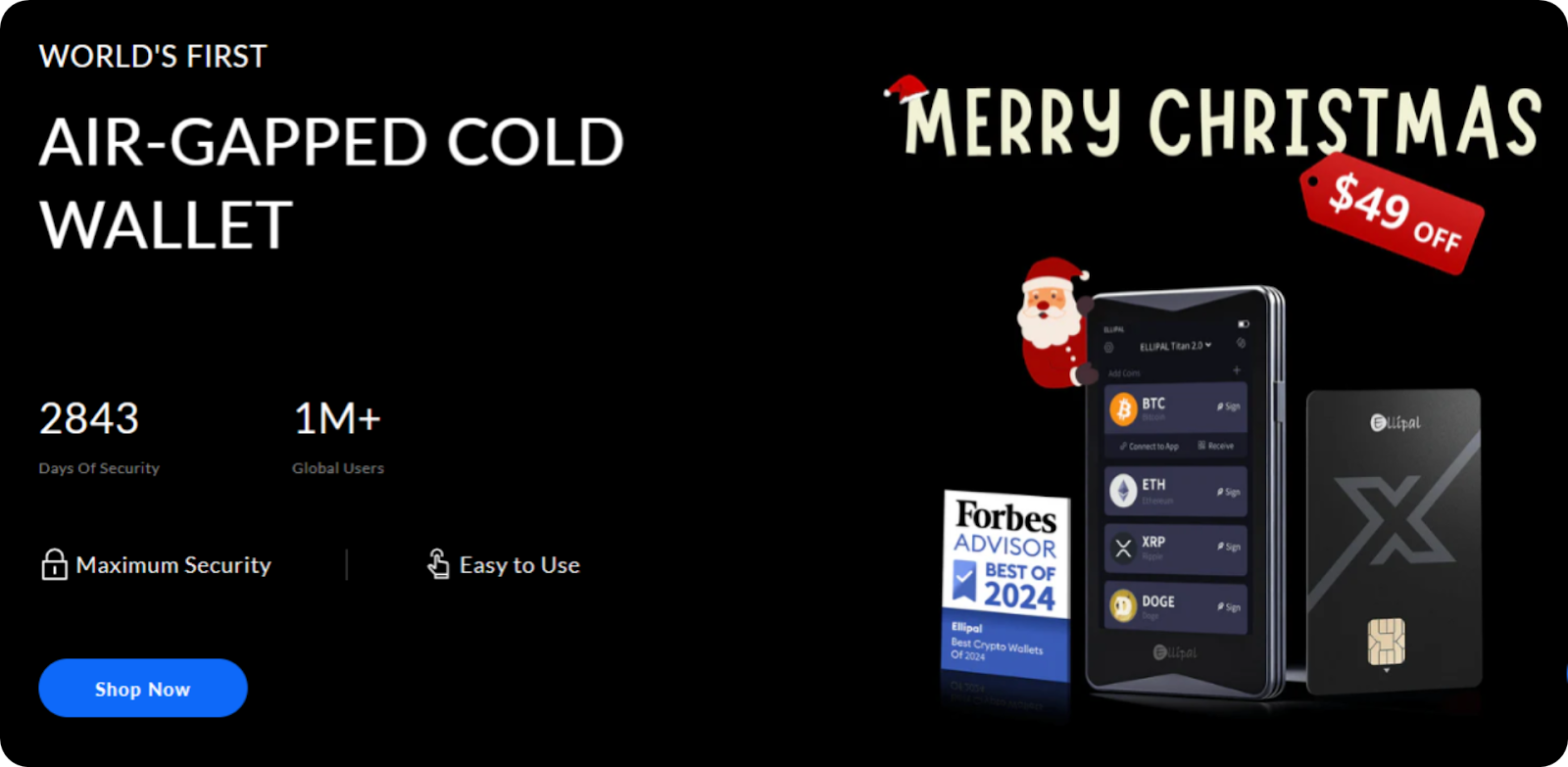
Ellipal is widely known as a non-custodial hardware solution for users who prioritize maximum isolation and offline security. Its differentiating mechanism is the simple but aggressive air-gapped architecture that completely removes USB, Bluetooth, Wi-Fi, or NFC connections.
Instead of connecting to a computer or phone, Ellipal relies entirely on QR code–based communication, with online tasks handled separately by its companion app. Ellipal is clearly optimized for users who are deeply risk-averse and willing to sacrifice speed and convenience for near-total elimination of network-based attacks.
| Main features |
|---|
| 👛 Wallet type & custody model: Non-custodial hardware wallet |
| 📲 Devices: Physical Ellipal device + Android/iOS companion ELLIPAL App |
| ✅ Audited by: Towo Labs |
| 🛡️ Security measures: Offline key storage; Secure element chip (EAL5+); PIN/passphrase; Self-destruct tamper protection |
| 🪙 Supported networks and currencies: More than 10,000 tokens/assets across 40+ blockchains, including BTC, ETH, SOL, XRP, BNB, ADA, BASE, etc |
| 💸 Payment methods: Credit/debit cards; 3rd-party bank transfers |
| 📲 dApps Integration: WalletConnect and MetaMask support through the companion app |
| 🛡️ KYC required: No for core wallet use, self-custody, or crypto operations; Yes, triggered when using fiat on-ramps |
📌Why is it in our list? A balanced overview:
✅ Private key isolation in an offline environment provides bulletproof defense against remote malware
✅ Beginner-friendly QR code process makes signing transactions fast
✅ Anti-tamper physical design plus secret secondary wallets for emergency scenarios
✅ Optional Seed Phrase Steel strengthens the overall cold-storage security model.
✅ Compatible with major ecosystems for DeFi and Web3 activities
✅ App integration for swapping, staking and portfolio tracking
✅ Metal build resistant to physical attacks
✅ 4.1/5 review on Amazon
✅ Promotional discount during Christmas holidays
❌ No traditional 2FA or biometrics
❌ No wired or Bluetooth connectivity limits convenience for frequent traders
❌ Higher upfront cost compared to software wallets
❌ Reported security incident in 2025 indicates potential vulnerability.
❌ No desktop version of the companion app
Alternatives: 7 More Decentralized Wallets For You
We added some more alternatives and their features to expand our picks. Keep on reading about these other options to safely store your cryptocurrency assets.
- Trust Wallet > Mobile dApp browser wallet. Supports +100 chains & +10M assets
- Uniswap > Allows importing any decentralized wallets
- MetaMask > Best Web3 wallet for EVM
- OKX Wallet > Supports thousands of coins across 130+ blockchains
- Exodus Wallet > Device-based passkey, multi-chain support & user-friendly interface
- Phantom > Multiple chains in one wallet & Private by design
- Bitget Wallet > Multichain, Web3 wallet supporting +130 blockchains
Trust Wallet: The Simplest Mobile Wallet for Multi-Chain Crypto Access
Trust Wallet is a non-custodial wallet built for mobile use by everyday crypto users, with a focus on comprehensive blockchain coverage. Despite being acquired by Binance in 2018, Trust Wallet is still a self-custodial product that caters to users who want full ownership of their assets without the hassle of hardware wallets or browser extensions.
At its core, Trust Wallet integrates multi-chain asset support (EVM + non-EVM chains), built-in swaps, staking, and access to Web3/dApp browser for DeFi and NFTs.
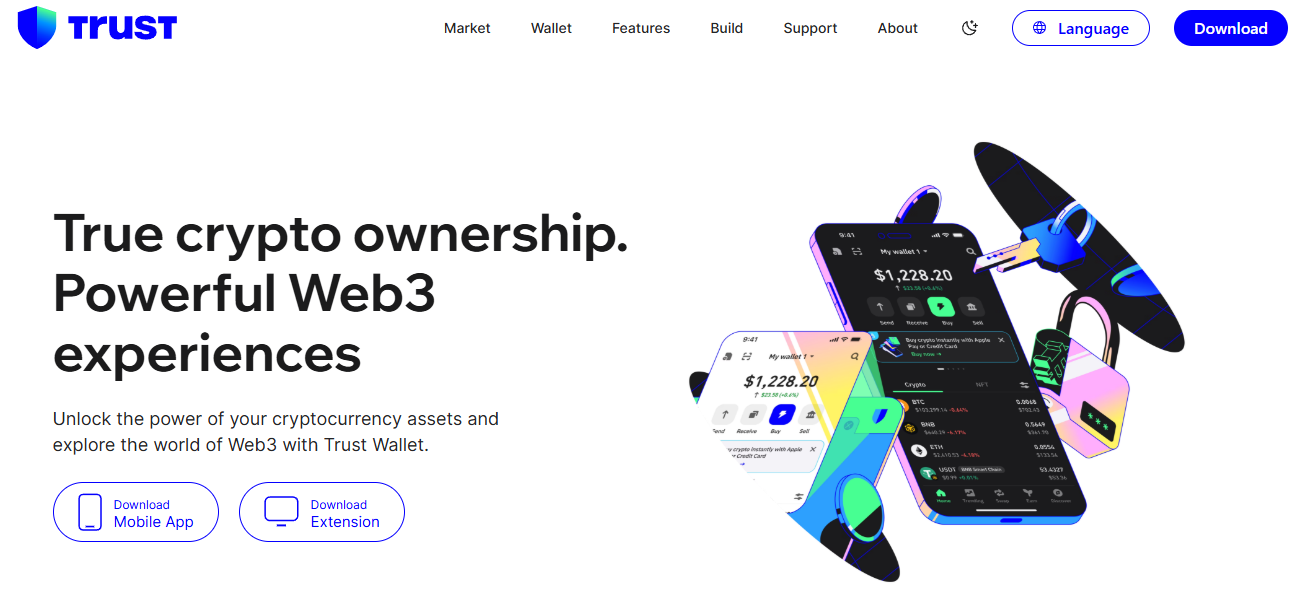
Trust Wallet’s value lies in accessibility, breadth of support, and minimal setup overhead, all on the mobile interface. It is designed, so users can swiftly interact with DeFi without needing to understand technicalities, such as gas abstractions, chain configuration, and so on.
| Main features |
|---|
| 👛 Wallet type & custody model: Non-custodial software wallet |
| 📲 Devices: Mobile (Android/iOS) & Browser extension |
| ✅ Audited by: More than 30 annual app and infrastructure audits, including Certik, Halborn, Cure53, Quantstamp, and Salus |
| 🛡️ Security measures: Device key generation, App PIN/Passcode, Biometrics (fingerprint/Face ID) |
| 🪙 Supported networks and currencies: More than 100 blockchains and millions of assets |
| 💸 Payment methods: Cards, Apple Pay, Google Pay, Bank transfers via providers like MoonPay, Ramp, Simplex |
| 📲 dApps Integration: WalletConnect for DeFi/NFT platforms, Built-in dApp browser |
| 🛡️ KYC required: No for wallet use or self-custody functions, But triggered only when using fiat on-ramps |
📌Why is it in our ranking? A balanced overview:
✅ Built-in DEX aggregating and staking for over 20 coins with competitive yields are seamless
✅ Free to download and use (no subscription fees)
✅ Built-in Security Scanner detects and warns about risky dApps, tokens, and transactions in real time.
✅ Strong NFT handling through a clean and readable NFT display
✅ FlexGas allows paying transaction fees in alternative tokens such as TWT, USDT, or USDC
✅ Its governance token, TWT, is also used for discounts on swaps and rewards.
✅ Compatible with Ledger hardware wallets via the browser extension
✅ Ratings averaging 4.5/5 on both iOS and Android app stores
❌ Limited to mobile, and Hardware wallet integration is limited to Ledger devices at the moment
❌ Lacks traditional 2FA
❌ Customer support is limited to a ticketing system, email, self-help guides, and community forums.
❌ Staking is currently limited to about 20 coins.
❌ No desktop version of the companion app
Uniswap Wallet: The Mobile-First Native DeFi Access to EVM Chains
The Uniswap Wallet is a non-custodial mobile wallet designed as the definitive portal for trading via the Uniswap Protocol. Its core philosophy is deep integration to transform the familiar swap interface on EVM-compatible chains into a secure, self-custody mobile experience.
Built natively for iOS and Android, it prioritizes simplicity and speed for decentralized trading. It offers direct access to the broadest liquidity on Ethereum and other supported Layer 2 networks directly from your pocket.
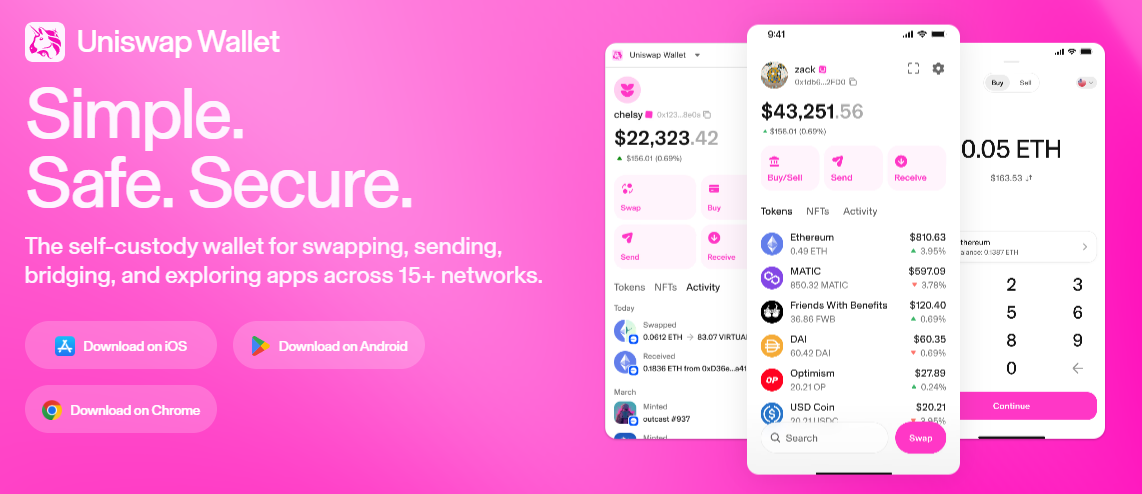
The wallet also features built-in price charts, multi-chain swap aggregation with optimizations for better rates, and instant access to new listings directly from the mobile interface.
| Main features |
|---|
| 👛 Wallet type & custody model: Non-custodial software wallet |
| 📲 Devices: Mobile (Android/iOS) & Chrome browser extension |
| ✅ Audited by: Uniswap protocol extensively audited (Trail of Bits, OpenZeppelin, ABDK Consulting, ConsenSys Diligence); Wallet code partially open-source |
| 🛡️ Security measures: Local key generation, Encrypted key storage, Biometrics, App PIN |
| 🪙 Supported networks and currencies: Ethereum mainnet and major Layer 2s (Arbitrum, Optimism, Polygon, Base, etc.) + all associated ERC-20 tokens |
| 💸 Payment methods: Cards, Apple Pay, Venmo, bank transfers via integrated providers like MoonPay, Robinhood, and Alchemy Pay |
| 📲 dApps Integration: WalletConnect; Built-in dApp explorer for token discovery and DeFi/NFT interactions |
| 🛡️ KYC required: No for core wallet use and swaps, but triggered when using fiat on-ramps |
📌Why is it in our ranking? A balanced overview:
✅ Self-custodial control combined with MEV protection safeguards your trades and funds
✅ Real-time token warnings alert users to risky assets
✅ Intuitive interface and one-click features
✅ Free to use with no hidden fees for core functions
✅ Human support and regular updates from Uniswap Labs provide reliable assistance
✅ User ratings average 4.8/5 across 62K+ reviews on iOS, Android, and Chrome
❌ Limited exclusively to EVM-compatible chains
❌ Need for bridges to access non-Ethereum ecosystems like Solana natives
❌ Lack of 2FA or multi-signature support features
❌ Customer support is restricted to email
❌ No native staking functionality
❌ WalletConnect integration is limited to the mobile app
MetaMask: The Foundational Portal to the Web3 World
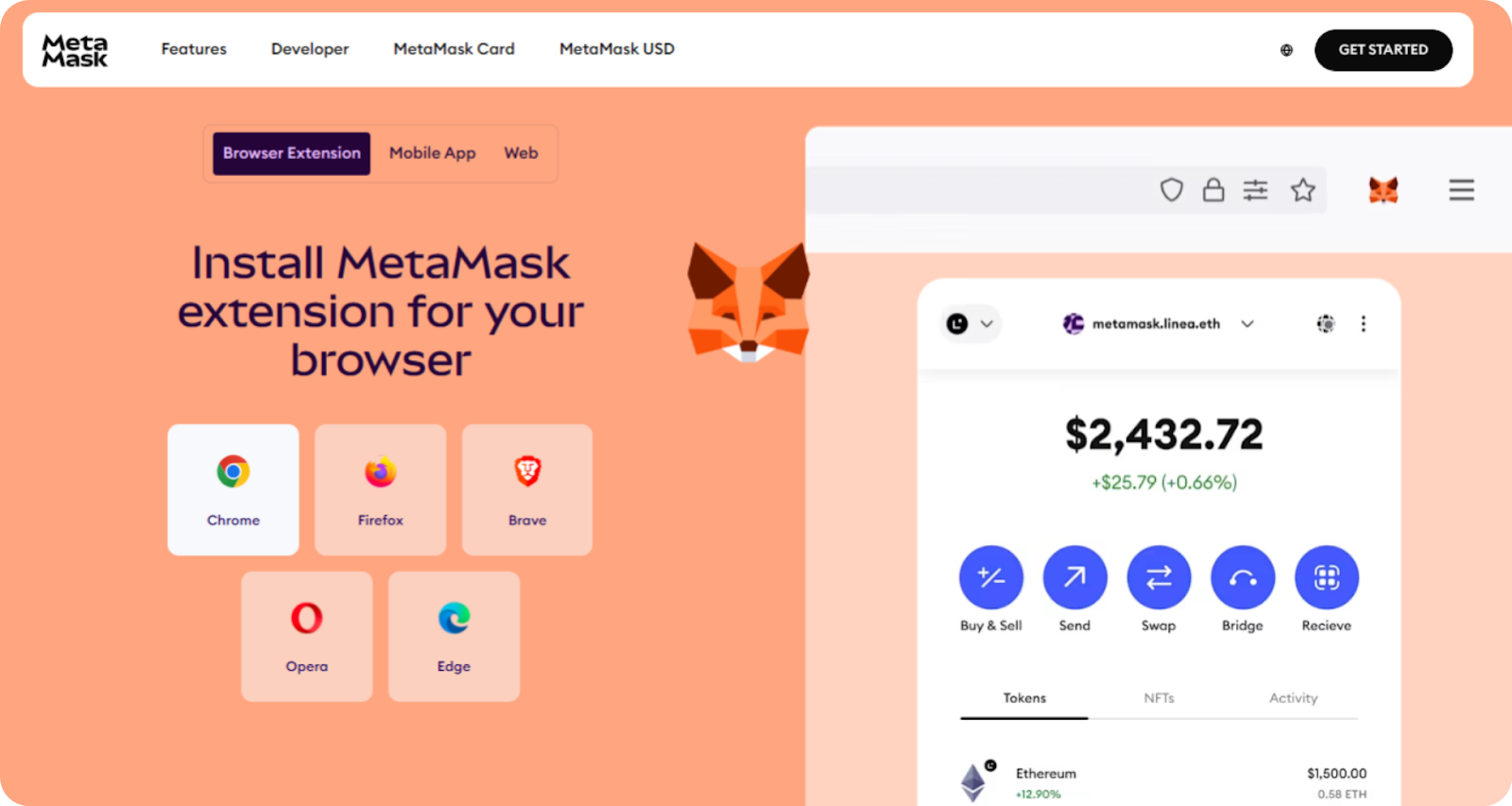
MetaMask has been the uncontested standard for gaining access to Ethereum and EVM-compatible dApps since its introduction in 2016. In the effort to keep dominating and integrate the fragmented crypto ecosystem into a single interface, it now supports major non-EVM chains like Bitcoin and Solana. Numerous other chains and associated assets are further supported via its Snap ecosystem.
The true strength of MetaMask lies in its deep integration. Its built-in tools for token swaps, staking, and security features like transaction simulation role make it the standard connector for the vast majority of dApps in the Web3 world.
| Main features |
|---|
| 👛 Wallet type & custody model: Non-custodial software wallet |
| 📲 Devices: Mobile Apps (Android/iOS), Desktop via browser extensions (no standalone app) |
| ✅ Audited by: ConsenSys Diligence, Trail of Bits, Monthly security reports and third-party vulnerability assessments |
| 🛡️ Security measures: Local key generation, Encrypted vault, Password/PIN, Biometrics (mobile) |
| 🪙 Supported networks and currencies: Over 100+ chains and thousands of tokens |
| 💸 Payment methods: Cards, Apple Pay, PayPal, bank transfers via third-party providers |
| 📲 dApps Integration: WalletConnect support, Built-in dApp browser, Direct access to thousands of dApps, Snaps for extended integrations like custom RPCs or protocols |
| 🛡️ KYC required: No for wallet use, but triggered when using fiat on-ramps |
📌Why is it in our ranking? A balanced overview:
✅ Massive user base and ecosystem integration
✅ Snaps allows you to customize the wallet for more efficiency and adaptability
✅ Open-source code is regularly audited by top security firms
✅ Advanced security features: built-in Wallet Guard for real-time threat monitoring, front-run protection, and phishing alerts
✅ Custom RPCs, multi-network management, and hardware wallet integration for advanced users
✅ Compatible with hardware wallets like Ledger and Trezor via extensions
✅ Cross-device synchronization through its mobile app and browser extensions
❌ Vulnerable to device compromises and phishing risks
❌ Interface complexity and performance friction (slow UI, frequent pop-ups, and occasional RPC issues)
❌ Absence of built-in multi-signature support
❌ Customer support through email, self-help guides, and community forums
❌ No native staking for a wide range of assets
OKX Wallet: Power-User, Multi-Chain Wallet for Maximized DeFi Operations
We rate OKX Wallet as a non-custodial software wallet built for active engagement across Web3. Since its inception under the OKX ecosystem in 2018, the wallet has evolved as a standalone gateway for crypto natives seeking true ownership in a decentralized world. Although it is branded under the OKX exchange, the wallet itself is separate from the custodial exchange account and does not require users to deposit assets with OKX.
OKX wallet is built for the power user who navigates across dozens of blockchains. This wallet offers a unified dashboard for swapping tokens, exploring NFT collections, and staking assets, all without switching tabs or apps.
It stands out for employing a layer of security approach that includes the Multi-Party Computation (MPC) technology and a proactive threat detection system. The MPC tech splits your private key into secure fragments (spread across your device, cloud backup, and OKX’s server), removing the single point of failure of a traditional seed phrase.
In a complementary act, the proactive threat detection system acts as a real-time sentry, scanning smart contracts and transaction requests to warn you of potential scams before you sign. The design enables deep DeFi involvement without compromising on security.
| Main features |
|---|
| 👛 Wallet type & custody model: Non-custodial software wallet |
| 📲 Devices: Mobile apps (Android/iOS), Browser extensions and Web version |
| ✅ Audited by: CertiK, SlowMist, and ConsenSys Diligence, Hacken (Proof of Reserves) |
| 🛡️ Security measures: Local key generation, Encrypted private keys, Password/PIN, Biometrics, Proactive threat scanning |
| 🪙 Supported networks and currencies: Over 130+ blockchains (BTC, ETH, SOL, BNB, TON, etc.) and 500,000+ tokens/assets + NFTs |
| 💸 Payment methods: Cards, Apple Pay, PayPal, bank transfers via third-party providers |
| 📲 dApps Integration: WalletConnect, Built-in dApp browser, Native DEX router, Access to staking protocols and analysis tools |
| 🛡️ KYC required: Not for wallet use, but needed for integrated fiat on-ramps |
📌Why is it in our ranking? A balanced overview:
✅ Non-custodial ownership combined with proactive security tools
✅ MPC splits your private key into three shares, enabling keyless, secure access
✅ Advanced account abstraction (AA) features allow gas payments in stablecoins, batched transactions, and smart account upgrades
✅ Integrated interface offers real-time analytics, trend tracking, and setting of custom alerts
✅ Versatile device support across mobile, web, and extensions and integration with hardware wallets
✅ Built-in tools include multi-chain DEX aggregator, NFT marketplace, staking/earn platforms, and access to thousands of dApps
✅ Cross-chain functionality for direct bridging and swaps without need for manually switching networks
✅ Cross-device synchronization possible across the standalone app and browser extension
❌ Full access restricted in some countries (e.g., the U.S.)
❌ Despite built-in safeguards, it inherently carries online attack risks, like with any hot wallet.
Exodus Wallet: Design-First, Multi-Asset Wallet Built for Simplicity
Exodus was launched in 2015 and has since cemented its place as a user-centric pioneer in crypto storage. It is renowned for its focus on visual design, ease of use, and low cognitive load to demystify the Web3 space. It deliberately avoids the “developer tool” feel of other wallets and instead targets users who want clean asset management without technical friction.
As a non-custodial software wallet, Exodus prioritizes self-sovereignty while supporting a wide range of assets across major blockchains and offering built-in swaps and basic staking. Exodus is best understood as a portfolio wallet first and a Web3 wallet second. For many users, that trade-off is exactly the point.
| Main features |
|---|
| 👛 Wallet type & custody model: Non-custodial software wallet |
| 📲 Devices: Mobile apps (Android/iOS), Desktop apps, Browser extension |
| ✅ Audited by: Selected components audited by Kudelski Security |
| 🛡️ Security measures: On-device key generation, Auto-lock features, Password/PIN protection, Biometric (fingerprint/Face ID) |
| 🪙 Supported networks and currencies: Over 260+ cryptocurrencies and tokens across 20+ blockchains |
| 💸 Payment methods: Cards · Bank transfers via MoonPay, Ramp, Sardine |
| 📲 dApps Integration: WalletConnect support, Built-in Web3 browser for direct dApp access |
| 🛡️ KYC required: No for wallet use, but used for fiat on-ramps |
📌Why is it in our ranking? A balanced overview:
✅ Good visual portfolio tracking
✅ Multi-device sync enhances flexibility, letting you access your portfolio anywhere
✅ Device-based passkey authentication eliminates traditional passwords
✅ Built-in exchange for one-click swaps, staking, and NFT gallery viewing (an all-in-one mobile experience)
✅ Seamless integration with Trezor hardware wallets
✅ 24/7 live chat and email customer support
✅ Ratings averaging 4.6/5 on iOS App Store
❌ Limited advanced DeFi tooling
❌ Absence of 2FA and multi-signature support
❌ Staking limited to select assets like Solana and Cardano
Phantom: Solana Default Wallet Expanding Into a Multi-Chain Web3 Hub
Phantom Wallet has redefined accessibility in the Solana ecosystem since its launch in 2021, similar to MetaMask for Ethereum. It is now expanding into a multi-chain leader that millions of people trust for its user-friendly design, connecting novice and advanced DeFi users in a secure and privacy-focused environment.
Phantom ensures you maintain absolute control over your private keys (like all non-custodial software wallets) while unifying holdings across high-speed networks, optimizing rates and fees for cross-chain swaps, offering NFT management and native staking (without third-party involvement) to earn rewards.
| Main features |
|---|
| 👛 Wallet type & custody model: Non-custodial software wallet |
| 📲 Devices: Android/iOS (mobile apps) and browser extension |
| ✅ Audited by: Least Authority, Kudelski Security, Halborn Security, OtterSec, and ongoing smart contracts and infrastructure reviews |
| 🛡️ Security measures: On-device key generation, Biometric authentication (fingerprint/Face ID), PIN/passcode, Transaction Previews with Blowfish AI for scam detection, Open-source blocklist for malicious sites, NFT spam reporting/hiding/burning |
| 🪙 Supported networks and currencies: 7+ major blockchains (including Solana, Ethereum, Bitcoin, Polygon, Base, Sui, Monad) and thousands of assets |
| 💸 Payment methods: cards, Apple Pay, Google Pay, PayPal, bank transfers via integrated providers |
| 📲 dApps Integration: WalletConnect support, Built-in dApp browser, Direct access to DeFi and NFT platforms, Cross-chain bridging and swaps |
| 🛡️ KYC required: No for wallet use, but needed for fiat on-ramps |
📌Why is it in our ranking? A balanced overview:
✅ Cutting-edge scam detection via Blowfish AI
✅ Enhanced NFT experiences with features like quick burning and listing streamline collection management
✅ Privacy-first design with no personal data required safeguards users’ identity
✅ Low-friction onboarding, especially for Solana newcomers
✅ Cross-chain swapping and bridging functionality eliminates the need for external tools
✅ Integration with Ledger hardware wallets bridges hot wallet convenience with offline security
✅ App store with 4.8/5 ratings
❌ No native desktop application yet
❌ No 2FA and multi-signature support
❌ Customer support is limited to email, chatbot, and self-help resources.
Bitget Wallet: A Multi-Chain Hub With MPC Security & Integrated DeFi
Bitget Wallet, formerly known as BitKeep, is rated a top-tier multi-chain powerhouse, trusted by over 50 million users for its comprehensive gateway for secured Web3 interaction. Although the wallet rebranded in 2023 under the Bitget ecosystem, it operates independently of custodial exchange accounts, granting you sovereign control over assets. It does not even require users to deposit assets with Bitget.
Built for multi-chain activity, it integrates native tools like a dApp browser, cross-chain DEX aggregator, NFT marketplace, and real-time threat detection powered by GoPlus Security, creating a unified platform for managing assets across 100+ blockchains.
| Main features |
|---|
| 👛 Wallet type & custody model: Non-custodial software wallet |
| 📲 Devices: Mobile (Android/iOS), browser extension and web version for desktop access |
| ✅ Audited by: Certik, SlowMist, and Netcraft + ongoing reviews for smart contracts, infrastructure, and MPC tech |
| 🛡️ Security measures: MPC-based key generation, Password-only recovery, Biometric authentication (fingerprint/Face ID), 2FA, DESM encryption, Real-time threat detection (GoPlus), Withdrawal whitelisting, Address scanning and Transaction warnings |
| 🪙 Supported networks and currencies: Over 100+ blockchains and 500,000+ tokens/assets, plus NFTs across multiple chains |
| 💸 Payment methods: Cards, Apple Pay, Google Pay, bank transfers |
| 📲 dApps Integration: WalletConnect support, Built-in DApp browser, Access to thousands of dApps for DeFi, NFTs, and more; Cross-chain bridging and Super DEX aggregator |
| 🛡️ KYC required: No for wallet use. Yes for fiat on-ramps |
📌Why is it in our ranking? A balanced overview:
✅ Real-time threat detection for smart contracts and dApps
✅ DEX aggregation and gasless options optimize swap rates and fee efficiency
✅ Integrated NFT tools and PayFi QR codes extend utility beyond basic transfers
✅ GetGas functionality allows flexible gas fee payments in alternative tokens
✅ Advanced account abstraction (AA) features enable gas payments in stablecoins like USDT or USDC, batched transactions, and simplified DeFi interactions
❌ All-in-one feature set can create a complex interface
❌ Deep integration with the Bitget exchange may conflict with a philosophy of maximal decentralization
❌ Only ticket and in-app chat support
Full Comparison of Top Decentralized Wallets
Navigating the cryptocurrency universe with numerous alternatives to store them is no easy task. That is why we created this comparison chart to guide you through key aspects you need to consider when choosing a non-custodial wallet.
| Decentralized Wallets | Type | Best For | Limitations | Price |
|---|---|---|---|---|
| 👛 Best Wallet | Software wallet (mobile-first, app-based) | Users who want easy, all-in-one access. All-round DeFi use & trading. | No dedicated hardware, no desktop or web app, no browser extension | Free |
| 👛 Ledger | Hardware (4 models) | Long-term multi-asset storage | Closed-source secure element and limited memory for apps | $79–$149 |
| 👛 Zengo | Software (desktop and mobile) | Seedless backup & easy recovery | No support of popular chains (Sui, Avalanche, Cardano, Hedera, Stellar) | Free app; fees |
| 👛 Cypherock X1 | Hardware (main X1 device + up to 4 X1 cards) | Multi-wallet key management | No Solana/NFTs yet on X1 | $99–$199 |
| 👛 Tangem | Hardware, card-based | Crypto holders who want cold storage in a compact card/ring. | Total loss of funds if you lose all cards (no other recovery options) | From $54.90 |
| 👛 Trezor | Hardware (4 models) | Open-source security & transparency | Small displays on all models, no Bluetooth connectivity | From $79 |
| 👛 SafePal S1 | Hardware | Users who want cold-storage security in a compact, easy-to-carry form | No native desktop wallet | From $49 |
| 👛 Ellipal | Hardware | Fully air-gapped transactions | Bulkier body, no Bluetooth or desktop support | $169 |
| 👛 Trust Wallet | Software (mobile + extension) | On-the-go dApp and DEX usage, single app for many assets | Seed phrase only, no 2FA | Free |
| 👛 Uniswap | Software (mobile app + browser extension) | Users looking for a unified wallet to manage many aspects of crypto activity | It’s limited to EVM‑compatible chains | Free |
| 👛 MetaMask | Software (browser & mobile) | dApp browsing, Core EVM DeFi & Web3 access | EVM-only without bridges | Free |
| 👛 OKX Wallet | Software | Experienced investors | Overwhelming for beginners | |
| 👛 Exodus Wallet | Software | All-in-one “portfolio wallet” with polished UX | If you lose your 12‑word secret key, you lose access. | Free |
| 👛 Phantom | Software (browser & mobile) | NFT viewing & management. Solana and SPL Tokens. | Solana-centric | Free |
| 👛 Bitget Wallet | Hardware | Users who want a feature-rich Web3 wallet | Complex and challenging for beginners | Free |
What Is a Decentralized Wallet to Store Cryptos?
A decentralized wallet is a non-custodial wallet that grants you full control over the private keys or key shares. That is to say, no one else but you will be responsible for the access keys and funds. Decentralized wallet providers cannot access your passwords, and they don’t rely on servers, exchanges, or third-party companies to store or manage your cryptocurrencies.
These wallets let you manage and access your crypto funds, similar to how a PayPal account lets you hold and manage money online. The main differences lie in custody, control, and how transactions are processed:
- Decentralized wallets can’t freeze your funds or restrict your account.
- Crypto wallets interact directly with a blockchain. Transactions are decentralized and recorded on a public ledger. PayPal transactions happen within PayPal’s centralized system, not on a blockchain.
- Interoperability: Crypto wallets can connect to dApps, DeFi, NFTs, and multiple blockchains, not within a closed system.
- No personal information is required to setup some crypto wallets (levels of anonymity may vary).
You will get the private keys to your decentralized wallet when setting it up. It usually contains 12 words (seed phrase) and you have to enter this key in the correct order to reconstruct the private key and access the wallet. You are the only guardian of the private key, if you lose it, the provider won’t be able to recover your funds.
📌 CoinNews suggestion: Back up your seed phrase securely, use physical seed-phrase storage device or multiple backups in separate locations. Never share your seed phrase with anyone.
Centralized vs. Decentralized Wallets: Full Comparison
The core difference between centralized and decentralized crypto wallets comes down to who controls the private keys. Exchange or brokers control your keys and keep your funds safe in centralized wallets. Regarding decentralized wallets, you are ultimately responsible for safeguarding your private keys.
➡️ In centralized wallets, typically provided by exchanges or brokers, the custodian manages your keys and safeguards your funds on your behalf.
➡️ In centralized systems, private keys are stored by a third-party provider. This convenience comes with trade-offs: if the custodian is hacked or becomes insolvent (as seen in cases like FTX) your assets may be at risk since you do not control the keys.
➡️ With decentralized wallets, you hold the keys directly and are fully responsible for protecting your assets (self-custody of properties).
➡️ Decentralization grants complete control over both your funds and your private keys, enabling you to send, receive, and manage crypto without relying on intermediaries or needing anyone’s approval. This self-custody model requires greater responsibility.
To make this distinction clearer, we crafted a comparison chart that breaks down each wallet type. Let’s examine the contrast between centralized and decentralized wallets.
| 📌 Feature | 👛 Centralized Wallet | 👛 Decentralized Wallet |
|---|---|---|
| Who controls keys? | Exchange/custodian or brokers | You, the investor (self-custody) |
| Recovery method | Email, KYC, support ticket | Seed phrase/hardware / MPC |
| On-chain access | Withdrawals only | Full dApp, DeFi, Web3 |
| KYC required | Almost always | Rare |
| Counterparty risk | High. Full exposure | Low. No exchange insolvency risk |
| Recommended for | Beginners, simple to use | Experienced investors. It requires more responsibility. |
| Ideal use case | Fiat access, trading | Storage, DeFi, Web3 |
What Are the Different Types of Decentralized Wallets?
There are two main types of decentralized crypto wallets: software or hot wallets, which come in the form of mobile, desktop, and browser apps, and hardware or cold wallets, which are physical, tangible devices, such as cards, wearable rings, or other forms. Let’s delve into them:
Software or Hot Crypto Wallets
Software-based decentralized wallets are also referred to as hot wallets, as they remain online at all times. They typically come as applications to download and manage from mobile devices. It is possible to download them for free from the App Store or Google Play Store and start using them right away on iOS/Android devices.
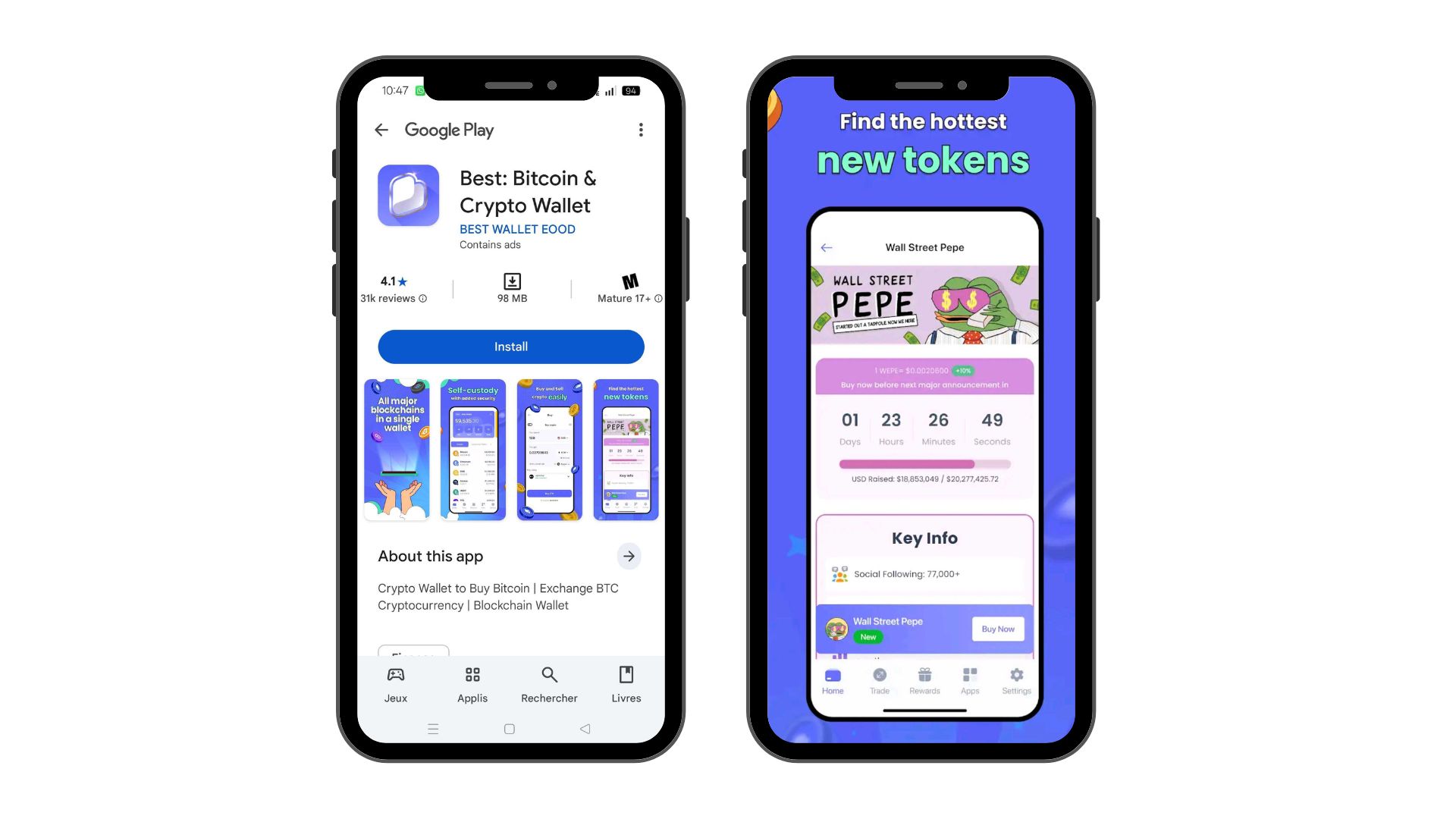
✅ Advantages: fast, great for DeFi, buy, trade or sell crypto from your smartphone and receive notifications.
✅ Providers: Best Wallet, Trust Wallet
✅ Security: secure your funds by using a PIN or fingerprint ID.
❌ Tradeoffs: exposed to malware, phishing
- Browser extensions, like MetaMask and Phantom
- Mobile apps: Best Wallet, Trust Wallet, Zengo
- Desktop frontends or apps are less common, but you can find them for Exodus or as companion apps like Ledger.
Hardware or Cold Crypto Wallets
Many of the wallets we rated throughout this article are hardware wallets. They store your keys on a physical device and work offline only (Trezor, Tangem, Cypherock, or Ledger). They are also decentralized because the providers don’t have access to your keys or funds.
To make transactions, sell, buy, or transfer funds to another wallet, a PIN is required on the device. Additional security measures for access include scanning a QR code or using biometric authentication.
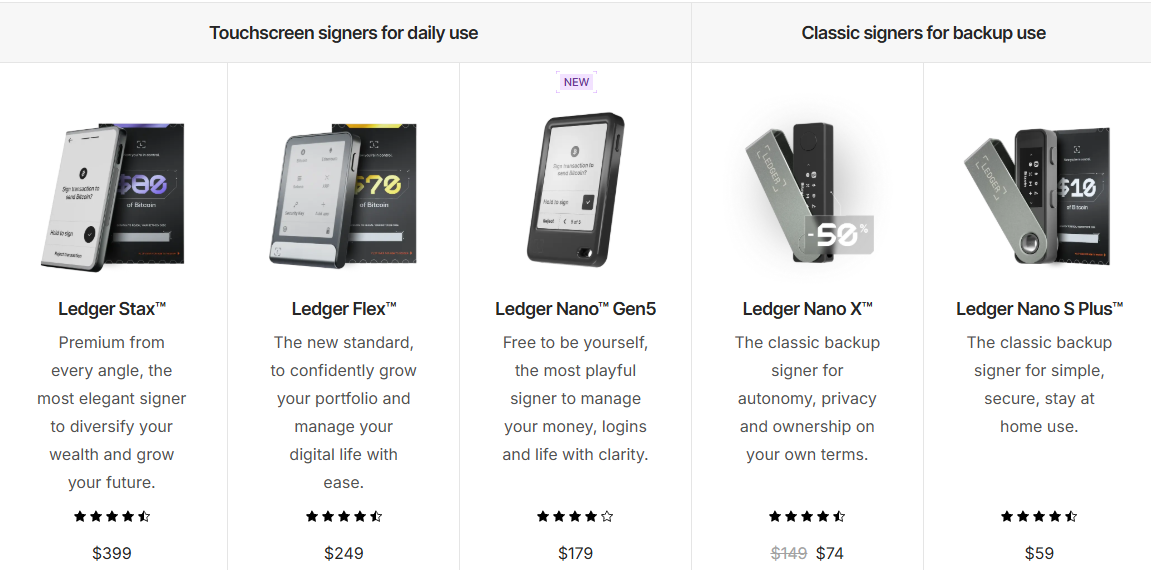
✅ Advantages: keys stay offline, different formats (cards, ring, USB devices)
✅ Providers: Trezor, Tangem, Cypherock, or Ledger
✅ Safe, keys are stored offline
❌ Tradeoffs: slower UX for DeFi, slower trades since access to the device is required
- Devices provided by Ledger, Trezor, Cypherock
- Air-gapped: Ellipal, NGRAVE
- NFC card systems available
Decentralized Crypto Wallets: Benefits and Drawbacks
The absolute custody of private keys, funds, and access to dApps are among the primary advantages of decentralized crypto wallets. We listed all the benefits to help you choose the best non-custodial wallet. Read on to find out.
✔️ You have full ownership and control of private keys and funds.
✔️ Security is enhanced since assets aren’t stored on centralized servers, and there is no central target for hackers. Devices store your keys offline, providing an additional level of protection (cold wallets).
✔️ More privacy. Decentralized wallets don’t require KYC or identity verification. You can have your wallet and without providing personal information.
✔️ Direct Access to DeFi & Web3, such as Uniswap, OpenSea, PancakeSwap. Hardware wallets integrate easily with decentralized applications (dApps), DEXs, and DeFi services. This integration enables you to swap, stake, lend, and borrow tokens, as well as interact with NFTs.
✔️ Many decentralized crypto wallets support numerous blockchains and cryptos. This multi-asset and multi-chain support enables investors to manage their portfolio and diversify investments.
As regards the drawbacks, the main one is that if you lose your keys, your funds will be unrecoverable. As you have full responsibility for the security of private keys and seed phrases, bear in mind these disadvantages of using a decentralized, self-custody wallet:
➖ Steeper learning curve when it comes to setting up wallets, gas fees, managing blockchains, and interacting with DeFi protocols. These types of wallets can be challenging for beginners.
➖ Compared to centralized platforms, some decentralized wallets may lack fiat on/off-ramps, advanced trading tools, or robust customer support.
Are Decentralized Wallets Safe? Risks and Security Measures
Used properly, decentralized crypto wallets can avoid exchange failure risk and reduce theft risk. Main losses come from compromising your seed phrase, approving malicious contracts, or having large balances in hot wallets.
Overall, decentralized wallets are generally safer than centralized options. However, you need to remain responsible and keep your eyes peeled regarding key management and your user behavior.
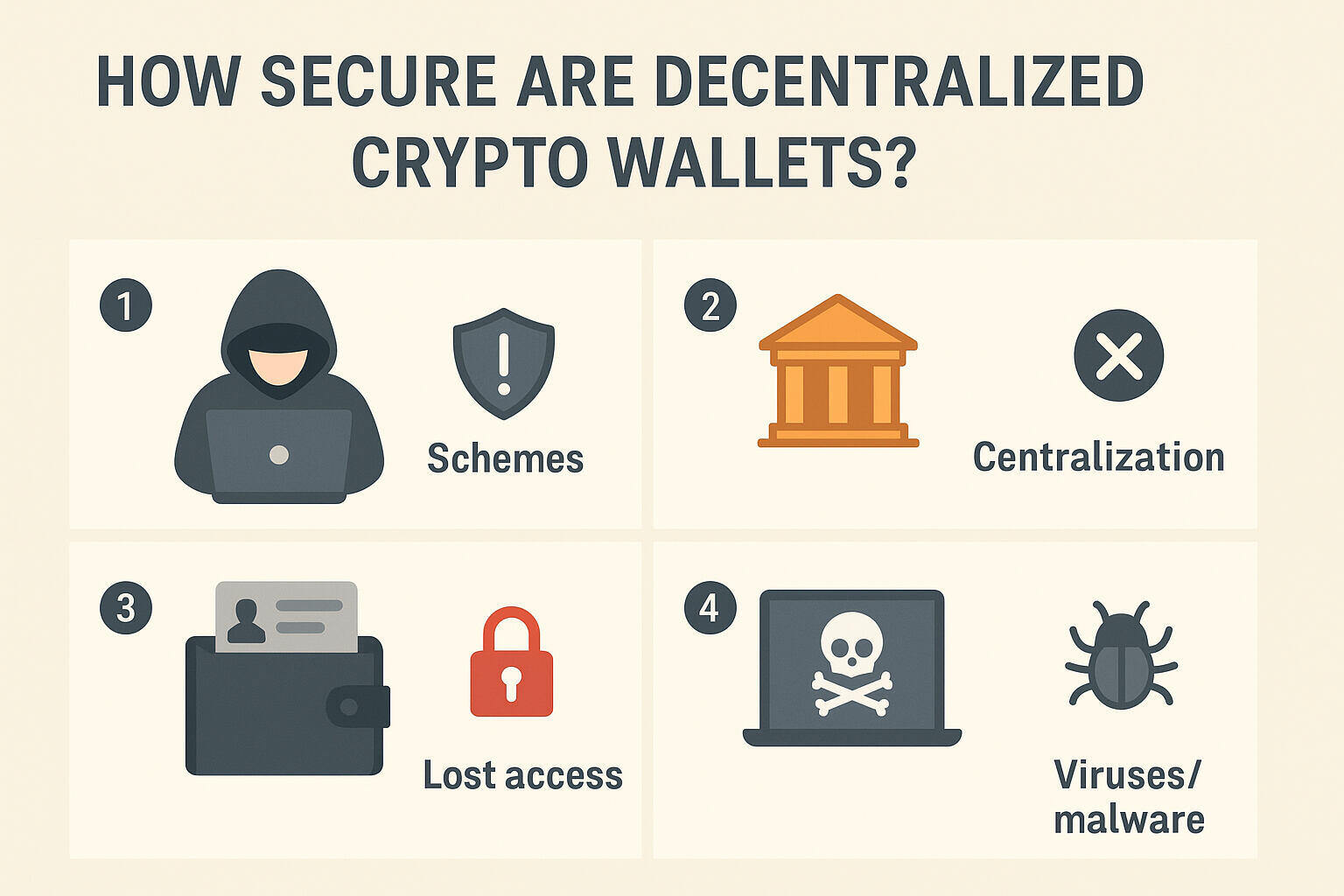
- Risk: Scams and phishing schemes.
- Safety measure: Always verify URLs and official sources, and never click on links from unknown or suspicious emails, messages, or social media accounts.
- Risk: Centralization. If you store large amounts on exchanges or rely on third-party services.
- Safety measure: Keep crypto in non-custodial wallets under your control
- Risk: Losing access. Unlike centralized platforms, no one can recover your funds for you in decentralized wallets.
- Safety measure: Store seed phrases securely offline or split keys across multiple locations.
- Risk: Malware, keyloggers, or viruses. Hackers can remotely access wallets. Software wallets on compromised computers or phones are particularly vulnerable.
- Safety measure: Use hardware wallets when possible, keep devices updated, run antivirus software, and avoid downloading untrusted apps or files.
- Safety measure: Use hardware wallets when possible, keep devices updated, run antivirus software, and avoid downloading untrusted apps or files.
How to Use a Decentralized Wallet Explained
Each wallet comes with its own setup parameters and steps to follow. This brief guide aims to provide a general overview of how cryptocurrency wallets work. The process may vary depending on whether you use software or hardware (hot or cold wallets).
Let’s learn how to deal with both alternatives:
Step 1: Choose a Wallet and Buy it or Download it
The first step is selecting a wallet that fits your needs. Some popular options include mobile apps, desktop wallets, browser extensions, and hardware devices we listed at the beginning of this article.
When choosing it, consider factors such as supported cryptocurrencies, user experience, and security features. If you opt for an online software wallet, Best Wallet is our recommended alternative to download.
If you prefer a device to store your cryptocurrencies offline, Trezor, Cypherock, Tangem, or Ledger offer products starting at around $50. Buy them from the official websites to avoid scams.
Step 2: Create Your Account or Connect Your Device
After downloading, open the wallet and follow the prompts to create your account. Most decentralized wallets will generate a unique seed phrase or private key, which acts as your access key.
This step is crucial: write down your seed phrase exactly as provided and store it securely or in several locations. Never share it online or with anyone, as it grants full access to your funds.
If you bought a device in a card, USB, or ring format, plug the hardware into your computer or mobile device and follow the provider’s instructions. Then, install de software or official companion app to interact with the device.
Once the device has been set up, hte hardware wallet will generate a new wallet, private keys and seed phrase. Save and treasure them to never lose access to your assets.
Step 3: Secure Your Decentralized Wallet
Security is crucial with decentralized wallets because there’s no central authority to recover lost funds. How you secure your wallet depends on the type of wallet you’re using:
For software wallets (mobile, desktop, or browser), back up your seed phrase or private key offline on paper or a dedicated seed storage device. Enable additional protections such as a PIN, password, or biometric lock (FaceID or fingerprint). Additionally, consider using a hardware wallet for larger amounts, keeping most of your funds offline.
For hardware wallets, store your seed phrase safely, as this is your only backup in case the device is lost or damaged. Set a secure PIN or passphrase to prevent unauthorized access and keep your device physically secure, and avoid connecting it to untrusted computers or networks.
Step 4: Use Your Wallet (As You Use Your Bank Account)
Once set up and secured, you can start using your wallet to send, receive, and manage cryptocurrencies. You can check balances, initiate transactions, like buying new cryptos or swapping tokens, and even interact with decentralized apps (dApps).
If you use a hardware alternative to manage your cryptos, use the companion software to perform the same transactions offline. The hardware device signs transactions offline and keeps your private keys safe.
The Universe of Crypto Wallets
Crypto wallets can be broadly classified based on custody, connectivity, and platform type. Understanding these categories helps you pick the right wallet for your needs. If you are starting in the universe of cryptocurrencies, we have classified the storage options:
| Type | Custody | Connectivity | Example Wallets | Main Use |
|---|---|---|---|---|
| Custodial | Third party | Online | Coinbase, Binance | Beginner storage, exchange access |
| Non-Custodial | Investor holds keys | Online/Offline | Ledger, MetaMask, Trust Wallet | Self-custody, DeFi, NFTs, Web3 |
| Hot Wallet | Investor | Online | MetaMask, Trust Wallet | Daily transactions, dApp use |
| Cold Wallet | Investor | Offline | Ledger, Trezor, Ellipal | Long-term storage, max security |
| Software Wallet | Investor | Online | MetaMask, Phantom | DeFi, NFT, swap access |
| Hardware Wallet | Investor | Offline | Ledger, Trezor, SafePal | Safe key storage, HODL |
Some wallets, like Best Wallet, are software hot wallets; they work online. However, some others, like Ledger, are cold hardware wallets with a software interface to help you sign transactions offline while interacting with online apps.
How to Evaluate The Best Wallet For You
This is a useful checklist to consider aspects such as type, supported cryptocurrencies and devices, format, app integration, functionalities, and security audits in order to choose the best non-custodial wallet for you.
📌 Wallet type: Is it non-custodial (you control the private keys) or custodial? Is it a software wallet (mobile, desktop, browser) or a hardware wallet?
📌 Supported cryptocurrencies and chains: Does it support the cryptocurrencies you plan to invest in? Can it connect to multiple blockchains or networks if needed?
📌 Device compatibility & format: Is it available for your preferred device (iOS, Android, desktop)? Does it offer a browser extension or hardware companion app?
📌 App and ecosystem: Can it connect with DeFi platforms, NFTs, staking protocols, or other wallets?
📌 Functionalities: Does it allow sending, receiving, swapping, and storing tokens easily? Are advanced features like staking, or portfolio tracking supported?
📌 UX and interface: Is it intuitive and user-friendly?
📌 Security audits: Has the wallet undergone independent security audits? Are features like two-factor authentication, PINs, passphrases, or biometric locks available? Does it offer seed phrase backup and recovery options?
CoinNews Methodology: How We Rank Top Decentralized Wallets
The providers of decentralized wallets ranked in CoinNews were selected under strict criteria. These are key factors of interest for any crypto investor:
- Security scrutiny, reputation, and audits are at the top of our list. This is the guarantee that decentralized wallets are frequently checked, have strong track records and good community reviews.
- Supported cryptos and blockchains come in second place. This factor is crucial for investors who want diversification and multi-chain support for DeFi, staking and NFTs.
- Self-custody and authentication are among our top three criteria. We ensured the wallets ranked provide users with complete control of passwords and offer 2FA and biometric logins.
- User experience is also crucial. We tested interfaces since this can lead to unwanted confusion when sending funds, for example. These wallets were also evaluated for their intuitive designs and mobile or desktop versions to satisfy different users’ needs.
The Bottom Line
After reviewing the top decentralized crypto wallets on the market, we agree on one main aspect: having full control over your cryptocurrency investment is of the highest importance. Contrasting and reviewing the best alternatives, such as Best Wallet, Cypherock, Ledger, or Tangem is a non-negotiable step to avoid third-party risks, funds freeze or hacks.
Before spending money on a hardware device or downloading an app, evaluate them and follow best security practices to stay safe. Top your evaluation list with security, safe key storage, chain support, and authentication measures. Remember: you are ultimately responsible for selecting a decentralized wallet to store and trade cryptocurrencies.
FAQs About the Best Decentralized Wallets
One of the best decentralized options is Best Wallet. It is full self-custody, it has a built-in decentralized exchange and it does not require identity verification for more privacy. Regarding hardware decentralized alternatives, Cypherock, Tangem, Trezor, and Ledger are among the top options, offering long-term storage, multi-wallet and multi-chain management, as well as backup and recovery options.
A decentralized crypto wallet is a type of wallet where you fully control your private keys and own your cryptocurrencies. Unlike centralized wallets, which store your funds on exchanges, a decentralized wallet gives you self-custody, letting you securely send, receive, and manage crypto on your own. It’s essential for safe crypto storage, DeFi access, and interacting with Web3 apps.
They usually don’t charge fees for holding or storing funds. However, you may pay network or blockchain transaction fees (or gas fees) for sending or swapping tokens.
A digital crypto wallet that stores your private keys on a device or app. They allow you to receive, trade, buy or sell cryptos easily.
Decentralized crypto wallets can be both hot and cold. It depends on how they store your private keys. Hot wallets are connected to the internet for easy access and daily transactions, while cold wallets remain offline for maximum security and long-term storage.
Yes, Coinbase Wallet (sometimes called Coinbase Wallet or the Base app wallet) is a decentralized, self‑custodial crypto wallet, meaning you control your private keys and funds rather than Coinbase holding them for you. You do not need a Coinbase.com account to use it, and Coinbase itself does not manage or have access to your keys or assets stored in Coinbase Wallet.
Yes, Tangem Wallet is a decentralized, non‑custodial crypto wallet. It is a hardware wallet that generates and stores your private keys offline on secure NFC cards or rings, giving you full self‑custody of your crypto.