


Apple Tariffs and Kospi Collapse Drive Crypto Category Exit
A tech-equity rout triggered by Apple tariff fears and a 9% Kospi crash has mechanically drained crypto risk appetite, sending Ether down 7.9% on the week.
Ether traded at $1,555 into the weekend – down 5.6% over 24 hours and 7.9% on the week, the steepest weekly loss among large-cap digital assets – caught in a transmission chain that originated not in crypto-native catalysts but in a renewed rout across global technology equities, a macro event that sent Nasdaq 100 futures down 1.5%, collapsed Apple shares by 6.1% on tariff-driven hardware price increases, triggered a second trading halt in South Korea’s Kospi after the index tumbled as much as 9%, and mechanically drained risk appetite from every asset class simultaneously carrying elevated beta to the global AI and semiconductor trade – a category that now includes the entire digital asset complex by institutional classification; XRP fell 4.9% to $1.03 for an 8.5% weekly loss, Dogecoin slid 3.8% to $0.074 and is down 9.8% over seven days, Solana held at $68 with only a 1.2% weekly loss – a relative outperformance that is structural, not coincidental – while Hyperliquid’s HYPE dropped 5.4% and Tron stood as the lone gainer in the entire major-asset complex at +0.4%; Bitcoin dipped near $58,000 before recovering toward $59,888, down 2.7% on the day and 4.5% on the week, holding the lower bound of the $50,000–$60,000 support zone it has not broken on a confirmed session close in nearly two years, even as the altcoins clustered around it capitulated faster and deeper – the governing question is whether the $58,000 intraday wick represents demand absorption at a structural floor, whether U.S. spot Bitcoin ETF outflows reverse across multiple consecutive sessions concurrent with tech equity stabilization, and whether the macro rotation from crypto into AI equities exhausts itself before altcoin liquidity deteriorates further.
How Apple’s Tariff-Driven Price Hike, a 9% Kospi Collapse, and Nasdaq 100 Futures Selling Mechanically Transmitted Into the Bitcoin Bid and Cascaded Across Ether, XRP, and Dogecoin – and Why This Is Confirmed Continuation of the Same Macro Selloff That Began on June 23
The transmission chain from Friday’s equity rout into crypto is not complicated, but it requires tracing each link precisely to understand why the altcoin losses exceeded Bitcoin’s by a factor of two to three and why the move does not resolve on a single session’s stabilization. The first link is Apple‘s announced price increases on Macs, iPads, and home devices – tariff pass-through to consumers that immediately raised the probability of margin compression across the hardware supply chain and stoked fears that the memory-chip demand cycle underpinning the AI trade is more fragile than consensus pricing had assumed. That single catalyst was sufficient to move Apple shares down 6.1%, a stock with sufficient index weight to pull Nasdaq 100 futures down 1.5% in early trading and reprice global technology risk simultaneously.
The second link is the South Korean semiconductor complex. SK Hynix and Samsung – two of the three largest memory-chip producers globally and direct beneficiaries of AI server demand – both fell more than 8% on Friday, dragging the Kospi to a decline of as much as 9% and triggering its second circuit-breaker halt of the week; prior CoinNews coverage of the chipmaker selloff’s initial transmission through the Kospi channel and into Bitcoin’s price structure documented the same mechanism at work on June 23, when Bitcoin was trading near $62,200 and Ether was still holding $1,650 – Friday’s session represents the second leg of what is now a confirmed multi-session de-risking event, not a one-day anomaly. The third link is the mechanical consequence for crypto: institutional desks that classify digital assets as high-beta risk positions reduce exposure in lockstep with technology book drawdowns, and the selling that results is not sentiment-driven but portfolio-management-driven – price-insensitive by design, executed at market, and concentrated in the assets with the thinnest order books, which are altcoins rather than Bitcoin.
Brent crude slipping below $74 a barrel added a secondary macro signal – a brief supply-concern spike from a projectile strike on a vessel in the Strait of Hormuz failed to hold any bid, and energy’s inability to sustain a safe-haven premium confirmed that the market is in a broad risk-off liquidation rather than a sector-specific rotation. The convergence of equity index selling, commodity weakness, and digital asset drawdowns across the same session window is not coincidental – it is the mechanical fingerprint of institutional de-risking across correlated risk books simultaneously. Gabe Selby, head of research at CF Benchmarks, characterized the dynamic precisely, noting that part of Bitcoin’s pullback came from large holders selling sizable amounts into a market that has been slow to absorb the extra supply, and framing the move as a broad market cooldown rather than anything broken in crypto’s underlying structure – a distinction that matters for the recovery thesis but does not alter the mechanical selling pressure active in the current session.
Ether Down 7.9% on the Week, XRP Losing 8.5%, Dogecoin Off 9.8% – The Multi-Asset Breadth Across Every Major Altcoin Confirms Category Exit Rather Than Rotation Within Crypto, With Tron’s 0.4% Gain the Exception That Proves the Structural Rule
The breadth of Friday’s decline across the digital asset complex removes any rotation narrative and confirms structural category exit. When Ether, XRP, Dogecoin, and Hyperliquid’s HYPE all register losses of 3.8% to 5.6% in the same 24-hour window – assets with fundamentally different use cases, liquidity profiles, and investor bases – the common variable is not project-specific news but portfolio-level de-risking by holders who classify all of them as risk-on exposure. That is the mechanical definition of category exit: not rotation from one coin into another, but simultaneous reduction of the entire category’s allocation weight.
Ether at $1,555 is the headline casualty on a weekly basis – down 7.9% over seven days, a loss that extends a deteriorating trend that preceded Friday’s session; prior CoinNews analysis of Ethereum’s structural weakness during the same market selloff period and the altcoin pain it foreshadowed established that the move in Ether is not a single-session event but a multi-week compression driven by the same capital rotation dynamic now accelerating – money leaving the digital asset category entirely and re-entering the AI equity trade, not cycling between ETH and BTC within crypto. At $1,555, Ether has now given back a significant portion of its 2025 recovery and sits at levels that represent genuine structural risk if the $1,500 psychological floor fails on a confirmed daily close. XRP‘s 8.5% weekly loss to $1.03 is mechanically consistent with its behavior in prior macro shocks this cycle – XRP carries elevated speculative positioning and its order book thins materially during institutional risk-off events, making it a reliable leading indicator of altcoin deleveraging rather than a project-specific signal; the move to $1.03 does not reflect any change in XRP’s regulatory or utility thesis, it reflects margin calls and position reduction in a thinly bid market.
Dogecoin‘s 9.8% weekly decline to $0.074 is the largest among the named major-cap assets and structurally predictable: Dogecoin carries the highest retail speculative concentration of any large-cap asset, with no institutional utility floor to absorb selling, meaning its order book clears downward fastest when risk appetite contracts. Hyperliquid’s HYPE at -5.4% in 24 hours reflects the additional dynamic of DeFi-native assets losing their premium when on-chain activity slows and the marginal buyer retreats to stablecoins. The single outlier – Tron at +0.4% – is not a bullish signal but a structural one: Tron’s positive performance on a broad down day reflects its function as a stablecoin settlement layer with consistent fee revenue that is partially insulated from speculative de-risking, making it the closest thing to a defensive position within the crypto category rather than a momentum trade. Solana‘s relative outperformance at -1.2% weekly versus Dogecoin’s -9.8% reflects higher institutional ownership and deeper liquidity – Solana’s order book absorbs selling with less price impact than Dogecoin’s, not because its risk profile differs fundamentally but because its market structure does.

Spot Bitcoin ETF Outflows Flipping Negative, May Exchange Volumes Falling to a Nine-Month Low of $4.41 Trillion, and AI Equity Rotation Starving Crypto of Fresh Capital – The Institutional and Derivatives Framework Is Not Pricing a Recovery
The institutional flow picture entering Friday’s session was already structurally compromised before the Apple-triggered equity rout added mechanical selling pressure. U.S.-listed spot Bitcoin ETF products collectively recorded approximately $80 million in net outflows on a recent down session after a week-long streak of positive flows – a reversal that signals the institutional bid that had been absorbing supply during the June consolidation range has become conditional rather than systematic, withdrawing precisely when macro conditions demand the most support. The mechanical implication of ETF outflow events is not merely the removal of demand – it is the addition of supply, because authorized participants redeeming ETF shares receive spot Bitcoin that must be sold into the market, creating price-insensitive selling pressure that compounds the directional move already underway from discretionary liquidations.
Prior CoinNews analysis of the semiconductor rout’s impact on Bitcoin ETF institutional flows and the $60,000 floor’s structural significance established the correlation between chip-sector selling and ETF redemption activity – Friday’s session confirms that correlation is operative across back-to-back weeks, not a single-event phenomenon. Beyond ETF mechanics, the broader exchange volume data reinforces the structural deterioration: combined exchange volumes in May fell 3.45% to $4.41 trillion, the lowest reading since September 2024 – a nine-month low in trading activity that reflects not just lower prices but reduced participation, meaning fewer buyers exist at any given price level to absorb the supply that institutional de-risking generates. Lower volume into a declining price is the mechanical definition of a bid-side vacuum, not a consolidation floor.
The one data point running counter to the trend – RWA perpetual futures volumes rising 10.4% in May to an all-time high – does not represent a bullish signal for the broader market but a structural reallocation within the derivatives complex toward asset-backed instruments that carry lower correlation to speculative beta; that rotation within derivatives is itself a defensive posture, not a sign of expanding risk appetite. Selby of CF Benchmarks noted that much of the new money and investor attention has flowed into AI plays lately, leaving crypto competing for a smaller share of overall risk appetite – a characterization that is mechanical rather than anecdotal, because the AI equity trade and the crypto trade draw from the same pool of discretionary risk capital, and the performance differential between the two has widened sufficiently to make the reallocation decision straightforward for institutional allocators managing against a benchmark. The Crypto Fear and Greed Index, which dropped to 19 – deep into Extreme Fear territory – during the June 23 tech-led selloff that preceded this session, entered Friday already at levels that historically precede either capitulation lows or mechanical bounces, with the determining factor being whether institutional ETF flows confirm demand re-engagement or continue the redemption cycle.
$59,888 Is the Active Trading Level – A Confirmed Daily Close Below $58,000 Opens the Path to the $55,000 Structural Support, While Reclaiming $61,000 to $62,000 Across Two Consecutive Session Closes Is the Minimum Threshold for Any Structural Bias Reversal
The price level map for Bitcoin at $59,888 is built on three structurally justified reference points that Selby of CF Benchmarks explicitly named in his market commentary. The first is the current active trading level: $59,888 sits within the upper portion of the $50,000–$60,000 zone that has functioned as the dominant support band for nearly two years – a zone defined not by a single technical moving average but by the convergence of long-term realized price cohorts, prior consolidation bases from late 2024, and the psychological floor that institutional positioning has repeatedly defended on confirmed daily closes. The fact that Friday’s intraday wick touched near $58,000 without producing a session close below that level is meaningful only if subsequent sessions confirm absorption; an intraday wick is not a floor test, it is a probe – the floor test is the daily close.
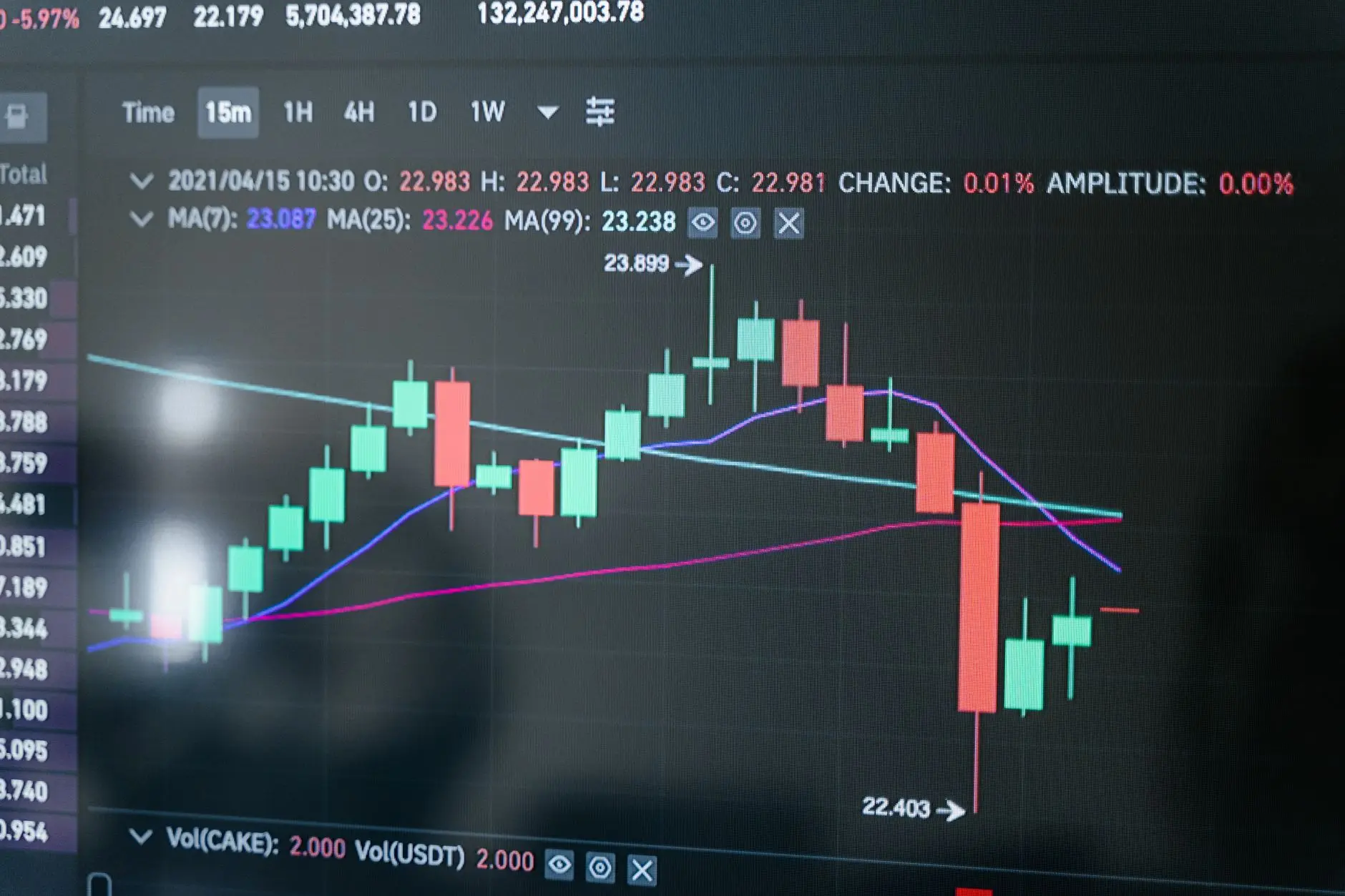
The second level is the confirmed downside trigger: a confirmed daily close below $58,000 – not an intraday wick, but a session close – would extend the downside path toward $55,000, the level Selby explicitly identified as the next structural support to watch. At $55,000, the market would encounter the realized price of a significant cohort of medium-term holders acquired during 2024’s consolidation phase – a level where cost-basis pressure mechanically increases the probability of demand re-engagement, but where a failure to hold would signal that even the two-year support architecture has been compromised by the combination of ETF outflows, macro rotation, and altcoin deleveraging cascading back into Bitcoin spot. The third level is the upside invalidation threshold: a confirmed daily close above $61,000 to $62,000 across two consecutive sessions – not an intraday spike, but sustained session-close strength on back-to-back days – would represent the minimum condition for a structural bias shift, as that range marks the prior consolidation ceiling that Bitcoin failed to reclaim following the June 23 selloff and the level at which options market positioning shifts from net negative gamma to a more neutral configuration that allows directional momentum to sustain.
For Ether, the equivalent downside reference is the $1,500 psychological floor – a level where spot demand from DeFi protocols and staking yield seekers has historically concentrated, but where a confirmed session close below that level would mechanically trigger the next leg of altcoin deleveraging across XRP, Dogecoin, and the remaining high-beta names that have already absorbed weekly losses in the 8% to 10% range. Selby further advised keeping position sizes sensible – a framing that reflects the mechanical reality of a market where the downside catalyst (tech equity weakness, ETF outflows, volume deterioration) remains active while the upside catalyst (AI spending confirmation, Fed rate-cut clarity, ETF flow reversal) remains unconfirmed across any observable data dimension.
The Bull Case Requires the Tech Equity Selloff to Resolve With Confirmed AI Spending Durability, Spot Bitcoin ETF Flows to Reverse Across Three Consecutive Sessions, and the $58,000 Intraday Floor to Hold on Confirmed Daily Closes – None of Those Three Conditions Are Currently Met, and the Bear Case Is Already Printing Across Every Data Layer Simultaneously
The bull case for Bitcoin recovering from $59,888 toward and above $62,000 – and for Ether, XRP, and Dogecoin recovering the weekly losses of 7.9%, 8.5%, and 9.8% respectively – requires exactly three simultaneously confirmed conditions, none of which are currently in place. First, the global technology equity selloff must resolve with explicit confirmation that AI capital expenditure remains durable and that the Apple tariff pass-through represents a one-time repricing event rather than the beginning of a sustained margin-compression cycle that undermines the semiconductor demand thesis – a confirmation that can only arrive through corporate guidance, Fed communication, or trade policy clarification, none of which are imminent within the current session window. Second, U.S. spot Bitcoin ETF flows must reverse from net outflow to sustained net inflow across a minimum of three consecutive sessions, confirming that the institutional bid has re-engaged at current price levels rather than withdrawn to await a deeper entry point – because without ETF flow confirmation, any spot price stabilization at $58,000 to $60,000 reflects retail accumulation in a thin order book rather than institutional demand absorption capable of sustaining a directional recovery. Third, Bitcoin must produce confirmed daily closes above the $58,000 intraday floor across multiple sessions without revisiting the wick low – because a single session’s recovery to $59,888 after an intraday probe of $58,000 is not floor confirmation, it is the absence of immediate capitulation, a distinction that matters mechanically for the derivative gamma structure and the liquidation cascade risk that remains active below that level.
None of those conditions are currently met, and the bear case is already printing across every data layer simultaneously. The macro transmission layer is confirmed: Apple down 6.1%, SK Hynix and Samsung both down more than 8%, Kospi triggering its second circuit-breaker halt of the week at a 9% decline, and Nasdaq 100 futures down 1.5% – a multi-index, multi-geography equity rout that is not a single-session anomaly but the second leg of a confirmed continuation that originated June 23 and has now mechanically repriced risk assets across two consecutive weekly periods. The institutional flow layer is confirmed: spot Bitcoin ETF products recorded net outflows of approximately $80 million on a recent down session after a streak of inflows, signaling that the institutional bid is conditional and has withdrawn at precisely the moment when supply from large-holder selling – explicitly identified by Selby of CF Benchmarks as a component of Bitcoin’s pullback – requires the most absorption capacity. The volume layer is confirmed: May exchange volumes at $4.41 trillion represent a nine-month low, a bid-side vacuum that mechanically amplifies directional moves in both directions but currently favors the downside because the selling pressure from ETF redemptions, large-holder liquidations, and margin-call cascades is active while the demand catalyst remains absent. The altcoin breadth layer is confirmed: simultaneous weekly losses of 7.9% in Ether, 8.5% in XRP, and 9.8% in Dogecoin across assets with different structural profiles constitutes category exit rather than within-crypto rotation, and category exit is the signature of institutional de-allocation rather than speculative repositioning. The sentiment layer is confirmed: the Crypto Fear and Greed Index at 19 following the June 23 selloff placed the market in Extreme Fear territory before Friday’s additional leg lower – a reading that historically precedes either a capitulation flush or an extended base-building period, neither of which represents immediate upside recovery.
The governing condition for the next move is whether the global technology equity complex stabilizes with AI spending confirmation sufficient to reverse the capital rotation out of crypto and into AI equities, whether Bitcoin spot ETF flows confirm institutional re-engagement across three or more consecutive sessions concurrent with Bitcoin holding confirmed daily closes above $58,000, and whether the $55,000 structural support identified by Selby remains uncontested on a session-close basis – because until all three of those structural conditions are simultaneously confirmed, the path of least resistance remains lower, with $55,000 as the next structural level the market will be forced to price on a confirmed daily close below $58,000. Follow CoinNews on X and Telegram for real-time Bitcoin, Ether, and altcoin price updates and ETF flow reversal alerts.
Source: CoinDesk