

OKX fined €2.25M by Dutch central bank for unlicensed operations
The crypto exchange has been fined €2.25 million by the Dutch central bank for operating without a licence, as Europe steps up crypto enforcement under the new MiCA regulatory framework.
European regulators are signalling a firm shift in their approach to crypto oversight. The days of digital asset platforms operating without a proper licence appear to be numbered.
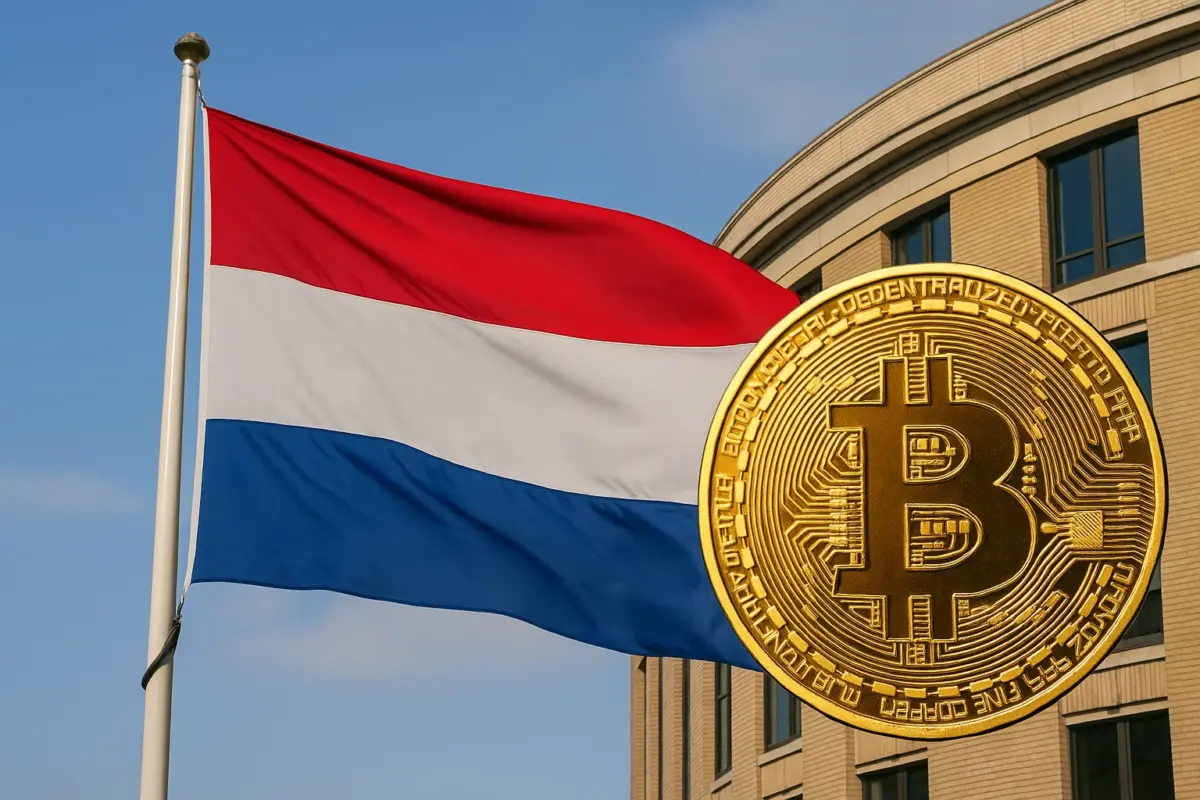
This change in tone was made crystal clear when the Dutch central bank, De Nederlandsche Bank (DNB), imposed a €2.25 million fine on crypto exchange, OKX.
The fine covers the period from July 2023 to August 2024, when OKX operated in the Netherlands without registering under the country’s anti-money laundering (AML) framework.
The penalty aligns with a growing pattern of stricter enforcement across the continent. In recent years, multiple crypto firms have come under fire for operating without proper registration in the Netherlands.
Notably, Kraken and Crypto.com were also fined multi-million-euro amounts for similar breaches. These penalties underline the region’s hard stance on unlicensed operations, especially as the new Markets in Crypto-Assets (MiCA) regulation takes effect.
Regulators are no longer content to wait for companies to catch up. They are now actively going after past compliance lapses.
The DNB’s decision to fine OKX for activities that took place before MiCA was even in force shows that authorities are willing to apply new expectations retroactively.
“Operating without registration will not be tolerated”, the DNB stated. The Netherlands first mandated crypto registration back in 2020 to bring the sector in line with its AML standards.
By targeting past offences even after MiCA’s implementation, Dutch authorities are setting an example that others in the EU may follow.
Global scrutiny and repeated penalties for OKX
OKX’s issues in the Netherlands are far from isolated. The exchange, officially known as Aux Cayes Fintech Co., has been facing regulatory action in several jurisdictions throughout 2025.
In early February, it agreed to a landmark $504 million settlement in the United States after admitting to operating as an unlicensed money transmitter. US authorities found that OKX had facilitated over $1 trillion in transactions for American users between 2018 and early 2024, including $5 billion in suspicious or criminally linked trades.
As part of that settlement, OKX is now required to operate under close regulatory supervision until 2027. It must also employ an independent compliance consultant to monitor its activities.
In Europe, OKX was fined €1.1 million by Malta’s Financial Intelligence Analysis Unit in April for AML breaches that dated back to 2023. Investigators there described some of the compliance failures as “serious and systematic”.
A separate penalty of €304,000 was handed down in January by the Malta Financial Services Authority for unrelated regulatory breaches.
Adding to its regulatory woes, OKX was also named in March reports by Bloomberg suggesting that its Web3 infrastructure may have been used to launder proceeds from a $1.5 billion hack targeting rival exchange Bybit.
Though the company has not been officially charged in that case, the association added to the mounting concerns over its compliance standards.
The situation hasn’t been limited to Europe and the US either. In Asia, the Philippines’ Securities and Exchange Commission issued a warning in August accusing OKX and nine other exchanges of operating without the required authorisation.
Meanwhile, Thailand’s SEC filed a criminal complaint against the exchange and several individuals in April, alleging that they breached the country’s digital asset laws.
The Netherlands sends a message to the industry
The Netherlands has become a focal point in Europe’s broader crackdown on unregistered crypto activity. OKX’s €2.25 million penalty is just the latest in a series of high-profile actions.
In March 2023, the DNB fined Crypto.com €2.85 million for operating in the country for over two years without registration. In 2022, Binance was hit with a similar fine before deciding to exit the Dutch market entirely. Coinbase also faced a penalty in 2023 for failing to meet the same requirements.
Despite these challenges, the Netherlands remains a hotspot for crypto development. Dutch crypto platform Amdax recently announced plans to launch a Bitcoin treasury company on Amsterdam’s Euronext exchange, with $23.3 million raised in early funding.
Additionally, Bitvavo, a local exchange, secured its MiCA licence in June, reinforcing the view that fully compliant firms can still thrive in this new environment.
The Dutch government is also considering more stringent regulations. In October, authorities requested public feedback on proposed laws that would require exchanges to collect and share user data with tax authorities. The direction is clear: more oversight, more transparency, and zero tolerance for ambiguity.
For OKX, this fine may not be its last regulatory hurdle in the Netherlands, but it is one that it is trying to downplay. In a statement, the company referred to the matter as a “legacy registration issue” and claimed the fine had “no impact on customers”.
According to an OKX spokesperson, “the penalty was the lowest ever imposed on a major exchange” by the DNB, citing the firm’s cooperation and corrective actions. Dutch users, the firm said, have since migrated to its fully MiCA-compliant European arm, Okcoin Europe.
An OKX representative noted, “We’re pleased to have resolved this matter”, and added that “OKX did not actively target Dutch customers during the period in question”. They reiterated that the fine “does not apply to, nor concern, our MiCAR-licensed entity”.
Yet the timing of the fine is notable. It covers a period before the MiCA regime was implemented, showing that regulators are willing to reach into the past to apply current standards.
This retroactive approach suggests that other crypto exchanges may also be vulnerable if they previously operated in grey areas or failed to register.
The DNB’s action shows that European regulators are not only enforcing current laws but also reviewing historical compliance.
And as the MiCA framework takes full effect across the continent, exchanges that hope to survive in Europe must ensure they have nothing in their past that could come back to haunt them.
Kraken, recognising the changing environment, closed its acquisition of Dutch firm Coin Meester last September to bolster its regulated presence in the country.
This may reflect a broader trend: international exchanges seeking legitimacy through local partnerships and full regulatory compliance.
For now, OKX holds a MiCA licence and is authorised to operate in the Netherlands. But its global record of fines and investigations suggests that compliance cannot be treated as a one-time event.
Regulators, in Europe and beyond, are making it clear that today’s approval does not erase yesterday’s violations.
The message from the DNB and other regulators is unmistakable: crypto exchanges must follow the rules, not just now, but always.
About Author

About Author