


Tether freezes illicit USDT, repositions for regulated US growth
Tether is eying US relaunch as crypto security breaches and stablecoin oversight intensify in 2025.
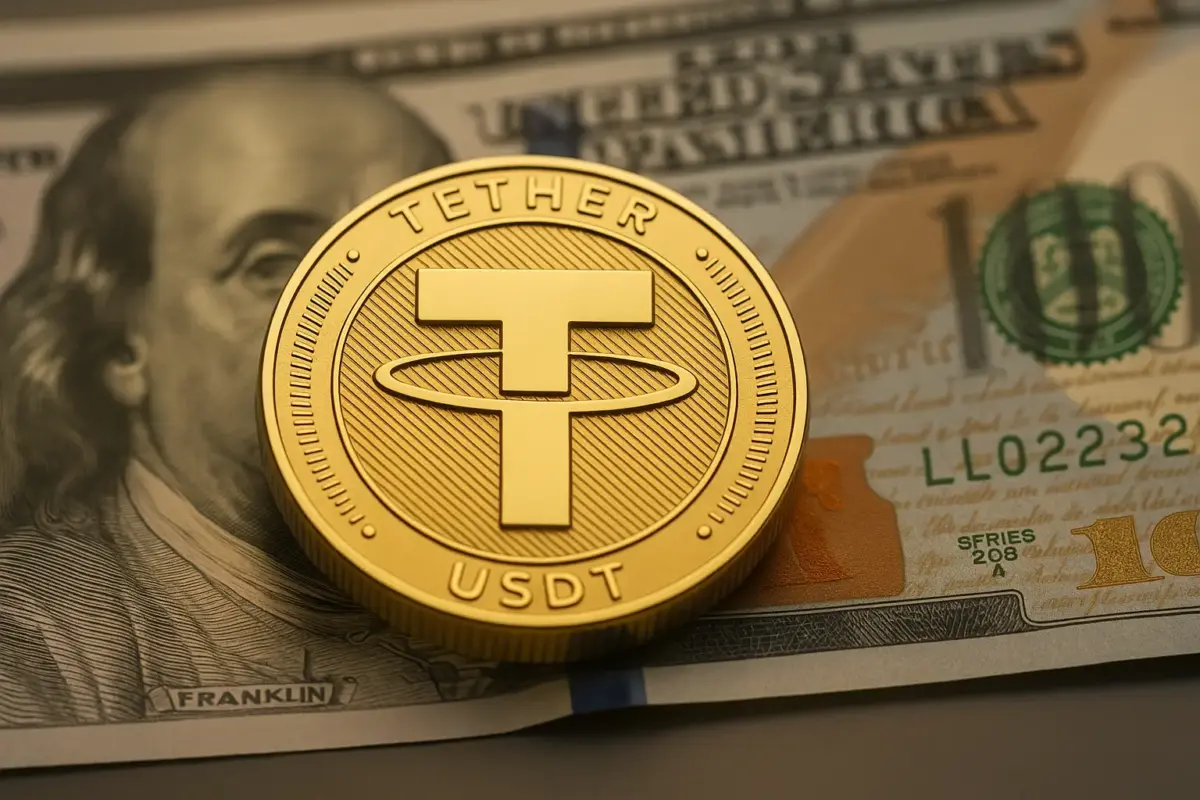
Tether ($USDT), the company behind the world’s largest stablecoin, has frozen $1.6 million worth of USDT linked to a terrorist financing group in Gaza.
The wallets were connected to BuyCash, a service that was flagged by US authorities in a civil forfeiture case. These wallets were part of a wider effort to fund terrorist organisations, according to American officials.
The freeze was carried out by Tether after receiving intelligence from law enforcement agencies. The company said it acted quickly and froze the assets in the secondary market. It also reissued the funds in a way that supports lawful recovery.
This move is part of a larger investigation led by the US Department of Justice, which is looking into nearly $2 million in digital assets used to support designated terrorist groups.
Tether stressed that it continues to work closely with US authorities to track and block illegal activity involving its stablecoin.
“We remain committed to helping law enforcement and regulators ensure the safety of the financial system”, the company has stated in previous communications.
This is not the first time Tether has taken action like this. Over the past year, the company has frozen more than $2.9 billion in USDT connected to criminal activity.
It says it has cooperated with over 275 law enforcement agencies in 59 countries to fight crime in the crypto space.
In one example, Tether helped authorities in Brazil freeze $6.2 million as part of a money laundering case involving the Klever Wallet. More recently, in June, the US DOJ publicly recognised Tether for freezing $225 million tied to an illicit operation.
The company says it has blocked over 5,000 wallets suspected of criminal use. About 2,800 of these were frozen in direct coordination with US agencies.
Other major freezes include $23 million in USDT connected to the Russia-sanctioned crypto exchange Garantex, and $9 million from funds stolen during the Bybit hack.
Tether says its freezing policies follow standards set by OFAC (the US Treasury’s sanctions office) and other global regulatory bodies. It believes public blockchain systems, like the one USDT runs on, make it easier to trace transactions than traditional finance systems, which are often more opaque.
The company says this latest action shows the importance of oversight in the crypto sector. Tether’s ability to freeze tokens quickly has made it a key player in helping authorities tackle crime in the digital asset world.
However, this power also raises questions about regulation and the balance between innovation and security.
Plans to return to US with focus on institutions
Tether is also making plans to re-enter the United States market after being pushed out four years ago due to legal troubles. This time, the company is focusing on working with institutional clients such as banks and trading firms.
In an interview with Bloomberg Television, Tether CEO, Paolo Ardoino, confirmed that the company is developing a strategy specifically for the US. He said Tether is not targeting everyday consumers but rather institutions that need a stablecoin for fast and reliable settlements.
This shift comes after President Donald Trump signed the GENIUS Act into law on July 18. The law provides new rules and oversight for stablecoins – digital tokens like USDT that are tied to the value of traditional currencies like the US dollar.
These rules make it easier for banks and other financial firms to use stablecoins for payments and transactions.
With clearer regulations in place, Tether sees a chance to challenge Circle, the company behind the $USDC token. USDC currently leads the stablecoin market in the US, and Circle’s recent IPO helped its stock price rise over 500%.
But Tether is still the global leader, with $162 billion worth of USDT in circulation, compared to Circle’s $64.7 billion.
Tether’s return is not without challenges. In 2021, the company paid nearly $60 million in settlements to resolve claims it had misled the public about its dollar reserves.
These legal issues led to Tether being banned from operating in New York and refocusing its operations outside the US.
Even now, some critics continue to question Tether’s transparency. The company has not yet completed a full audit of its reserves, despite years of promises.
Ardoino said they are in talks with auditing firms but did not provide a timeline for completing the process.
“We are in advanced discussions with several auditing partners to ensure an additional level of trust for users”, he said.
Unlike Circle, which went public to grow its business, Tether plans to remain a private company. “In general, we are not interested in becoming a public company”, Ardoino told Bloomberg.
Instead, the company wants to grow by offering services that meet the needs of banks and trading institutions.
Tether also continues to expand in developing markets, where it sees advantages over its competitors. Ardoino was one of several crypto executives who attended the White House ceremony when President Trump signed the GENIUS Act. His presence shows Tether’s intention to be part of the regulated financial system in the US.
Tether says it wants to play a key role in helping mainstream financial institutions use stablecoins for secure and fast transactions. With $162 billion worth of USDT already in circulation, the company is entering the US market from a position of strength.
But its success will depend on how well it can meet regulatory expectations and win the trust of institutions.
Security risks in crypto still growing fast
While Tether deals with law enforcement and plans a return to the US, the wider crypto industry continues to face major security problems.
According to a new report by blockchain security firm, Hacken, over $3.1 billion has already been lost to hacks and scams in the first half of 2025. That’s more than the total losses in all of 2024, which reached $2.85 billion.
One of the biggest sources of losses is access-control failures. These are security flaws that allow attackers to take control of wallets or protocols. In fact, such issues were responsible for about 59% of the total losses so far this year.
Smart-contract bugs were another major problem, leading to losses of $263 million. These bugs are often found in the code that runs decentralised finance (DeFi) applications. Even small errors can allow attackers to steal large sums of money.
In the second quarter of 2025, the most serious attack was on the Cetus protocol. In just 15 minutes, hackers stole $223 million by exploiting a flaw in how the system calculated liquidity.
Hacken believes most of this loss could have been avoided if real-time monitoring and auto-pause features had been in place.
Hackers are also shifting their focus. Instead of attacking the technology itself, they are increasingly targeting people and processes. This includes phishing attacks, leaked private keys, and tricks like blind signing, where users unknowingly approve harmful transactions.
The rise of artificial intelligence (AI) in crypto is creating new risks as well. Hacken reported a 1,025% increase in AI-related attacks compared to 2023.
Nearly all of these were tied to weak or insecure APIs. Five new major vulnerabilities related to AI have been added to global risk lists this year.
At the same time, more than 34% of Web3 projects are now using AI in live environments, making them prime targets.
Yet the usual cybersecurity standards, such as those from ISO or NIST, are not well-equipped to deal with AI-specific threats. These include issues like model hallucination, prompt injection, and poisoned training data.
As crypto technology evolves, so do the threats. And while tools like public blockchains offer some transparency, they are not enough on their own. The industry still faces major risks, especially when it comes to operational security and human error.
About Author

About Author