


UK Crackdown Reveals Billion-Dollar Crypto Laundering Network as Fraud Investigations Expand
UK authorities have exposed a billion-dollar crypto laundering network. This comes alongside the launch of a major fraud probe into Basis Markets as enforcement efforts intensify.
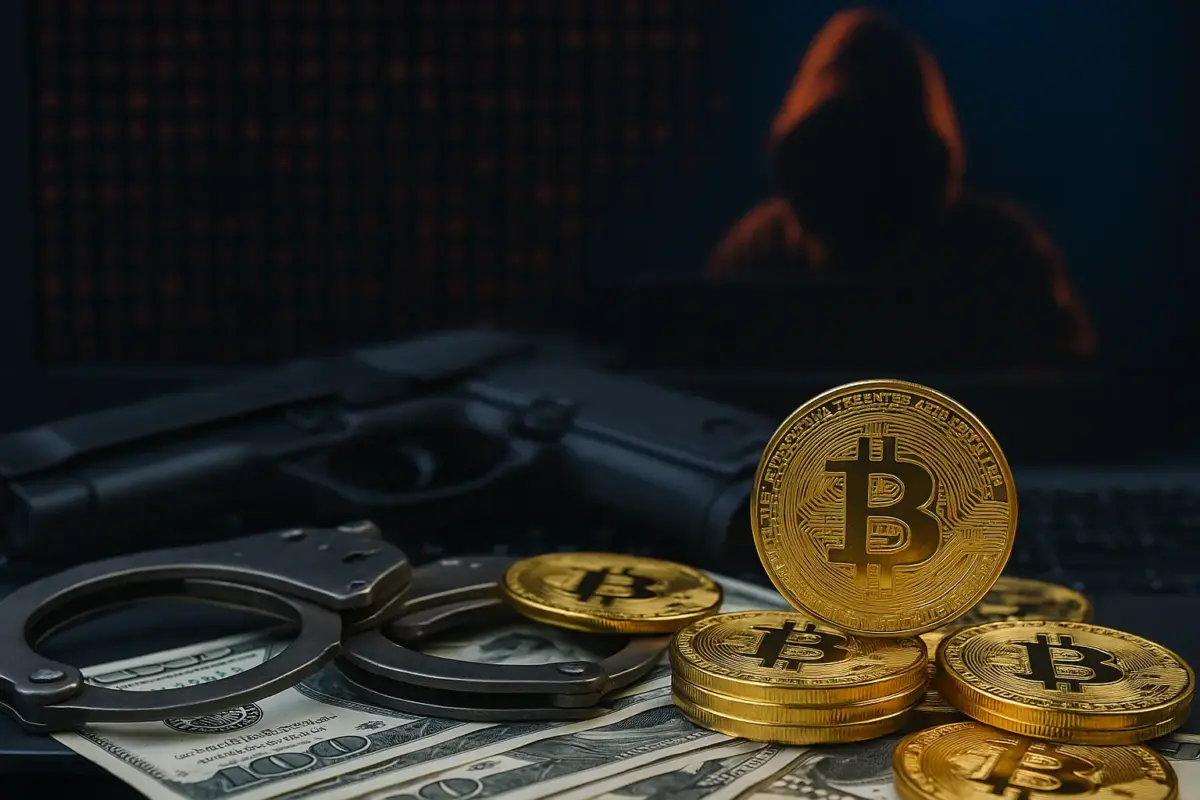
The United Kingdom is escalating its fight against crypto-enabled financial crime, unveiling a sweeping crackdown on international money laundering networks while launching one of its most significant digital-asset fraud probes to date.
In two major developments, the National Crime Agency (NCA) has exposed a billion-dollar “cash-to-crypto” operation tied to Russian sanctions evasion, and the Serious Fraud Office (SFO) has made its first major arrests connected to the collapse of Basis Markets, a 2021-era crypto project that vanished with millions in investor funds.
Together, the actions highlight a rising urgency across UK law-enforcement agencies to confront the accelerating scale of crypto misuse, from illicit finance to deceptive fundraising schemes that proliferated during the digital-asset boom.
Operation Destabilise
UK authorities revealed that the National Crime Agency has dismantled a massive international network that moved criminal profits into digital assets to hide their origins and evade global sanctions.
The operation, known as “Operation Destabilise,” spans multiple countries, including the United States, France, and Spain. To date, enforcement teams have arrested 128 suspects and seized more than £25 million ($33 million) in cash and cryptocurrency within Britain alone.
Officials say the network enabled sanctioned Russian entities to bypass restrictions and finance activities tied to the war in Ukraine. According to the NCA’s Deputy Director for Economic Crime, Sal Melki, the organisations targeted through the crackdown operated across every layer of the global laundering ecosystem.
“The networks disrupted through Destabilise operate at all levels of international money laundering, from collecting the street cash from drug deals, through to purchasing banks and enabling global sanctions breaches,” he said.
Investigators found that the groups specialized in collecting “dirty” cash generated from narcotics, weapons, and other criminal markets, before converting it into cryptocurrency designed to appear “clean” on blockchain ledgers. These digital assets were then used as tools for sanction evasion and transnational organized crime.
Melki described the scale of the domestic network, noting, “These networks have been identified as operating in at least 28 towns and cities across the UK, collecting criminal cash and converting it to crypto.”
The probe has international dimensions. Last December, the NCA and the U.S. Treasury uncovered two laundering rings known as TGR and Smart, both of which allegedly used “cash-for-crypto” swaps to help Russian clients skirt restrictions. UK Security Minister, Dan Jarvis, said the operation shed new light on illicit state-linked tactics.
“This complex operation has exposed the corrupt tactics Russia used to avoid sanctions and fund its illegal war in Ukraine,” he stated. Jarvis added, “We are working tirelessly to detect, disrupt, and prosecute anyone engaging in activity for a hostile foreign state. It will never be tolerated on our streets.”
Operation Destabilise comes amid a global surge in crypto-enabled scams and cross-border financial crimes. In the United States, officials recently moved to curb Chinese organized crime groups and crypto-investment fraud schemes. Meanwhile, researchers have linked a sprawling $19 billion crypto scam to senior Cambodian officials.
A University of Texas analysis earlier this year identified more than 4,000 crypto addresses associated with the theft of over $75 billion worldwide between 2020 and early 2024.
The United Nations also issued new warnings about the rapid expansion of crypto-crime networks. A report by the UN Office on Drugs and Crime (UNODC) said syndicates are no longer relying solely on existing platforms, they are now building their own.
SFO Launches Major Probe Into Basis Markets as First Crypto Arrests Are Made
As the NCA confronts international laundering, the UK Serious Fraud Office has moved aggressively into domestic crypto enforcement with its first significant investigation into a digital-asset scheme.
The agency arrested two men in coordinated raids in Herne Hill, south London, and Bradford, West Yorkshire, in connection with the collapse of Basis Markets, a decentralized hedge-fund project that raised more than $28 million before disappearing in 2022.
The arrests involve one suspect in his thirties and another in his forties. Both were detained on suspicion of fraud and money laundering, though no charges have yet been filed. The SFO described the case as a “suspected fraud,” emphasizing that the investigation remains active and ongoing.
SFO Director, Nick Ephgrave, said the operation reflects the agency’s expanded capabilities in the digital-asset space. “With our expanding cryptocurrency capability and growing expertise in this area, we are determined to pursue anyone who would seek to use cryptocurrency to defraud investors,” he said.
Basis Markets emerged in late 2021 during the peak of crypto enthusiasm, presenting itself as a decentralized hedge fund offering “delta-neutral” returns through institutional-grade arbitrage strategies. The team behind the project promoted itself as highly experienced, with claims of more than 80 combined years in finance, software development, and crypto infrastructure.
Independent investigators quickly noticed warning signs. Crypto Sleuth Investigations, an independent research group, discovered discrepancies in team identities and questioned several exaggerated claims about professional backgrounds.
The sleuths identified multiple red flags, including projections that a single NFT valued at $1,880 could generate as much as $18,000 in monthly returns by year three, figures the team later revised to a cumulative $30,000, which the researchers still viewed as unrealistic.
Basis Markets conducted two major fundraising rounds, an NFT membership sale in November 2021 that raised 32,000 SOL (worth roughly $7 million at the time), and a December token sale of BASIS tokens that brought in an additional $20.7 million in USDC. Investors were promised access to profit-sharing, performance fees, and governance rights.
However, investigators later found that the funds were allegedly diverted into founders’ personal wallets rather than a secure project treasury. No functioning product was ever released. In mid-2022, the team abruptly shut down the project, citing proposed U.S. regulatory changes as the reason for halting operations.
The SFO is now examining whether the regulatory explanation was legitimate or used as a pretext to collapse the project. The agency is also reviewing the flow of investor capital from the NFT and token sales to determine whether any funds were improperly handled.
As the probe expanded, additional details emerged about one of the founders. Adam Cobb-Webb, known in trading circles as “TraderSkew,” was sanctioned by the U.S. Commodity Futures Trading Commission (CFTC) in August 2023 for spoofing in crude oil futures contracts. The CFTC fined him $150,000 and barred him from trading on regulated exchanges for one year.
Authorities say further arrests have not been ruled out. The collapse of Basis Markets has become an example of a broader structural issue: during the 2021 crypto boom, large sums flowed to teams that promised sophisticated trading strategies but offered minimal transparency or accountability.
The SFO’s investigation, supported by £8 million in new government funding for digital-asset enforcement, could set a precedent for how UK regulators approach high-value token sales and decentralized finance fundraising in the future.
Introducing Cyber Security and Resilience Bill Amid Growing Digital Threats
As law enforcement ramps up efforts against crypto fraud and money laundering, the UK government is also moving to strengthen the country’s digital-security framework. Officials have formally introduced the Cyber Security and Resilience (CSR) bill to Parliament, seeking to expand existing Network and Information Systems (NIS) regulations to cover a broader range of technology and managed service providers.
The legislation aims to tighten requirements around data protection, cyber-incident reporting, and risk management across essential digital infrastructure. IT management firms, cybersecurity service providers, and technical support companies would face the same obligations currently applied to operators under the NIS regime. Noncompliant organizations could face significant turnover-based penalties.
The bill also grants the technology secretary new powers to instruct regulators and organizations to take preventive actions when facing risks linked to national security. These measures are designed to counter threats attributed to state actors, including China, Iran, and North Korea.
Independent research commissioned by the Department for Science, Innovation and Technology (DSIT) estimates that a serious cyber attack in the UK costs an average of £190,000 per incident, with annual losses exceeding £14.7 billion. Officials say the updated framework is intended to help reduce both economic and security vulnerabilities.
The bill also includes safeguards to address emerging risks tied to artificial intelligence, specifically the potential misuse of models to create child sexual abuse material. The legislation would allow trusted organizations, including AI firms and child-protection groups, to test AI systems for vulnerabilities before harmful content can be generated.
Science, Innovation and Technology Secretary, Liz Kendall, said the bill reinforces the nation’s defensive posture. She emphasized that the legislation aims to protect UK citizens, businesses, and public services from increasingly complex cyber threats.
As financial crime evolves alongside digital infrastructure, the UK’s coordinated actions, from Operation Destabilise to new cybersecurity rules, signal a broader effort to confront the risks emerging from both global crypto markets and vulnerable networks at home.
About Author

About Author