


LiquidChain (LIQUID) Launch Date
LiquidChain (LIQUID) unifies the Bitcoin (BTC), Solana (SOL), and Ethereum (ETH) blockchains via a native Layer 3 framework. Its interoperability solutions unlock institutional-grade capital for each ecosystem in a secure and non-custodial environment.
The LIQUID presale offers early access to the Web 3.0 project at a reduced token price. Our research suggests that the LiquidChain launch date is scheduled for Q2 2026, which falls within the roadmap’s second phase.
Read on to discover key LIQUID dates, including its presale conclusion, token claim window, initial exchange listings, and full network functionality.
When Does LiquidChain Launch on Exchanges?
The founders list LiquidChain on decentralized exchanges (DEX) after its presale. Although the whitepaper omits specific timelines, most new projects initiate the token generation event (TGE) within a week of the presale’s completion. This window gives enough time for participants to claim their LIQUID tokens and for the team to deposit liquidity into DEX pools.
📌 In terms of the exact LiquidChain launch date, we anticipate Q2 2026.
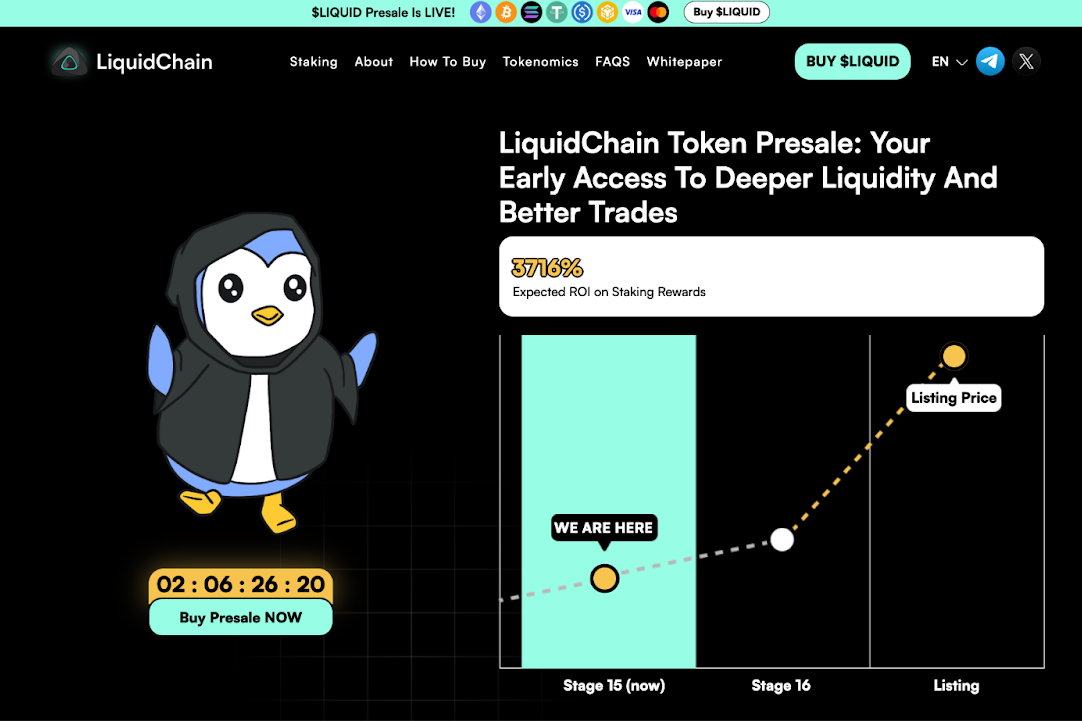
In the same roadmap phase, the startup launches its unified liquidity pools for BTC, SOL, and ETH. Besides decentralized application (dApp) partnerships, it releases multi-chain swaps and settlements in the public domain. These product launches may drive the LIQUID price at the TGE, since new investors gain exposure to the underlying technology.
While presale buyers must wait for official team announcements, we predict that LiquidChain will launch on the Uniswap exchange. The native token uses the ERC-20 standard, so as the largest Ethereum-based DEX, Uniswap remains the most liquid platform for the TGE.
The whitepaper confirms a LiquidChain launch date of Q3 2026 for centralized exchange (CEX) listings. LIQUID holders hope for major exchanges like Binance and Kraken, yet Tier 2 and 3 platforms are more probable until the project matures.
When is the LiquidChain Mainnet Launch?
The LiquidChain mainnet launches in the third phase of its roadmap. As unified liquidity pools go live in the previous phase, the mainnet enables BTC, SOL, and EH stakeholders to access cross-ecosystem features. For example, Bitcoin holders can trade Solana meme coins and interact with Ethereum dApps, such as Uniswap and Compound.
As confirmed by the project, LIQUID “debuts on decentralized exchanges prior to the mainnet launch”. Therefore, we forecast Q3 2026 for the Layer 3 release because it follows the anticipated TGE timeframe.
Note that alongside the mainnet, LiquidChain introduces cross-chain derivatives and lending modules. Token holders trade leveraged products in a non-custodial environment and borrow capital from their preferred ecosystem.
LiquidChain Presale History So Far
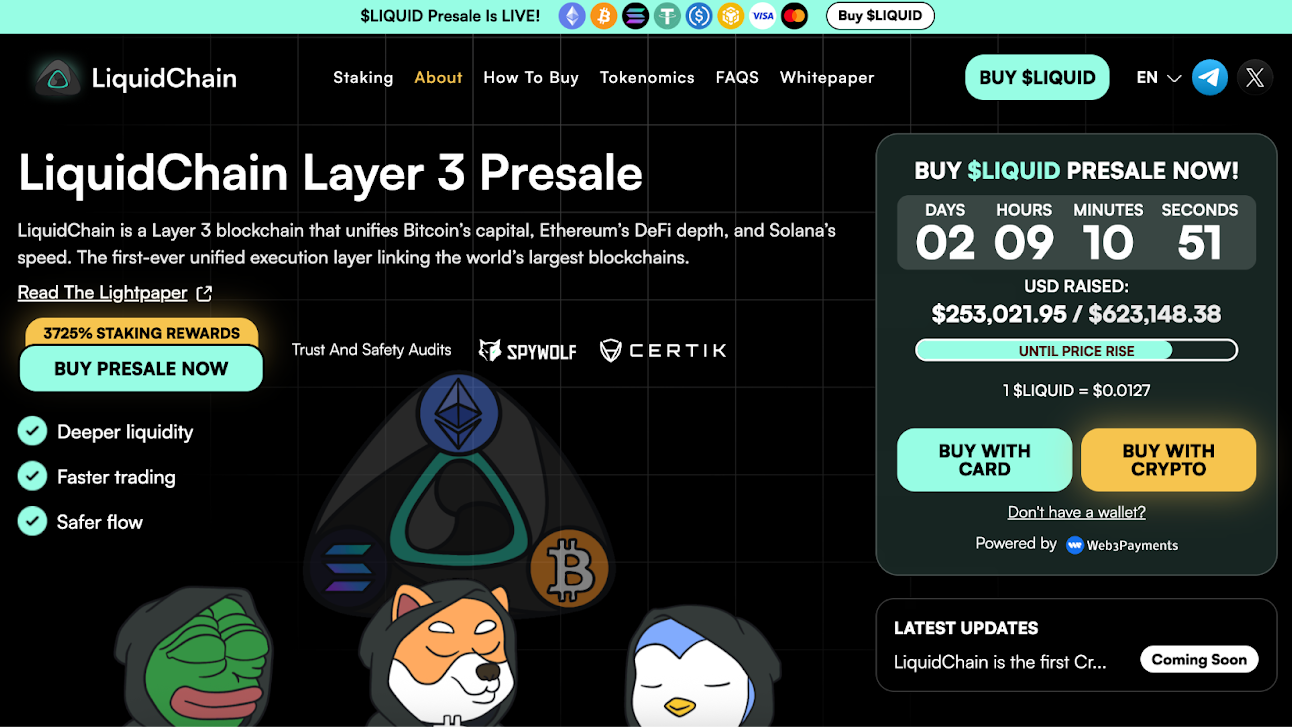
LiquidChain launched its presale in November 2025 and raised approximately $253,000 in the first month. The event enables the project to raise startup capital, which it allocates to Layer 3 development, marketing, and other roadmap objectives.
According to Reuters, LiquidChain sold its native tokens for $0.0122 in the initial presale stage. The current price is slightly higher at $0.0127, and further increases happen as the event progresses. This tiered structure is common with most crypto presales, as it encourages investors to participate early.
As an unregulated digital asset project, the LiquidChain presale accepts cryptocurrencies only. Investors allocate BTC, ETH, SOL, Tether (USDT), and other major coins, and receive LIQUID when the presale ends.
Throughout the campaign, participants can stake their purchased tokens. This presale perk allows investors to generate passive rewards, which the project distributes in LIQUID. A dynamic mechanism adjusts the staking APY to reflect demand and supply, so early backers get the higher rates.
| 📅 Launch Date | November 2025 |
| 📅 Presale End Date | Q2 2026 (predicted) |
| 💰 Raised to Date | Approx. $253,000 |
| 💸 Starting Price | $0.0122 |
| 💲 Current Price | $0.0135 |
| 💲 End Price | TBA |
| 📌 Number of Stages | Not stated |
| 💳 Accepted Payment Methods | BTC, ETH, SOL, USDT, USDC, BNB |
| 🪙 Token Standard | ERC-20 |
| 📌 Launch Exchange | Uniswap (predicted) |
What is LiquidChain?
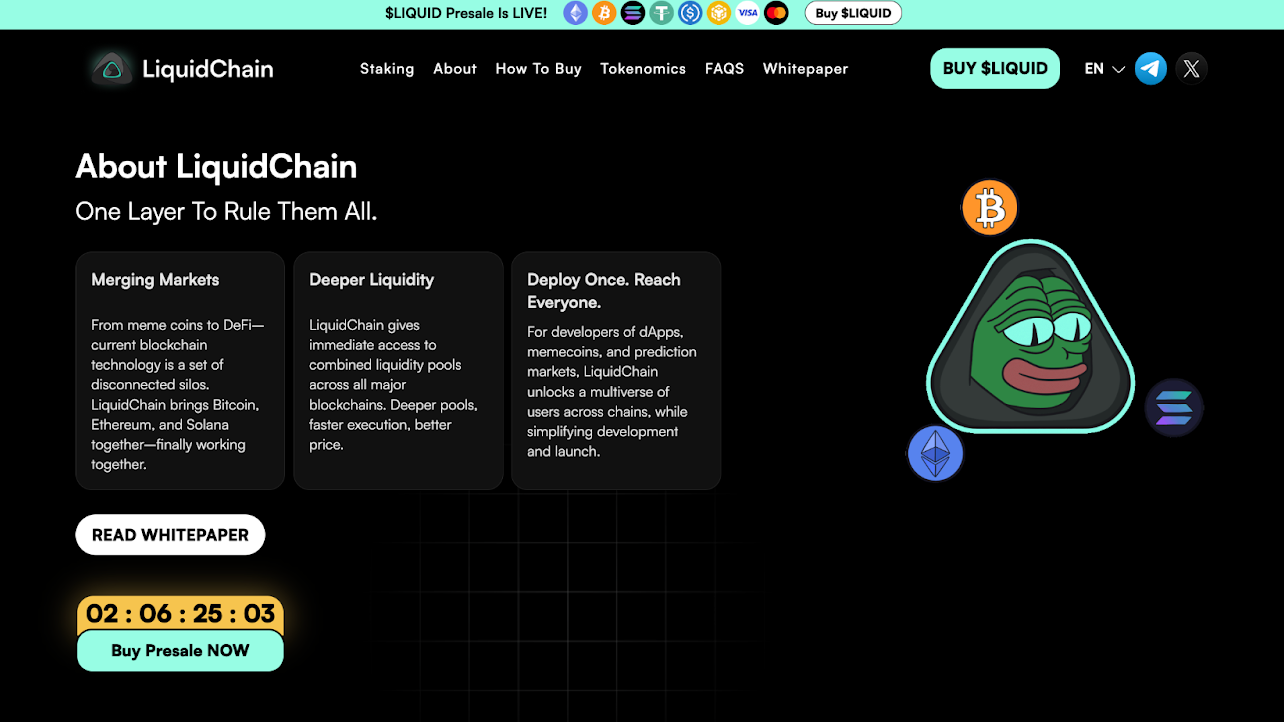
LiquidChain is a new Web 3.0 startup that launches an innovative Layer 3 network to unify Bitcoin, Solana, and Ethereum. These blockchains account for the vast majority of transaction activity in the broader cryptocurrency sector.
Yet, as each decentralized system uses independent technology, neither blockchain can communicate with nor share data with the other. These interoperability restrictions prevent investors from accessing competing ecosystems without relying on wrapped tokens or centralized bridges.
One pain point for BTC holders is that, unlike Ethereum and Solana, the Bitcoin blockchain lacks smart contract support. As they cannot access decentralized finance (DeFi) protocols, the BTC community misses out on yields, lending facilities, and real-world asset (RWA) tokenization.
LiquidChain’s solution is a high-performance virtual machine that achieves cross-chain composability. In simple terms, ecosystem users from Bitcoin, Solana, or Ethereum can access non-native assets without relinquishing control of their holdings. LIQUID tokens power the Layer 3 network, and use cases include gas fee payments, dApp access, liquidity provision incentives, and staking rewards.
Why People are Excited About LiquidChain: Use Cases & Benefits
Early investors rate LiquidChain as one of the best crypto presales for long-term price appreciation. Here are the key reasons why an increasing number of analysts are bullish on the LIQUID token.
Real Solutions for Existing Layer 1 Blockchains
While LiquidChain’s mainnet is set to launch in 2026, technical documents reveal real solutions to the sector’s interoperability limitations. Interoperability solves the “silo” issue, where independent blockchains use unique infrastructures, which prevents them from engaging with other ecosystems. A simple example is that ETH holders cannot swap their coins for BTC, and vice versa.
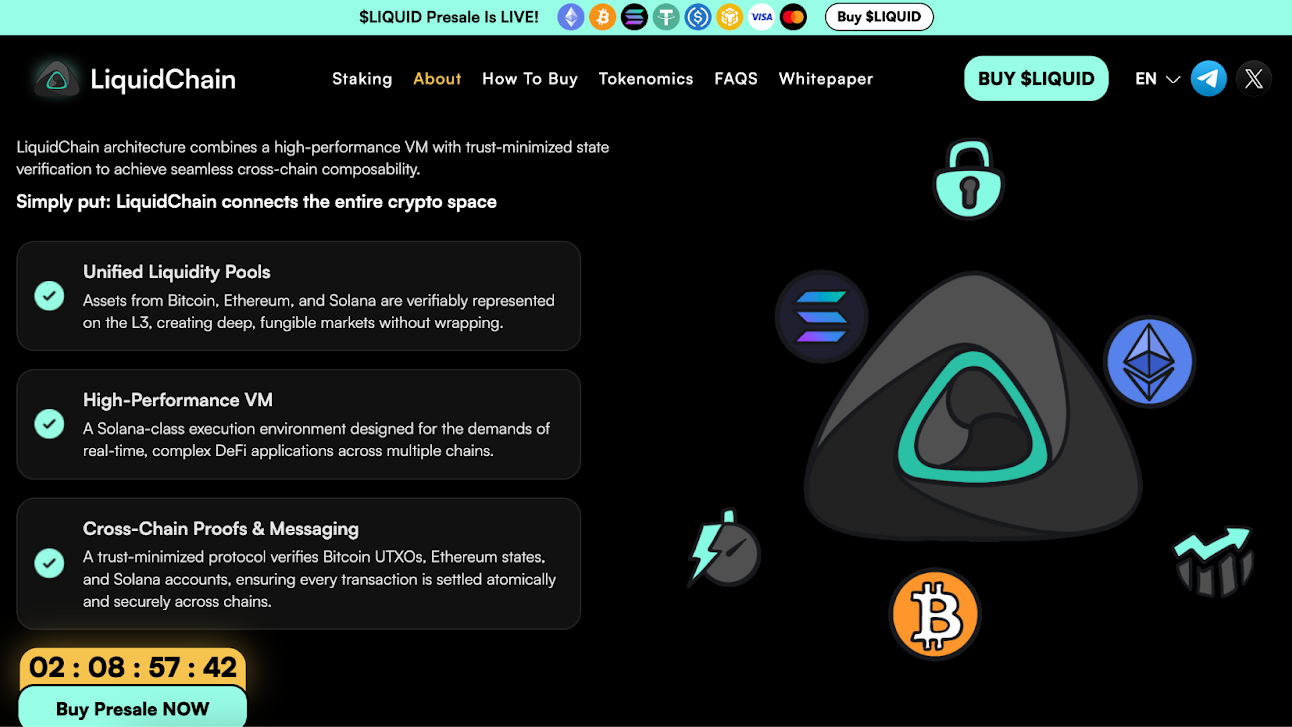
By developing a decentralized Layer 3 protocol, LiquidChain connects the Bitcoin, Ethereum, and Solana blockchains without stakeholders swapping assets. Unified liquidity pools unlock unprecedented utility for each ecosystem without impacting custodianship. BTC investors access Ethereum’s extensive DeFI markets and trade Solana-based meme coins.
As the roadmap progresses, LiquidChain partners with other Layer 1 and 2 networks to magnify global liquidity. It launches proprietary applications that support cross-chain derivatives and decentralized lending agreements. Smart contracts manage all functions to ensure safety and transparency.
Adoption Drives LIQUID Demand
LiquidChain uses a similar revenue model to existing blockchains. Platform users pay network fees in LIQUID, which covers wallet transfers and smart contract execution. The Layer 3 framework adjusts transaction fees dynamically to maximize network efficiency.
A direct relationship exists between adoption and token demand, as each dApp movement triggers a new transaction request. As those requests rise, more people purchase LIQUID from public markets, which fuels price increases.
In addition to gas payments, the LIQUID token incentivizes holders to provide ecosystem liquidity. When users deposit cryptocurrencies into decentralized pools, they earn LIQUID rewards.
The staking protocol provides an alternative method for earning passive income. The process secures the network and stabilizes the circulating supply, and the project distributes rewards gradually to ensure sustainability.
Fair Presale Terms
We analyzed the largest Layer 1 and 2 projects by market capitalization and found that most prioritized private-round investors in their presale events. This unfair fundraising structure provides institutional buyers with the lowest valuation, while everyone else enters the market at a much higher cost basis.
LiquidChain’s presale does not offer early access to private investors. Anyone can join to secure a discounted rate, although the specific price depends on the presale stage. The event also eliminates minimum investment requirements, and with no know-your-customer (KYC) steps, participants invest without country restrictions.
High Growth Potential
Because LiquidChain remains an early-stage concept, presale investors gain exposure to the Layer 3 technology from the ground up. Similar to traditional company startups, investors allocate funds before the project reaches its full potential.
The presale market capitalization reflects the investment risks, since we project a fully diluted valuation (FDV) of just $156 million at the TGE. If LiquidChain achieves widespread adoption across its three target blockchains, it could grow to a multi-billion-dollar asset.
Audited Smart Contracts
LiquidChain appointed two blockchain security companies to audit its smart contract: CertiK and SpyWolf. CertiK, which security experts rate as the most reputable auditing firm, confirmed that no contract vulnerabilities exist. SpyWolf provides a more comprehensive report, verifying that the founders cannot blacklist wallet addresses, pause trading, or mint new tokens.
These crucial findings help ensure a safe trading experience after the TGE and protect LIQUID holders against post-listing scams.
Here are links to each LIQUID contract audit:
Deflationary Tokenomics
We examined the LIQUID token supply to evaluate scarcity and potential inflationary risks. As confirmed by CertiK and SpyWolf, the renounced smart contract limits the LIQUID supply to 11,800,000,100 tokens.
The capped supply creates a deflationary mechanism over time, as once the team releases the full amount, no new tokens enter the public float. As long as ecosystem adoption and token demand rise, the fixed supply fuels LIQUID price increases. Bitcoin uses a similar framework, which resembles a conventional store of value.
The tokenomics also present sustainable allocations. The team reserves LIQUID tokens for the following operating objectives:
- Development (35%): To build and secure the Layer 3 protocol
- LiquidLabs (32.5%): Marketing and brand awareness
- AquaVault (15%) Business development and community activations
- Rewards (10%): Staking and giveaway events
- Listings (7.5%): Platform liquidity for DEX and CEX partnerships
LiquidChain Roadmap: What to Expect After Launch
The roadmap provides no specific LiquidChain launch dates, although most management goals are likely to happen in 2026. Delivering roadmap targets in a reasonable timeframe is essential to LIQUID’s price trajectory.
Here are the most important development and business objectives to monitor.
Phase 1
In the first phase, the project completed its smart contract audits, launched the whitepaper, and activated its LIQUID presale event. Incoming releases include the API and SDK beta, and the Layer 3 testnet results. Participants expect developer updates no later than Q1 2026.
Phase 2
LiquidChain concludes its presale event and lets investors claim their tokens. The claim window requires users to relink their non-custodial wallet (the same one used to participate), and the system transfers LIQUID to the connected ERC-20 address.
After the claim process, the founders deposit LIQUID tokens into the Uniswap exchange, alongside a stablecoin like USDT. Trading markets open, and non-presale investors can trade LIQUID freely.
Regarding infrastructure releases, LiquidChain launches multi-chain swaps and unified liquidity pools. One use case is that BTC holders can swap their assets for Solana tokens such as Bonk (BONK) or dogwifhat (WIF). The operations department also forms partnerships with dApp builders to prepare for the mainnet launch.
Phase 3
The Layer 3 mainnet arrives in the third roadmap phase. At this stage, LiquidChain provides full interoperability solutions for Bitcoin, Solana, and Ethereum. Early adopters purchase LIQUID to access ecosystem features, which helps grow token demand organically.
Additional products launch shortly after the mainnet system, including cross-chain tools like lending and derivative trading. To accelerate platform growth, the project introduces grants. Skilled dApp developers are granted digital assets to build on the Layer 3 and increase network use cases.
Phase 4
The long-term objective is to expand cross-chain functionality. LiquidChain plans to integrate with additional Layer 1 blockchains, as well as Layer 2 rollups. These ambitious goals create a super-ecosystem that connects the most active blockchain communities.
LiquidChain Price Forecast: Will it Pump After Launch?
The LiquidChain whitepaper omits the TGE price, so token predictions have limited validity until the team releases more information. Based on existing price hikes, we forecast a potential exchange listing price of $0.01323 per LIQUID. This token price represents a $156 million FDV.
As the project releases a small percentage of tokens at the TGE, analysts expect a much lower valuation at launch. By the end of 2026, LiquidChain is expected to complete roadmap phases two and three, which include the mainnet and other ecosystem products.
As such, the LIQUID price may reach $0.07981 in Q4 2026, and potentially $0.11702 the following year. Our 2027 price target requires a 6.2x upside from the current presale price.
Long-term growth relies on dApp development, adoption growth, and transaction fee revenue. If the project achieves these goals, LIQUID may reach $0.25109 by the end of the decade. With all tokens in circulation, this prediction implies a market capitalization of nearly $3 billion.
How to Buy LiquidChain in 5 Steps
The LiquidChain presale offers a discounted price, and those who join in the earlier rounds get the lowest cost basis. Connect a wallet to the LIQUID website, fill out the presale form, and transfer cryptocurrencies to the project’s fundraising wallet.
The Best Wallet app provides a simplified way to buy and store LIQUID tokens. This non-custodial wallet allows you to purchase major assets using traditional payment methods and swap those coins for LIQUID.
Follow these simple steps to participate in the presale via Best Wallet:
- Step 1: Download Best Wallet. Go to the Best Wallet website and download the app. The iOS and Android app installs encrypted private keys onto the device, which ensures only the smartphone holder can approve transactions.
- Step 2: Secure the Wallet. To protect the wallet against remote hacking risks, set up two-factor authentication and biometrics. Then use the cloud feature to securely store backup credentials on Google Drive or iCloud. This backup feature is considerably more user-friendly than managing seed phrases.
- Step 3: Deposit or Buy Crypto. Transfer BTC, ETH, SOL, USDT, USDC, or BNB to your unique blockchain address, which Best Wallet provides for each supported asset. To purchase assets with a debit/credit card or e-wallet, tap “Trade” and “Buy”. Complete the on-ramp form to instantly buy cryptocurrencies.
- Step 4: Set up a Presale Purchase. Tap the “Home” and “Upcoming” buttons. Select “LiquidChain” and choose the payment coin. Once you input the purchase amount, the presale form displays the equivalent number of LIQUID tokens.
- Step 5: Buy and Stake LiquidChain. Best Wallet allows users to instantly stake their presale tokens. When investors select this purchase option, they receive daily LIQUID rewards throughout the fundraising event. Confirm whether to stake and complete the presale investment.
Final Thoughts
As the LiquidChain presale remains in the early stages, the team releases specific timeline dates as the event progresses. Our analysis shows that Q2 2026 is a potential LiquidChain launch date, which includes the TGE and unified liquidity pools.
In the following quarter, LiquidChain likely releases its mainnet Layer 3 technology, with full functionality arriving by the end of the year. Follow the startup on X and Telegram for new release announcements, and ensure independent research before you invest.
FAQs About LiquidChain Launch Date
When will LiquidChain be listed on exchanges?
We predict a Q2 2026 LiquidChain exchange listing date, which follows the presale’s conclusion and token claim window. Wait for the team’s official announcement for exact launch timelines.
Is LiquidChain legit?
While LiquidChain raises capital before its mainnet release date, technical documents highlight legitimate Layer 3 objectives. CertiK and SpyWolf audits legitimize the LIQUID smart contract, as the blockchain security firms verify that no vulnerabilities exist.
Which exchanges will LiquidChain launch on?
As an Ethereum-based token, the project will likely list LIQUID on Uniswap. The roadmap includes CEX partnerships in Q3 2026, which may align with the Layer 3 mainnet release.
Should I buy LiquidChain before the presale ends?
As the TGE listing price exceeds the presale rate, investors receive a discounted cost basis when they join the LiquidChain presale. However, despite strong fundamentals and high-growth potential, LIQUID tokens represent a high-risk investment, so do your own research before contributing funds.
References
- LiquidChain whitepaper (PDF)
- An Introduction to Layer 3 in Blockchain (Chainalysis)
- What Is Blockchain Interoperability? (Chainlink)
- What is wrapped crypto? (Coinbase)
- What is Decentralized Finance? (Corporate Finance Institute)
About Author

About Author