


$875M in Longs Wiped Out as Bitcoin Slips to September 2024 Lows
Bitcoin fell to $58,189 as $875M in long liquidations, $691M in ETF outflows and a $10.6B options expiry converge in a structural — not cyclical — breakdown.

Bitcoin was trading at $59,100 on Friday – down 6.4% over the past week and 53% below the $126,080 record set in October, pinned to an intraday range of $58,189 to $60,724 and touching its lowest level since September 2024 as the asset briefly breached its 200-week moving average – caught in a transmission chain that originated not in crypto-native catalysts but in three simultaneously active structural forces: a $691 million single-day outflow from U.S. spot Bitcoin ETFs on Thursday, the largest single-day redemption since May 27 per Farside Investors data, coinciding with $10.6 billion in Bitcoin options expiring Friday on Deribit in the year’s largest quarterly settlement, a derivatives event in which approximately 80% of all open contracts are on track to expire worthless against a max pain level of $72,000 – a level trading Bitcoin currently sits more than $12,000 below – while over $1.1 billion in leveraged crypto positions, $875 million of which were longs, were liquidated in the preceding 24 hours per CoinGlass data, with the broader digital asset complex confirming no rotation dynamic is operating as the selloff extends across the category, and macro conditions have deteriorated further following new Federal Reserve Chair Kevin Warsh‘s hawkish debut, with the Iran conflict identified by Galaxy Digital CEO Mike Novogratz as the direct mechanism suppressing rate cut probability through elevated oil prices, while prediction market Myriad now assigns a 77% probability to Bitcoin reaching $55,000, up from 72% at the start of the week – the governing question is whether the $60,000 floor survives Friday’s expiry on a confirmed daily close, whether U.S. spot ETF annual holdings growth can reverse from what CryptoQuant head of research Julio Moreno characterized as “basically zero,” and whether the macro rate path shifts sufficiently to re-engage institutional demand – because until all three of those conditions are confirmed, this is not cyclical sentiment noise, it is mechanical deterioration across every data layer simultaneously.
How a $691 Million ETF Redemption Wave Mechanically Transmits From Fund-Level Distribution Through the Spot Bid Into Bitcoin’s Price Structure – and Why the Annual Holdings Trend Confirms This Is Structural, Not Episodic
The first link in the transmission chain is the ETF redemption mechanics itself. When institutional holders redeem units in U.S. spot Bitcoin ETFs, authorized participants return shares to the fund and receive the underlying Bitcoin, which is then sold into the spot market to satisfy the redemption – meaning every dollar of ETF outflow produces a corresponding unit of spot Bitcoin supply that must be absorbed by the market at whatever the prevailing bid happens to be. On Thursday, that process generated $691 million in net selling pressure concentrated across the largest products in the complex: Fidelity‘s FBTC shed approximately $274 million, BlackRock‘s IBIT followed with approximately $266 million, ARK 21Shares‘ ARKB contributed roughly $82 million, and Invesco‘s BTCO added approximately $53 million, with smaller outflows hitting VanEck‘s HODL, Bitwise‘s BITB, Franklin‘s EZBC, and Valkyrie‘s BRRR – a distribution pattern that is notably broad rather than concentrated in one product, indicating this is not idiosyncratic redemption activity from a single institutional holder but a coordinated de-risking movement across the fund complex simultaneously.
The second link is the duration of the outflow trend, which disqualifies any single-session interpretation. The Thursday redemption extended a broader pattern in which cumulative outflows over just four trading days reached approximately $1.62 billion, with IBIT and FBTC repeatedly appearing at the top of the redemption tables, and monthly net outflows for the period climbing to roughly $3.6 billion, pushing year-to-date net flows to approximately negative $4.6 billion according to SoSoValue data – a figure that represents a marked structural reversal from the strong inflow regime that characterized the first quarter. Prior CoinNews coverage of the record ETF outflow structure and fund-level distribution mechanics established that the concentration of redemptions in IBIT and FBTC specifically is consistent with hedge fund and fast-money players reducing exposure rather than long-term holders rebalancing, a distinction that matters because fast-money outflows tend to cluster and accelerate rather than mean-revert gradually.
The third link – and the one that most clearly marks this as structural deterioration rather than temporary volatility – is the annual holdings growth figure. Julio Moreno, head of research at CryptoQuant, told Milk Road that annual growth in U.S. ETF Bitcoin holdings has slumped to “basically zero” for the first time since the funds launched in 2024, with the ETFs now functioning as a net supply contributor rather than the demand absorber they operated as during the inflow regime. Moreno framed the bottom formation condition precisely: that buying needs to stop shrinking and start accelerating again before any structural floor is established. That condition is not currently met – and until it is, the ETF channel, which analysts at CryptoQuant and elsewhere have identified as the primary institutional demand vector for spot Bitcoin, is mechanically adding to the supply overhang rather than clearing it.
Bitcoin Down 6.4% on the Week, Long Liquidations at $875 Million, Prediction Markets Pricing $55,000 at 77% – The Multi-Asset and Derivatives Breadth Confirms Category-Wide Pressure Rather Than BTC-Specific Positioning
The 6.4% weekly decline in Bitcoin does not operate in isolation – it is the anchor of a category-wide move that eliminates any rotation thesis. The leveraged position liquidation data from CoinGlass is particularly diagnostic: $875 million of the $1.1 billion in total liquidations over the preceding 24 hours were long positions, meaning the majority of the forced selling was generated by bullish bets placed at higher levels being mechanically unwound as price moved through their liquidation thresholds – a process that is self-reinforcing in thin liquidity environments because each liquidation adds spot selling pressure that can trigger the next liquidation cluster below it. This is not a description of market mood – it is a description of how leveraged long liquidation cascades operate mechanically, and the $875 million figure confirms the cascade was already active before Friday’s options expiry introduced its own directional pressure.
The prediction market data from Myriad provides a separate and independently derived confirmation of the directional consensus. Traders on Myriad now assign a 77% probability to Bitcoin reaching $55,000, a figure that has risen from 72% at the start of the week – meaning the probability-weighted market expectation of further downside has increased by 5 percentage points over the course of the week even as the price itself was already declining. This is not sentiment – it is the market mechanically updating its probability distribution in response to each successive data point confirming the deterioration: the ETF outflow record, the 200-week moving average breach, the leveraged liquidation cascade, and the approach of the options expiry with Bitcoin trading far below max pain. The directional pressure is being confirmed across derivatives, spot, prediction markets, and on-chain flow data simultaneously, which is the structural signature of a coordinated category exit rather than isolated BTC-specific positioning.
The macro transmission mechanism adds a layer of pressure that is independent of crypto-native dynamics. Bitcoin has weakened specifically since new Federal Reserve Chair Kevin Warsh‘s hawkish debut shifted rate expectations in the higher-for-longer direction, a move that mechanically raises the opportunity cost of holding non-yielding assets like Bitcoin relative to rate-sensitive alternatives. Mike Novogratz, CEO of Galaxy Digital, identified the specific causal chain in a Thursday AMA: the Iran conflict has “slowed the cutting cycle down” by keeping oil prices elevated, which feeds through to inflation expectations, which delays the rate cut trigger that he characterized as one of the two pillars of Bitcoin‘s bull case. The second pillar – passage of the Clarity Act – also remains unresolved. Both conditions being simultaneously unmet is not a coincidence; it is the structural configuration that makes the current range-bound-to-lower price action the mechanically expected output rather than a surprise.
Record $691 Million Single-Day ETF Outflows Concentrated in IBIT and FBTC, $10.6 Billion in Deribit Options Expiring With 80% Out-of-the-Money Against a $72,000 Max Pain Level, and $1.1 Billion in Leveraged Liquidations – The Institutional and Derivatives Framework Is Not Pricing a Recovery
The options expiry structure on Deribit Friday is the most mechanically significant near-term event because of the size of the dislocation between the current spot price and the max pain level. With Bitcoin trading near $59,100 and the max pain level – the strike price at which the greatest number of options contracts expire worthless, minimizing payout to holders – sitting at approximately $72,000, the spread between current price and max pain is roughly $12,900, or approximately 18%. That gap means approximately 80% of all $10.6 billion in expiring contracts are projected to expire worthless, a figure that represents the largest quarterly settlement of the year on Deribit. Prior CoinNews coverage of Deribit put positioning and downside options flow ahead of major expiries established that put concentration at key strikes mechanically influences how options dealers manage their delta exposure in the days surrounding expiry, with dealers typically short gamma below the max pain level in a way that amplifies rather than dampens directional moves.
Mike McCluskey, co-founder of tokenization platform tx, framed the options structure’s implications for the $60,000 strike precisely, characterizing it as the level where heavy put positioning creates a binary outcome: a successful defense “would confirm that dip buyers maintain control,” while a breach would “likely accelerate the downside in this thin liquidity environment” – a characterization that is mechanically accurate because the concentration of put open interest at that strike means options dealers who are short those puts must delta-hedge by selling spot Bitcoin as price falls toward or through $60,000, which adds selling pressure at exactly the point where it is already most vulnerable. This is not a speculative assertion about market psychology – it is a description of how options dealer hedging mechanics operate in relation to concentrated open interest at a specific strike.
The fund-level distribution within the ETF outflow data reinforces the institutional de-risking interpretation rather than a retail-driven redemption narrative. The concentration of outflows in FBTC at approximately $274 million and IBIT at approximately $266 million – the two products with the deepest institutional ownership bases – is structurally different from outflows concentrated in smaller products like BITB or EZBC, which carry heavier retail ownership profiles. When the two largest, most institutionally held products lead the redemption table simultaneously and by the largest margins, the mechanical interpretation is that large, sophisticated allocators are reducing exposure in size – and they are doing so into a derivatives environment where the options structure provides no natural support below $60,000 and where the max pain dynamic is pulling in the opposite direction from the current spot price. The integrated framework – ETF distribution concentrated in institutional products, options structure mechanically biased toward further downside below $60,000, and leveraged long liquidation cascade already active – is not pricing a recovery; it is pricing continuation.

$60,000 Is the Active Structural Floor – A Confirmed Daily Close Below That Level Opens the Path to $55,000, While Reclaiming $65,000 Across Two Consecutive Confirmed Sessions Is the Minimum Threshold for Any Structural Bias Reversal
The immediate structural floor is $60,000, and its mechanical weight comes from three simultaneous sources rather than simple horizontal support. First, it is the site of heavy put open interest concentration in Friday’s $10.6 billion expiry, meaning the options dealer delta hedge dynamic described above is most acute at precisely this level. Second, $60,000 is a major psychological round number that has historically attracted both buyer interest on the approach and seller pressure on any failed defense, creating a binary liquidation dynamic rather than a gradual transition. Third, as McCluskey noted, it “historically served as a critical psychological and technical floor” – a characterization supported by the fact that the 200-week moving average, which Bitcoin briefly breached this week, sits in close proximity to this zone, making a confirmed daily close below $60,000 simultaneously a psychological break, a technical break, and a derivatives-structure break. Intraday wicks below $60,000 – including the $58,189 low already printed this week – do not constitute a confirmed break; only a confirmed daily close below the level triggers the mechanical cascade implications described above.
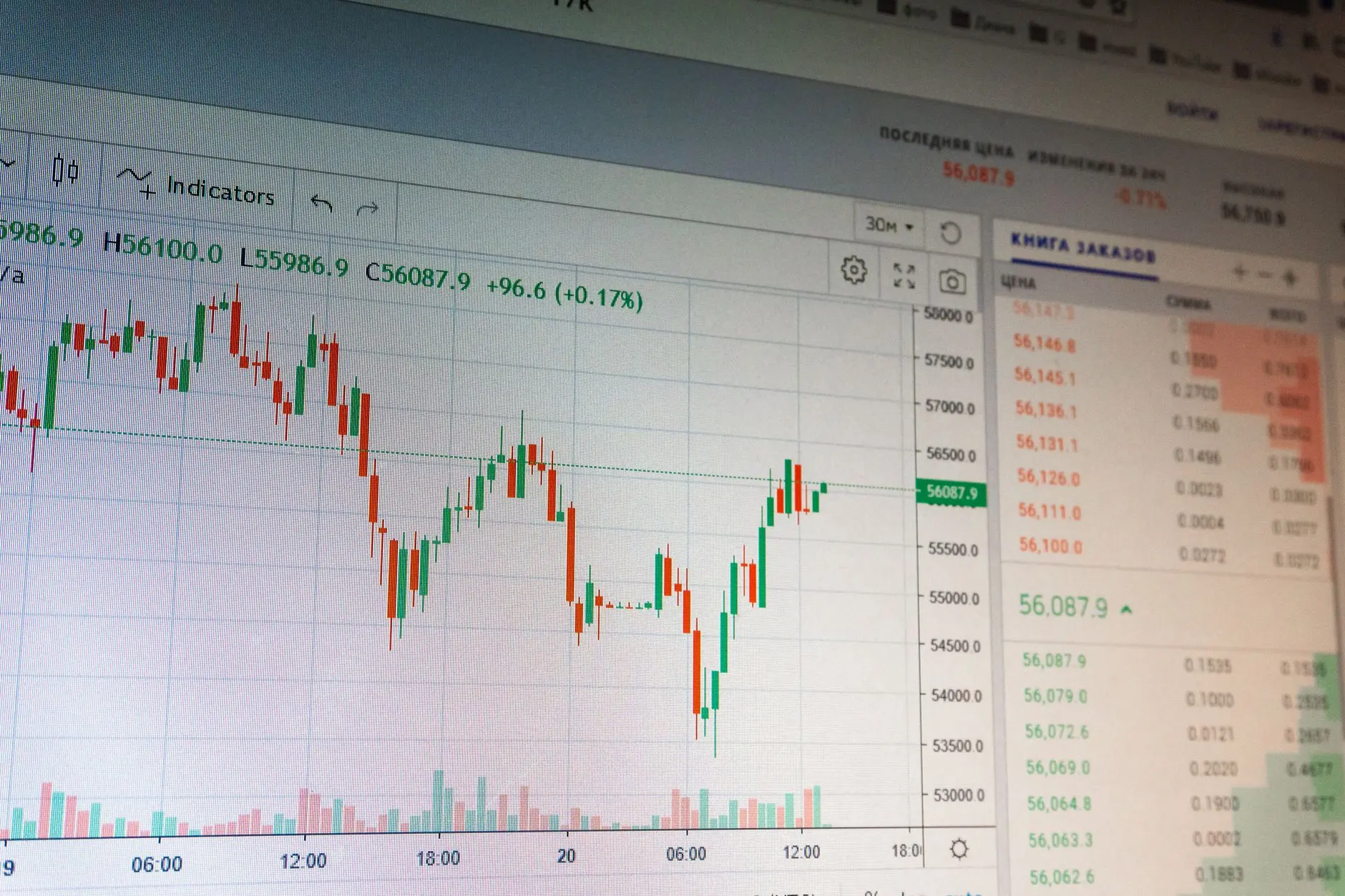
A confirmed daily close below $60,000 opens the structural path to the $55,000 level, which now carries a 77% probability weighting on Myriad‘s prediction market – a figure that is itself a data point about where the market’s probability-weighted expectation of the next major level sits. The mechanical justification for $55,000 as the cascade target is not arbitrary: it represents the approximate lower boundary of the consolidation range that preceded Bitcoin‘s acceleration through $60,000 in the prior cycle, making it a structural level where a cost basis cohort of buyers who entered during that consolidation period would be sitting at breakeven or slight loss – a configuration that historically generates both natural support from those holders and selling pressure from those who capitulate at breakeven. Prior CoinNews coverage of the $60,000 floor mechanics and the ETF outflow context that has repeatedly tested this level established that a sustained breach with follow-through below $58,000 on a confirmed daily close would accelerate the move toward this range by removing the last cluster of stop-loss and liquidation protection between current price and the lower level.
The upside invalidation threshold requires a more demanding confirmation than a single session’s close. Reclaiming $65,000 across two consecutive confirmed daily closes – not one session’s close and not an intraday move – is the minimum structural threshold for any bias reversal, because a single session close at that level is insufficient to confirm that the ETF outflow trend has reversed, that the options expiry aftermath has cleared without a cascade, and that the macro rate path has shifted sufficiently to re-engage institutional demand. Two consecutive confirmed closes above $65,000 would require both that the immediate selling pressure from Friday’s options expiry has fully absorbed and that the ETF complex has demonstrated at least the early signs of the inflow re-acceleration that Moreno identified as a prerequisite for bottom formation. Below that two-session threshold, any move toward $65,000 should be interpreted as a relief rally within a structurally bearish configuration rather than a trend reversal – the distinction is not semantic, it is mechanical, because a failed rally to $65,000 followed by a return to $60,000 would represent a lower high in the weekly structure and add a new bearish data point to an already deteriorating pattern.
The Bull Case Requires the Fed Rate Path to Shift With Oil Below $60 and the Clarity Act to Pass, ETF Annual Holdings Growth to Reverse From Zero to Sustained Acceleration, and the $60,000 Floor to Hold on a Confirmed Daily Close Through Friday’s Expiry – None of Those Three Conditions Are Currently Met, and the Bear Case Is Already Printing Across Every Data Layer Simultaneously
The bull case for Bitcoin recovering toward and through prior structural levels requires exactly three simultaneously confirmed conditions, none of which are currently in place. The first condition is a material shift in the Federal Reserve rate path – specifically, the sequence that Novogratz described: the Iran conflict resolving, oil prices returning to approximately $60 per barrel, and that oil price normalization opening the door to a late fourth-quarter rate cut or early first-quarter rate cut in the following year. That chain is not currently active; the conflict remains ongoing, oil prices remain elevated relative to that threshold, and Warsh‘s hawkish debut has moved market expectations in the opposite direction. The second condition is the passage of the Clarity Act, which Novogratz identified alongside the rate cut as the dual pillar of Bitcoin‘s bull case – a piece of legislation that remains unresolved and whose timeline is not governed by market forces. The third condition is the reversal of ETF annual holdings growth from “basically zero” – Moreno‘s characterization – to the kind of sustained inflow acceleration that historically characterized the demand-driven regime in which Bitcoin made its prior structural advances. None of those conditions are currently met, and the bear case is already printing across every data layer simultaneously.
The bear case confirmation is not partial or probabilistic – it is comprehensive across the full data stack. The $691 million single-day ETF outflow is the largest since May 27; the year-to-date net ETF flow has reached approximately negative $4.6 billion; the annual ETF holdings growth rate has reached “basically zero” for the first time since launch; the 200-week moving average – a level that McCluskey characterized as having “historically served as a critical psychological and technical floor” – has been breached intraday; $875 million in long liquidations have been mechanically forced over 24 hours; the Myriad prediction market probability of reaching $55,000 has risen from 72% to 77% over the course of a single week; the options expiry structure has 80% of contracts expiring worthless at a max pain level $12,900 above current price; and the macro backdrop has shifted hawkishly under a new Fed chair with no rate cut on the near-term horizon. This is not one or two confirming data points – it is the full simultaneous activation of every structural bear signal across ETF flows, on-chain mechanics, derivatives positioning, leveraged liquidation dynamics, macro rate expectations, and prediction market probability-weighting. This is not cyclical sentiment noise; it is mechanical deterioration across every data layer simultaneously.
The governing condition for the next move is whether the $60,000 floor survives Friday’s $10.6 billion Deribit options expiry on a confirmed daily close – not an intraday recovery – whether U.S. spot ETF annual holdings growth reverses from the “basically zero” level identified by Julio Moreno at CryptoQuant into sustained inflow acceleration across a minimum of three consecutive sessions, and whether the macro rate path shifts sufficiently – through either the Iran conflict resolution reducing oil prices toward $60 per barrel or an unexpected pivot in Fed Chair Warsh‘s posture – to re-engage the institutional demand that has been mechanically withdrawn from the ETF complex over the preceding weeks – because until all three of those structural conditions are simultaneously confirmed, the path of least resistance remains lower, with $55,000 as the next structural level the market will be forced to price on a confirmed daily close below $60,000. Follow CoinNews on X and Telegram for real-time Bitcoin price updates and ETF flow reversal alerts.
Source: Decrypt