


ChatGPT Predicts Price of Bitcoin, Ethereum, XRP by End of 2026
In volatile markets like the one seen this week, AI tools such as ChatGPT have proven essential for crypto traders and investors as they rapidly synthesize complex, fast-moving information that would otherwise overwhelm human analysts. AI excels at cross-referencing ETF flow data, on-chain metrics, technical indicators, and macroeconomic factors (such as U.S.-Iran tensions) that have impacted institutional moves and rate-cut expectations. This allows traders to quickly understand whether a selloff or surge stems from temporary liquidity pressure or deeper structural shifts, enabling faster position adjustments.
Given the above, we asked ChatGPT to predict the end-of-2026 prices for Bitcoin, Ethereum, XRP, and a brand-new presale project called LiquidChain (LIQUID), which is due to launch on CEX and DEX platforms soon. The AI provided overall bullish, balanced, and realistic theses for each project and noted that LIQUID could deliver greater upside, given its presale status and increasing hype around its cross-chain Layer 3 network.
Bitcoin (BTC)
“Bitcoin remains the strongest asset in the cryptocurrency market because it combines absolute scarcity with growing institutional demand,” ChatGPT asserted. “Unlike most digital assets, Bitcoin has a fixed maximum supply of 21 million coins, while new issuance continues to decline following each halving cycle. At the same time, adoption has expanded beyond retail investors and into asset managers, corporations, pension funds, and sovereign entities seeking exposure to a scarce, globally accessible store of value.”
“This creates a powerful supply-and-demand imbalance: fewer new coins are entering circulation while more capital is competing to acquire them.”
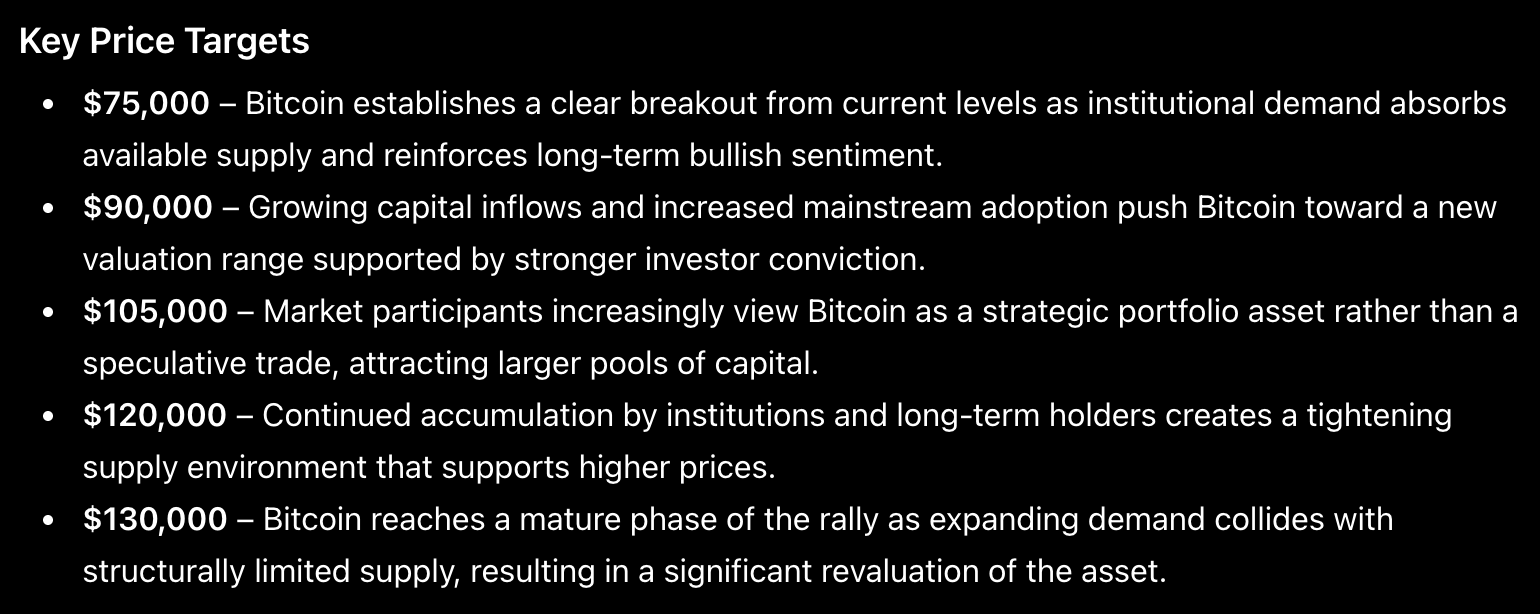
Given these points, ChatGPT noted that “a move to $130,000 by the end of 2026 from BTC’s current levels would represent just over a 2x return, which is modest by historical Bitcoin standards.”
“The path to $130,000 is supported by continued ETF accumulation, broader institutional participation, increasing recognition of Bitcoin as ‘digital gold,’ and improving global liquidity conditions,” the AI continued. “As confidence grows among traditional investors, Bitcoin’s market capitalization can expand significantly without requiring the speculative frenzy seen in previous cycles. In this scenario, Bitcoin benefits from both its scarcity narrative and its position as the dominant gateway asset for capital entering the crypto sector.”
Ethereum (ETH)
“Ethereum’s bull case is fundamentally different from Bitcoin’s,” explained ChatGPT. “Rather than functioning primarily as a scarce monetary asset, Ethereum derives its value from economic activity occurring directly on its network. It remains the dominant settlement layer for decentralized finance, tokenized real-world assets, stablecoins, blockchain gaming, and a large portion of the broader smart-contract economy. Every time users trade, borrow, lend, tokenize assets, or interact with decentralized applications, they generate demand for block space that ultimately benefits Ethereum’s ecosystem.”
“A bull run to $6,000 would require Ethereum to reclaim its position as the primary infrastructure layer of Web3 while capturing a growing share of global financial activity,” ChatGPT said. “The most compelling catalyst is the continued migration of traditional finance onto blockchain rails. As banks, asset managers, and fintech firms explore tokenized securities, digital payments, and on-chain settlement, Ethereum stands to benefit from its deep liquidity, mature developer ecosystem, and strong network effects.”
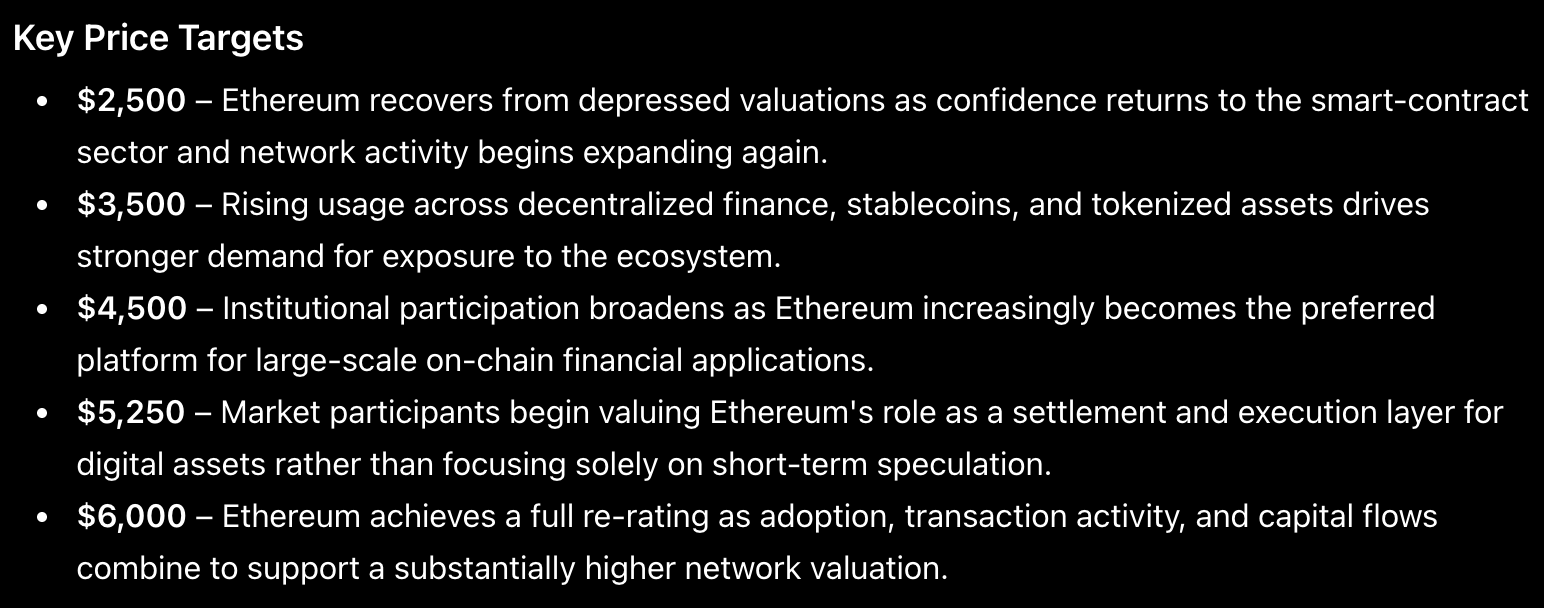
“Unlike many competing chains that rely heavily on speculative interest, Ethereum’s long-term value proposition is tied to becoming the backbone of a new financial and digital ownership system. If adoption accelerates, a $6,000 valuation becomes achievable as investors begin pricing Ethereum more like critical infrastructure than a high-risk technology experiment.”
XRP (XRP)
In ChatGPT’s view, “XRP’s potential upside depends less on creating a new financial system and more on improving an existing one. The traditional cross-border payments market remains fragmented, expensive, and often slow, particularly when funds move between different currencies and banking jurisdictions.”
“XRP was designed specifically to act as a bridge asset that can move value between financial institutions without requiring large pools of pre-funded capital sitting idle around the world,” ChatGPT asserted. “If adoption of this model expands, XRP’s value proposition becomes tied to transaction efficiency rather than digital scarcity or decentralized application growth.”
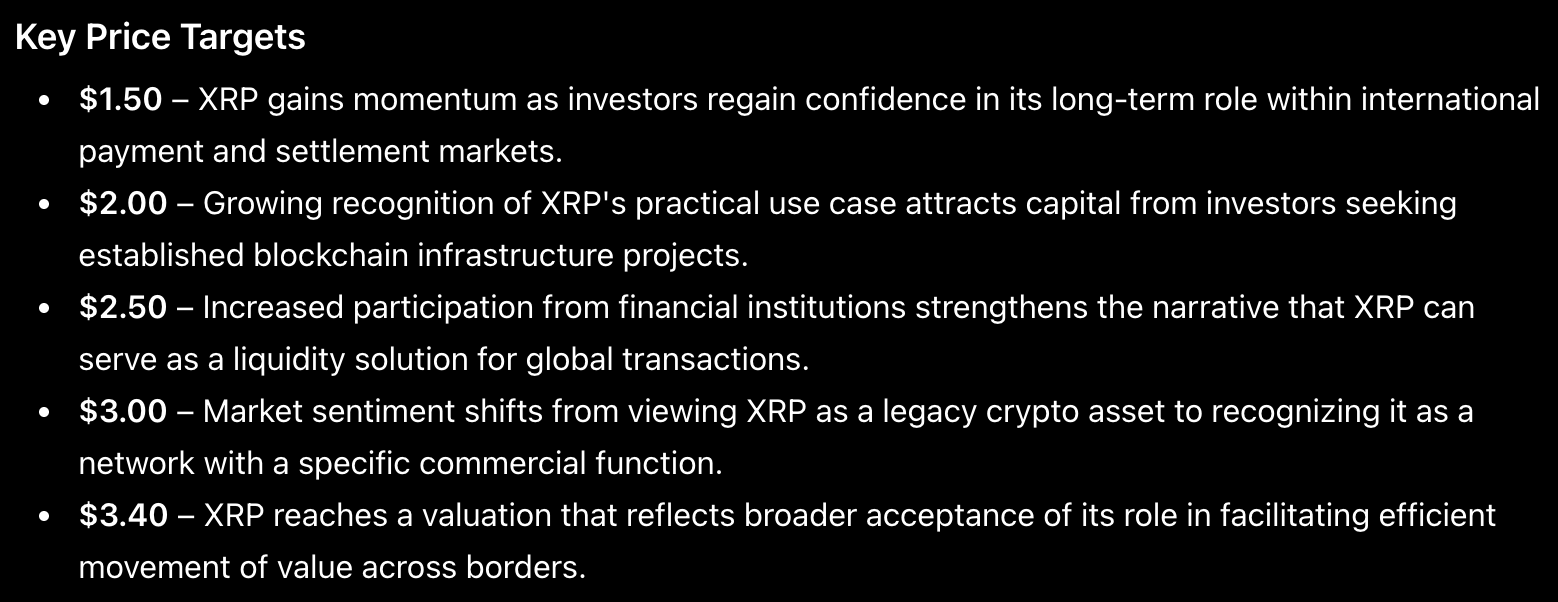
Therefore, ChatGPT predicted that “a move to $3.40 will not require XRP to become the dominant cryptocurrency. Instead, it requires the market to increasingly view XRP as a specialized financial asset with a clearly defined role. While many blockchain projects pursue dozens of narratives simultaneously, XRP’s focus on payments, liquidity provision, and financial settlement remains straightforward. As regulatory uncertainty fades and institutional confidence improves, investors may begin assigning a premium to projects with established infrastructure, long operating histories, and real-world commercial use cases – and in that environment, XRP could benefit from renewed capital inflows as the market rewards utility-driven networks.”
LiquidChain (LIQUID)
“LiquidChain’s bullish case stems from its ability to address one of crypto’s most persistent structural problems: fragmented liquidity across chains,” ChatGPT stated. “Right now, capital in DeFi is split across ecosystems that don’t naturally communicate, forcing users and protocols to rely on bridges, wrappers, and multiple layers of abstraction that all introduce friction, delay, and risk. However, LiquidChain can collapse that fragmentation into a unified liquidity coordination layer where capital can move and be deployed without constantly being re-wrapped or re-routed.”
“If that vision works even partially, it doesn’t just improve efficiency – it creates a new coordination point for liquidity itself, which is exactly the kind of structural role that markets tend to reprice aggressively,” the AI explained.
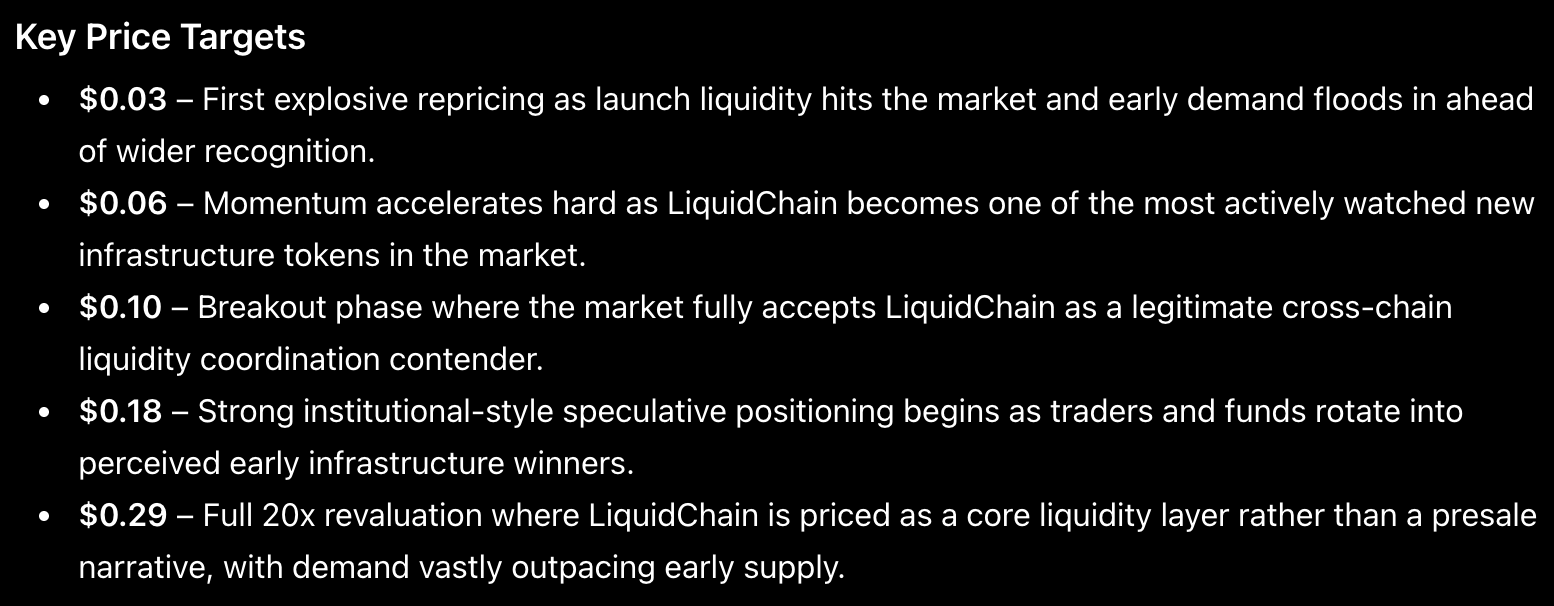
“A 20x scenario is also on the table because presales like this are typically priced before any major liquidity flows and usage feedback loops exist. LiquidChain’s current price is $0.01469 per LIQUID, with almost $840,000 raised during the presale so far and a 1,331% APY for staking rewards. Furthermore, if LiquidChain manages to attract even a small set of meaningful trading routes between ecosystems, the token transitions from ‘idea value’ to ‘infrastructure value.’ That shift is where the upside lives.”
About Author

About Author