


Next 100X Crypto: Can LiquidChain’s Unity Layer Soar Up the Charts After Launch?

The global crypto market cap sits at $2.67T today, with Bitcoin trading at $81,483.28 (+7.12% over the past week) and Ethereum at $2,341.79, up 3.62% on the 7-day chart.
While Layer 2s dominated the previous bull run, the case for Layer 3 is worth understanding properly. Layer 1 blockchains – Bitcoin, Ethereum, Solana – are the settlement bedrock, each with deep capital and distinct strengths. Layer 2 networks arrived to solve the congestion problems on top of those base chains – but in the process, they split up global liquidity.
A user wanting to swap assets across chains now needs to use bridges, pay multiple gas fees, and take on smart contract risk. It’s chain fragmentation, and is an active drag on market efficiency.
Layer 3 is the next logical move: a unification layer sitting above the noise.
LiquidChain (LIQUID) is building the universal routing layer that connects the largest blockchains without forcing users to think about the underlying chain plumbing. The project is currently in presale and has raised $723,000 at $0.01457 per token, and is offering staking at 1,513% APY for early participants.
How the Unity Layer Actually Works
LiquidChain describes itself as the first Layer 3 network built on top of Bitcoin, Ethereum, and Solana, aiming to serve as a unified liquidity and execution layer. In practice, the idea is to let users and developers tap into the defining strengths of each major network without leaving the LiquidChain environment.
The technical architecture behind that promise is more specific than most cross-chain projects are at this stage. LiquidChain’s architecture combines a high-performance virtual machine that constantly verifies the state of Bitcoin, Ethereum, and Solana to trustlessly represent them on the L3, creating deep, fungible markets without wrapping.
With an architecture designed to reduce dependence on wrapped assets and limit reliance on centralized intermediaries, it allows transactions to be processed on Layer 3, with finality anchored to the underlying chains when required.
In effect, LiquidChain aims to remove all the shenanigans that come with moving and using crypto across DeFi. Use your assets anywhere, at the right price, and at low cost, without having to consider which chain you are on. For developers, they can code once without having to worry about compatibility.
On the security side, the smart contracts have been audited by SpyWolf and CertiK.
Why LIQUID Could Be a Next 100X Crypto Story in 2026
Layer 2 tokens dominated previous cycles by solving scalability, and Layer 3 tokens may well dominate 2026 and 2027 by solving fragmentation. LiquidChain is launching at the exact moment the market recognizes the problem, and the $722,000 raised so far reflects early momentum. According to the official roadmap, LIQUID is scheduled for centralized exchange listings in Q3 2026, and the speed of the LiquidChain presale is sparking rumors of an earlier debut.
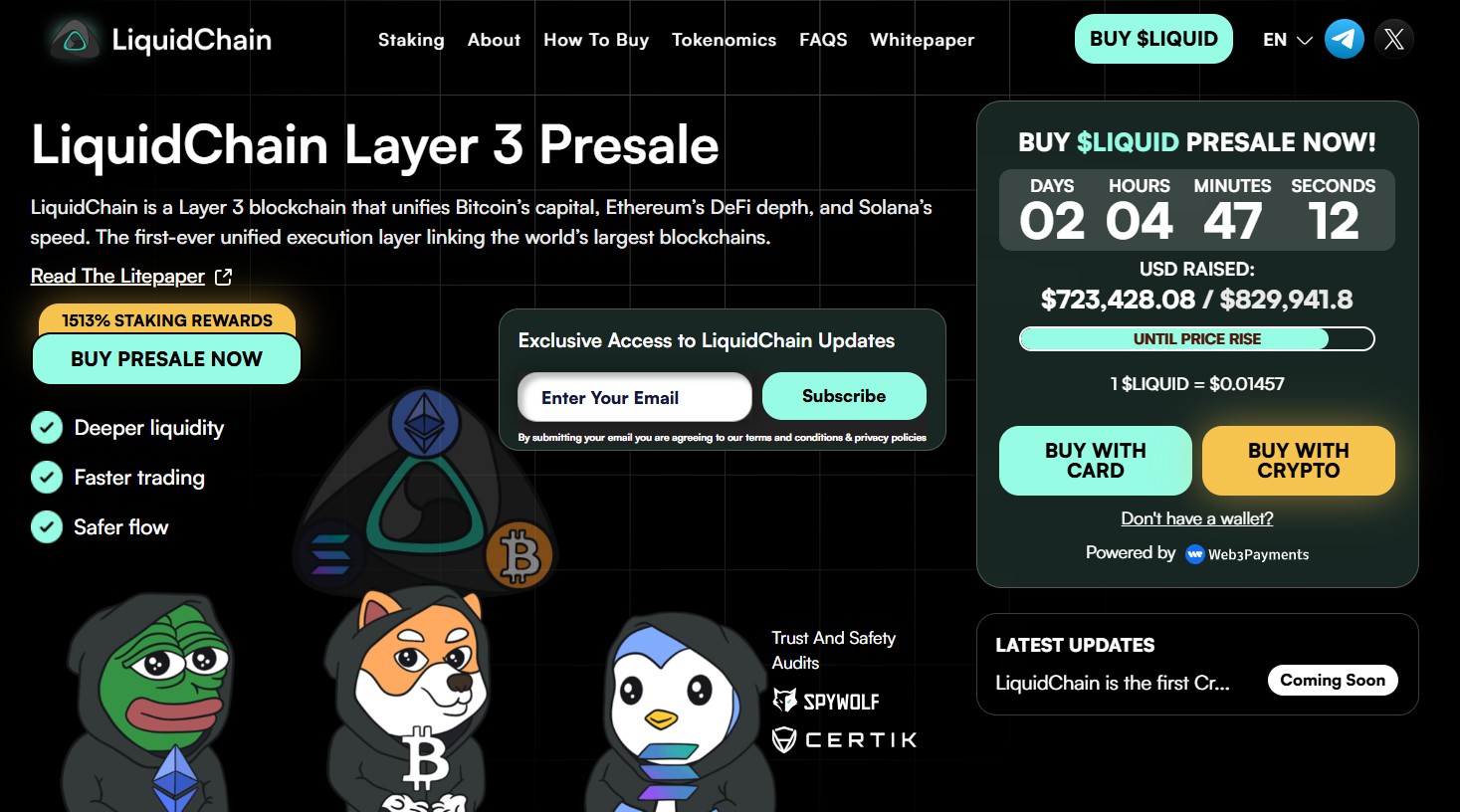
With a market cap sitting well below $1 million at current presale pricing, the cavern between where LIQUID is and where a functioning cross-chain infrastructure protocol could credibly trade is wide. In the short term, forecasts suggest the LIQUID could reach around $100 million in early 2027, if the token lists on major exchanges and early demand grows among DeFi users and developers.
Fragmented liquidity across chains is a persistent $50 billion problem in DeFi. A working solution would capture meaningful TVL from liquidity providers seeking chain-agnostic yield.
The post-launch roadmap also targets institutional capital: LiquidChain aims to provide institutions with in-depth liquidity access on the L3 blockchain, bridging traditional capital into DeFi markets. That is not a small addressable market.
The Presale is On!
The presale pricing won’t hold indefinitely, especially with anticipated centralized exchange listings in Q3 2026.
LIQUID’s pitch is not about hype but about addressing a problem that every serious DeFi participant has encountered and that nobody has convincingly solved.
At under $1M market cap, the question of whether this is a next 100x crypto opportunity comes down to one thing: whether the team ships what the architecture promises.
About Author

About Author