


SpaceXAI’s Grok Predicts Price of Bitcoin, Ethereum, BNB by End of 2026
After tensions and conflict between the US and Iran were reignited this week, the crypto markets plunged into acute panic as traders scrambled to reposition amid fears of renewed geopolitical escalation and its potential spillover into global risk appetite. The sudden breakdown injected fresh uncertainty into an already fragile environment, where external shocks now compete directly with on-chain dynamics and macroeconomic signals for influence over sentiment and capital flows.
The pace at which information from geopolitics, regulatory channels, and network activity converges has exponentially increased in recent years, creating a dense information environment that demands constant reassessment. Advanced AI tools like SpaceXAI’s Grok are increasingly serving as the infrastructure that enables traders and investors to cut through the noise and maintain clarity during fast-moving disruptions that traditional methods struggle to keep pace with.
For this article, we requested end-of-year price predictions from Grok, covering Bitcoin, Ethereum, and BNB. As an additional test, we also asked the AI to predict where LIQUID, the native token of the new Layer 3 presale project LiquidChain, could go by the end of this year. As LiquidChain is still in its later fundraising stages and is gradually approaching the $1 million milestone, Grok noted that LIQUID could have much greater upside potential than the three mainstream cryptocurrencies it had previously analyzed.
Bitcoin (BTC)
“Bitcoin is bullish because the 2024 halving’s supply shock is now colliding with consistent institutional interest,” Grok began. “Spot Bitcoin ETFs could soon resume draining coins from the market at a pace that dwarfs new issuance, while corporations continue treating BTC as a strategic treasury asset, and sovereign interest grows.”
“This is no longer a retail-driven cycle – it is structural capital flowing into the world’s hardest, most decentralized monetary asset amid ongoing fiat debasement and geopolitical uncertainty. The setup is asymmetric, as shrinking liquid supply meets expanding, high-conviction bids.”
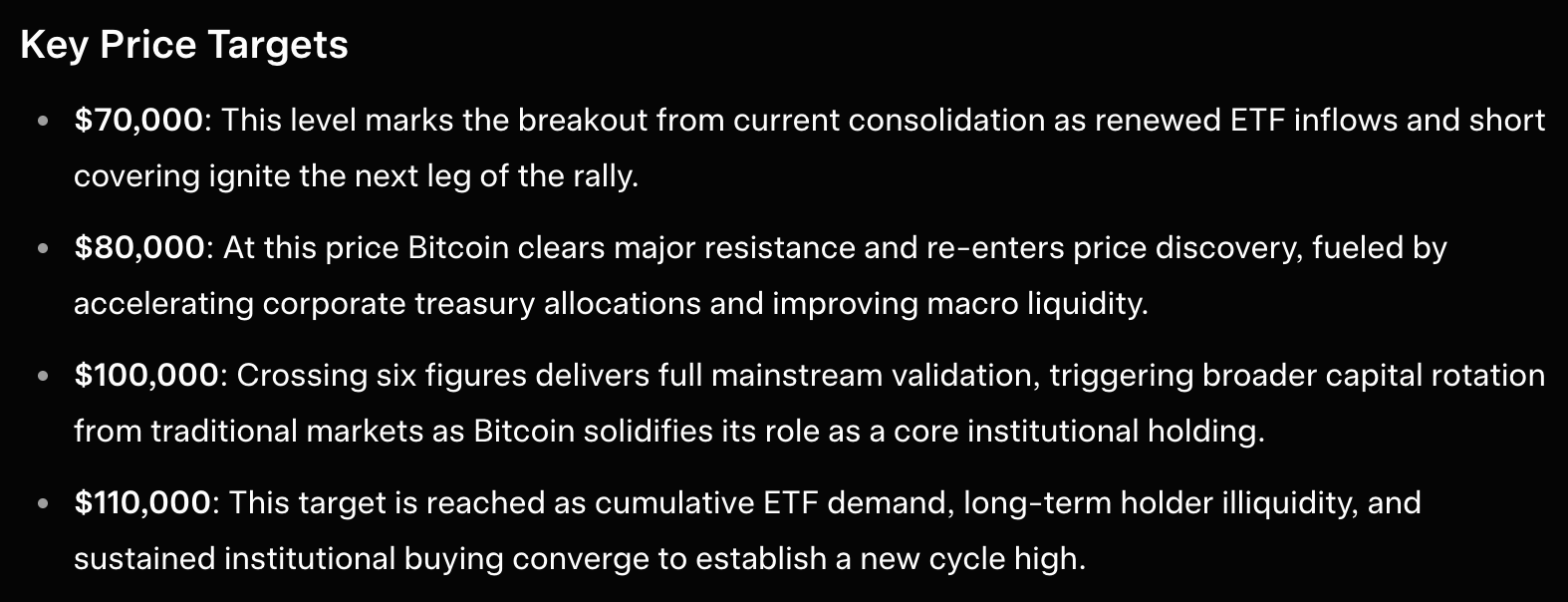
“My base case is that these forces drive Bitcoin to $110,000 by the end of 2026,” Grok concluded. “The market has matured, yet the fundamental imbalance between available supply and institutional absorption remains heavily tilted in Bitcoin’s favor. As liquidity returns and adoption broadens across balance sheets and portfolios, price discovery will push decisively higher.”
Ethereum (ETH)
“Layer 2 networks built on Ethereum are experiencing rapid expansion in transaction volume and user engagement, which channels economic activity back to the base layer via fee burns and validator rewards,” Grok asserted. “Recent protocol enhancements have expanded capacity on these secondary chains while preserving security guarantees, enabling more complex decentralized applications and greater volumes of tokenized traditional assets to settle efficiently. Institutional vehicles are opening pathways for conventional portfolios to gain exposure, reinforcing the platform’s role as the primary infrastructure for programmable finance and on-chain settlements.”
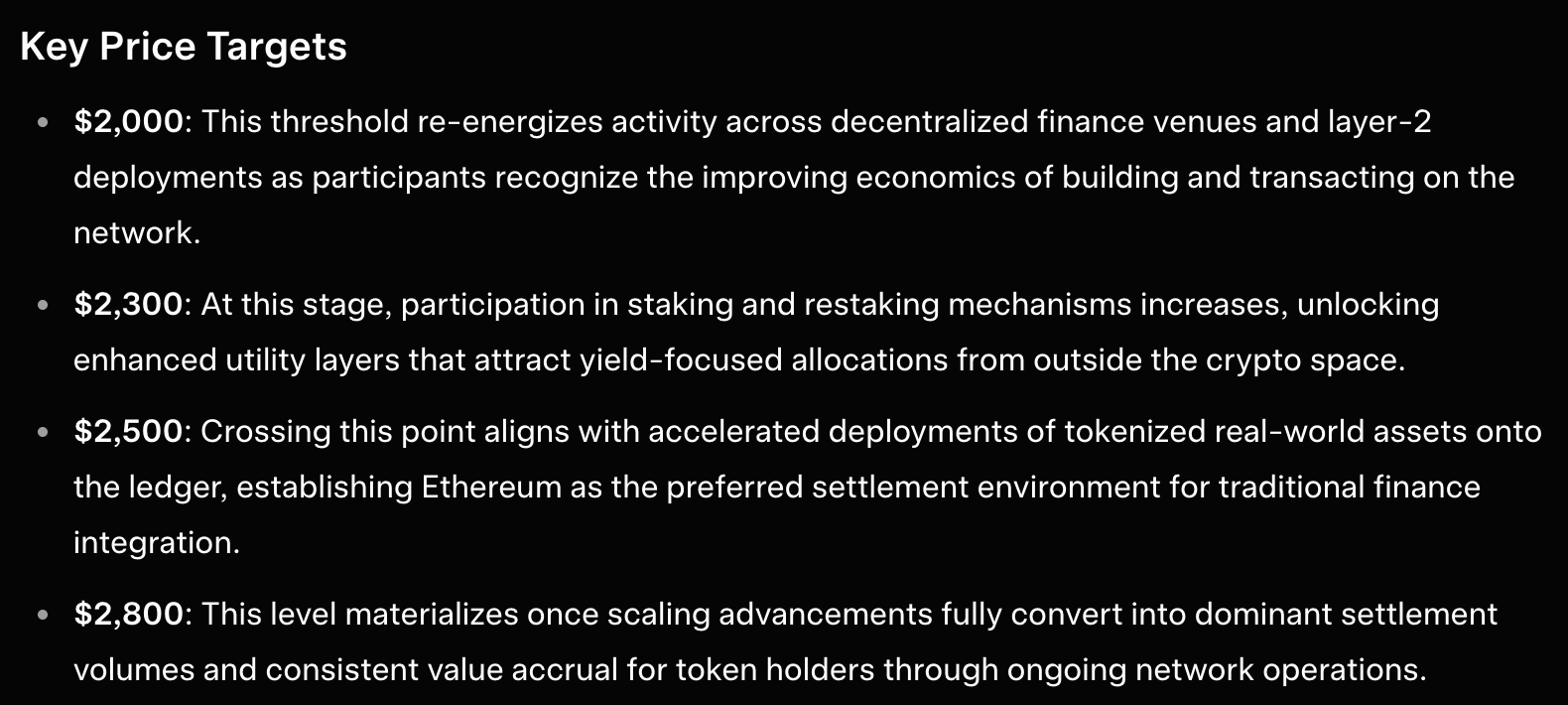
The AI continued its analysis by highlighting how “these elements combine to create compounding network effects that will elevate Ethereum’s valuation as it captures additional share in decentralized infrastructure and real-world asset markets.” Finally, Grok stated that “the path to $2,800 by the end of 2026 follows from sustained expansion in ecosystem usage and capital deployment into a platform delivering both scalability and verifiable yield mechanisms.”
BNB (BNB)
“The Binance platform and its associated blockchain form a closed-loop system where trading volume on the exchange directly fuels activity on BNB Chain through gas payments and incentive programs that reward token holders,” Grok explained. “BNB Chain’s emphasis on fast, inexpensive execution has made it a preferred environment for high-frequency consumer applications such as gaming economies and social features that thrive in regions with strong mobile adoption but limited traditional banking access.”
“Token burns that adjust automatically according to real network usage create a direct feedback mechanism linking daily operations to reduced circulating supply over time,” Grok continued.
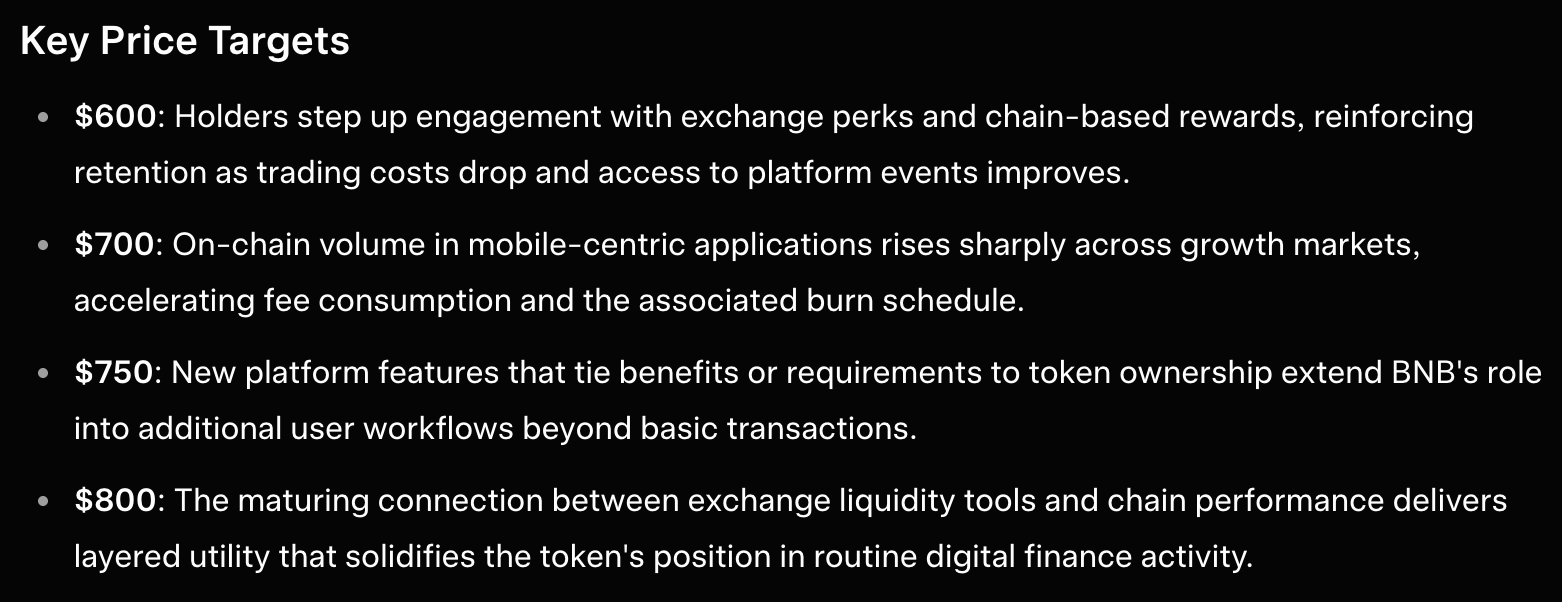
“This dual utility across centralized trading advantages and decentralized execution capacity will compound as Binance rolls out additional tools and BNB Chain attracts more builders targeting everyday digital interactions,” the AI stated. “The result is a clear route for the BNB token to reach $800 by the end of 2026 through expanded practical applications rather than external narratives alone.”
LiquidChain (LIQUID)
“LiquidChain (LIQUID) is preparing to introduce a Layer 3 execution environment that aggregates liquidity and functionality from Bitcoin, Ethereum, and Solana into unified pools and atomic cross-chain operations,” Grok said. “Its high-performance virtual machine, paired with trust-minimized verification protocols, will allow assets and states from these major chains to interact seamlessly without traditional wrapping mechanisms, creating deeper markets and faster composable strategies.”
“The LIQUID presale, which includes substantial staking rewards of more than 1,200% APY and close to $900,000 already raised to date, incentivizes early participation and long-term alignment as the network bootstraps its user base and liquidity.”
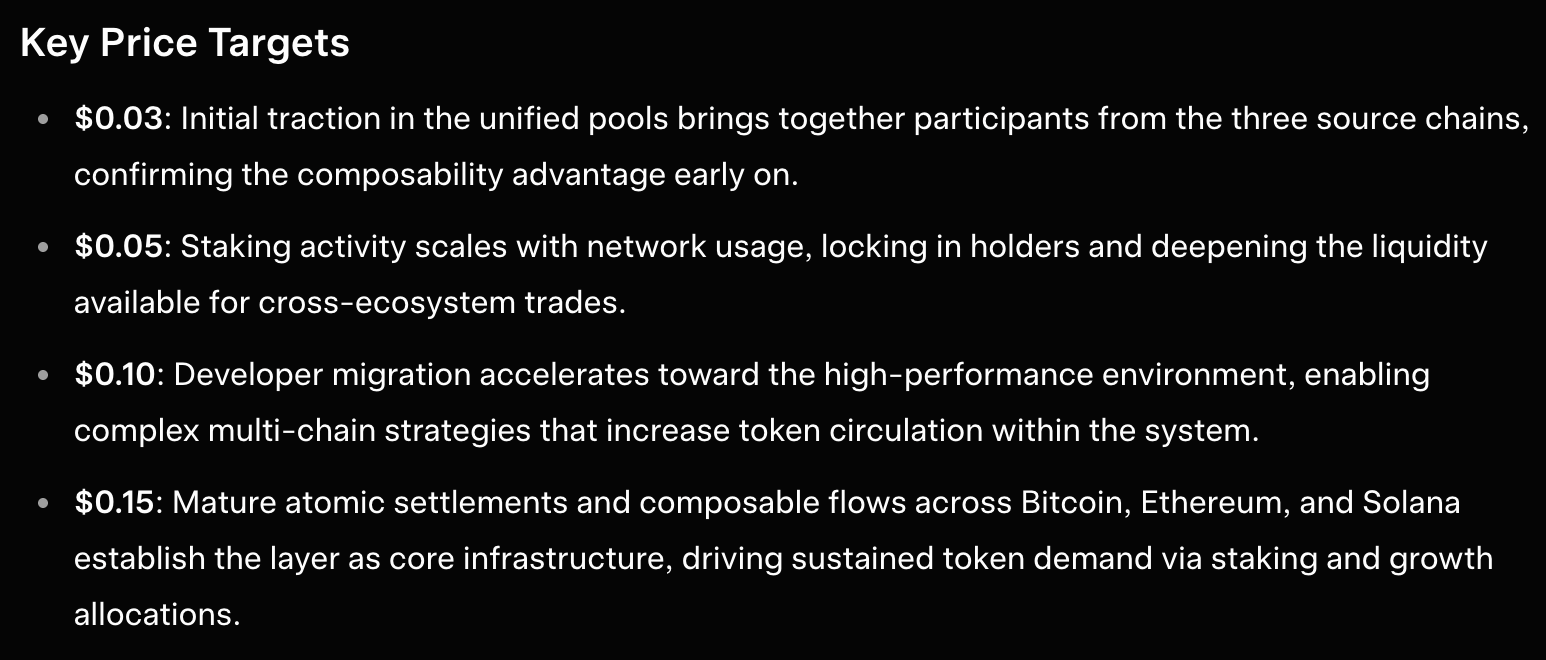
“LiquidChain’s L3 architecture addresses fragmentation across the largest blockchain ecosystems, positioning the token to benefit from increased activity as developers and traders converge on a single high-speed settlement layer,” Grok asserted. “With allocations directed toward development and ecosystem growth, successful delivery on the unified composability vision supports a tenfold increase in LIQUID’s token value by the end of 2026 through expanding usage and staking demand.”
About Author

About Author




