

SpaceX’s Grok AI Predicts Price of BNB, XRP, Solana by End of 2026
The crypto markets have grown far more complex over the past several years, evolving from relatively straightforward price speculation into sophisticated ecosystems. Traders and investors must simultaneously monitor real-time on-chain data, institutional updates, regulatory shifts, macroeconomic correlations, and fast-moving narratives across social and developer communities. This expansion has dramatically increased the volume and velocity of information that market participants must process to make informed decisions.
Traditional analysis methods, which often rely on manual chart reviews, basic technical indicators, and fragmented news sources, struggle to keep pace with this environment – making AI tools such as SpaceX’s Grok LLM truly indispensable. By rapidly synthesizing vast datasets, identifying subtle patterns in price action and on-chain behavior, and delivering objective insights that help mitigate emotional decision-making, these tools enable traders to access timely sentiment analysis, scenario modeling, and customized research that would otherwise require significant time and expertise.
Given the above, we asked Grok 4.3 to analyze BNB, XRP, Solana, and Bitcoin Hyper (HYPER), a brand-new Bitcoin Layer 2 project, and predict the end-of-year prices for their respective cryptocurrencies. Grok offered deep insights and sophisticated conclusions, with bullish predictions overall – but due to HYPER’s relatively small valuation and presale status, it ultimately stood out with higher potential upside in 2026.
BNB (BNB)
“BNB has one of the cleanest fundamental setups in crypto right now,” Grok explained, “because it combines the unmatched distribution and liquidity of the world’s largest exchange with a high-usage smart contract chain that’s actually delivering real adoption.”
“Binance keeps dominating trading volumes and funnels constant demand into BNB through fees, staking, and ecosystem products,” the AI continued. “At the same time, BNB Chain is posting leading daily active users, strong TVL growth, and rapid expansion into AI agents, RWA tokenization, and scalable infrastructure via its 2026 roadmap. The aggressive auto-burn plus quarterly burns are systematically removing large amounts of supply (hundreds of millions of dollars’ worth only recently), creating genuine scarcity for BNB while utility demand rises.”
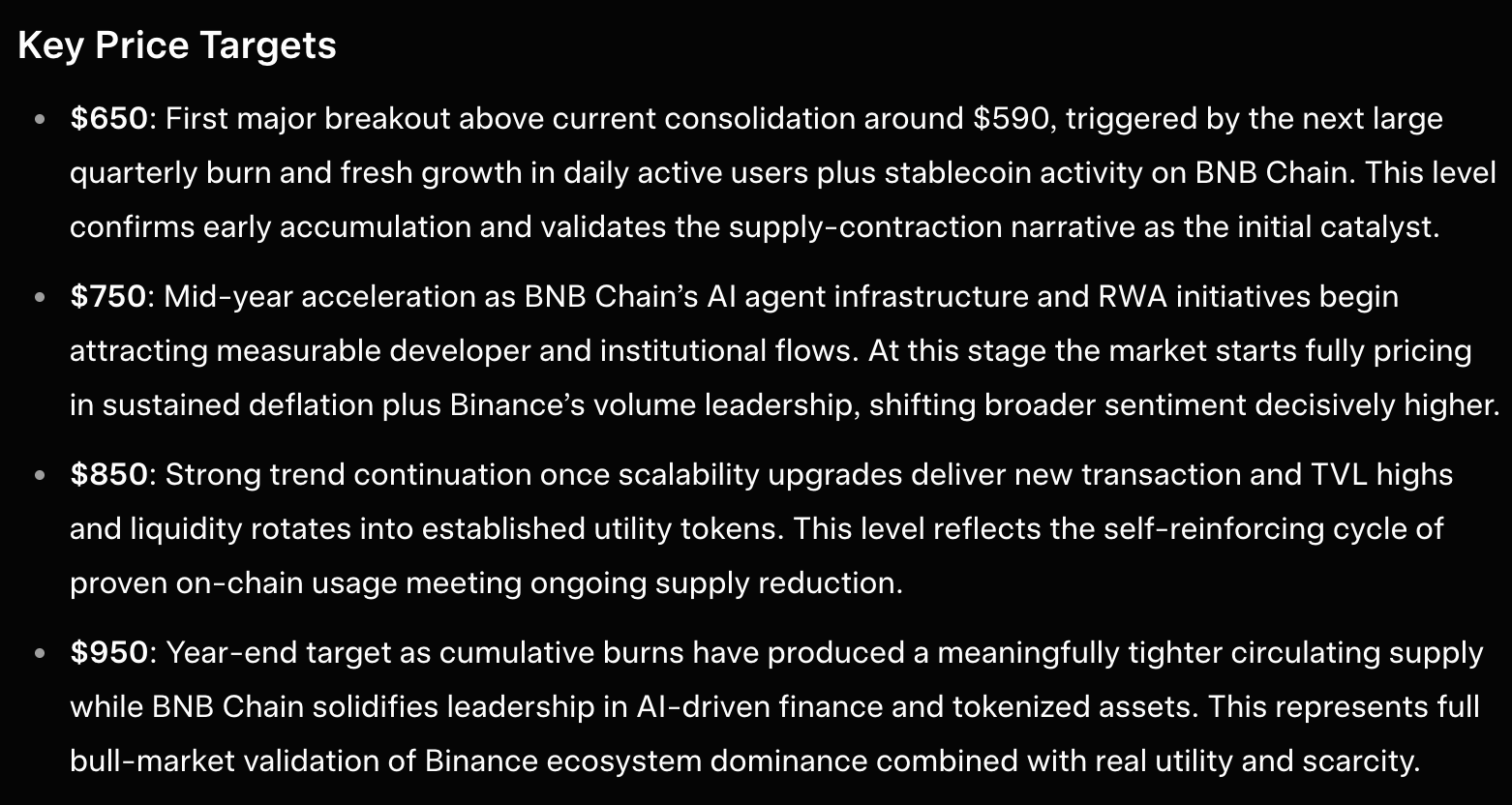
Therefore, “BNB reaching $950 by the end of 2026 is a straightforward extension of these fundamentals,” Grok concluded. “Continued burns will keep tightening supply while BNB Chain’s AI SDK, higher TPS upgrades, and institutional RWA features drive measurable increases in gas usage, staking, and developer activity. Binance’s global reach ensures steady capital inflow, and as the broader market expands with altcoin rotation, BNB’s proven track record and clear value accrual attract both retail and larger players. The math is simple: shrinking supply plus rising real demand equals higher prices.”
XRP (XRP)
“XRP has emerged with clear regulatory tailwinds following the resolution of long-standing legal matters, enabling broader institutional participation and the successful launch of U.S. spot ETF products that are already attracting substantial inflows,” stated Grok. “Ripple’s On-Demand Liquidity solution continues to process growing volumes in key remittance corridors, while the XRP Ledger supports expanding activity through its AMM, RLUSD stablecoin, and rising tokenized real-world asset issuance. These developments create direct, recurring demand for XRP as a bridge currency and liquidity provider in real financial flows, distinct from purely speculative assets.”
“With institutions now accessing XRP through regulated vehicles and payment networks scaling usage, the foundation is set for meaningful price appreciation as adoption compounds.”
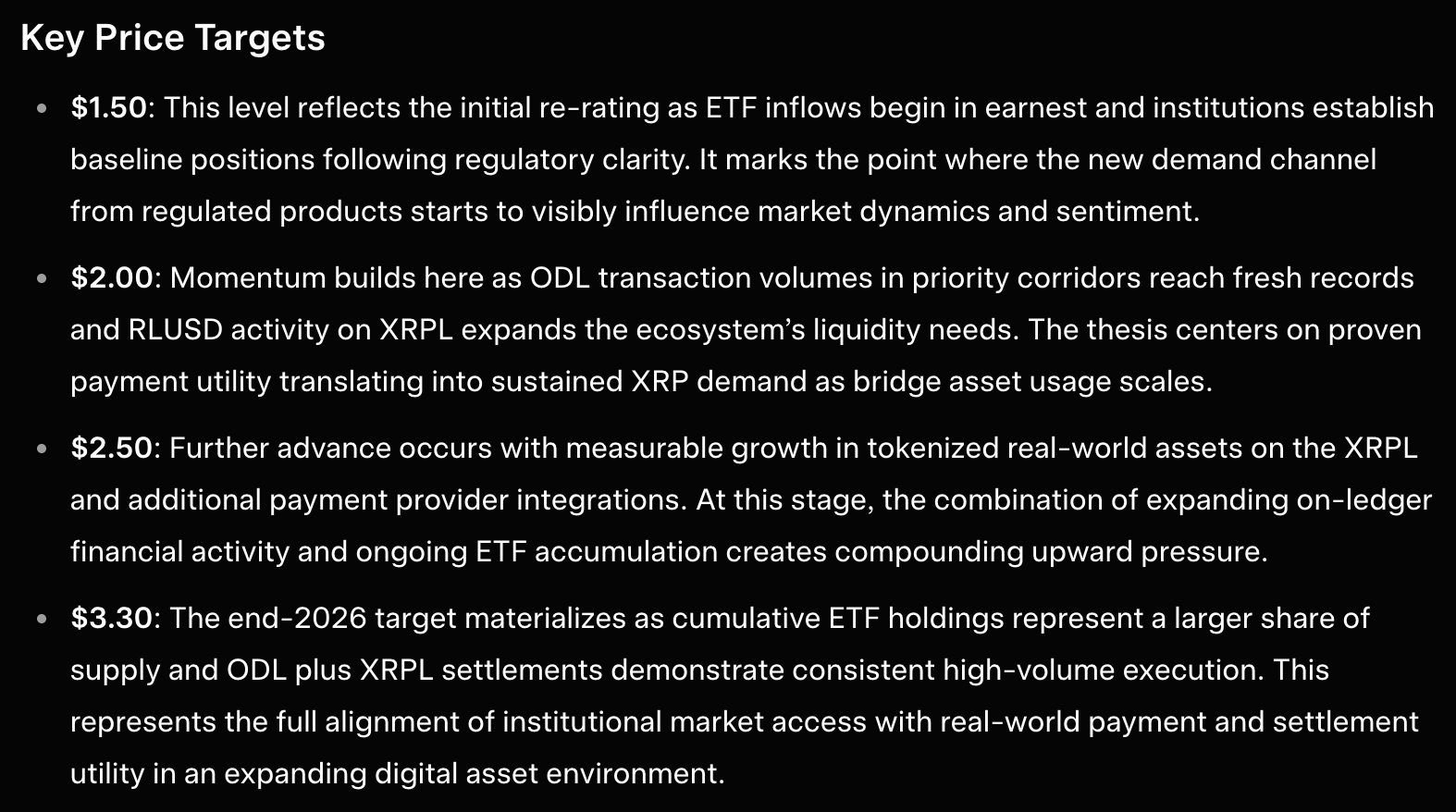
“XRP’s path to $3.30 by the end of 2026 rests on ETF-driven capital inflows locking away meaningful portions of supply alongside accelerating ODL and XRPL-based settlement volumes,” Grok explained. “As RLUSD and tokenized assets mature on the ledger, they increase the need for XRP in bridging and liquidity provision across borders and asset classes. Major financial players entering via ETFs add a persistent bid that was previously constrained – and in a favorable macro setting for digital assets, this utility-plus-access combination could drive XRP to reprice substantially higher from current levels.”
Solana (SOL)
Grok began its Solana analysis by explaining how the Layer 1 blockchain “delivers a rare technical profile where extreme speed and near-zero costs make previously impractical on-chain experiences routine. The Firedancer validator client and Alpenglow consensus upgrades have eliminated single points of failure while compressing finality to sub-second levels and scaling throughput dramatically. This performance leap has turned Solana into the default environment for high-velocity retail speculation, especially meme coins, which function as a powerful user-acquisition engine that funnels newcomers into staking, DeFi, gaming, and infrastructure projects.”
Furthermore, Grok added that “competitive staking yields and direct fee capture align holder incentives with network usage, creating durable value accrual as activity compounds.”
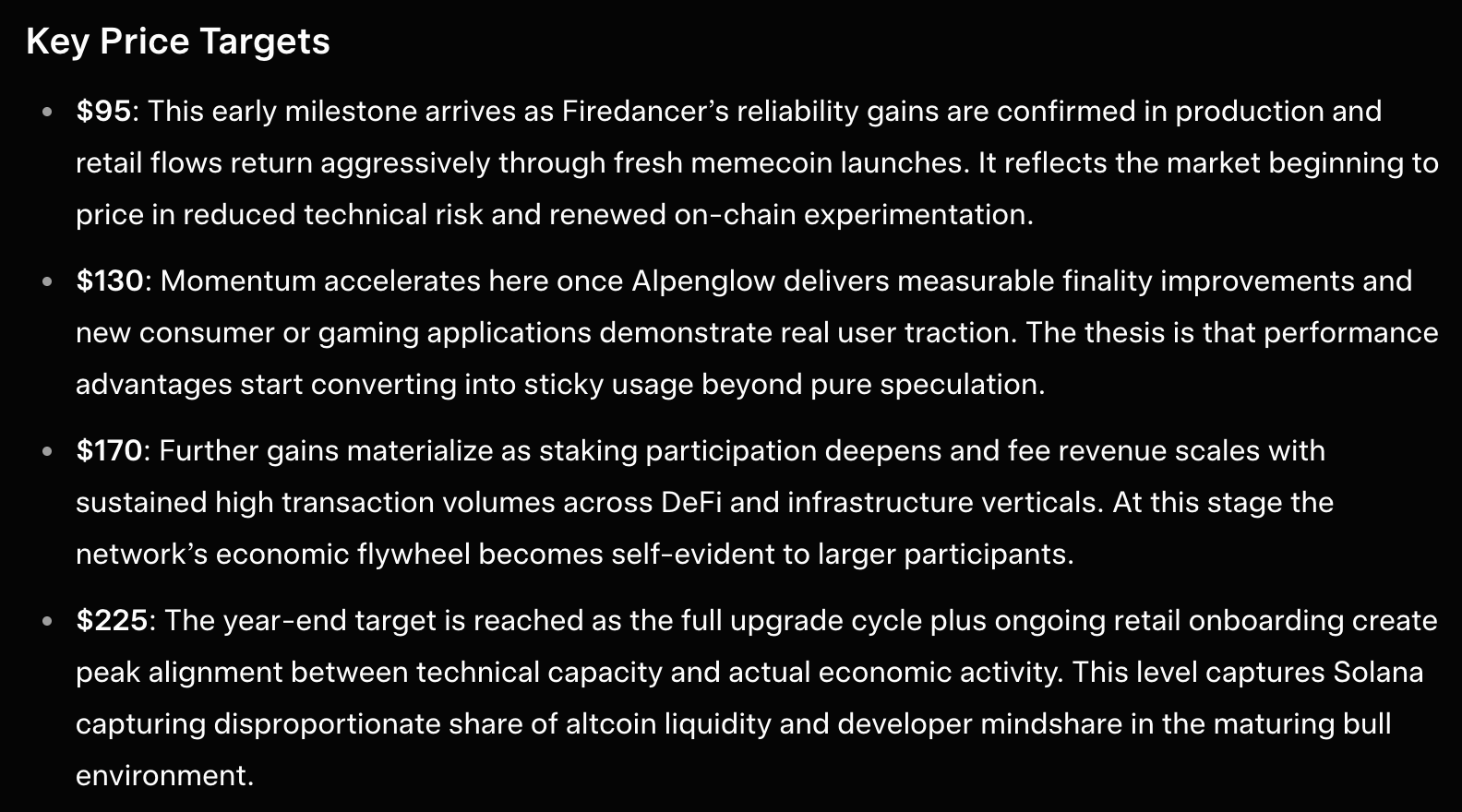
Given the above, “the case for $225 SOL at EOY depends on these upgrades maturing into a clear competitive moat that sustains both speculative and utility-driven demand,” according to Grok’s analysis. “Meme coin-driven retail inflows continue expanding the participant base at scale, while developers exploit the low-friction environment to launch consumer-facing applications that legacy chains cannot economically support. As capital rotates into high-beta, high-performance assets during the broader cycle, Solana’s ability to absorb massive volume positions SOL for substantial re-rating as the network’s economic activity translates directly into token demand.”
Bitcoin Hyper (HYPER)
While assessing the presale project on our list, Grok noted that “Bitcoin Hyper is developing a Layer 2 protocol to increase transaction speed and reduce costs on the Bitcoin network while retaining its security properties. The project uses a Solana Virtual Machine architecture, together with a bridging mechanism that incorporates zero-knowledge proofs and rollup elements. This setup is designed to support faster finality, staking, decentralized finance protocols, and other applications built around Bitcoin.”
“Staking, which delivers a 36% APY reward rate, is just one core utility driver for HYPER, as the token also fuels governance and ecosystem participation on the new L2,” Grok stated. “HYPER’s tokenomics allocate substantial portions to development, marketing, and community rewards to fuel rapid growth. The presale’s successful and ongoing raise ($32.8 million so far) demonstrates clear market demand for BTC-native scalability solutions ahead of the L2’s mainnet launch.”
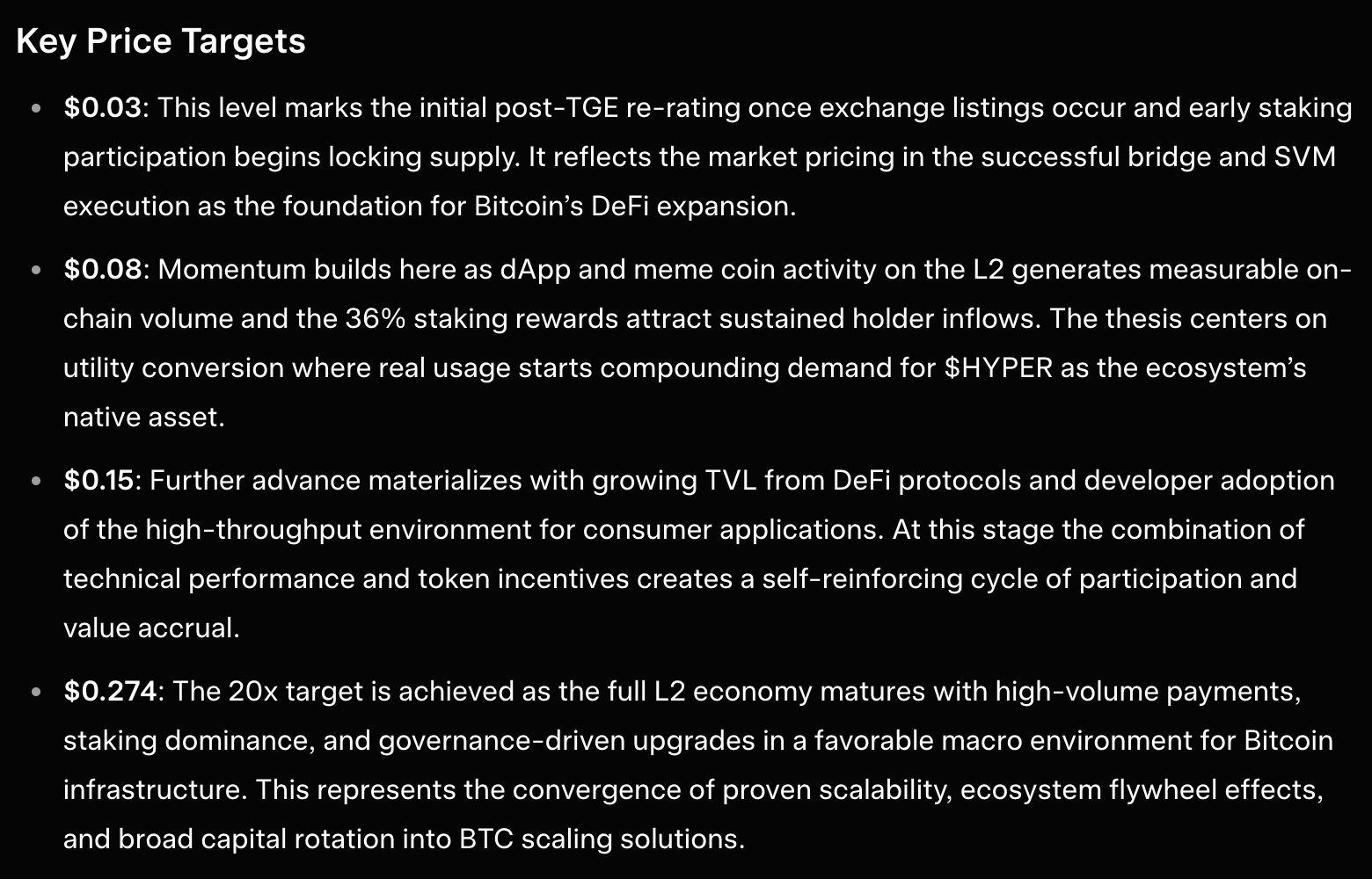
Grok then predicted that “a 20x move to approximately $0.274 by the end of 2026 is realistic for HYPER, because a successful mainnet launch and major CEX listings can convert presale momentum into real utility demand as Bitcoin DeFi and on-chain activity explode. Bitcoin Hyper’s SVM architecture positions the network to capture developer mindshare, and user flows, that Bitcoin’s L1 or slower alternatives cannot handle – while staking incentives and governance rights create ongoing holding pressure.”
“As the crypto market enters a BTC-centric expansion phase, capital will flow into infrastructure that finally makes Bitcoin programmable and usable at scale, driving transaction volume, TVL, and token accrual directly to HYPER.”
About Author

About Author