


Stripe’s Tempo Blockchain Launches Public Testnet, Adds Mastercard, UBS, Klarna As Partners

Tempo, the layer-1 stablecoin and payments-focused blockchain that was created by Stripe and Paradigm, has launched its public testnet.
According to the project’s announcement, anyone can “run a node or sync the chain,” as well as test out a variety of features.
Tempo’s team said the public testnet launch paves the way for “the next phase of development,” which will focus on “scale, reliability, and integration experience.”
Stripe Processed $1.4T In Payments Last Year
Stripe’s expansion into the blockchain, crypto and stablecoin space is significant because the company is one of the most prominent payment processors globally. With a valuation of $106 billion, Stripe was the largest privately-held fintech company as of September, according to Fintech Magazine.
In 2024, the company had processed $1.4 trillion in payment volume, which is “equivalent to around 1.3% of global GDP,” according to the company.
The Tempo blockchain project was first announced in September by Stripe and Paradigm, and went on to raise $500 million at a $5 billion valuation shortly after.
Since then, the network has been built with early design input from major firms such as OpenAI, Visa, Deutsche Bank, Standard Chartered, and Shopify.
The project also attracted the attention of well-respected crypto executives, researchers, and software engineers. Among them is Ethereum Foundation researcher Dankrad Feist, former Optimism Labs CEO Liam Horne, and Rice University Professor Mallesh Pai.
As part of the project’s next stage, Tempo’s team said it will bring additional early partners, including MasterCard, UBS, and the buy-now-pay-later firm Klarna, on board.
Tempo Testnet Comes With Six Main Features
The Tempo blockchain focuses mainly on payments and settlements.
“Tempo is built to deliver instant, deterministic settlement, predictably low fees, and a stablecoin-native experience, which are qualities that most general-purpose blockchains still struggle to provide for financial applications,” the team said.
Currently, there are six key features live on the blockchain to give it a competitive edge over other networks in the market. These features are dedicated payment lanes, stablecoin-native gas, a built-in stablecoin asset decentralized exchange (DEX), payments and transfers metadata, fast deterministic finality, and modern wallet signing methods.
The network boasts microtransactions, agentic commerce, global payments remittances, and tokenized deposits as out-of-the-box use cases. Users also have access to additional features, such as the ability to create their own stablecoin from their browser.
In its current state, Tempo utilizes a rotating set of four validators that are operated by the team. However, the team said that they will look to bring in independent validators as well. They also plan to bring in validators from the project’s global partners and infrastructure providers closer to the mainnet’s launch.
The full rollout for the network has not yet been determined.
Stripe Actively Expands Into Blockchain And Stablecoin Space
Stripe has been expanding its presence in the blockchain space with a series of product and feature launches in the past few months.
In addition to working on Tempo, Stripe has announced that merchants will be able to accept payments in stablecoins like USD Coin (USDC) on blockchains such as Ethereum, Base, and Polygon starting Dec. 12.
Stripe introduced recurring stablecoin-based payments for customers in October as well.
Earlier, in September, Stripe launched a new product called Open Issuance. This feature allows any business to “launch and manage their own stablecoin” with just a few lines of code.
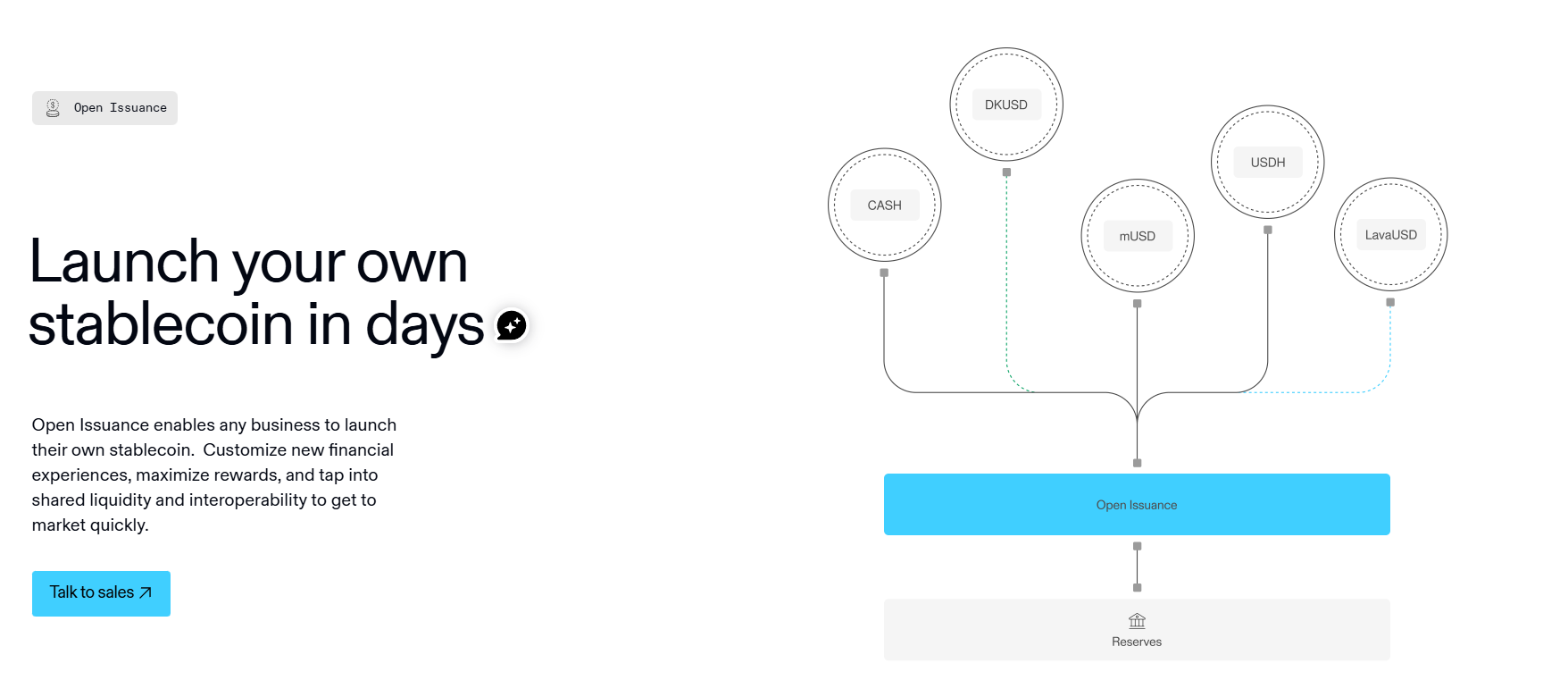
Stripe’s Open Issuance product (Source: Bridge)
The Open Issuance feature followed Stripe’s $1.1 billion acquisition of the stablecoin infrastructure firm Bridge, which was completed in February.
Related Articles:
About Author

About Author