


AI Contracts Deepen the Divide Among Bitcoin Miners
Public Bitcoin miners lost hashrate as long-term AI contracts made power reallocation more profitable than mining, deepening a sector split.
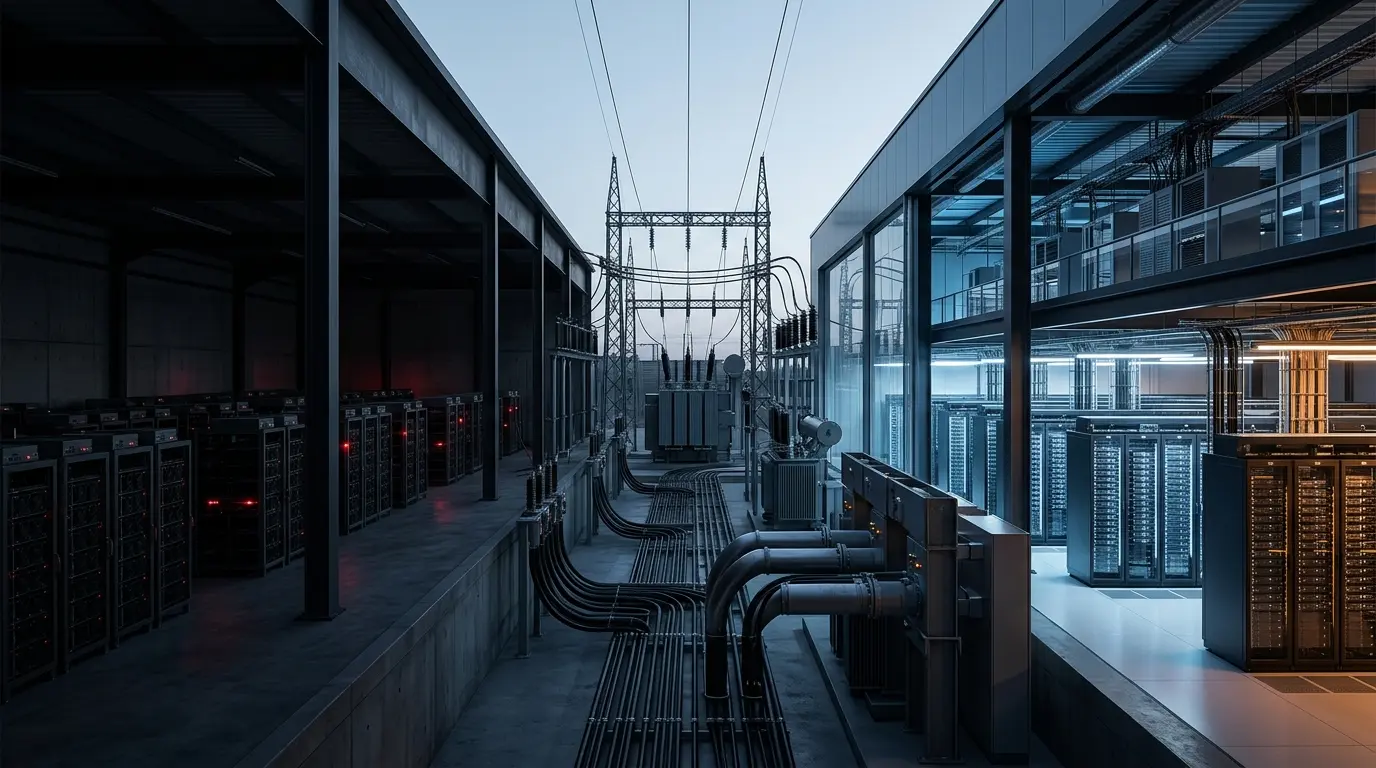
Publicly traded Bitcoin miners cut realized hashrate by 13.4% between the fourth quarter of 2025 and the second quarter of 2026, falling from 368.3 EH/s to 319 EH/s, according to BlocksBridge Consulting’s Miner Weekly newsletter. The decline outpaced the broader Bitcoin network, whose average hashrate dropped a comparatively modest 10.6% over the same window, signaling that public operators are repositioning capacity toward AI infrastructure faster than the network as a whole is shedding it.
The Gap Widens Once Bitdeer Is Stripped Out
The headline number understates how uneven the pivot has become across the sector. Excluding Bitdeer, which kept expanding its mining footprint, the remaining cohort’s realized hashrate fell 21.2% over six months, from 324.6 EH/s to 255.9 EH/s. Bitdeer itself moved in the opposite direction, growing 44% to 63 EH/s, according to BlocksBridge’s data as Cointelegraph reported.
That divergence is the clearest evidence yet that the industry is splitting into two camps: operators doubling down on proof-of-work economics, and operators converting power sites into data centers for hire. Core Scientific generated $136.7 million in colocation revenue during the second quarter, versus just $27.5 million from Bitcoin mining. TeraWulf reported $31.9 million in HPC lease revenue against $12.8 million from mining, meaning both companies now generate the majority of their revenue from non-mining activity.
A Longer, Deeper Slump Than the Charts Usually Show
The public-miner contraction sits inside a larger and more unusual network-wide slide. Bitcoin’s 30-day mean hash rate fell 19% between November 2025 and August 2026, dropping from 1,108 EH/s to 898 EH/s, a nine-month decline that Glassnode data flags as the longest in the network’s history. That is a different animal from the two prior comparable drawdowns: the 2021 China mining ban cut hashrate 42% in ten weeks but reversed within six months, and the 2024 post-halving purge shed 8% before new machines replaced the lost capacity within a quarter. Neither shows signs of bottoming as of August.
Mining difficulty has followed the hashrate lower, contracting 19.9% from a November 2025 peak near 156 trillion to 126.23 trillion. The metric now sits 1.1% below its level of a year ago, the first negative year-over-year reading since August 2021’s -21.2% print during the China exodus, and only the second sub-zero annual reading in Bitcoin’s history, according to Luxor’s Hashrate Index. Poolin, once the largest mining pool globally, filed for Chapter 11 protection in late July, underscoring how the margin squeeze is already producing casualties. For readers tracking how difficulty adjustments feed back into miner participation and network security more broadly, the mechanics behind hashrate and consensus economics remain the backdrop against which this contraction plays out.
The Contracts That Explain Why Capacity Isn’t Coming Back
Unlike prior hashrate shocks, this one is structural rather than cyclical. Public miners have signed more than $70 billion in long-term AI hosting contracts, locking power capacity into 12-to-20-year leases that make a Bitcoin-mining reversal economically irrational even if profitability recovers. Hut 8 reports a $26.6 billion contracted AI portfolio, Core Scientific leases roughly 1.1 GW to CoreWeave, and TeraWulf signed a 20-year lease with Anthropic worth about $19 billion. IREN and Cipher Mining added Microsoft and AWS deals worth $9.7 billion and $5.5 billion respectively.
AI hosting reportedly pays 3 to 25 times as much per megawatt as Bitcoin mining, which explains the math. Cohen & Company Capital Markets head of blockchain Christian Lopez put concrete numbers to the comparison, estimating that one megawatt of power over five years generates roughly $1.9 million in cumulative cash flow from Bitcoin mining versus a substantially larger sum from HPC and AI hosting contracts. With hashprice hovering near $30-32 per petahash per day, below breakeven for older fleets, and industry estimates suggesting 15-20% of machines running at a loss, the incentive to redirect power away from mining is not going away on its own.
The selling pressure that accompanied this shift has been notable in its own right. Public miners sold more than 32,000 BTC in the first quarter to fund the transition, a figure that outpaces total miner selling across all four quarters of 2025 combined, according to Keyrock’s research cited by industry trackers. That kind of treasury drawdown mirrors a broader theme playing out across publicly traded companies managing Bitcoin exposure against shifting balance-sheet incentives, even as some corporate holders take the opposite approach and pause accumulation entirely, as seen in Strategy’s recent halt on new BTC purchases.
Not Everyone Agrees the Shift Is Dangerous
Coinbase CEO Brian Armstrong has dismissed fears that the energy reallocation will damage Bitcoin’s price, while investor Chamath Palihapitiya has called the shift structural for miners rather than a passing phase. Bitwise Europe research head André Dragosch struck a more cautionary note, warning that miners could come to regret the pivot if mining profitability recovers and they’ve already signed away the power capacity to do anything about it.
BTC traded near $64,000 at the time of BeInCrypto’s reporting, roughly 49% below its October 2025 peak – the price collapse that triggered the exodus in the first place. Riot Platforms and Bitdeer remain much earlier in their own transitions, with mining still accounting for the vast majority of their revenue, which suggests the sector-wide split BlocksBridge documented is still in its early innings rather than fully played out.
What Comes Next
The signal worth watching through autumn is whether the year-over-year difficulty reading stays negative. A sustained negative print would confirm the network’s first structural security-budget contraction on record, rather than a temporary shake-out like 2021 or 2024. Either fresh mining capacity replaces the AI defectors in 2027, or Bitcoin heads into its next rally cycle with a measurably thinner hashpower cushion than it has ever operated with before.
Follow CoinNews on X and Telegram for ongoing coverage of Bitcoin mining economics and market structure.
About Author

About Author