


Best Cryptos to Buy Now: Top Coins to Invest in 2026
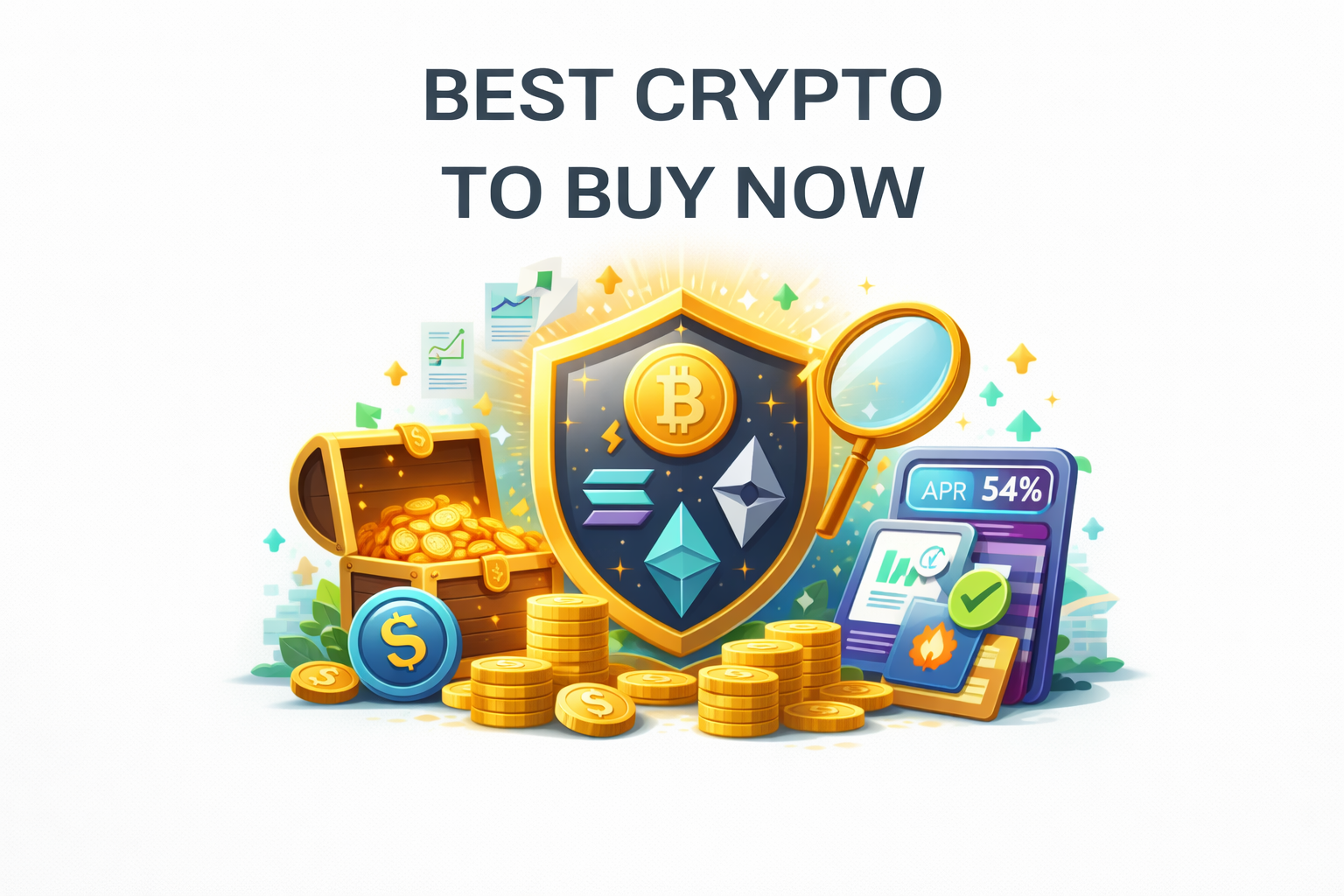
Your ideal choice depends on your risk tolerance and timeline. Presales like Bitcoin Hyper, MaxiDoge, and BMIC Token offer massive upside with extreme volatility. Bitcoin and Ethereum provide security and proven track records. Utility tokens like Chainlink bridge these extremes with real infrastructure and active adoption.
The crypto market houses over 20,000 different tokens, but only a handful deserve your attention and capital. We did the homework so you don’t have to, and built this list of the best crypto to buy now based on verified metrics and actual analysis.
Our selection process examines liquidity depth, security audits, token distribution, developer activity, and risk-adjusted return potential. Every project passed verification through official documentation and on-chain data before it earned a spot on this list.
Main Highlights About The Best Cryptos to Buy Now
These highlights summarize the key findings from our analysis of established cryptocurrencies, emerging infrastructure projects, and presale opportunities.
▪️ Coins like Bitcoin and Ethereum remain the safest long-term holds due to their established networks, institutional adoption, and proven resilience through market cycles.
▪️ Utility tokens with real usage metrics, such as Chainlink and The Graph, offer exposure to blockchain infrastructure that generates measurable demand independent of speculation.
▪️ Independent research separates profitable opportunities from costly mistakes. Verify on-chain metrics, developer activity, and actual usage before you commit capital to any project.
▪️ Security checks catch red flags early. Look for completed contract audits, locked liquidity, and doxxed teams before you send funds to any token address.
Cryptos to Buy Now for High-Risk/High-Reward: Alternatives

- Introducing the first Bitcoin L2 solution
- Allows users to trade BTC almost instantaneously
- Enhanced transaction security with ZK-proofs
 USDC
USDC ETH
ETH USDT
USDT

- High Staking Incentives / Yield Mechanism
- Strong Presale Momentum & Early Demand
- Meme Branding + Aspirational / Niche Positioning
 BNB
BNB Credit Card
- ETH
- +1 more

- Raising consciousness around the world
- Live social media app ready to scale to help communities
- Payments, NFTs and community membership
- USDC

- Layer-3 blockchain connecting Bitcoin, Ethereum and Solana
- Unified liquidity pools and a high-performance VM
- Lucrative staking rewards
- ETH
- Credit Card
- USDT
- +2 more

- Real Utility in the Creator Economy
- AI-Powered Tools and Automation
- Staking Incentives & Token Holder Benefits
- ETH
- Credit Card
- BNB

- Early-Entry Value & Strong Demand
- Utility Beyond Meme Hype
- Fairness & Holder Incentives
- Credit Card
- ETH
- BNB

- Multi-utility: Trading perks, rebates, real payments
- Stake VFX for projected APYs up to 67.7%
- Token issued by Vortex FX (the regulated forex broker itself)
- ETH
- BNB
- USDT

- Permissionless lending for any ERC-20 token, no gatekeepers
- Instant liquidity or fully customizable lending agreements
- Dual P2C and P2P markets for maximum flexibility
- ETH
- USDC
- USDT

- Meme token paired with AI trading
- Secret Pumpd Days give away surprise bonus rewards
- PUMPD Launchpad for new meme projects
- ETH
- USDC
- USDT
The presale category attracts traders for good reason. Prices sit at their lowest before exchange listings, and early buyers capture the biggest gains when launches go well. We screened active presales through our standard methodology and selected five that passed our checks for security, momentum, and community strength.
| 🪙 Coin | 📌Highlights | ✅ Pros | ❌ Cons |
|---|---|---|---|
| Bitcoin Hyper (HYPER) | Bitcoin-focused scaling network | Improves Bitcoin execution speed, enables smart contracts tied to BTC, and Targets DeFi use on Bitcoin | No live mainnet, strong Bitcoin L2 competition, and adoption depends on apps |
| MaxiDoge (MAXI) | Trader-focused meme project | Clear identity, simple token design, and strong niche appeal | No intrinsic utility, hype-driven demand, crowded meme segment |
| BMIC Token (BMIC) | Quantum-resistant wallet with AI security | Guards against future quantum attacks, hides public keys off-chain, and targets enterprise adoption | Theoretical threat timeline, no major partnerships yet, and unproven tech |
| LiquidChain (LIQUID) | Layer-3 scaling network | App-level optimization, modular architecture, and specialized use cases | Unproven Layer-3 demand, depends on lower layers and requires developers |
| SUBBD Token (SUBBD) | AI-powered creator subscription platform | 250M follower network, AI content tools, and an audited smart contract | Adoption-dependent value, subscription market competition, and unconfirmed listings |
| Little Pepe (LILPEPE) | Meme-branded Layer-2 ecosystem | Strong brand recognition, ecosystem ambition, and retail familiarity | Heavy Pepe competition, early utility stage, and momentum-dependent |
| VFX Token (VFX) | Solana-based RWA token with dual-yield income | Licensed forex firm with $40M AUM, 50% revenue share model, and Web3 spending card | Trading volume dependency, limited RWA track record, and Q1 2026 card launch timeline |
| AgoraLend (AGORA) | Permissionless DeFi lending protocol with dual P2C and P2P markets | Any ERC-20 token access, zero team/VC allocation, and 40% revenue buybacks | Scam token risk, P2P matching requirements, and oracle vulnerabilities |
| Pumpd (PUMPD) | Meme token with algorithmic price increases and Bitcoin-synced burns | Daily auto price appreciation, AI detection tools, and community-voted launchpad | BTC correlation risk, complex tokenomics, and 80-day capital lock |
1. Bitcoin Hyper (HYPER) – Bitcoin’s Speed Upgrade Through Layer-2 Innovation

Bitcoin Hyper adds a Layer-2 network that runs Solana Virtual Machine smart contracts directly on top of Bitcoin. The project addresses two persistent issues that have held Bitcoin back for years, namely slow transaction speeds and the lack of native programmability.
With smart contract functionality now on Bitcoin, the network can support applications that previously required users to move funds to other chains. A canonical bridge wraps BTC and mints it on the Layer-2, which lets users access DeFi, payments, and games without any load on the main chain.
For traders and developers who want Bitcoin exposure with faster execution, this setup offers a practical middle ground. They get Bitcoin’s security alongside the speed and flexibility that modern DeFi demands. The project turns Bitcoin into a programmable asset without altering its core protocol.
| 💸 Current Price | $0.013675 |
| 📈 Funds Raised | $32.01M |
| 🗓️ Launch Date | TBA |
| 💳 Payment Methods | ETH, USDT, BNB, or bank card |
| 📌 Why it made our list | Early-stage Bitcoin scaling project with innovative features |
| ✅ Pros | • Targets Bitcoin-style scaling via an L2-style network • Clear TGE catalyst after presale close • Strong visibility across crypto media |
| ❌ Cons | • No confirmed major exchange listings • Competes with established Bitcoin L2 narratives • Post-launch demand depends heavily on app adoption |
Resources
Website | Whitepaper | Coinsult audit | Official X / Telegram
2. MaxiDoge (MAXI) – The Gym-Bro Meme Coin for Leverage Addicts
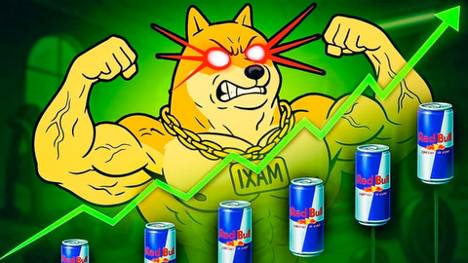
MaxiDoge puts a muscular spin on the classic doge meme with a bodybuilder Shiba Inu mascot who lives on caffeine, green candles, and 1000x futures positions. The project blends meme culture with an active trading community, which sets it apart from tokens that rely purely on viral attention.
Holders gain access to Community Alpha, a group where traders share strategies and compete in weekly challenges like Max Ripped and Max Gains. Top performers win prizes based on ROI results, which keeps the community engaged and rewards skill over luck.
The token runs on Ethereum with a fixed supply and zero inflation. No VCs or private investors hold tokens, so holders face less dump pressure once exchanges list MAXI. For meme coin fans who also want utility and competition, this project offers both under one roof.
| 💸 Current Price | $0.0002802 |
| 📈 Funds Raised | $4.96M |
| 🗓️ Launch Date | Early 2026 |
| 💳 Payment Methods | ETH, BNB, USDT, USDC, or bank card |
| 📌 Why it made our list | Strong presale momentum with defined tokenomics and competition mechanics |
| ✅ Pros | • Avoids complex token mechanics that often hide risk • Simple branding lowers the cognitive barrier for new users • Holder distribution remains visible through public explorers |
| ❌ Cons | • Lacks a revenue model or protocol cash flow • Long-term value depends entirely on community interest • Ethereum gas fees reduce small-ticket participation |
Resources
Website | Whitepaper | Solidproof audit | Official X / Telegram
3. BMIC Token (BMIC) – Quantum-Safe Wallet With Enterprise Ambitions
BMIC Token builds a wallet designed to resist quantum computing attacks. The project uses post-quantum cryptography to guard digital assets against future threats that current encryption may not handle as computing power grows.
Most conventional wallets expose public keys on-chain, and that could become a weak point over time. BMIC takes a different route and keeps keys completely concealed through a smart-account architecture that hides signatures. On top of that, an AI layer watches activity in real time and adjusts security settings when it spots unusual behavior.
To make all of that work, four layers power the system. Quantum security handles encryption and key protection, while quantum hardware connects providers of decentralized computing. Blockchain assist manages staking and governance, and AI orchestration ties it all together. Down the line, the team plans to add enterprise APIs and a crypto card for everyday use.
| 💸 Current Price | $0.049474 |
| 📈 Funds Raised | $698.13K |
| 🗓️ Launch Date | TGE after presale (no fixed date), roadmap through 2028 |
| 💳 Payment Methods | ETH, USDT, USDC |
| 📌 Why it made our list | Prepares wallets for quantum-era threats before they arrive |
| ✅ Pros | • Post-quantum cryptography shields assets from “harvest now, decrypt later” attacks • Signature-hiding architecture eliminates on-chain public key exposure • Four-layer system covers wallet security, staking, and enterprise use cases |
| ❌ Cons | • Quantum threats remain theoretical for now, which may limit immediate appeal • Hard cap of $40 million sets ambitious fundraising expectations |
Resources
Website | Whitepaper | Security audit | Official X / Telegram
4. LiquidChain (LIQUID) – One Token for Three Major Blockchains
LiquidChain sits above Bitcoin, Ethereum, and Solana as a Layer-3 network that pools liquidity from all three chains into a single execution environment.
The system routes value through a shared layer without traditional bridges or wrapped assets. Because it skips these legacy methods, users avoid the complexity and security risks that come with current multi-chain setups. Transactions settle through cryptographic proofs that verify positions across all connected networks.
Each chain brings something different to the table. Bitcoin offers deep liquidity, Ethereum provides smart contract flexibility, and Solana adds speed. LiquidChain lets applications tap all three at once while users stay within their preferred ecosystem.
| 💸 Current Price | $0.0135 |
| 📈 Funds Raised | $330,000 |
| 🗓️ Launch Date | Mainnet Q2 2026, CEX listings Q3 2026 |
| 💳 Payment Methods | ETH, USDT, or bank card |
| 📌 Why it made our list | Addresses performance bottlenecks that remain even on modern Layer-2 networks |
| ✅ Pros | • Layer-3 design allows customization without altering base layers • Can specialize in niches like gaming, trading, or data apps • Appeals to app teams that need predictable performance |
| ❌ Cons | • Competes with rollups that already serve similar use cases • Harder narrative sells compared to L1 or L2 tokens • Requires strong developer traction to justify existence |
Resources
Website | Whitepaper | CertiK audit | Official X / Telegram
5. SUBBD Token (SUBBD) – AI-driven Subscription Platform Secured by Blockchain

SUBBD Token builds a subscription platform on Ethereum that routes payments directly between fans and creators. Traditional platforms take 30-50% cuts and delay payouts for weeks, but SUBBD eliminates both problems.
Over 2,000 influencers with a combined 250 million followers already use the platform. Token holders unlock premium content, reduced subscription fees, and AI tools that automate video editing, scheduling, and fan engagement. Early participants earn 20% staking APY during the presale.
AI integration sets this project apart. Creators can generate voice clones, build AI influencer personas, and deploy personal assistants for routine interactions. Fans receive verified creator-approved content, which addresses deepfake concerns.
| 💸 Current Price | $0.0574875 |
| 📈 Funds Raised | $1.4M |
| 🗓️ Launch Date | Q1 2026 |
| 💳 Payment Methods | ETH, BNB, USDT, USDC, or bank card |
| 📌 Why it made our list | Presale token with existing platform traction and clear utility in a multi-billion-dollar market |
| ✅ Pros | • 250 million followers already use the platform through 2,000+ creators • AI tools add real utility for content production and fan interaction • SolidProof and Coinsult audits verified the smart contract |
| ❌ Cons | • Token value depends on platform adoption after launch • Competes with established subscription services like Patreon • Exchange listings remain unconfirmed |
Resources
Website | Whitepaper | Solidproof audit | Official X / Telegram
6. Little Pepe (LILPEPE) – Custom Layer-2 Blockchain for Meme Ecosystems

Little Pepe launches its own EVM-compatible Layer-2 chain built specifically for meme projects. The chain removes buy and sell taxes entirely, which lets traders keep more of their profits. For a sector plagued by hidden fees, this approach stands out.
Anti-sniper protections block bots from front-running launches. This solves a problem that has burned retail investors on other platforms time and time again. Developers can also deploy smart contracts directly without any code modifications, which lowers the barrier to entry.
A native launchpad called Pepe’s Pump Pad will let creators launch new tokens with locked liquidity from day one. Locked liquidity prevents rug pulls where developers drain funds overnight, so investors can enter with more confidence. The project essentially builds a safer playground for meme coin trading.
| 💸 Current Price | $0.0022 |
| 📈 Funds Raised | $27.8 million |
| 🗓️ Launch Date | Q1 2026 |
| 💳 Payment Methods | ETH, USDT, BNB, or bank card |
| 📌 Why it made our list | Layer-2 infrastructure with massive presale traction and confirmed listing price |
| ✅ Pros | • Uses a recognizable mascot that lowers discovery friction • Focuses on community-driven growth over centralized control • Attempts to bridge meme appeal with broader ecosystem goals |
| ❌ Cons | • Utility remains largely conceptual at this stage • Competes directly with multiple established Pepe variants • Lacks clear differentiation at the technical level |
Resources
Website | Whitepaper | CertiK audit | Official X / Telegram
7. VFX Token (VFX) – Real-World Asset Token Bridges Forex Trading With DeFi Yields
VFX Token connects regulated forex trading with DeFi through a revenue-sharing model that pays token holders directly. The licensed firm behind VFX trades 1,500+ lots daily and generates $150,000 monthly from broker rebates. It directs 50% of this revenue to stakers and token buybacks, and stakers earn up to 67.7% APY from real trade volume.
Holders spend rewards through the VFX Card, a Web3-powered Visa/Mastercard that burns tokens with each transaction. A fixed supply of 100 million VFX tokens prevents dilution, and 24-month team locks plus transparent tokenomics protect early investors. Governance rights activate in Q2 2026 through DAO votes.
| 💸 Current Price | $0.355 |
| 📈 Funds Raised | $2.21M |
| 🗓️ Launch Date | Q1 2026 |
| 💳 Payment Methods | ETH, USDT, BNB, USDC (Solana-compatible wallets) |
| 📌 Why it made our list | Connects regulated forex trading profits directly to token holders through staking rewards and trading rebates. |
| ✅ Pros | • Licensed trading firm with $40M AUM provides a verifiable revenue source and regulatory compliance • 50% revenue share model allocates half of all broker rebates directly to token holders through staking and buybacks • Fixed 100M supply with no minting prevents dilution and creates scarcity as demand increases |
| ❌ Cons | • Roadmap delays are common in card launches, and the Q1 2026 timeline may push back key utility feature • Only 10% public allocation in the seed round, with 50% TGE unlock, could create immediate sell pressure at launch |
Resources
Website | Whitepaper | SolidProof audit | Official X / Telegram
8. AgoraLend (AGORA) – Permissionless Lending for Every Token Holder

AgoraLend removes traditional asset restrictions from decentralized finance and opens its lending markets to any ERC-20 token without permission requirements. Community tokens, memecoins, and niche assets can access credit markets immediately after launch.
Dual lending mechanisms drive the protocol’s functionality. Automated peer-to-contract pools deliver instant liquidity, while peer-to-peer agreements allow users to negotiate custom loan terms. Depositors receive dTokens that accrue yield automatically. The 4 billion AGORA token supply allocates 50% to presale participants, with zero tokens reserved for team members or venture capital firms.
Interest fees, liquidation penalties, and yield spreads create three revenue streams for the protocol. AgoraLend directs 40% of all revenue toward AGORA token buybacks from open markets and burns these tokens permanently. Each buyback cycle shrinks the circulating supply.
| 💸 Current Price | $0.00555 |
| 📈 Funds Raised | $510.42K |
| 🗓️ Launch Date | Q1 or Q2 2026 |
| 💳 Payment Methods | ETH, BNB, SOL, TRX, or TON |
| 📌 Why it made our list | Combines peer-to-contract pools and peer-to-peer lending to deliver flexibility that single-market protocols cannot provide |
| ✅ Pros | • Permissionless listing lets any ERC-20 token create lending markets without approval • Zero team and zero VC token allocation eliminates insider dump risk • Dual P2C and P2P lending models accommodate different user preferences |
| ❌ Cons | • P2P lending requires active counterparty matches for illiquid assets • Oracle dependencies introduce potential manipulation vectors • New lending protocols face adoption challenges against established competitors |
Resources
Website | Whitepaper | CertiK audit | Official X / Telegram
9. Pumpd (PUMPD) – Meme Token with Algorithmic Daily Price Increases
Pumpd builds automatic price appreciation into its presale structure through a bonding curve that responds to Bitcoin movements, presale demand, and staking activity. Over 80 days, token prices climb every 24 hours without manual intervention.
Bitcoin price gains directly affect PMPD supply through an automated burn mechanism. Every 1% BTC increase activates a 0.25% token burn at random intervals. Supply reduction occurs automatically and ties token scarcity to broader market momentum.
Stakers receive more than yield. AI-powered trading tools scan Twitter and Telegram to identify trend signals, monitor whale wallet activity, and forecast meme coin breakouts. Community members vote through the launchpad feature to select which new projects receive platform support and resources.
| 💸 Current Price | $0.000412 |
| 📈 Funds Raised | $2.63K |
| 🗓️ Launch Date | TBA |
| 💳 Payment Methods | BTC, ETH, SOL, BNB, USDT, or credit cards |
| 📌 Why it made our list | Links community staking activity directly to token price mechanics through automated bonding curve adjustments |
| ✅ Pros | • Bitcoin burn sync creates automatic deflation during BTC bull runs • AI trading tools provide tangible utility that goes past simple speculation • Random Pumpd Days add surprise bonus opportunities |
| ❌ Cons | • Bitcoin correlation may amplify losses during BTC downturns • Complex tokenomics could confuse casual retail investors • 80-day presale requires patient capital commitment |
Resources
Website | Whitepaper | CertiK audit | Official X / Telegram
What is the Best Crypto to Buy Now: Long-Term Investment Alternatives
A long-term portfolio needs coins that won’t disappear in the next crash. These eight passed that test across multiple cycles, offer reliable liquidity, and still receive regular protocol updates. Below is a summary of what each one brings.
| 🪙 Coin | 📌Highlights | ✅ Pros | ❌ Cons |
|---|---|---|---|
| Bitcoin (BTC) | Store-of-value benchmark | Limited programmability, fee spikes, and low upgrades | Limited programmability, fee spikes, and slow upgrades |
| Ethereum (ETH) | Smart contract leader | Largest dev base, deep DeFi usage, and strong L2 support | High L1 fees, complex scaling stack, and MEV exposure |
| Binance Coin (BNB) | Exchange utility token | Constant usage demand, fast transactions, and deflationary supply | Binance dependency, centralization risk, and scam exposure |
| Solana (SOL) | High-performance Layer-1 | Past outages, high validator costs, and uneven app quality | Past outages, high validator costs, and uneven app quality |
| Cardano (ADA) | Research-driven Layer-1 | Very low fees, fast finality, and strong app growth | Slow ecosystem growth, few flagship apps, and dev complexity |
| Polkadot (DOT) | Interoperability network | Shared security model, specialized chains, and strong engineering | Complex value capture, slower retail adoption, and competing designs |
| Polygon (POL) | Ethereum scaling layer | Broad adoption, enterprise traction, and Ethereum compatibility | Token transition friction, fragmented stack, and L2 competition |
| XRP (XRP) | Payments-focused blockchain | Fast settlement, high liquidity, and global access | Centralization perception, legal sensitivity, and limited DeFi |
1. Bitcoin (BTC) – Digital Gold and Core Portfolio Foundation
Bitcoin has operated continuously for 16 years, which makes it the oldest and most established cryptocurrency on the market. Its investment thesis rests on scarcity, security, and accumulated trust. The network maintains virtually 100% uptime and processes billions in daily value.
Institutional adoption accelerated dramatically in 2025. Exchange-traded funds, corporate treasuries, and sovereign governments now absorb more coins than miners produce. Strategy (formerly MicroStrategy) alone holds over 671,000 BTC worth approximately $60 billion.
| 💸 Current Price | BTC live price |
| 📈 Market Cap | $1.76T |
| 🔄 Circulating Supply | 19.98M BTC |
| 🔍 Where to Buy | Binance, Coinbase, Kraken, Bitstamp, OKX, Upbit, Gate, KuCoin |
| 📌 Why it made our list | Anchors long-term portfolios with unmatched network security |
| ✅ Pros | • Deepest liquidity in crypto • Strongest security model • Fixed supply narrative |
| ❌ Cons | • Limited native programmability • Fee spikes during congestion • Yield requires external layers |
Resources
Website | Whitepaper | Contract adress | Reddit / Github
2. Ethereum (ETH) – The Decentralized Supercomputer
Ethereum powers the vast majority of DeFi, NFTs, and Web3 applications. The 2022 Merge to Proof-of-Stake transformed its tokenomics, and ETH now experiences slight deflation as fee burns often exceed new issuance during periods of high network activity.
Developer activity on Ethereum remains unmatched, with roughly five times more active developers than the next largest ecosystem. Layer-2 rollups like Arbitrum, Optimism, and Base have dramatically reduced transaction costs while the mainnet maintains security.
| 💸 Current Price | ETH live price |
| 📈 Market Cap | $360.77B |
| 🔄 Circulating Supply | 120.69M ETH |
| 🔍 Where to Buy | Binance, Coinbase, Kraken, OKX, Bybit, Gate, KuCoin, MEXC |
| 📌 Why it made our list | Leading utility platform for real on-chain activity |
| ✅ Pros | • Largest smart contract ecosystem • Deep DeFi and stablecoin usage • Layer-2 scaling stack |
| ❌ Cons | • High Layer-1 fees at peak usage • MEV-related risks • Upgrade complexity |
Resources
Website | Whitepaper | Contract adress | Official X
3. Binance Coin (BNB) – Exchange Utility With Deflationary Burns
BNB functions as the native token for both the world’s largest exchange and the BNB Smart Chain. Transaction fee discounts on Binance drive constant buy pressure, and every on-chain activity requires BNB for gas.
Quarterly burns systematically reduce supply, with recent burns that removed approximately 1.5-2 million BNB each quarter. Over the past two years, the token’s total supply has shrunk roughly 12%, which translates to an annualized deflation rate near 5%.
BNB Chain consistently ranks among the top blockchains by daily transactions and active addresses. Low fees attract retail users who find Ethereum too expensive for smaller trades.
| 💸 Current Price | BNB live price |
| 📈 Market Cap | $122B |
| 🔄 Circulating Supply | 136.36M BNB |
| 🔍 Where to Buy | Binance, OKX, Bybit, PancakeSwap, KuCoin, Bitget, MEXC |
| 📌 Why it made our list | Exchange-backed utility token with constant usage |
| ✅ Pros | • Native utility across Binance products • Low-cost, fast transactions • Regular token burns |
| ❌ Cons | • Heavy dependence on Binance • Centralization concerns • Scam saturation on BNB Chain |
Resources
Website | Whitepaper | Contract adress | Official X / Telegram
4. Solana (SOL) – High-Performance Layer-1 for Consumer Applications
In theory, Solana can process 65,000+ transactions per second, and it regularly sustains 2,000-3,000 TPS on-chain. Transaction confirmations finalize in approximately 400 milliseconds, and fees remain minimal.
The ecosystem recovered strongly after the 2022 FTX collapse. Developer activity now ranks second among all blockchains, and Solana hosts major consumer applications, NFT marketplaces, and DeFi protocols that benefit from its speed and low costs.
Nearly 70% of SOL sits in staking contracts, where validators earn approximately 6-7% annual yield. Visa has experimented with Solana for stablecoin settlements, a move that signals institutional interest in the network’s capabilities.
| 💸 Current Price | SOL live price |
| 📈 Market Cap | $71.44B |
| 🔄 Circulating Supply | 566.06M SOL |
| 🔍 Where to Buy | Binance, Coinbase, Kraken, OKX, Jupiter, Raydium, OKX, Bitget, KuCoin |
| 📌 Why it made our list | High-growth L1 optimized for speed and scale |
| ✅ Pros | • High throughput with very low fees • Strong consumer app traction • Active developer ecosystem |
| ❌ Cons | • Past network outages • High validator hardware requirements • App quality varies widely |
Resources
Website | Whitepaper | Contract adress | Official X / Telegram
5. Cardano (ADA) – Research-First Blockchain Development
Cardano takes a methodical approach to blockchain development, with peer-reviewed research that backs every upgrade. The project uses formal verification methods and the Haskell programming language, both of which enhance security.
ADA has a fixed supply cap of 45 billion tokens, and more than 60% of them are currently in staking contracts. The Ouroboros Proof-of-Stake consensus represents the first provably secure PoS protocol.
The team continues to develop Hydra Layer-2 scaling and the Voltaire era for on-chain governance. Real-world partnerships include identity solutions and government projects in Africa.
| 💸 Current Price | ADA live price |
| 📈 Market Cap | $12.86B |
| 🔄 Circulating Supply | 36.04B ADA |
| 🔍 Where to Buy | Binance, Coinbase, Kraken, Minswap, SundaeSwap, OKX, Bitget, KuCoin, MEXC |
| 📌 Why it made our list | Prioritizes protocol stability and peer-reviewed development with one of the largest staking communities |
| ✅ Pros | • Research-driven protocol design • High staking participation • Strong long-term holder base |
| ❌ Cons | • Slower ecosystem growth • Fewer flagship apps • Steep developer learning curve |
Resources
Website | Whitepaper | Contract adress | Official X / Telegram
6. Polkadot (DOT) – Multichain Network for Web3 Interoperability
Polkadot connects specialized blockchains called parachains into one interoperable ecosystem that a central Relay Chain secures. The network can host up to 100 parachains that share security while they maintain custom optimizations.
Live parachains include Acala (DeFi hub), Moonbeam (Ethereum-compatible contracts), and Astar (dApp platform). Projects secure slots through auctions where participants lock DOT, which creates consistent demand for the token.
This design positions Polkadot for a multi-chain future where specialized networks need secure communication channels. Cross-chain message passing (XCMP) enables seamless interaction between parachains.
| 💸 Current Price | DOT live price |
| 📈 Market Cap | $3.25B |
| 🔄 Circulating Supply | 1.64B DOT |
| 🔍 Where to Buy | Binance, Coinbase, Kraken, OKX, KuCoin, MEXC, Bitget |
| 📌 Why it made our list | Focuses on native interoperability through a shared-security model |
| ✅ Pros | • Built for multi-chain interoperability • Shared security architecture • Strong technical foundation |
| ❌ Cons | • Slower retail adoption • Indirect value capture • Messaging inconsistency |
Resources
Website | Whitepaper | Contract adress | Official X / Telegram
7. Polygon (POL) – Ethereum’s Premier Scaling Solution
Polygon provides Layer-2 scaling for Ethereum through its PoS sidechain and currently develops zkEVM technology. Major brands like Starbucks, Reddit, and Nike have built on Polygon for consumer-facing blockchain applications.
The network processes transactions at a fraction of Ethereum’s cost and maintains full compatibility with Ethereum’s developer tools. Enterprise partnerships bring mainstream users who might otherwise never interact with blockchain technology.
Polygon 2.0 aims to unify all scaling solutions under one value layer, a move that could increase utility for the POL token across multiple chains.
| 💸 Current Price | POL live price |
| 📈 Market Cap | $1.24B |
| 🔄 Circulating Supply | 10.58B POL |
| 🔍 Where to Buy | KuCoin, Binance, Coinbase, Uniswap, KuCoin, MEXC |
| 📌 Why it made our list | Extends Ethereum’s reach through scaling solutions with real production use |
| ✅ Pros | • Major Ethereum scaling provider • Broad enterprise integrations • Large developer base and updated token design |
| ❌ Cons | • Token transition confusion • Heavy L2 competition • Fragmented product stack |
Resources
Website | Whitepaper | Contract adress | Official X / Telegram
8. XRP (XRP) – Cross-Border Payment Infrastructure
XRP settles transactions in 3-5 seconds with fees below $0.01, which makes it ideal for fast, cheap value transfer. Ripple’s On-Demand Liquidity product uses XRP for cross-border remittances and handles billions in volume across hundreds of corridors.
The 2023 court ruling provided regulatory clarity in the United States and lifted a significant overhang that had suppressed the token’s price. Remittance providers and banks now integrate XRP for liquidity, and partnerships with financial institutions continue to grow.
The XRP Ledger has operated reliably since 2012. Because it requires no mining, the network appeals to institutions with ESG mandates.
| 💸 Current Price | XRP live price |
| 📈 Market Cap | $116B |
| 🔄 Circulating Supply | 60.85B XRP |
| 🔍 Where to Buy | Binance, Kraken, Coinbase |
| 📌 Why it made our list | Large-cap payments token with distinct behavior |
| ✅ Pros | • Fast transaction settlement • High liquidity combined with global exchange access • Payments-focused narrative |
| ❌ Cons | • Centralization perception • Legal headline risk • Limited DeFi ecosystem |
Resources
Website | Whitepaper | Contract adress | Official X
High-Growth Cryptos: Best Alternatives for Utility
Utility tokens derive value from actual usage rather than speculation alone. These five projects provide essential blockchain infrastructure with measurable adoption metrics. Revenue generation, query counts, and total value secured demonstrate real-world demand.
| 🪙 Coin | 📌Highlights | ✅ Pros | ❌ Cons |
|---|---|---|---|
| Best Wallet Token (BEST) | Wallet ecosystem token | In-app utility, fee alignment and multi-chain access | Strong wallet competition, adoption-linked value, and weak standalone demand |
| Chainlink (LINK) | Oracle infrastructure | Market-leading oracles, deep integrations, and strong network effects | Weak value capture, economic complexity, and growing competition |
| The Graph (GRT) | Blockchain data indexing | Core data layer, multi-chain support, and developer reliance | Token underperformance, RPC competition, and unlock pressure |
| Filecoin (FIL) | Decentralized storage | Real storage demand, global providers, and a long history | Capital-intensive model, UX friction, and cloud competition |
| Maker (MKR) | DeFi governance token | Controls protocol revenue, DAI exposure and proven resilience | Governance risk, regulatory exposure, and system complexity |
1. Best Wallet Token (BEST) – Non-Custodial Wallet Ecosystem Token
Best Wallet Token anchors a comprehensive mobile wallet ecosystem that spans 60+ blockchains and thousands of cryptocurrencies. A built-in DEX aggregator scans 330 exchanges to secure optimal trade execution for every swap.
Token holders unlock reduced swap fees, boosted staking rewards, and priority access to vetted presales via the Upcoming Tokens portal. The wallet surpassed 500,000 downloads before its presale closed in November 2025 with $17.6 million raised.
Security comes from Fireblocks’ MPC-CMP technology, which eliminates the need for seed phrases while maintaining institutional-grade protection. The token now trades on KuCoin, MEXC, and Uniswap.
| 💸 Current Price | $0.001493 |
| 📈 Market Cap | $2.49M |
| 🔄 Circulating Supply | 1.67B BEST |
| 🔍 Where to Buy | Uniswap, KuCoin, MEXC, KCEX |
| 📌 Why it made our list | Early-stage utility token linked to real user activity |
| ✅ Pros | • Direct wallet utility • In-app fee and perk alignment • Presale discovery integration |
| ❌ Cons | • Value tied to wallet adoption • Security reputation still builds compared to established wallets • Must maintain constant feature parity to stay relevant |
Resources
Website | Whitepaper | Contract adress | Official X / Telegram
2. Chainlink (LINK) – Universal Data Connector for Smart Contracts

Chainlink serves as the backbone for much of crypto’s real-world utility because it enables smart contracts to access off-chain data. Virtually every major DeFi protocol relies on Chainlink price oracles for accurate, tamper-proof price feeds.
The network processed a record 6.49 billion data requests in Q2 2025 and marked four consecutive quarters of growth. More than 1,700 projects across DeFi, gaming, insurance, and enterprise blockchains use Chainlink services.
Cross-Chain Interoperability Protocol (CCIP) bridges traditional finance with blockchain networks. Swift ran a successful pilot that linked 11,000+ banks to multiple blockchains through Chainlink infrastructure.
| 💸 Current Price | LINK live price |
| 📈 Market Cap | $8.59B |
| 🔄 Circulating Supply | 708.09M LINK |
| 🔍 Where to Buy | Supplies critical data infrastructure for DeFi, stablecoins, and tokenized assets |
| 📌 Why it made our list | Binance, Coinbase, Kraken, OKX, Uniswap |
| ✅ Pros | • Dominant oracle provider • Deep DeFi integration • Strong network effects and high liquidity |
| ❌ Cons | • Price often lags adoption • Systemic oracle risk • Complex economics |
Resources
Website | Whitepaper | Contract adress | Official X / Telegram
3. The Graph (GRT) – Blockchain Data Indexing Protocol
The Graph delivers critical indexing and querying for blockchain data through Subgraphs that developers create to enable fast, complex searches across on-chain activity. Without it, many dApps would struggle to display data efficiently to users.
The decentralized network processed 6.49 billion queries in Q2 2025, which demonstrates continued growth as Web3 applications multiply. The protocol now supports 39 different blockchain networks and can add more as demand increases.
Token holders can delegate to indexers and earn a share of query fees. This structure creates passive yield tied directly to network usage instead of inflationary emissions.
| 💸 Current Price | GRT live price |
| 📈 Market Cap | $399.63M |
| 🔄 Circulating Supply | 10.65B GRT |
| 🔍 Where to Buy | Essential data layer for decentralized apps |
| 📌 Why it made our list | Binance, Coinbase, Kraken, Uniswap |
| ✅ Pros | • Core blockchain data indexer • Multi-chain support • Sticky developer demand |
| ❌ Cons | • Competes with RPC providers • Economic complexity combined with unlock pressure • Underperforms during meme cycles |
Resources
Website | Whitepaper | Contract adress | Official X / Telegram
4. Filecoin (FIL) – Decentralized Storage Network

Filecoin dominates decentralized storage through a marketplace where anyone can sell unused space. The network stores petabytes of data across NFT assets, academic datasets, and Web3 applications.
Storage providers earn FIL each time they prove they maintain data correctly. The protocol launched smart contracts (FEVM) in 2023, and this update enabled storage-oriented DeFi and perpetual storage deals. More than 4,000 storage providers now operate globally.
Cost per gigabyte often undercuts traditional cloud providers for cold storage. Partnerships with the Internet Archive and other institutions validate the network’s reliability for long-term data preservation.
| 💸 Current Price | FIL live price |
| 📈 Market Cap | $953.52M |
| 🔄 Circulating Supply | 740.54M FIL |
| 🔍 Where to Buy | Binance, Coinbase, Kraken, OKX |
| 📌 Why it made our list | Targets decentralized storage as a distinct, non-financial crypto use case |
| ✅ Pros | • Decentralized storage focus • Clear real-world use case • Long project history |
| ❌ Cons | • UX challenges • Centralized cloud competition • Capital-intensive network |
Resources
Website | Whitepaper | Contract adress | Official X
5. Maker (MKR) – Governance Token for DAI Stablecoin

Maker governs DAI, the largest decentralized stablecoin with over $5 billion in circulation. MKR holders control stability fees, collateral types, and risk parameters that shape DAI’s monetary policy.
The protocol allocates reserve capital to real-world assets like U.S. Treasury bonds and generates substantial yield from these positions. Over 80% of Maker’s revenue now comes from RWA investments instead of crypto loan interest, and these surplus funds MKR buybacks and burns.
DAI Savings Rate offers holders approximately 3.3% yield, which the actual protocol revenue backs. The “Endgame Plan” aims to decentralize governance further through specialized subDAOs.
| 💸 Current Price | MKR live price |
| 📈 Market Cap | $1.27B |
| 🔄 Circulating Supply | 847.22K MKR |
| 🔍 Where to Buy | Coinbase, Binance, Bitstamp, Balancer |
| 📌 Why it made our list | Proven DeFi governance asset with real cash flow exposure |
| ✅ Pros | • Governs the DAI stablecoin system • Real protocol control • Strong fee-driven model |
| ❌ Cons | • Governance risk • Smart contract exposure • Regulatory sensitivity and high complexity |
Resources
Website | Whitepaper | Contract adress | Official X / Telegram
Where to Find the Best Crypto Coins to Buy
Different platforms serve different needs. Your choice depends on experience level, trading frequency, and the specific coins you want to buy.
🎯 Major exchanges like Coinbase, Binance, and Kraken offer fiat on-ramps, deep liquidity, and familiar interfaces. These platforms handle custody and provide customer support for less experienced users. KYC requirements apply, and fees vary by payment method and volume tier.
🎯 DEXs like Uniswap, PancakeSwap, and Jupiter handle wallet-to-wallet trades without middlemen. No signups, no ID checks, and you hold your assets the entire time. Pair these platforms with one of our recommended decentralized crypto wallets for a fully self-custodial setup.
🎯 Presale websites and launchpads offer the earliest access to new tokens. Projects like Bitcoin Hyper, Maxi Doge, or LiquidChain sell directly to investors before exchange listings. Best Wallet’s Upcoming Tokens feature curates vetted presales within the app.
🎯Platforms like CoinGecko, CoinMarketCap, and DeFiLlama provide research, but not direct purchases. Use these tools to compare prices across exchanges, verify contract addresses, and track market cap and volume metrics.
⚠️ Price alerts help you time entries during volatility. Historical data reveals patterns that inform position size and entry points.
Advantages of Buying Crypto
Crypto investment offers distinct advantages that traditional assets cannot replicate. These benefits help you allocate capital appropriately within a diversified portfolio.
Portfolio Diversification
Crypto assets demonstrate low correlation to traditional stocks and bonds during certain market conditions. This diversification can reduce overall portfolio volatility when assets move independently. A small allocation (typically 1-10%) provides exposure without excessive concentration risk.
Exposure to Emerging Technology
Blockchain networks power applications across finance, gaming, identity, and data storage. Native tokens provide direct participation in these ecosystems’ growth. Early positions in successful protocols have generated returns impossible in traditional markets.
Global Accessibility
Cryptocurrency operates 24/7 across borders without bank hours or geographic restrictions. Anyone with internet access can participate in markets previously limited to accredited investors or specific jurisdictions. Remittance and payment applications serve the unbanked population worldwide.
Self-Custody and Control
Non-custodial wallets give you complete control over your assets. No bank can freeze your account or delay withdrawals. This sovereignty comes with responsibility for security, but the tradeoff appeals to those who distrust centralized institutions.
What Are the Risks of Buying Cryptocurrencies?
Every advantage carries corresponding risks. An honest assessment of these dangers helps you size positions appropriately and avoid devastating losses.
Market Volatility
Crypto prices regularly swing 10-20% within days. Bitcoin has experienced multiple 50%+ drawdowns even during bull markets. New investors often panic-sell at the worst moments. Position size should assume your entire investment could temporarily lose half its value.
Regulatory Uncertainty
Government treatment of cryptocurrency varies by jurisdiction and changes frequently. New regulations can suddenly restrict trades, affect tax treatment, or ban specific activities. Stay informed about your local regulatory environment and maintain compliance with tax reports.
Security and Custody Risks
Exchange hacks, smart contract exploits, and phishing attacks have cost investors billions. Centralized platforms can freeze withdrawals when crises hit. Self-custody demands careful seed phrase management, and the best anonymous crypto wallets add privacy to that protection
Liquidity and Exit Risk
Not all tokens have sufficient trade volume for clean exits. Large positions in small-cap tokens move prices against you when you sell. Presale tokens may have lock-up periods or thin liquidity at launch. Always check daily volume relative to your position size before you enter.
How to Buy Crypto Safely in 5 Quick Steps
The process follows a straightforward path from platform selection to secure storage. Each step builds on the previous one to create a secure foundation for your crypto holdings.
1️⃣ Choose a Platform and Complete Verification
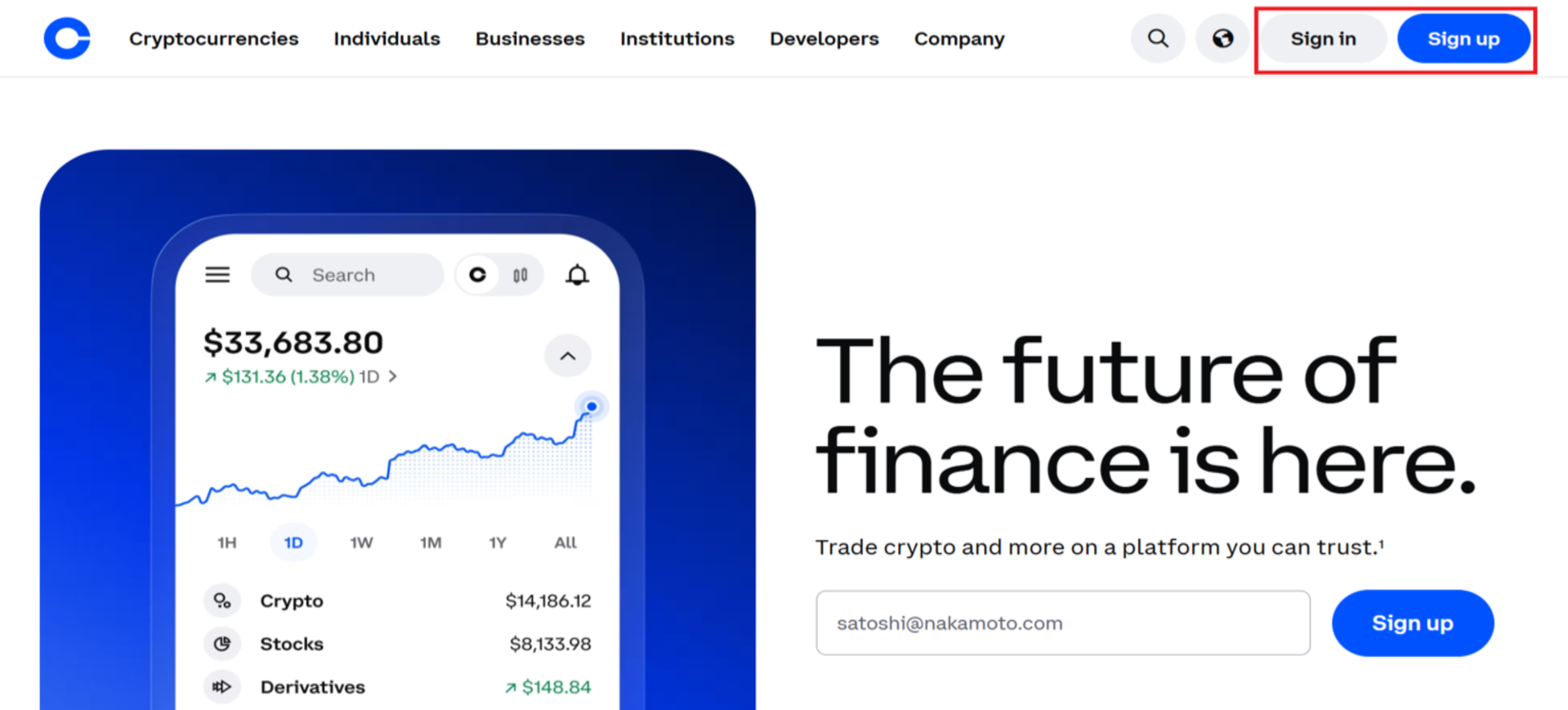
Start with established exchanges (i.e., Binance, Coinbase, Kraken) that maintain strong security records and regulatory compliance. Create your account and complete the required identity verification promptly. Enable two-factor authentication immediately after account creation. Hardware security keys provide stronger protection than SMS or authenticator apps.
2️⃣ Navigate to Buy & Sell
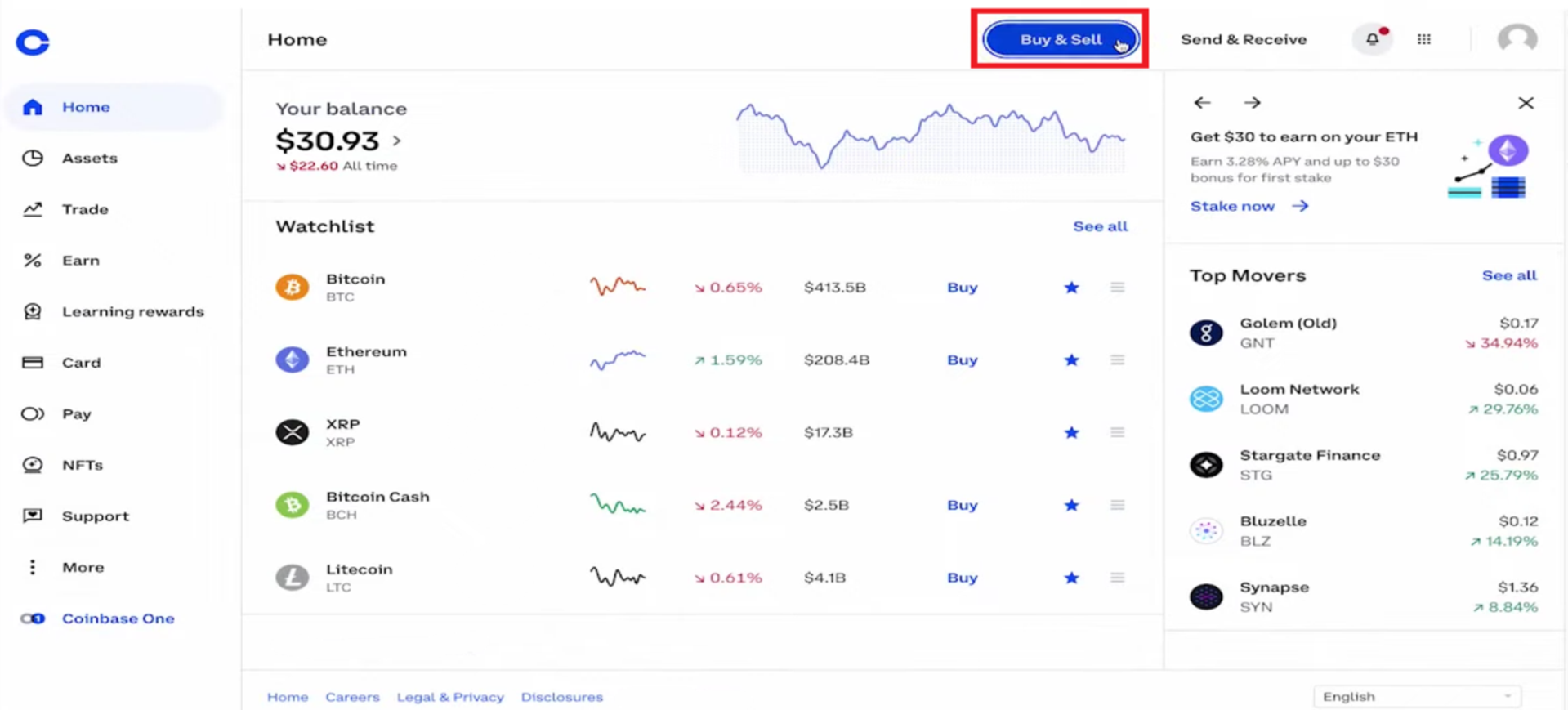
Once verified, locate the buy and sell section on your chosen platform. Most exchanges place this prominently on the main dashboard. Coinbase displays a clear “Buy & Sell” button at the top of the interface.
3️⃣ Select Your Asset and Payment Method
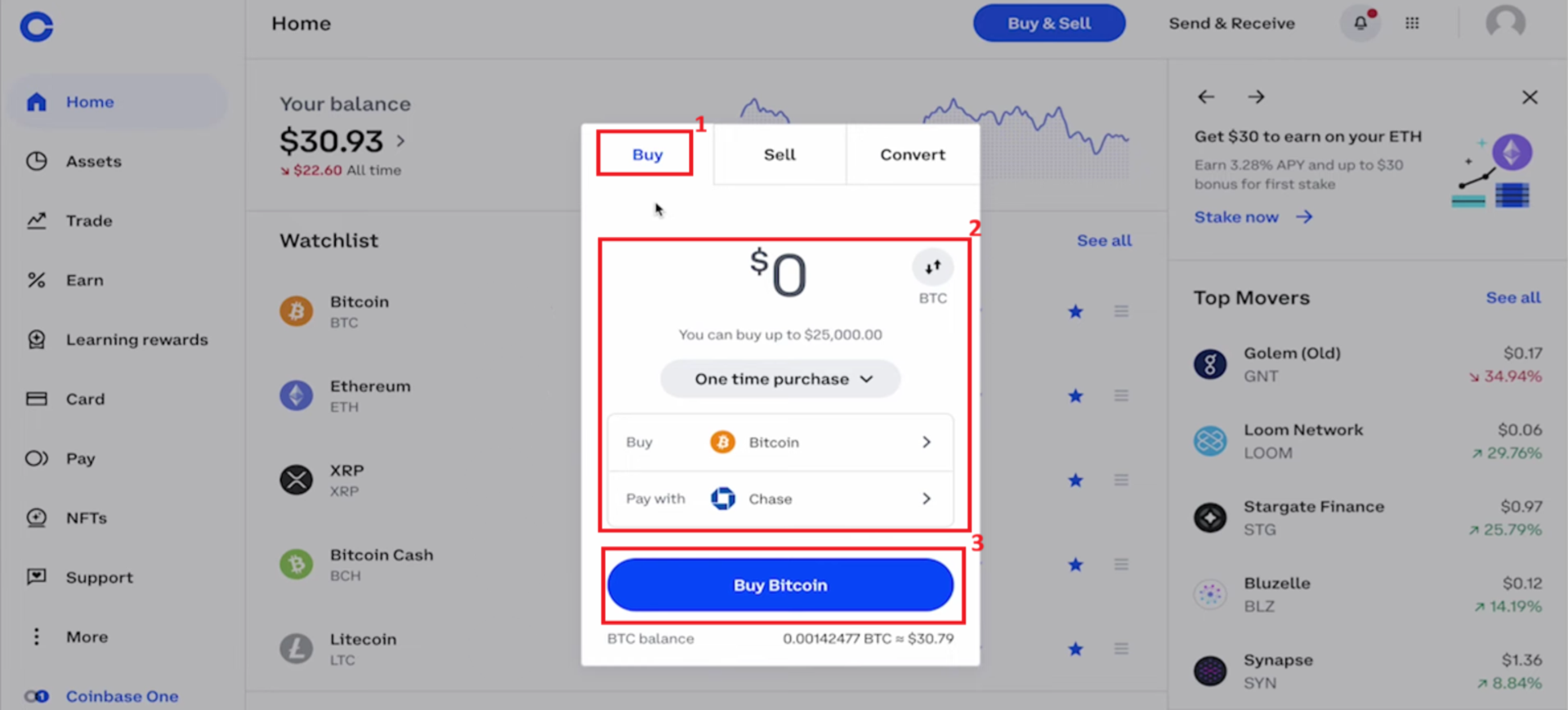
Choose the cryptocurrency you want to purchase from the available list. Enter your desired amount and select your payment method. Bank transfers typically offer lower fees than debit cards.
4️⃣ Review Your Order
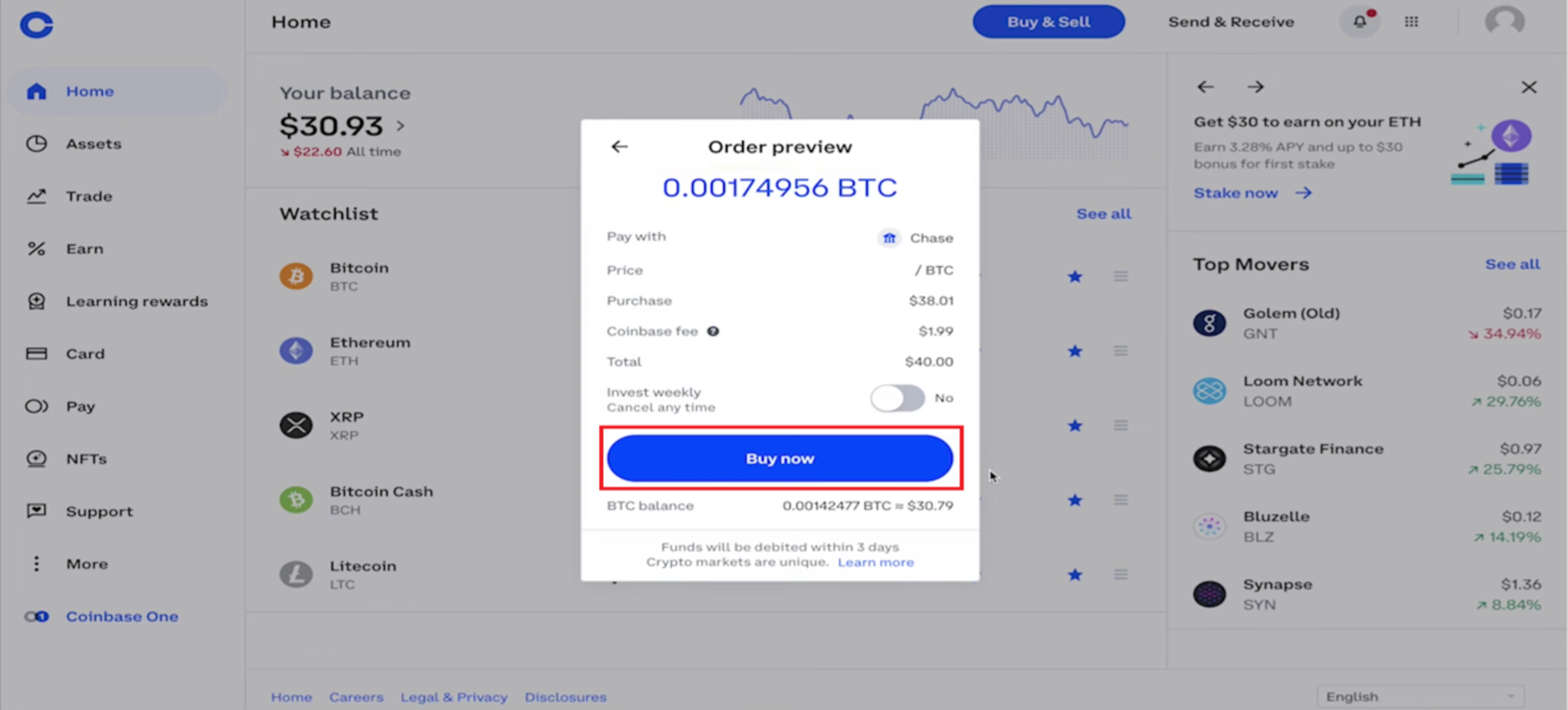
Double-check the purchase amount, selected cryptocurrency, and total cost with fees. Verify the payment method and delivery timeframe. Fees vary significantly by payment type and volume tier. Confirm all details match your intent before you proceed.
5️⃣ Confirm and Secure Your Purchase
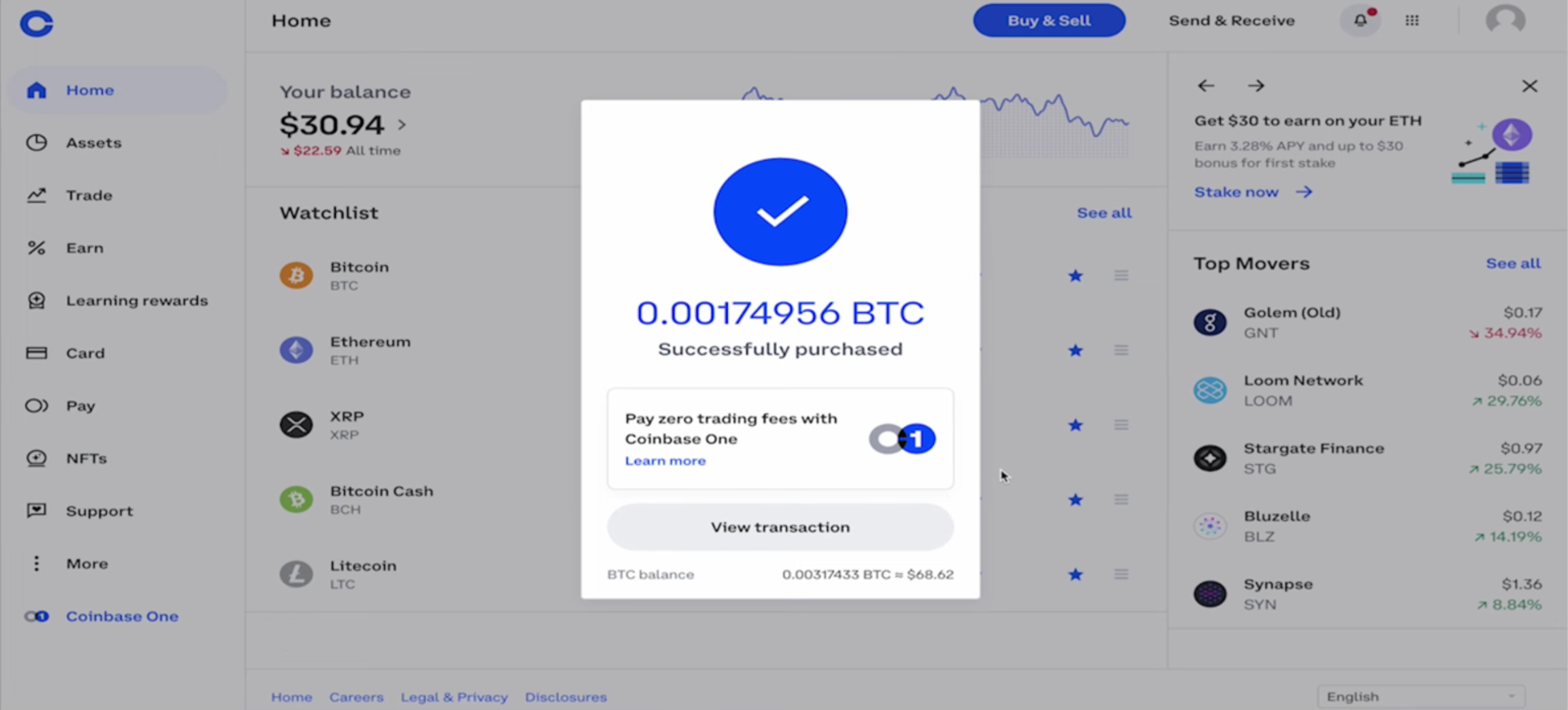
Complete the transaction and wait for confirmation. Processing times vary from instant to several days based on your payment method. For significant holdings, transfer assets to a non-custodial wallet rather than leave funds on exchanges. Hardware wallets offer the strongest security for long-term storage.
CoinNews suggestion: Start with established assets like Bitcoin or Ethereum before you explore higher-risk alternatives.
Best Wallet for Buying and Holding Crypto Safely
Your wallet choice determines both security and accessibility. The right solution balances ease of use with strong protection for your assets.
Best Wallet solves the complexity problem that stops many new investors. The platform connects to over 60 blockchains through one clean interface. Fireblocks MPC technology removes the stress of seed phrase management while you maintain full control. The built-in DEX aggregator scans 330 exchanges to find you the best prices automatically.
BEST token holders unlock reduced transaction fees, enhanced staking returns, and priority access to vetted presales through the Upcoming Tokens section. This creates a complete ecosystem where you can research, buy, store, and trade without constant platform switches.
Watch this video to set up your Best Wallet in simple steps. Once the wallet is active, you can follow our previous process and buy cryptos today:
📌 Check out our guide to the best crypto wallets for additional options.
Quick Tips to Save on Fees
Transaction costs eat into returns, especially for active traders. Simple adjustments can significantly reduce your all-in costs over time.
💡 Exchange fee tiers typically decrease with higher trade volume, so consolidate activity on one platform to climb tiers faster. Maker fees beat taker fees since limit orders usually cost less than market orders. This difference adds up quickly with frequent trades.
💡Native exchange tokens like BNB on Binance and KCS on KuCoin reduce trade costs by 10-25%. Factor the discount value against the capital required to hold these tokens. The math works best for regular traders who execute multiple transactions weekly.
💡 Network selection matters significantly for transfers. USDT via Tron costs pennies compared to dollars on Ethereum. The same token often supports multiple chains with drastically different fees, so check available networks before you withdraw funds from exchanges.
CoinNews Methodology: How We Chose Today’s Top Cryptos
Our selection process evaluates each cryptocurrency through six distinct lenses. This framework separates legitimate opportunities from empty promises and speculative noise.
➡️ 1. Current Momentum and User Growth (25%): We track wallet holder expansion, transaction volume patterns, and community growth across platforms. Projects that demonstrate consistent user acquisition in verified metrics score highest. Social media buzz without on-chain activity fails this test.
➡️2. Problem-Solution Fit (20%): The fundamental question asks whether anyone would use this technology if prices stopped rising. We analyze whether the project addresses actual friction points or simply repackages existing solutions. Durable demand survives bear markets.
➡️ 3. Trading Depth and Platform Access (15%): Deep order books and multiple exchange listings determine whether you can actually exit positions at fair prices. We measure daily volume against market cap and test slippage across different trade sizes. Illiquid tokens trap capital regardless of paper gains.
➡️ 4. Upside Potential vs. Downside Exposure (20%): Every opportunity carries specific dangers that require honest assessment. We examine token unlock schedules, audit coverage, team transparency, and contract vulnerabilities. Asymmetric upside must justify the downside exposure.
➡️ 5. Execution History and Network Growth (15%): Delivery history reveals far more than roadmap promises. We review past milestones, partnership substance, developer commit frequency, and protocol usage growth. Teams that ship consistently earn higher confidence scores.
➡️ 6. Token Structure and Market Differentiation (5%): Distribution fairness, inflation schedules, and genuine differentiation from competitors complete our analysis. Copy-paste projects with unfavorable token economics get flagged immediately.
‼️The candidates that score highest across these dimensions are seen as cryptos with the most potential. Projects must demonstrate genuine user adoption alongside technical innovation that solves real problems. We prioritize tokens that show consistent execution history while maintaining fair distribution models.
How to Identify the Best Cryptos on Your Own
Independent research skills create an edge in crypto markets. Spotting opportunities before mainstream coverage requires systematic evaluation of fundamentals.
Market Demand and Real-World Utility
📍 On-chain metrics like daily active addresses, transaction counts, and protocol revenue verify real adoption beyond marketing claims. DeFiLlama tracks total value locked across protocols and reveals which networks attract genuine capital. Rising usage with flat or declining prices often signals accumulation opportunities where smart money builds positions quietly.
Tokenomics and Supply Dynamics
📍 Analyze inflation schedules, vesting unlocks, and burn mechanisms to predict future supply pressure before you invest. Large upcoming unlocks can suppress prices even for quality projects, so calendar awareness prevents poorly timed entries. Block explorers reveal wallet concentration and distribution patterns that expose potential dump risks from insiders.
Development Activity and Ecosystem Growth
📍 GitHub commit frequency, developer counts, and grant program activity indicate ecosystem health better than marketing announcements. Electric Capital’s developer reports provide ecosystem-wide comparisons that show which networks attract top talent. Teams that ship features consistently deserve higher confidence than those who promise endlessly without delivery.
Liquidity, Volume, and Exchange Support
📍 Daily trade volume relative to market cap reveals exit quality and potential slippage on larger positions. Healthy projects maintain volume above 1% of market cap during normal conditions. Multiple exchange listings provide redundant liquidity sources and reduce the risk that a single platform failure traps your capital.
Alternatives: More Cryptos to Buy Now
Our featured picks represent core positions, but several categories deserve attention based on your investment goals and risk comfort.
Meme coins like Dogecoin and Shiba Inu offer high volatility exposure with established communities. These assets perform best during retail-driven market excitement. This sector changes constantly with new projects that capture social attention, so our guide to the best meme coins to buy now tracks current opportunities as trends evolve.
Layer-2 tokens like Arbitrum and Optimism handle Ethereum’s scaling needs while they keep its security protections. These protocols benefit directly from Ethereum network congestion without the need to compete against its user base.
Privacy coins face regulatory pressure but serve real use cases for transaction confidentiality. Monero and Zcash lead this category for those who accept delisting risks on major exchanges.
CoinNews Final Verdict
The best crypto to buy now depends on your risk tolerance, time horizon, and investment goals. Bitcoin and Ethereum remain the safest choices for those who seek long-term exposure to cryptocurrency’s growth without excessive execution risk.
Presale opportunities like Bitcoin Hyper and MaxiDoge offer potential for outsized returns, but they require acceptance of elevated risk. Smart contract bugs, delayed launches, and liquidity constraints at listing can eliminate investments entirely.
Utility tokens with demonstrated adoption provide a middle ground. Chainlink and The Graph generate real revenue from actual usage. MakerDAO produces yield from treasury investments. These fundamentals support value independent of speculative cycles.
Whatever you choose, verify information independently, size positions appropriately for your risk tolerance, and never invest more than you can afford to lose. The crypto market rewards preparation and punishes impulsive decisions.
FAQs About The Best Crypto To Buy and Invest in
Timing depends on your investment horizon and risk tolerance. Bitcoin trades below its all-time high, which some view as an opportunity and others as a warning. Dollar-cost average reduces timing risk for long-term investors. Short-term traders face elevated volatility from thin holiday liquidity and year-end options expiry.
Bitcoin remains the safest choice for most investors due to its track record, liquidity, and institutional adoption. Ethereum offers smart contract exposure with strong fundamentals. Presale tokens like Bitcoin Hyper provide the highest potential upside alongside the highest risk. Match your selection to your risk tolerance.
Yes, but start with established assets and small positions. Learn wallet security, basic market mechanics, and common scam patterns before you deploy significant capital. Exchanges like Coinbase provide user-friendly onboarding. Expect losses during the learning process and treat them as tuition.
Focus on metrics rather than narratives. Check on-chain usage, developer activity, and trade volume trends. Compare current valuations to historical ranges. Verify team backgrounds and audit status. If you cannot explain why a token has value without reference to price speculation, reconsider the investment.
For significant holdings or long-term positions, non-custodial wallets provide stronger security. Exchanges offer convenience for active trades but introduce counterparty risk. Consider the tradeoff based on your activity level and risk tolerance. Never leave life-changing amounts on any single platform.
Consulted References
CoinGecko: 2025 Q3 Crypto Industry Report
Chainalysis: 2025 Crypto Regulatory Round-Up
CoinMarketCap: Market Trends, Bitcoin Dominance & Price Charts
ARXIV: An Event Study of Ethereum’s Transition to Proof-of-Stake
Bank for International Settlements (BIS): Cryptocurrencies and Decentralized Finance