

Belarus Establishes New Legal Framework for National Crypto Bank Sector
Belarus President Alexander Lukashenko signed Decree No. 19, creating a legal framework for crypto banks to merge digital tokens with traditional banking services.
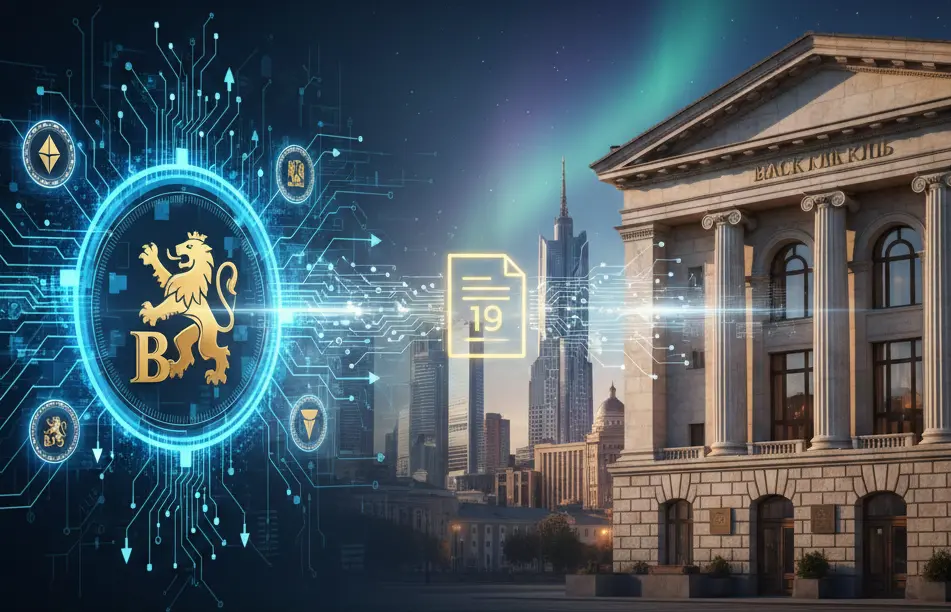
Belarus has officially approved a new legal regime for its cryptocurrency banking sector. This move aims to connect digital assets with regulated financial services under strict state supervision.
On January 16, 2026, Belarus President Alexander Lukashenko signed Decree No. 19. This document creates a formal regulatory framework for crypto banks across the country.
The measure allows companies that are residents of the national High-Tech Park to combine token services with traditional banking operations. It links the fast-growing digital asset market with the existing banking system.
This political move positions Belarus among the countries that are actively integrating digital assets into mainstream financial infrastructure. The government is choosing to merge these sectors rather than keeping them separate.
Under the new decree, a crypto bank is defined as a joint-stock company. These firms can conduct operations with digital tokens and offer standard banking and payment services at the same time. However, entering this market is not easy. Candidate firms must meet a dual qualification requirement.
First, they must obtain residency in the High-Tech Park. Second, they must secure registration in the National Bank crypto bank registry. This registry acts as the official list of authorized entities in the country.
Regulation and Oversight of the New Crypto Sector
This two-level authorization process creates a dual supervision model. It ensures oversight from both technology-focused authorities and traditional financial regulators. This setup raises the bar for new companies that want to participate. Once a firm is licensed, it will operate under rules that apply to non-bank credit and financial institutions.
Crypto banks must also comply with binding decisions issued by the High-Tech Park Supervisory Board. This board covers the innovation side of their activities. The combined regulatory approach is designed to address both technological risk and financial stability. It provides a structured environment for digital asset integration into the broader financial system.
The registration criteria create clear entry barriers for potential players. Only joint-stock companies that meet the specific conditions of the decree can join this specialized market.
This focus on institutional structures shows that regulators prefer larger, organized market participants. They are moving away from individual operators or very small companies.
The new rules aim to enable a framework where institutions can design hybrid financial products. These products will merge traditional banking advantages with digital token technology.
Customers are expected to gain access to services that combine banking security with the speed of blockchain-based transactions. However, these offerings must stay within the boundaries of existing financial rules.
In practice, every crypto bank must follow standard financial institution requirements while using token-based instruments. The decree does not replace old banking regulations. Instead, it extends those regulations to cover token operations.
Throughout their operations, these financial institutions will deal with obligations from more than one supervisory body. This complex environment is intended to keep innovation aligned with policy objectives.
Integration with Traditional Banking Systems
The Belarus crypto bank framework places the country among jurisdictions that promote financial technology development. Unlike regions that draw a strict line between crypto and traditional banking, Belarus allows controlled integration.
This happens when clearly defined conditions are fulfilled. This policy reflects a broader international trend. Lawmakers now recognize that token-based banking requires connected regulation instead of complete separation.
The president’s office stated that the decree is intended to strengthen the image of Belarus as a financial IT hub. At the same time, the framework reinforces a long-running policy approach. This approach permits crypto only within clearly defined, state-approved channels. The decree builds on years of policy signals.
On September 5, 2025, Lukashenko instructed lawmakers to create “clear and transparent rules” for the crypto market. He emphasized the need for state control along with innovation.
This message was reinforced just days later. The president urged local banks to expand their use of crypto-based payments. On September 10, he cited economic pressure from international sanctions as a reason for this move. He noted the growing use of digital tokens in cross-border transactions. He suggested there was an urgent need for banks to get into crypto to help the economy.
At the same time, Belarus moved to eliminate unregulated crypto activity. On December 12, authorities blocked access to several major offshore crypto exchanges. They cited advertising violations. This signaled a broader crackdown on the digital asset “gray market.” The government wants to ensure that all crypto activity happens through domestic, licensed entities.
Officials see the new regulation as a key part of the goal to become a regional hub for digital assets. For local users and businesses, the framework promises smoother connections between fiat and crypto. In theory, this could reduce friction when moving between traditional payments and digital assets. It offers faster settlement and more flexibility than legacy banking alone.
Global Context and Market Analysis
Belarus is not the only country moving in this direction. For example, KBC Group in Belgium has announced its own crypto plans. They will begin offering Bitcoin and Ethereum trading to retail investors in mid-February. This move makes KBC the first Belgian bank to provide direct access to crypto trading for private investors.
The Belgian service will operate under the European Union’s Markets in Crypto-Assets Regulation, also known as MiCAR. Erik Luts, Chief Innovation Officer at KBC Group, commented on the shift.
He said: “By offering the opportunity to purchase and sell crypto within a regulated framework, we are making innovation concrete and accessible. At the same time, we are demonstrating that KBC remains ready to assume its role as an innovator.”
In Belarus, the benefits of the new system come with strict boundaries. Reports suggest that crypto banks must maintain full fiat backing. They must operate within clearly defined rules to limit risk. This reduces the total freedom often associated with crypto markets. Some analysts suggest that the move is more about control than adoption.
One analyst noted that by legalizing crypto banks while banning foreign exchanges, the government is channeling all activity through state-approved institutions. This is a strategy to manage capital flows and navigate sanctions. The real test will be whether this framework attracts foreign capital. It remains to be seen if it will simply confine domestic liquidity within regulated walls.
The decree defines a cryptobank as a joint-stock company with the right to combine digital tokens with standard banking. The framework is designed to foster “technological efficiency, speed, and convenience” for transactions involving tokens. This push follows a directive from last year to develop the national crypto-mining sector.
The country also restricted crypto trading for real money to domestic exchanges and crypto exchangers registered in the High‑Tech Park. This happened on September 20, 2024. These steps show a consistent path toward state-vetted digital asset activity. Belarus is marking a notable shift in how it approaches digital assets by formally legalizing these banks.
By allowing financial institutions to offer crypto services alongside deposits and loans, the country is modernizing its system. This allows for the delivery of crypto services through entities that are already part of the financial system.
The framework narrows participation to firms willing to operate within these specific parameters. This ensures that the integration of digital assets happens in a controlled and supervised manner.
About Author

About Author