


Best Crypto Presales: Why Wall Street’s Tokenization Push Strengthens the Case for LiquidChain

Wall Street is taking blockchain seriously again, with banks, exchanges, and asset managers exploring tokenized funds, deposits, and settlement systems that can operate around the clock. But putting more assets on digital ledgers leads to another problem: those systems must be able to communicate.
The Financial Times reports that financial institutions are investing heavily in tokenization, but a lack of interoperability continues to limit the industry’s ability to scale.
Public blockchains have reached the same obstacle: Bitcoin, Ethereum, and Solana have built large but largely separate economies, and it leads to a messy situation for TradFi. Imagine working in USD, GBP, and EUR without being able to transfer assets across currencies – blockchain has a similar problem.
LiquidChain (LIQUID) is developing a Layer 3 intended to make assets and applications easier to use together. The early presale has already raised $929,000, currently priced at $0.0148, with a staking pool offering 1,215% APY.
Tokenization Makes Interoperability More Urgent
Tokenization turns ownership rights into blockchain-based assets: a bond, fund share, bank deposit, or other financial instrument can then be transferred and programmed through digital infrastructure rather than relying entirely on conventional databases and settlement processes.
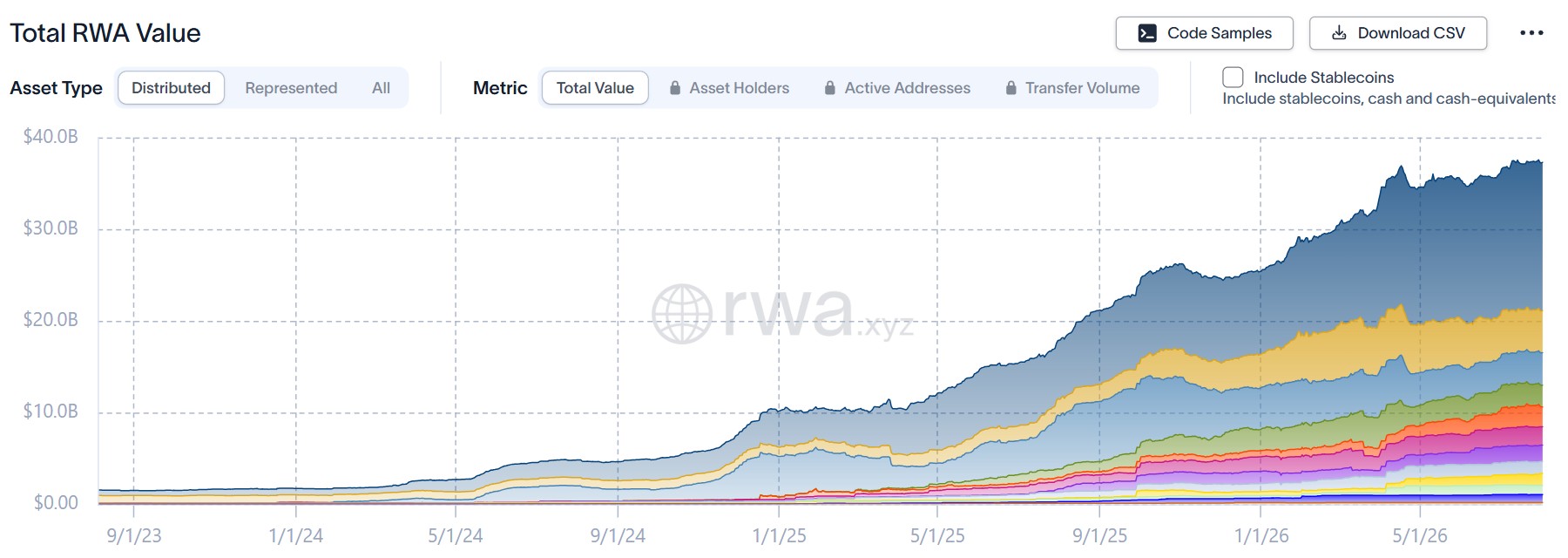
The attraction is straightforward in that markets can settle transactions faster, operate beyond traditional opening hours, and automate actions such as dividend payments or the movement of collateral. The harder part is ensuring that these tokenized markets do not become another collection of closed systems.
An asset issued by one institution is less useful when it cannot move into another institution’s platform. The same is true in crypto. Capital on Bitcoin cannot automatically enter an Ethereum lending market, while an application built for Ethereum does not immediately gain access to Solana’s users or liquidity. And moving assets around, where possible, means relying on bridges or wrapped assets – costly, time-intensive, and adding another layer of risk.
More blockchain adoption therefore does not automatically produce a connected financial system – without common infrastructure, it creates more places where value becomes isolated.
How LiquidChain Connects BTC, ETH, and SOL
LiquidChain is designed to make Bitcoin, Ethereum, and Solana feel less like three separate financial systems.
Moving between those networks currently require bridges, wrapped assets, compatible wallets, and several transactions. Developers also face their own version of the problem, in that reaching all three ecosystems means building and maintaining separate versions of the same application.
LiquidChain proposes a shared layer above those blockchains: the network verifies activity originating on BTC, ETH, and SOL (and more chains in the future), then allows applications to use that information through one environment.
That means a decentralized exchange can draw liquidity from more than one ecosystem rather than relying on isolated pools, and a lending platform can connect borrowers and collateral that would otherwise remain on different chains. Developers can build one product capable of reaching users across all three networks.
Transactions involving several chains are intended to complete as a single operation: either every connected step succeeds or the whole transaction is canceled.
The point is to make cross-chain activity feel less like a sequence of transfers and more like on transaction – no wrapping or bridgs required, as every asset exists in one unified layer.
Why Fragmentation Creates an Opening for LIQUID
Bitcoin, Ethereum, and Solana have developed distinct strengths: Bitcoin holds an enormous pool of monetary capital, Ethereum supports established decentralized finance markets, and Solana offers high-speed execution and a growing range of consumer applications.
LIQUID does not require one of them to defeat the others – its opportunity becomes larger when all three continue to grow.
That separates the project from any new Layer 1 attempting to draw users away from established networks, with LiquidChain working on the assumption that specialized blockchains will remain important, but the boundaries between them should become easier to cross.
The institutional tokenization push strengthens that argument, with traditional finance discovering that issuing assets on blockchains is only the first stage. Those assets become substantially more useful when they can move between markets, interact with other products, and draw upon wider liquidity.
LIQUID Is Designed to Power the Shared Layer
LIQUID is intended to operate within the network rather than merely act as a presale token. Users will pay network and execution fees in LIQUID when interacting with applications on the Layer 3. Holders can also stake the token, while liquidity providers are intended to earn rewards for contributing capital to the shared markets. LIQUID will also support governance.
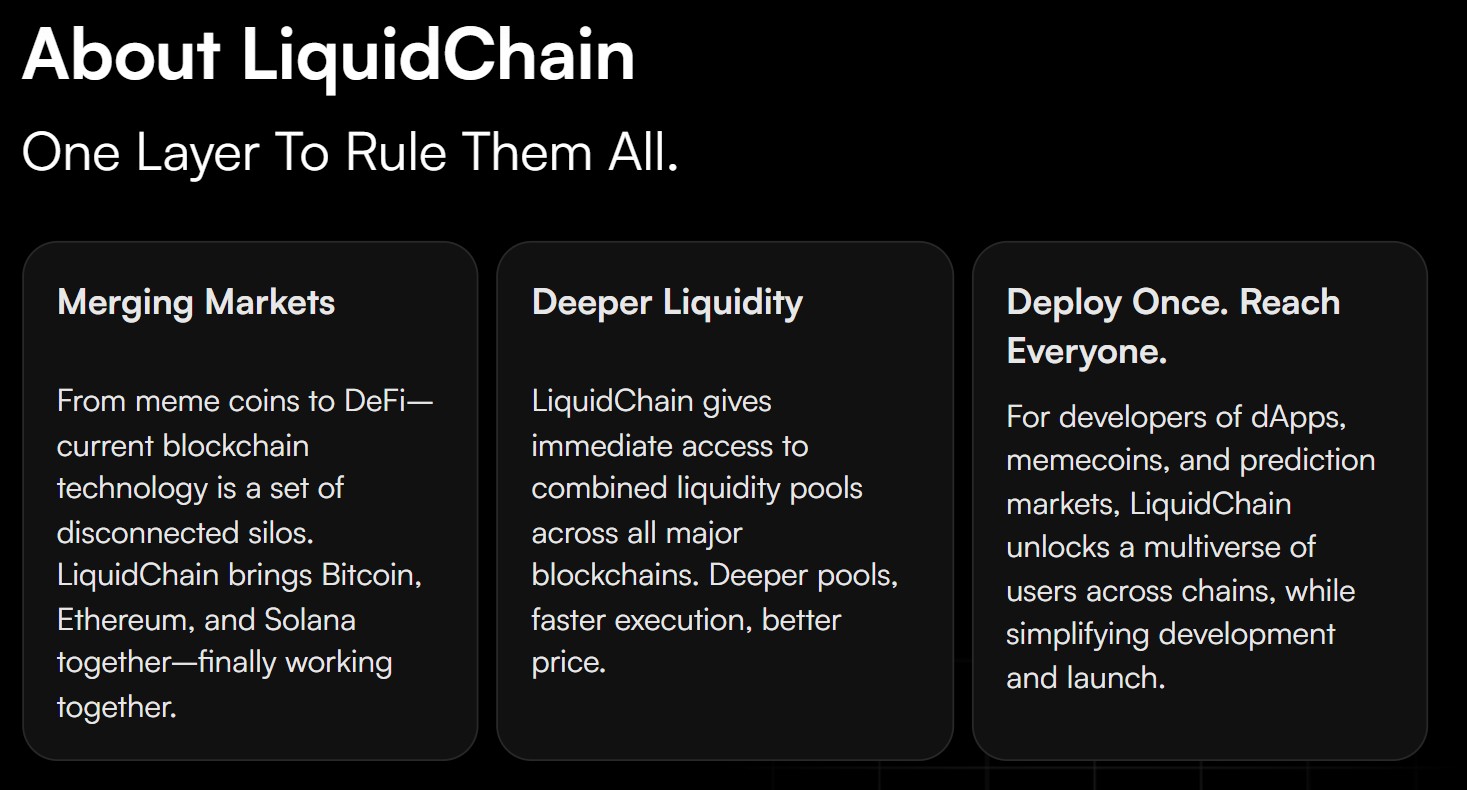
This creates demand from several types of network activity: traders generate fees when they use cross-chain applications and developers can bring more transactions by launching products. Liquidity providers can lock capital into the pools needed to make those products useful.
The 1,215% staking APY is a product of the presale’s early stage and the relatively small number of tokens currently staked (that rate can fall considerably as participation rises). The longer-term case for LIQUID rests on usage rather than an unusually high initial yield.
The presale has raised $929,000, leaving LiquidChain much earlier in its development than projects that have already collected tens of millions. So it is early, but it also gives the project room to gain recognition as interoperability moves further into the financial mainstream.
Wall Street Is Rediscovering Crypto’s Old Problem
Tokenization may change how traditional assets are issued, traded, and settled. It will not reach its full potential through hundreds of new systems that cannot interact.
Crypto already knows what that fragmentation feels like. Its largest networks hold deep capital and support useful applications, yet moving between them remains far more complicated than it should be.
That is why LiquidChain is one of the best crypto presales in the infrastructure space. Wall Street’s return to blockchain makes the need more visible – the next stage of digital finance needs assets that can be accessed from all chains.
About Author

About Author




