


Bull Score at 20: Why Bitcoin’s $63K Bounce Stays a Bear-Market Trade
CryptoQuant’s Bull Score Index sits at 20 — far below the 60 threshold — signaling Bitcoin’s rebound from $57,700 remains a bear-market bounce, not a reversal.

Bitcoin has rebounded roughly 10% from last week’s bear-market low of approximately $57,700, trading near $63,000 as of July 9 – but CryptoQuant is drawing a hard line between a tactical bounce and a structural regime change, with its Bull Score Index still sitting at 20, deep inside bearish territory and far below the 60 the firm identifies as the minimum threshold for a sustainable rally.
The recovery has reclaimed the $60,000 level as a key support area, and a cluster of improving signals – seasonal tailwinds, softening demand contraction, and stabilizing U.S. institutional flows – have supported the bounce. None of those inputs, however, have moved the composite regime indicator enough to reclassify the current environment as a bull market.

July Seasonality and Demand Recovery Underpin the Bounce
CryptoQuant head of research Julio Moreno pointed to July’s historically favorable seasonality as a structural tailwind for the current move. “Over the past ten years, July has been one of Bitcoin’s more reliably positive months, closing higher in most years shown. The effect is pronounced in down-cycles: in the bear-market years of 2018 and 2022, Bitcoin rallied roughly +20% and +17% in July even as the broader trend stayed weak,” Moreno said, adding that “With Bitcoin entering July 2026 fresh off a bear-market low, this seasonal pattern skews the near-term risk toward further upside.”

The demand picture is also showing early signs of repair. CryptoQuant’s 30-day total bitcoin demand metric – which aggregates spot and perpetual futures activity – has recovered from its sharpest contraction since 2022 and is now approaching neutral after falling by approximately 650,000 BTC in early June. Speculative futures demand has turned slightly positive, while spot demand is contracting at its slowest pace since mid-May. Moreno noted that “A move back into positive territory would confirm that the demand engine is re-igniting.”
U.S. institutional flows have also stabilized. The Coinbase Premium Index – a proxy for U.S. spot demand – recovered from deeply negative levels in early June to -0.062 as Bitcoin rebounded, suggesting the acute selling pressure on domestic exchanges has eased and institutional participation is finding a floor. This pattern is consistent with prior capitulation cycles where on-chain signals began stabilizing before price confirmed a durable floor.
Undervaluation Signal Has Historically Marked Local Bottoms
One of the more notable data points CryptoQuant flagged is the traders’ unrealized profit margin, which fell below -24% in early June – well past the firm’s -12% undervaluation threshold. Historically, readings at that extreme have coincided with local market bottoms, the point at which short-term holders capitulate and forced selling exhausts itself. The metric has since begun recovering alongside the price rebound from $57,700.
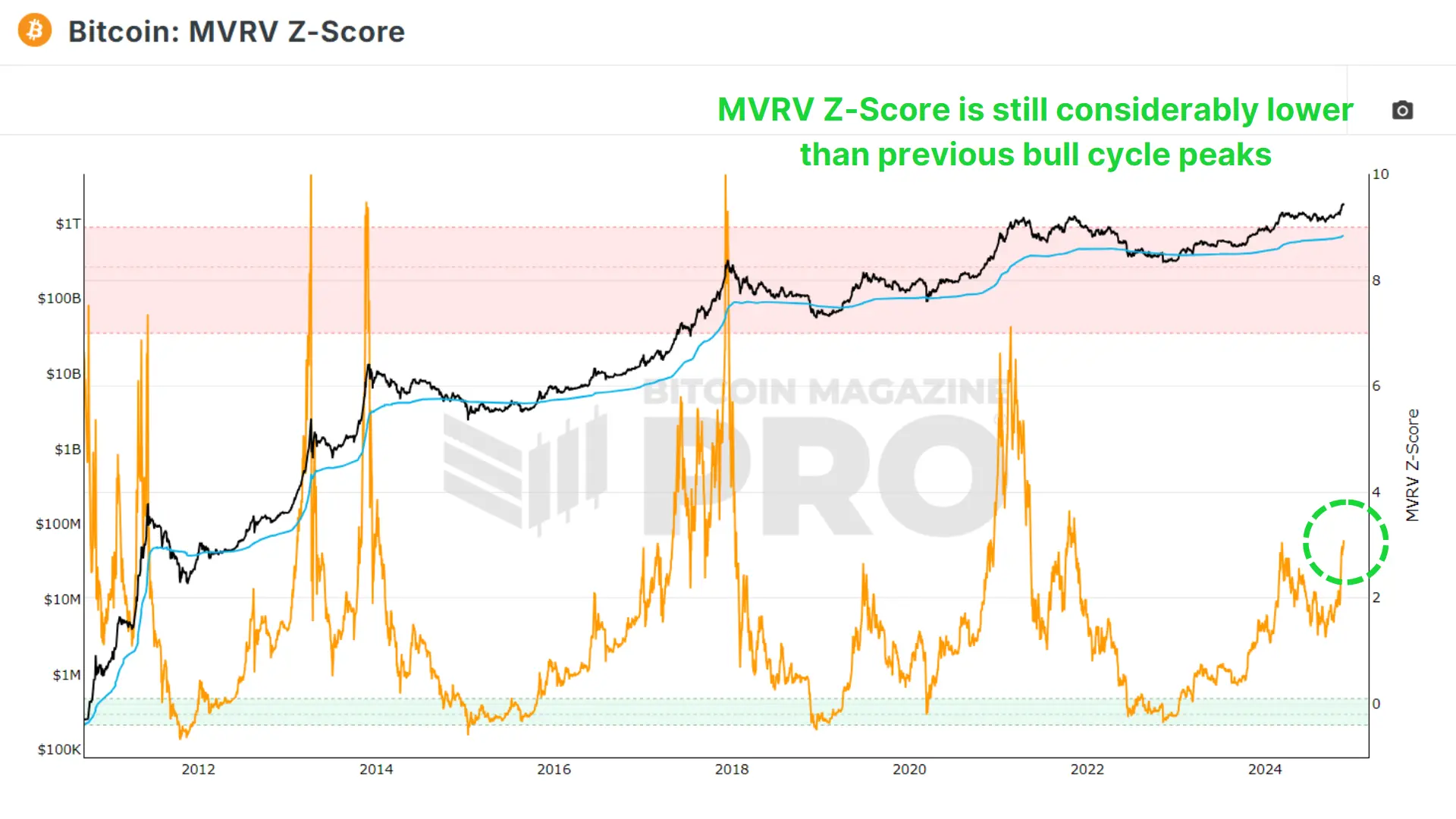
That kind of capitulation dynamic – where a sharp overshoot below fair value precedes a recovery – is a recurring structural feature of Bitcoin’s bear cycles. The signal does not predict the magnitude of the subsequent recovery, but it does narrow the probability that the low near $57,700 was arbitrary rather than structurally motivated.
Bull Score at 20: The Regime Has Not Changed
Despite the constructive short-term signals, CryptoQuant is explicit that the broader market structure has not turned. The Bull Score Index – a composite of on-chain, market, and valuation indicators – currently reads 20, a level that places it firmly in bearish territory. The firm’s framework requires a sustained reading above 60 to characterize conditions as supportive of a true bull market; at 20, the composite implies the majority of its underlying inputs remain negative.
The practical implication for positioning is that the current recovery is best treated as a mean-reversion trade within a downtrend rather than the opening leg of a new bull cycle. Multiple conditions – including sustained demand recovery, improving on-chain activity, and regime-indicator confirmation – would need to align before a trend reversal could be declared with confidence.
Until the Bull Score Index moves durably above 60, price action above $60,000 represents a recovery within a bear market, not an exit from one. The market will be forced to price that distinction if demand metrics fail to follow through into positive territory in the coming weeks, leaving the $57,700 low as the key structural reference point on any renewed test of downside.
Follow CoinNews on X and Telegram for real-time Bitcoin market updates and on-chain analysis.
Source: The Block