


Margin Calls, Record Volumes, and a Market That Held: Bitcoin Credit’s June Test
Forced liquidations drove STRC 25% below par in June, yet $10B in trading volume kept dividends flowing and corporate Bitcoin buying intact.

Bitcoin’s more than $10 billion corporate credit market survived its first meaningful stress test in June, according to a new report from BitcoinTreasuries.net – absorbing a sharp selloff that drove leading preferred shares well below par, triggering margin calls across leveraged positions, yet keeping dividend payments uninterrupted and corporate Bitcoin buying intact throughout the turbulence.
How Leverage Turned a Stable Trade into a Cascade
Strategy’s STRC and Strive’s SATA are the two largest instruments in the market, each carrying a $100 stated value with fixed or variable dividend payments and no maturity date. For months, both traded in narrow ranges around par – a stability that encouraged investors to borrow against their positions to amplify dividend income, according to the BitcoinTreasuries.net June corporate adoption report.
That structure held as long as Bitcoin stayed elevated and financing costs remained below dividend yields. When Bitcoin fell below $60,000 in June, selling pressure spread across the sector and the leverage unwind began. Starting June 18, STRC dropped to approximately $75 – roughly 25% below its $100 stated value – while SATA declined to around $88. Falling prices forced margin calls on leveraged STRC holders, who sold into an already weakening market and drove further liquidations in a self-reinforcing cycle.
The mechanics exposed a structural tension in the product design: higher dividends might attract buyers after a selloff, but they offered no protection to indebted investors who had to exit regardless of yield. Raising the payout also made the financing more expensive for the issuer. Strategy responded by lifting STRC’s annual dividend to 12%, establishing a $2.55 billion cash reserve sufficient to cover roughly 17 months of expected preferred dividends and interest payments, authorizing preferred share repurchases, and permitting limited Bitcoin sales under specified conditions. The company acknowledged that STRC could remain substantially below its target range, leaving the secondary market to determine whether the higher payout restores demand.
Record Trading Volumes Absorbed the Selloff Without Breaking the Market
Despite the price declines, the market’s operational infrastructure held. Combined June trading volume for STRC and SATA exceeded $10 billion, even as both instruments traded below par. STRC alone accounted for $8.7 billion of that total – its highest monthly volume on record – and posted two of its five busiest trading weeks. SATA generated nearly $1.5 billion, approximately twice its May volume, with three of its four strongest weeks occurring during the selloff.
Buyers absorbed shares from forced sellers, keeping the market liquid and dividends uninterrupted. The volume figure does carry an important caveat: the heavy secondary-market activity did not produce fresh capital for either issuer. Neither STRC nor SATA was able to execute at-the-market sales in June, meaning the record turnover reflected investors exchanging existing shares rather than companies raising new funds against their Bitcoin holdings.
As of the July 10 report date, STRC had recovered to approximately $87 from its $75 low, while SATA had climbed back to roughly $97. The uneven rebound – SATA nearly back to par while STRC remains 13% below – suggested investors were making instrument-specific distinctions rather than abandoning the asset class entirely.
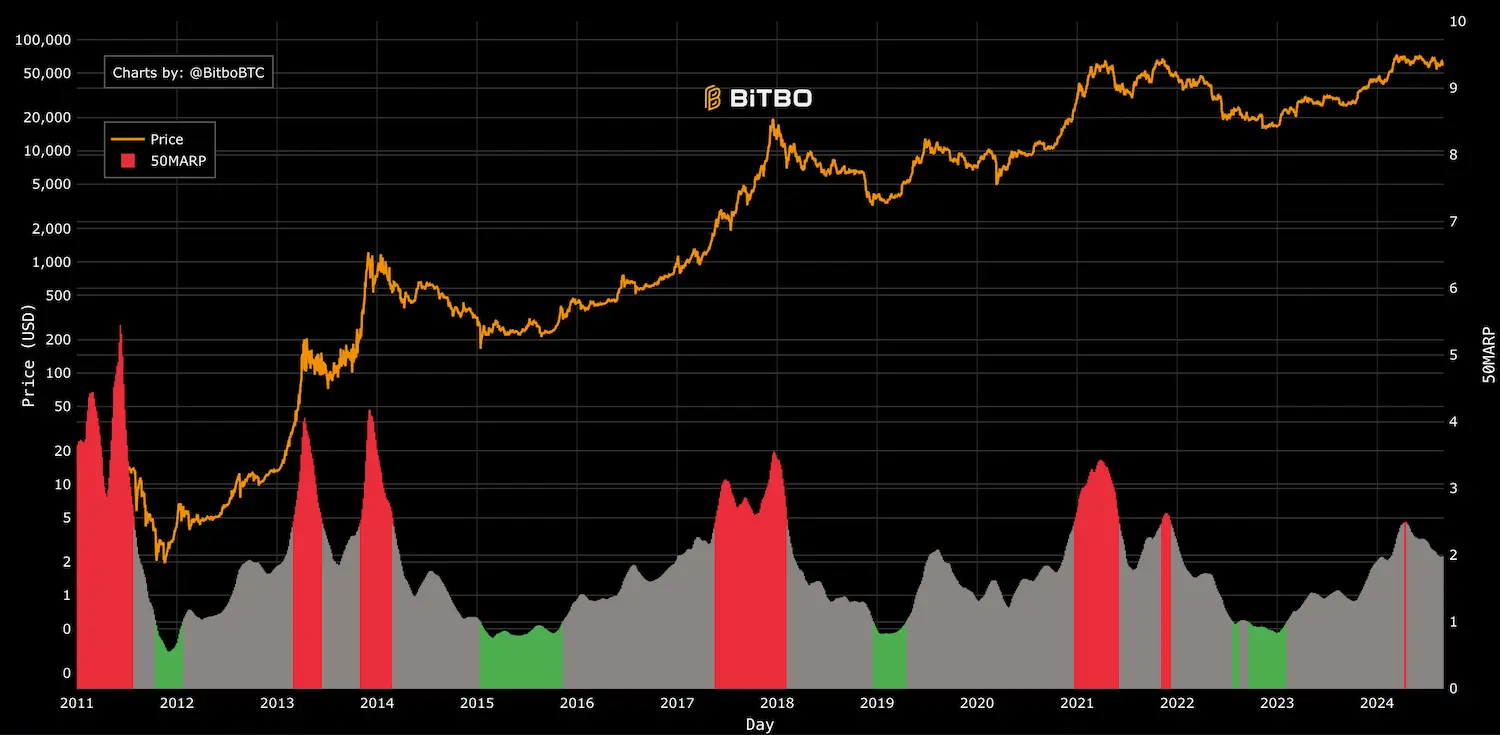
Corporate Bitcoin accumulation continued through the disruption. Strategy added a net 3,625 BTC during June, while Strive acquired 3,364 BTC, each spending approximately $200 million – making the two firms responsible for the majority of corporate Bitcoin purchases that month. Supporters of the model characterized the continued buying as evidence that June’s stress originated in securities-level leverage rather than in any deterioration of confidence in Bitcoin as a treasury asset. That argument is consistent with the broader institutional holder thesis that distinguishes this cycle’s corporate accumulation from speculative positioning.
Metaplanet Signals Geographic Expansion Into Japan’s Credit Market
The resilience of secondary-market volumes and sustained corporate Bitcoin buying have drawn new entrants to the model beyond the United States. On July 10, Metaplanet – the Tokyo-listed company that holds 43,000 BTC, ranking it third among publicly traded firms by Bitcoin holdings – announced a joint study on tokenized credit instruments in Japan. The company, which recently acquired Siiibo Securities for $13 million, will work alongside Siiibo, yen stablecoin issuer JPYC, and regulated security-token platform Progmat to examine products that use Bitcoin as a backing asset or a source of credit support.

According to the firm, digital credit backed by Bitcoin could evolve into instruments traded and settled globally on a 24/7/365 basis, with interest and distributions accruing on a daily prorated basis according to the holding period. The initiative targets longstanding structural barriers in Japan’s corporate credit market, where smaller companies face high costs across product design, distribution, investor administration, interest payments, and redemptions. The proposed structure would combine stablecoins for payments, security tokens for recording ownership and transfer rights, and Bitcoin as the asset supporting the securities – a configuration that could allow trading and settlement outside regular market hours.
The project remains early-stage. No issuance date, return target, distribution plan, or final structure has been established, and the partners have yet to commit to running a proof of concept. One unresolved structural question will determine whether the eventual product functions as a formally secured instrument or relies more broadly on the issuer’s balance sheet: Metaplanet has not specified whether investors would hold a direct legal claim to the designated Bitcoin. For more on the company’s treasury strategy, see the Metaplanet Bitcoin treasury overview.
$50B Forecasts Meet a Market That Now Understands the Risks
A BitcoinTreasuries.net survey found that 78% of respondents expect the digital credit market to grow through the end of 2027, with 22% projecting outstanding supply could exceed $50 billion and a subset forecasting figures above $100 billion. The survey population skews optimistic by construction – 87% of respondents viewed digital credit favorably and 72% had invested in the sector – which limits how far those projections should be extrapolated. The more meaningful data point is that 76% of the same group expected similarly sharp price dislocations to occur again, a signal that market participants are incorporating leverage risk into their base case rather than dismissing June as an anomaly.
Michael Saylor has argued that Bitcoin makes digital credit easier to assess because its primary market risk is tied to a globally traded asset with continuous, real-time price discovery – a property that allows investors to incorporate Bitcoin’s price and volatility directly into valuation models. June tested that argument under live conditions. The secondary market absorbed a leverage-driven liquidation shock without breaking; dividend payments continued; corporate buyers kept accumulating. Those facts support the structural case for Bitcoin-backed credit as a durable product category, separate from the ETF channel where institutional flows have shown more volatility in recent months.

The market’s next test is different from the one it just passed. Surviving a liquidation shock with existing securities is one data point; persuading investors to fund new issuance after watching leading products trade 13–25% below par is another. Whether STRC can recover to par, whether Metaplanet’s Japan initiative progresses from study to proof of concept, and whether new issuers can access the primary market on viable terms will determine whether June becomes a historical footnote or a structural ceiling for the asset class. The market will be forced to price that answer through whatever new issuance comes next.
Source: CryptoSlate
Follow CoinNews on X and Telegram for real-time market updates and institutional Bitcoin coverage.
About Author

About Author