

Coinbase Buys Echo for $375M and Spends $25M on NFT Linked to UpOnly Revival
Coinbase has acquired Echo for $375 million and spent $25 million on an NFT to revive Cobie’s UpOnly podcast, marking a renewed push into on-chain fundraising and public token sales.
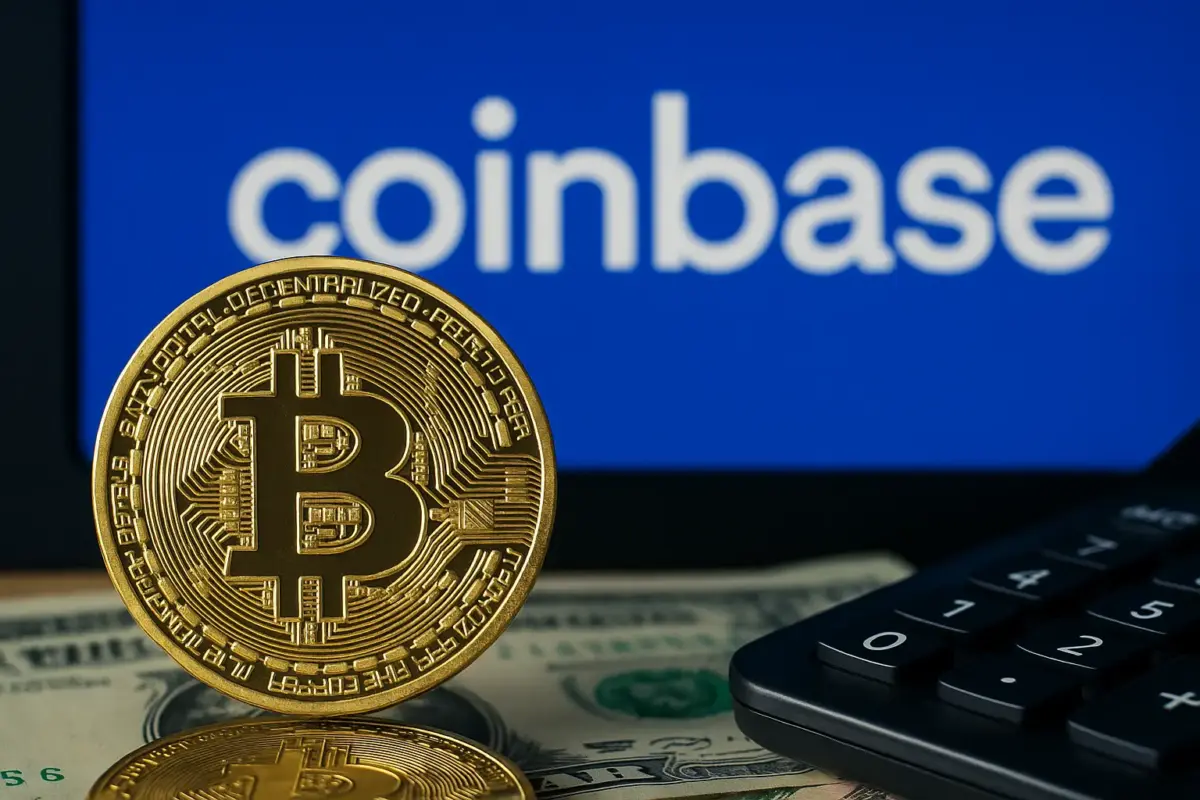
Coinbase has purchased Echo, an on-chain fundraising platform built for early-stage investing, in a deal valued at roughly $375 million. The exchange confirmed the agreement on Tuesday, one day after it wired $25 million in $USDC to buy an NFT tied to the return of the UpOnly podcast hosted by Echo’s founder Jordan Fish, known online as Cobie.
Echo was launched in beta in April 2024 to allow communities to pool capital into private deals and direct early investment opportunities toward startups. Cobie acknowledged the sale, writing on X that “I certainly didn’t think Echo would be sold to Coinbase, but here we are: Today Coinbase bought Echo for about $375 million.”
During its short operating period before the acquisition, Echo recorded at least 131 deals amounting to more than $51 million. Its earliest and most notable structured deal was with Ethena, the group behind USDe, a yield-bearing synthetic dollar that has been one of the fastest-growing stablecoins in the market this year.
Cobie has said that Ethena was the first project to raise through Echo, underscoring the product’s focus on early fundraising rounds in a tight capital market.
In May, the company extended its infrastructure with Sonar, a software tool designed to let project founders self-host public token launches on various blockchains such as Hyperliquid, Base, Solana or Cardano.
After Coinbase completed the acquisition agreement, Cobie said Echo would continue “as a standalone platform under its current brand for now,” while explaining that the Sonar product will be brought into Coinbase in phased form.
Coinbase said the plan is to begin with crypto token sales and then gradually expand the framework to tokenized securities and real-world assets. “Integrating Echo’s tools will help us enable more direct community participation, joining projects with capital, entirely on-chain,” Coinbase said.
The firm added that the expanded roadmap would leverage Echo’s existing infrastructure to open direct investor access to private and public sales over time.
The purchase adds to Coinbase’s run of transactions this year, which has included eight acquisitions such as Deribit and LiquiFi. According to a Wall Street Journal report, Coinbase is funding this latest deal with a mix of stock and cash.
Shares of Coinbase closed at $343.78 on Monday, up more than 33 percent since the start of the year and valuing the company at more than $88 billion.
The renewed appetite for public fundraising platforms resembles the rise of ICOs during 2017. A report from Tiger Research released Thursday said that public launchpads have been reappearing in updated forms through services like Legion, Buidlpad, Sonar and Kaito.
The research house wrote that “the ICO boom peaked in 2017 but rapidly contracted as it lost credibility due to fraud and opaque information,” pushing issuers into private placements. It said that “public sales are recently resurging in new forms” and cautioned that short-term activity could cool, even while the market’s structure suggests they are likely to remain. The report said launchpads persist because they supply projects with early liquidity and a pool of initial users.
$25M to Revive Cobie’s Podcast UpOnly
In a separate but related move, Coinbase has paid $25 million to purchase an NFT connected to the now-inactive UpOnly podcast, which was co-hosted by Cobie during the bull run that lifted crypto markets in 2021. UpOnly drew a large audience at the time with interviews from high-profile industry figures and a sponsorship from FTX before its collapse.
The show ended in December 2022 and has not released new episodes since. Speculation around its return had generated debate online before this week’s events.
Cobie had previously told followers that he no longer had unilateral control over whether UpOnly would restart. He explained that the rights were locked into the NFT structure and that the podcast would resume if the NFT were destroyed.
At the time the token was listed on OpenSea, its highest bid was roughly $18,500 at 4.7 ETH. The gap between that price and Coinbase’s final offer has fueled a sharp reaction across social media. The NFT is now ranked as the fifth most expensive NFT sale in crypto history.
The transaction drew controversy until Coinbase CEO, Brian Armstrong, confirmed that the purchase was intentional and connected to a plan to bring UpOnly back to air. He referred to public discussion as “rumors” before stating that the purpose was to ensure the podcast’s new season is produced.
Cobie reacted to the attention in an X post by asking, “Wow, what’s going on?” and noted that the show had been dormant for three years. He followed by saying that he was in his twenties when it began and has “grey hair” now, joking that the program might be called “Unc Only” while he “invests $25 million in cosmetic surgery.”
Shortly before the Echo deal was announced, Armstrong said he had already burned the NFT under the rules tied to the token’s conditions. The contract connected to the NFT includes terms that prevent sponsorship influence, allow the hosts to call Armstrong an “idiot” for buying it, and permit them to disregard him for all eight planned episodes.
Cobie has indicated that the recorded sessions will be streamed on Twitch rather than on a Coinbase-owned social channel like Zora, because publishing each episode on Zora would mint the stream into a tradable token by default.
He added that he “would happily use a crypto platform if it didn’t also make you launch a token,” a remark that also excludes other token-first streaming environments such as Pump Fun.
At the estimated rate, each podcast episode costs $3.1 million under the terms of the NFT transfer. If each episode spans roughly three hours, the cost translates to one million dollars per hour and more than $17,000 per minute.
UpOnly had built a reputation as a show that leaned toward entertainment during the last market cycle. Even so, observers have said it fell short of expectations on both entertainment and informational value. The attempt to revive it has nevertheless triggered rapid price action in theme-related meme coins.
A token called UPONLY on Base jumped 7,900 percent before collapsing, while a coin named COBIE on Base rose 5,800 percent. A separate Solana-based coin using the UPONLY name climbed roughly 250 percent.
Crypto traders have begun to post predictions for where the Base version of UPONLY might trade once the new series begins. One user named Rune said that in 2024, a Solana-launched UPONLY coin reached a $50 million valuation even without the show returning. He argued that Coinbase’s decision to spend $25 million to restart the program could support the thesis that a Base-based coin might reach $500 million.
MegaETH, a real-time blockchain initiative, is reportedly preparing to list a new token sale using Sonar. The group had already sold $10 million in private placement through Echo before the deal closed. Cobie said Sonar will be integrated into Coinbase but that Echo will continue to run under its existing banner for the time being.
U.S. Regulators Urged to Adopt AI, APIs and Onchain Analytics in Crime Prevention
Alongside its corporate deals, Coinbase has called on U.S. regulators to modernize their approach to financial crimes in crypto markets by adopting the same technologies used in the industry. The company sent a letter to the U.S. Treasury in response to a formal request for public input on methods to combat illicit transactions under the GENIUS Act.
Paul Grewal, the chief legal officer at Coinbase, filed a letter dated October 17 and later posted on X, warning that money laundering tactics have evolved with advances in new technology.
He wrote that law enforcement should make use of AI, APIs, digital IDs and blockchain analytics, saying it “would align with a primary objective of the Anti-Money Laundering Act of 2020, which aimed to update the Bank Secrecy Act.”
Faryar Shirzad, the company’s chief policy officer, also commented publicly in support of that position. Shirzad said that U.S. agencies should take cues from the technology stack used by major crypto exchanges and move away from paper-based compliance models toward automated systems that standardize identity and tracing.
Grewal suggested that the Treasury create a safe harbor rule under the Bank Secrecy Act for organizations deploying AI and API-based surveillance systems. He said the rule should emphasize governance and outcomes instead of uniform, one-size standards. He added that companies have been reluctant to implement AI due to unclear guidance and that APIs face inconsistent requirements across jurisdictions.
He also asked the Treasury to recognize decentralized IDs and zero-knowledge proofs as acceptable tools for customer verification together with clustering techniques in blockchain analytics. He noted that the direction of the policy should encourage the sharing of information linked to suspicious blockchain activity without imposing heavy record-keeping on compliant actors.
In a separate perspective, Jim Harper, a non-resident senior fellow at the American Enterprise Institute, argued that regulators should build a communication channel that would allow enforcement agencies to directly request case information from crypto companies.
About Author

About Author