


Deutsche Bank Says Bitcoin Could Join Gold as Central Bank Reserve by 2030

Deutsche Bank predicts that by 2030, central banks could hold both Bitcoin and gold as reserves, comparing the two based on factors such as stability, ease of trading, importance, and reliability.
Deutsche Bank noted that, although gold has been the main alternative asset, Trump’s plan for a U.S. Bitcoin reserve has revived the debate about central banks holding Bitcoin.
According to a research report, plans for such a reserve have been underway since last summer, with leaders like Michael Saylor recently meeting to discuss promoting the BTC Reserve bill, called the BITCOIN Act.
The banking giant emphasized that rising inflation, global tensions, dollar independence, and support for crypto are prompting authorities to reconsider the makeup of their reserves, with some believing a national Bitcoin reserve could provide the decisive push for central banks to adopt it.
This signals confidence in crypto’s future and helps set global financial standards, similar to how the U.S. gold reserves do today.
Deutsche Bank: Gold Leads, Bitcoin Gains as Reserve Asset
Deutsche Bank declared that gold will remain the main reserve asset for governments, while Bitcoin will keep growing as a reserve for private and alternative uses.
Based on its analysis, gold demand remains strong with its price hitting an all-time high this month, while Bitcoin has shown steady performance, reaching $124,000 last month, and is already being used as a reserve asset by companies such as MicroStrategy, Tesla, and Metaplanet.
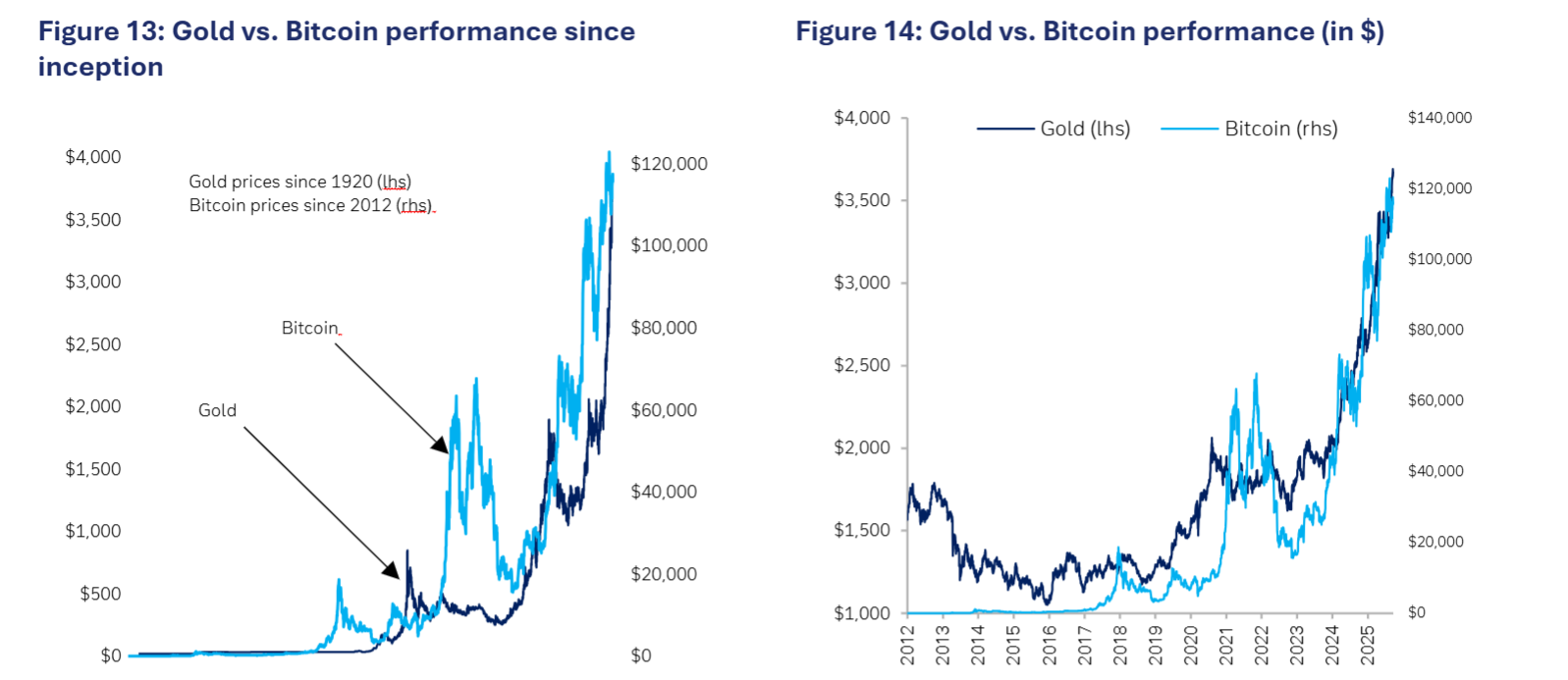
Although Gold and Bitcoin serve as alternatives to traditional safe assets due to their limited supply, low correlation with other investments, and role in protecting against inflation, the research report notes that Bitcoin still lacks trust and transparency, a gap that could narrow as more regulations are introduced.
About Author

About Author