

Kraken Secures U.S. Derivatives Foothold With $100M Acquisition of Small Exchange
Kraken has acquired Small Exchange for $100 million, securing a CFTC license to offer regulated crypto derivatives and strengthen its U.S. market presence.
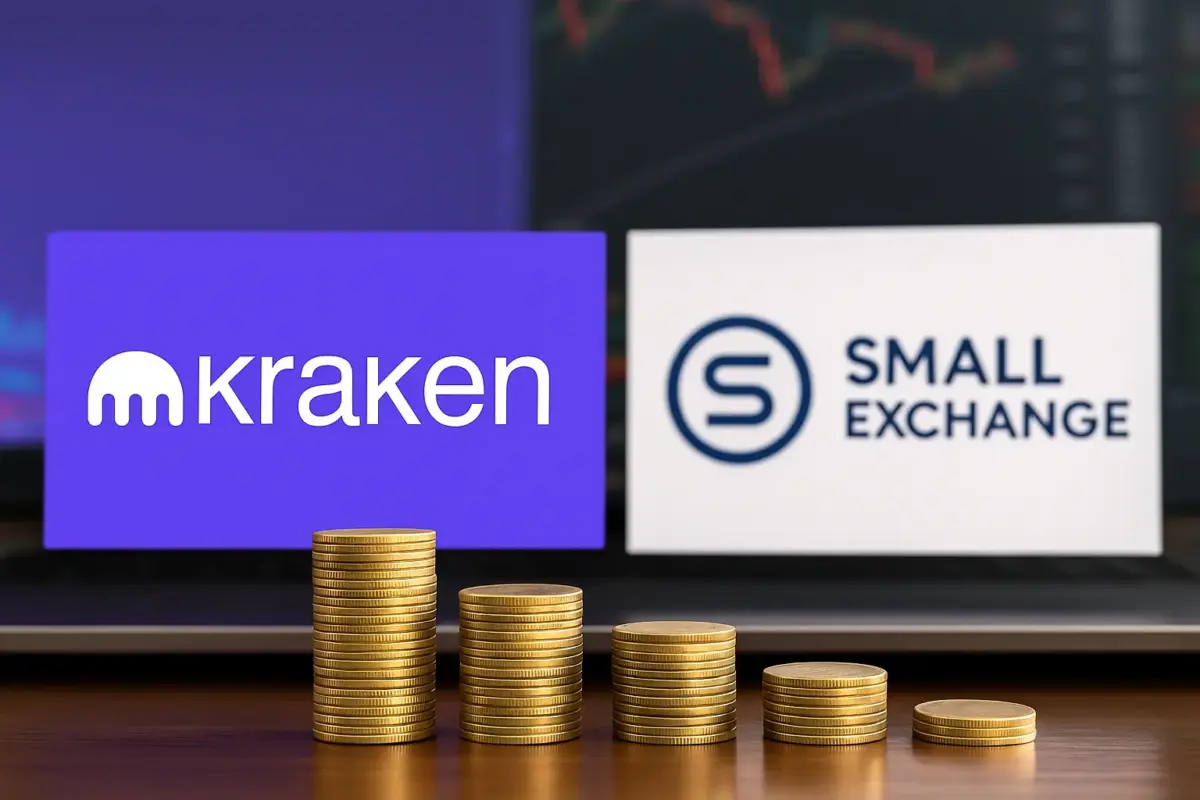
Cryptocurrency exchange, Kraken, has struck a major deal to deepen its footprint in the U.S. regulated derivatives market, announcing the $100 million acquisition of Small Exchange from London-based trading firm IG Group.
The move brings Kraken under direct oversight of the Commodity Futures Trading Commission (CFTC), granting it a long-sought license to offer futures and other derivatives products directly to American customers.
The agreement includes $32.5 million in cash and $67.5 million in stock from Kraken’s parent company, Payward Inc.IG Group, which launched Small Exchange in 2017 to serve retail traders and will retain a partnership role even after the sale.
Kraken said the acquisition marks a “major step” toward building a unified global platform that integrates spot, futures, and margin trading inside a regulated environment.
“Under CFTC oversight, Kraken can now integrate clearing, risk, and matching into one environment that meets the same standards as the largest exchanges in the world,” said Arjun Sethi, Kraken’s co-chief executive officer, in Thursday’s announcement.
The purchase gives Kraken a Designated Contract Market (DCM) license, a key regulatory credential required to run an exchange for derivatives such as futures and options. While the company has not yet set a launch date for its new U.S. derivatives platform, the move comes as demand for crypto derivatives continues to grow and the global market heads toward a projected $23 trillion in trading volume by the end of 2025.
Kraken’s Path to a Regulated U.S. Market
The Small Exchange acquisition fills the last major gap in Kraken’s U.S. regulatory structure. The company already operates licensed derivatives venues in the United Kingdom and European Union.
Earlier this year, it spent $1.5 billion to acquire NinjaTrader, a retail trading platform that gave it access to futures listed on the Chicago Mercantile Exchange (CME). That March 2025 purchase opened the door to CME-listed futures on crypto, equities, and commodities.
By taking over Small Exchange, Kraken gains the ability to run its own CFTC-regulated marketplace for exchange-listed derivatives rather than routing activity through third-party venues. It also consolidates its control over clearing, margin management, and risk controls – the operational core of a full-service derivatives platform.
Kraken said the new setup will connect spot, futures, and margin products inside one regulated liquidity network designed to minimize market fragmentation and reduce settlement delays. The company’s announcement described it as “a foundation for a new generation of United States derivatives markets – built for scale, transparency, and efficiency.”
The combined system will support more than 450 assets, both digital and traditional, and handle six fiat currencies, moving collateral in real time across multiple jurisdictions. According to Kraken, this model is intended to “net exposure across regions and reduce capital inefficiencies that have long held back U.S. traders.”
The move reflects a continuation of Kraken’s broader derivatives strategy that began years earlier. In 2019, the company acquired Crypto Facilities, a UK-based derivatives platform, marking its first major step into the regulated derivatives space.
In May 2025, it launched derivatives trading in the EU under the Markets in Financial Instruments Directive (MiFID II) framework, a key European law that governs financial instruments.
Kraken’s derivatives expansion is also being closely watched by market analysts, who say it positions the exchange to compete more directly with global giants such as CME Group, Coinbase, and Deribit – all of which are expanding crypto derivatives offerings.
CME announced earlier this month that it plans to offer 24-hour crypto derivatives trading starting in 2026, while Coinbase recently entered the derivatives market through its acquisition of Deribit in May.
“Together, these elements create a network that moves collateral in real time, nets exposure across jurisdictions, and reduces capital inefficiencies that have long held back U.S. traders,” said Sethi, describing Kraken’s goal to link regional markets under a single regulatory framework.
Inside the $100 Million Deal
Under the terms of the purchase, Kraken will pay IG Group $32.5 million in cash and $67.5 million in Payward stock. The mixed payment structure, Kraken said, helps align long-term incentives while preserving liquidity for the integration process. IG, meanwhile, expects the sale to generate a £73.3 million post-tax gain and boost its regulatory capital by £22.7 million, according to its own announcement.
Despite giving up full ownership, IG will remain a partner through a distribution agreement tied to Kraken’s future derivatives products. That ongoing collaboration will allow IG to continue offering clients access to new markets while focusing its growth efforts elsewhere.
The sale also marks a strategic exit for IG from the U.S. derivatives space. In recent months, the London-listed company has been streamlining its portfolio to focus on regions and segments showing stronger returns. It recently acquired Independent Reserve, an Australian cryptocurrency exchange, and secured a cryptoasset license from the UK Financial Conduct Authority (FCA) to expand its regulated crypto operations.
For Kraken, the deal accelerates its ability to bring U.S.-listed derivatives to market faster than building a new exchange from the ground up – a process that can take years of regulatory review.
Operating a CFTC-licensed DCM, however, comes with ongoing obligations, including compliance audits, trade surveillance, and market governance. These requirements, Kraken said, will guide how it rolls out new products and risk controls.
A spokesperson for Kraken described the purchase as a way to “shorten the road to market” while ensuring that its exchange operates under the same standards applied to major global derivatives platforms. The company said it intends to work closely with regulators and institutional counterparties as it finalizes its compliance framework.
In Kraken’s words, “This acquisition provides Kraken with a regulated venue and accelerates our roadmap for U.S.-listed futures.”
Preparing for an IPO and a Shifting Regulatory Climate
The acquisition of Small Exchange also arrives as Kraken prepares for what could be one of the most closely watched crypto listings in years. Reports from Bloomberg suggest the company is eyeing a Nasdaq initial public offering (IPO)as early as January 2026, building on its strengthened U.S. regulatory position.
The addition of a CFTC-licensed exchange could make Kraken more appealing to both investors and regulators ahead of its public debut. Analysts say the move may help Kraken differentiate itself from competitors that operate offshore or under less comprehensive compliance frameworks.
At the same time, the U.S. regulatory landscape for digital assets has begun to shift. Under President Donald Trump’s administration, several enforcement cases against crypto firms – including Kraken – have been paused or dropped, pending the rollout of a new national framework for digital asset regulation.
That change has created what industry participants describe as a more predictable environment for exchanges seeking to expand within the country.
“The U.S. futures license now positions Kraken alongside major global exchanges while keeping its core operations compliant with CFTC standards,” the company said in a statement.
The acquisition also builds on Kraken’s July 2025 expansion into CME futures markets, a move that extended its trading infrastructure into the largest derivatives exchange in the world. By combining that access with a domestic DCM license, Kraken now controls a vertically integrated trading system covering both U.S. and international markets.
While spot crypto trading volumes fell by roughly 22% in the second quarter of 2025, derivatives markets proved far more resilient, dipping only 4% to reach $20.2 trillion. That durability has made derivatives a central focus for major exchanges, including Kraken, which sees them as the next major driver of institutional participation in crypto markets.
“This acquisition strengthens Kraken’s foundation as a global derivatives leader and marks the next step in creating fully integrated, transparent markets for U.S. traders,” said Sethi.
Industry observers say the acquisition gives Kraken a rare combination of regulatory permissions across the U.S., UK, and EU, making it one of the few crypto exchanges with such multi-jurisdictional reach.
As Kraken begins integrating Small Exchange’s operations, the company says it will prioritize connectivity, compliance, and gradual rollout of products to ensure a smooth transition for customers. The end goal, executives say, is to create a seamless, regulated system for trading digital and traditional assets under one umbrella.
With its acquisition of Small Exchange, Kraken has completed another major step in its multi-year expansion into global derivatives trading. The deal strengthens its position in the United States, advances its push toward a 2026 public listing, and cements its strategy of building a single, regulated infrastructure that links markets across continents.
About Author

About Author