


Malaysia Faces a Billion-Dollar Battle Against Illegal Crypto Mining
Malaysian authorities are expanding crackdowns and deploying smart meters in a push for clearer regulation.
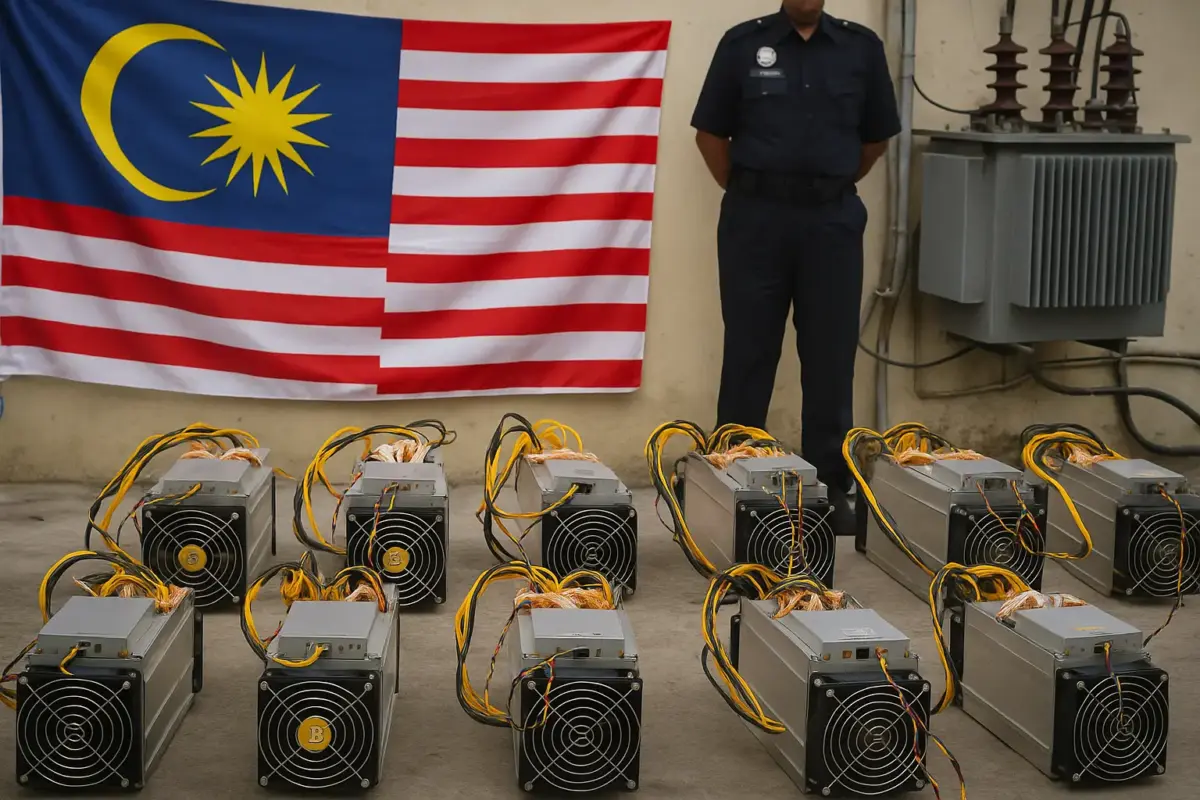
Malaysia is confronting one of its most costly crypto-related challenges to date, as new government disclosures reveal the enormous scale of electricity theft tied to unauthorized mining operations.
The problem, which has intensified over the past several years, has placed growing pressure on the national grid, law-enforcement agencies, and policymakers who are still navigating how to regulate the country’s expanding crypto economy.
Malaysia’s national utility company, Tenaga Nasional Berhad (TNB), has confirmed that it has lost more than US$1.11 billion in stolen electricity over roughly the past five years. The financial damage, equivalent to around 4.6 billion ringgit, stems from thousands of premises illegally diverting electricity to power cryptocurrency mining machines.
According to a written parliamentary reply dated Tuesday, authorities identified 13,827 properties that siphoned electricity from the grid between 2020 and August this year. These setups were often concealed inside rented storefronts, unused warehouses, or quiet residential homes with minimal foot traffic.
Officials said that miners typically choose such locations because they can be modified without drawing attention, especially when power usage dramatically increases.
While cryptocurrency mining is permitted in Malaysia, bypassing electric meters or directly tapping into transformers is against the law. These unauthorized connections allow miners to avoid high electricity costs, leaving TNB to absorb the losses. Over time, the theft has contributed to grid strain and the rising risk of equipment malfunctions.
The Ministry of Energy and Water Transformation said the theft represents a serious threat to the power system and public safety. It warned that the financial burden could eventually influence electricity system costs if left unchecked. The ministry noted in its report that “this activity poses a serious threat to the national electric supply system and public safety” and could have broader economic implications if it continues unmanaged.
This issue is not new. Earlier reports showed that electricity theft tied to crypto mining surged by 300% between 2018 and 2024. TNB recorded an average of 2,303 cases per year during that timeframe, along with approximately 1,699 public complaints. These numbers reflect a rising awareness among residents who notice suspicious activity, unusual heat from buildings, or sudden power inconsistencies in their local areas.
In March, Bukit Aman Criminal Investigation Department Director, Datuk Seri Mohd Shuhaily Mohd Zain, highlighted the scale of the issue, noting that TNB had lost around 520 million ringgit (US$121 million) to electricity theft, with most cases linked to illegal mining. Despite repeated enforcement efforts, syndicates continue to adjust their strategies. Operators frequently relocate every few months and invest heavily in ventilation, cooling, and soundproofing systems to avoid detection.
A Nationwide Crackdown Supported by New Technology
The scale of the problem has prompted a coordinated response across Malaysian enforcement agencies. Joint operations now involve TNB, the national police, the Malaysian Anti-Corruption Commission, the Energy Commission, and various local councils. These teams have carried out thousands of inspections and seized large numbers of Bitcoin mining machines.
In August 2024, local authorities announced that they had destroyed more than 900 mining rigs worth nearly 2 million ringgit (about US$482,000). These actions were part of broader efforts to dismantle illicit operations that divert massive amounts of electricity, sometimes enough to power entire residential blocks.
To support these efforts, TNB has developed new systems aimed directly at identifying high-risk locations. The utility has built an internal database containing complete records of property owners and tenants suspected of involvement in electricity theft. The ministry said in its parliamentary reply that “this database serves as an important internal reference for identifying and monitoring suspicious premises” and forms the foundation for inspection planning.
The database helps enforcement teams recognize patterns, track individuals who move between locations, and profile sites that may require repeated monitoring. Officials said the tool has become essential as illegal mining operations continuously shift their activities to avoid detection.
At the technical level, the utility is deploying new monitoring tools to detect abnormalities in real time. Smart meters are being installed at electricity distribution substations, allowing TNB to track sudden spikes in energy consumption or unusual fluctuations that may indicate tampering. These meters support automated alerts, enabling teams to respond quickly before losses escalate.
TNB has also introduced a pilot system called the Distribution Transformer Meter program. This initiative monitors electricity usage at the transformer level to catch manipulation and direct connections that bypass standard metering equipment. According to the ministry, early results show that the system can flag suspicious behavior more accurately than older technology.
The utility is also exploring the use of artificial intelligence and predictive analytics to refine detection. By scanning consumption data for irregularities, an AI system could identify potential illegal mining operations before human inspectors recognize the signs. Authorities believe this shift toward preventive oversight could help reduce losses, especially as illegal miners grow more sophisticated.
A Growing Mining Sector Without Clear Regulations
Malaysia has become an attractive destination for crypto mining in recent years, thanks to its competitive electricity prices and expanding share of the global Bitcoin hash rate. Industry groups estimate that the country could draw between 400 million and 700 million ringgit in mining-related investments, create as many as 4,000 jobs, and generate up to 150 million ringgit in annual tax revenue if the sector were formalized.
However, the legal framework surrounding mining remains incomplete. Unlike cryptocurrency trading or custody, which fall under the jurisdiction of the Securities Commission, mining activities are not directly regulated. This lack of a dedicated licensing structure or tariff framework leaves operators navigating unclear rules and uncertain electricity pricing.
Because of this ambiguity, legitimate miners often remain cautious. Without a defined regulatory pathway, many choose not to expand operations or publicly disclose their activities. Meanwhile, illegal miners take advantage of the gray area, sidestepping the costs that legitimate businesses must pay.
Industry organizations, including the ACCESS Blockchain Association, have repeatedly called for clearer policies. They argue that Malaysia could unlock significant economic potential if mining were properly governed. The association recommends introducing mining-specific licenses, revising landlord liability laws, and adopting energy pricing models that reward sustainable practices.
ACCESS also suggests establishing Shariah-compliant mining frameworks to align with Malaysia’s leadership in Islamic finance and attract investors who prioritize ethical governance.
Some early signs of progress may be emerging. Bank Negara Malaysia is working on tokenization initiatives and a broader digital asset framework. While these projects do not directly regulate mining, they indicate that policymakers are beginning to consider how Malaysia should manage its expanding crypto ecosystem.
Until a clearer regulatory structure is in place, however, TNB and enforcement agencies must continue dealing with unauthorized operations that strain the grid. Officials describe this as an ongoing battle that requires constant vigilance, especially as crypto mining operations become more mobile and technologically advanced.
Malaysia’s response reflects a balancing act: encouraging economic innovation while protecting critical national infrastructure. With more than a billion dollars already lost in stolen electricity, the stakes remain high, and the next phase of policy development could determine how the country navigates the future of digital asset mining.
About Author

About Author




