


Next Crypto to Explode: Analysts Back Bitcoin Hyper as Next $1 Altcoin

Bitcoin faces a utility challenge. While it stays as the top collateral in the crypto space – the “digital gold” that big players store safely – it has grown less active in function. At the same time, networks like Ethereum and Solana have become lively digital markets, full of lending options, decentralized trading platforms, and assets that yield returns.
For a long time, Bitcoin holders have stood by as others in the market made their holdings productive. The money exists – more than a trillion dollars worth – but the systems to use it actively have stayed stuck.
This lack of movement has opened up a space that BTC Layer 2 solutions are eager to occupy. The idea is straightforward: keep Bitcoin as the base for settlements, but add a high-performance layer on top.
Bitcoin Hyper (HYPER) is grabbing attention not just for its technology but also for the substantial funding it has raised in its early stages. By blending the Solana Virtual Machine (SVM) with Bitcoin’s secure architecture, the project aims to make BTC more programmable and suitable for fast-paced DeFi activities.
The market has taken notice. With the HYPER presale bringing in $31.3 million, experts view the project as a likely standout in 2026. The figures show strong belief: Bitcoin Hyper has a current price of $0.0136 and a staking yield of 37%, which has already tied up much of the initial tokens.
The Mechanics of a Bitcoin L2
Many efforts to expand Bitcoin have not succeeded because they aimed to mimic Bitcoin too closely, making them slow, awkward, and restricted in coding options. Bitcoin Hyper chooses a fresh path. It combines the power of a high-speed system (Solana’s SVM) with the strength of a solid base (Bitcoin). This mixed design lets developers create smart contracts in Rust and deploy rapid trading tools that finalize on the Bitcoin network, avoiding the usual backups to the primary chain.
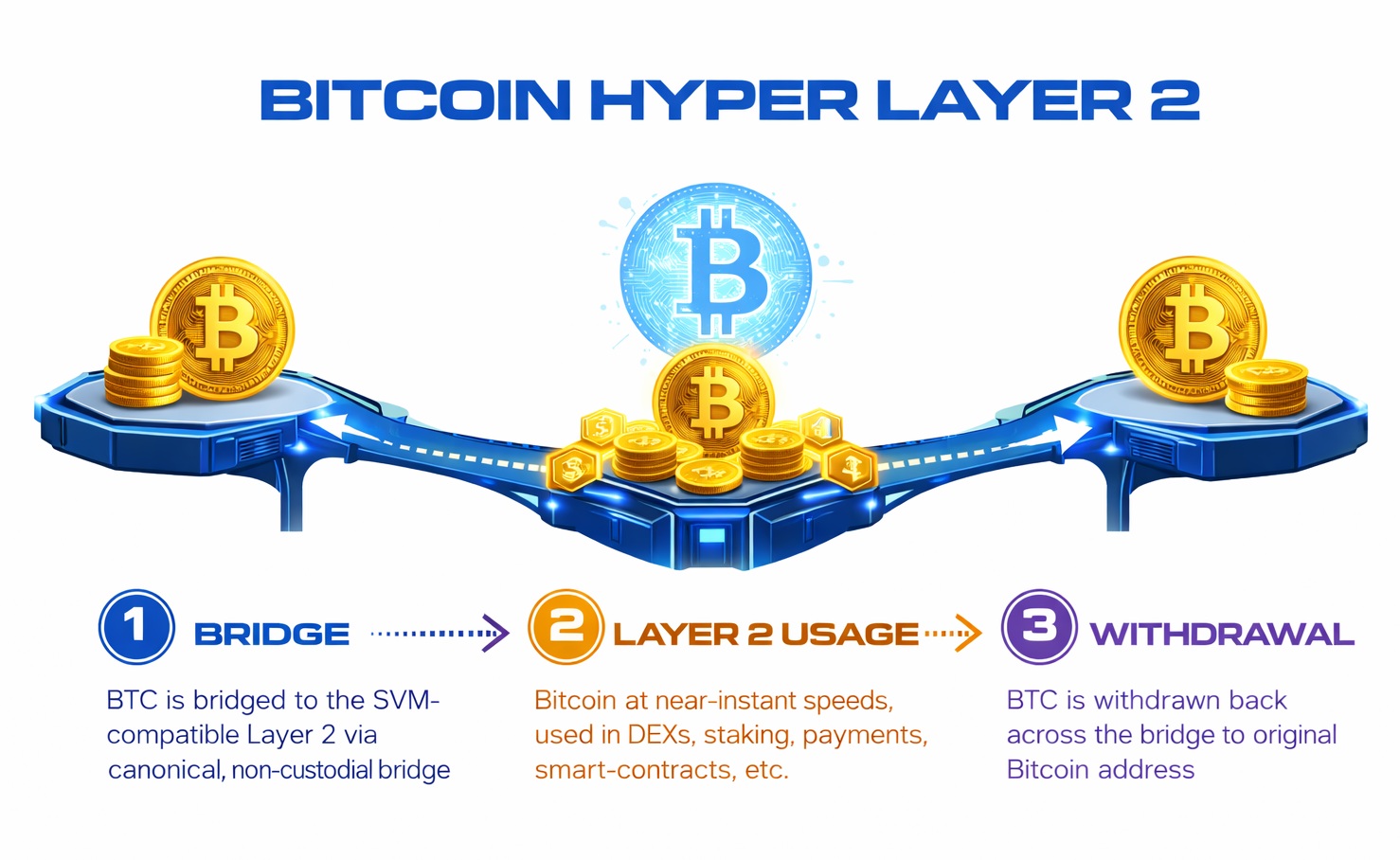
At the heart of this setup are the “Canonical Bridge” and the Bitcoin Relay Program. Unlike bridges that depend on groups of unknown approvers – which have often failed in crypto’s past – Hyper’s bridge checks block details and proofs on its own. This reduces trust issues, so users can move their BTC into the Hyper system without giving full control to a central group.
Security gets extra strength from reviews by Coinsult and SpyWolf, a key step for any project aiming to thrive in the 2026 market. Using the SVM, Bitcoin Hyper achieves transaction speeds comparable to Solana’s while maintaining the security of the Bitcoin chain. It involves advanced tech, but the aim is easy use: quick, low-cost deals with Bitcoin as the main fee token.
The Case for a $1 HYPER Token
The positive outlook for HYPER draws from a basic comparison to the Ethereum world. When Arbitrum launched, it brought more than just lower costs; it freed up billions of dollars that had been too expensive for Ethereum’s main layer. It currently trades with a market cap of more than $600 million. If Bitcoin Hyper can draw in even a small share of Bitcoin’s unused funds as Arbitrum did for Ethereum, the value shift could be sharp.
Experts forecasting a $1 price – a rise of about 73 times from now – count on this flow of funds. The spotlight on Layer 2s leads the year’s trends, and with Bitcoin below its peak prices, people seek high-reward options that can offer multiple returns on investment. HYPER is looking to fix Bitcoin’s payment problem, and success will make it the next crypto to explode.
For example, crypto analyst 2Bit Crypto praised the staking rewards to his 40,000 YouTube followers and praised the roadmap as HYPER moves towards launch.
Conclusion
The infrastructure is being laid for Bitcoin to finally wake up. That massive trillion-dollar market cap cannot stay locked up without purpose forever.
For now, the smart money is betting that the gap between Bitcoin’s market cap and its utility is about to close, and Bitcoin Hyper is the shovel they are using to fill it.
About Author

About Author