


SpaceXAI’s Grok Predicts Price of Ethereum, BNB, Solana by End of 2026
Over the past week, the crypto market has once again shown how quickly the ground can shift. Traders watched the Federal Reserve’s latest rate decision with bated breath after a volatile stretch, while Morgan Stanley rolled out low-fee spot Ethereum and Solana ETFs, and the US Senate shelved the long-anticipated CLARITY Act to prioritize other legislation. Despite the resulting uncertainty, Ethereum and Bitcoin still managed to outperform traditional assets for the month, even as semiconductor stocks slumped and institutional flows remained mixed.
These overlapping catalysts (macro policy, institutional product launches, and regulatory delays) all arrived within days of one another – and each prompted its own cascade of on-chain data, sentiment shifts, ETF flow reports, and secondary market reactions. For modern crypto traders and investors, keeping pace with that volume and velocity of information has become nearly impossible.
This is why AI tools have become an essential part of every serious analyst’s daily life – and for this article, we asked SpaceXAI’s new Grok 4.5 model to look at Ethereum, BNB, and Solana, then predict each crypto’s end-of-2026 price. We also asked Grok to do the same for Bitcoin Hyper (HYPER), a new BTC Layer 2 presale project that’s planning to supercharge Bitcoin itself, and has raised close to $33 million in supporting funds this year.
Ethereum (ETH)
“Ethereum’s industry dominance has reached the point where a move to $4,000 ETH by the end of 2026 is the base-case outcome, not a stretch target,” Grok predicted. “Spot ETF demand has turned into a permanent bid that absorbs every dip, while staking locks up an ever-larger share of ETH’s circulating supply. This relentless institutional buying is creating conditions that have historically produced extreme moves in a matter of months.”
“The market is already pricing in the first leg of that expansion, and the remaining path to $4,000 is simply the continuation of the same forces at higher velocity,” the AI stated.
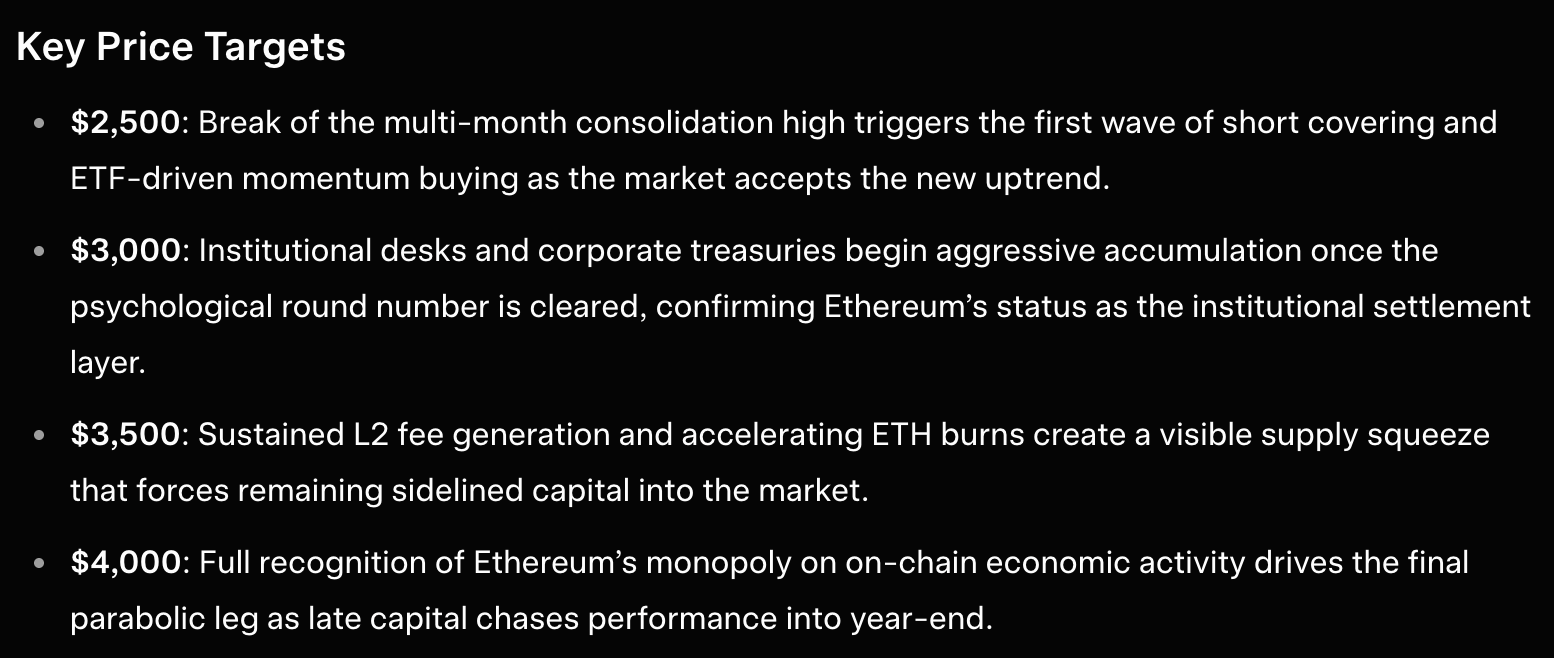
“Layer 2 adoption has removed the last meaningful constraint on Ethereum’s economic throughput,” Grok continued. “Daily transaction volumes and fee generation on Base, Arbitrum, and Optimism have made them significant competitors within the smart contract sector, and every incremental unit of activity accelerates ETH burns. The resulting deflationary pressure tightens supply precisely when capital is rotating into ETH, producing a classic supply-shock setup that can drive price discovery to $4,000 before year-end.”
BNB (BNB)
“Binance remains the dominant trading platform by volume, and BNB is the required token for fee discounts across every Binance product,” Grok stated. “Traders who move serious size buy and hold BNB to cut costs, turning everyday exchange activity into continuous demand. As volumes stay elevated through the rest of the year, this utility-driven buying is likely to push BNB’s price to $900 in 2026.”
“BNB Chain has rapidly and consistently attracted projects that need fast confirmation times and low transaction costs – and gaming titles, social applications, and new token launches migrate there because users can interact without high fees,” Grok explained. “Growing daily activity on the chain requires more BNB for gas and participation, creating steady upward pressure on an ongoing basis.”
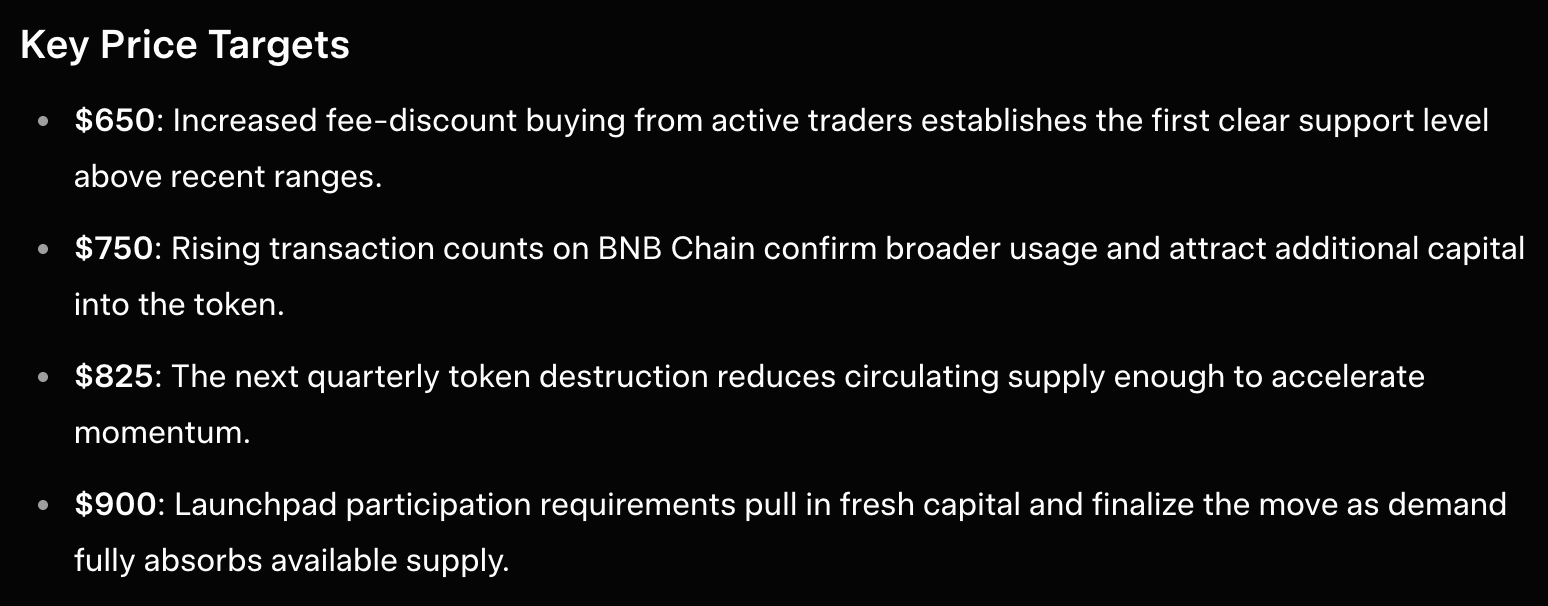
Grok then examined BNB’s tokenomics in greater depth, noting that “BNB Chain destroys a portion of BNB every quarter through its Auto-Burn mechanism, which calculates the amount based on the average BNB price and the number of blocks produced on the network. Stronger on-chain activity yields larger removals from BNB’s circulating supply, and with network usage remaining elevated, each burn event tightens the available tokens as demand rises. This could easily force the BNB price higher until it reaches $900.”
Solana (SOL)
“Solana processes thousands of transactions per second at near-zero cost, something other chains cannot match when activity spikes,” explained Grok. “Traders, bots, and applications stay on the network instead of fleeing to slower alternatives. That consistent choice during busy periods creates steady demand and could potentially move the price of SOL to $170 by the end of the year.”
“New applications keep launching on Solana because the chain delivers reliable performance under real load,” the AI continued. “Payment systems, data networks, and consumer tools are attracting actual users rather than just speculation. Growth in these live products generates ongoing purchases of SOL, adding yet another bullish catalyst.”
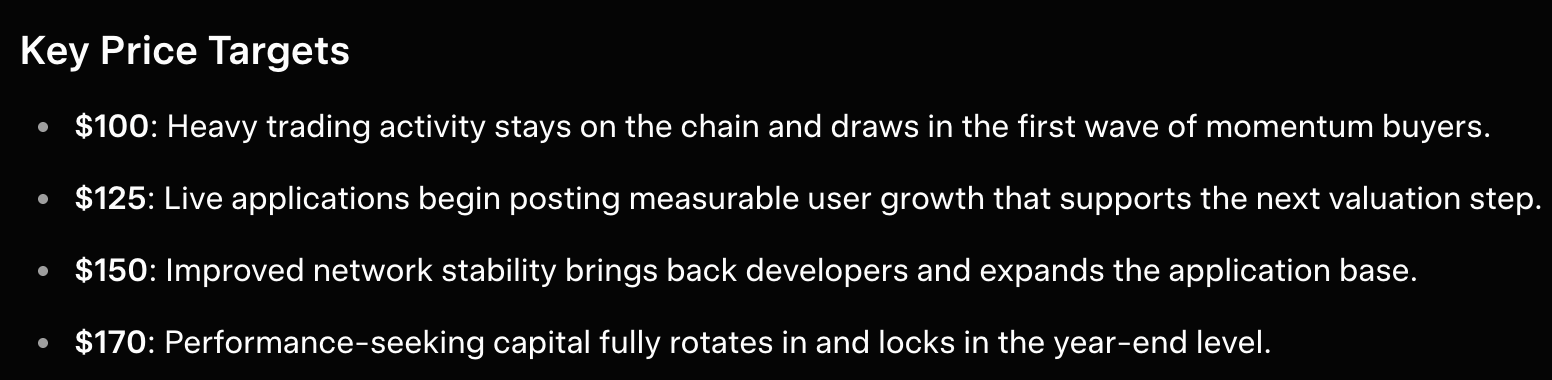
“Capital seeking the strongest growth story in the sector is flowing into Solana,” Grok asserted. “The ecosystem’s history of rapid expansion when markets turn higher also makes SOL the preferred holding for investors chasing performance. This inflow can also help the price surge as high as $170 before 2026 closes.”
Bitcoin Hyper (HYPER)
“Bitcoin transactions have always been slow and costly on the base layer, so most holders can do little more than send and receive BTC,” Grok stated as it took a deep dive into the presale project we asked it to analyze. “Bitcoin Hyper (HYPER) is building a Layer 2 that sits on top of Bitcoin and moves BTC quickly and cheaply while the L1’s original security stays intact. The Layer 2 also opens new opportunities for staking, DeFi tools, and applications that work with real Bitcoin.”
“These new practical uses for the asset are a key reason why the HYPER token could climb to 10x its present price by the end of 2026.”
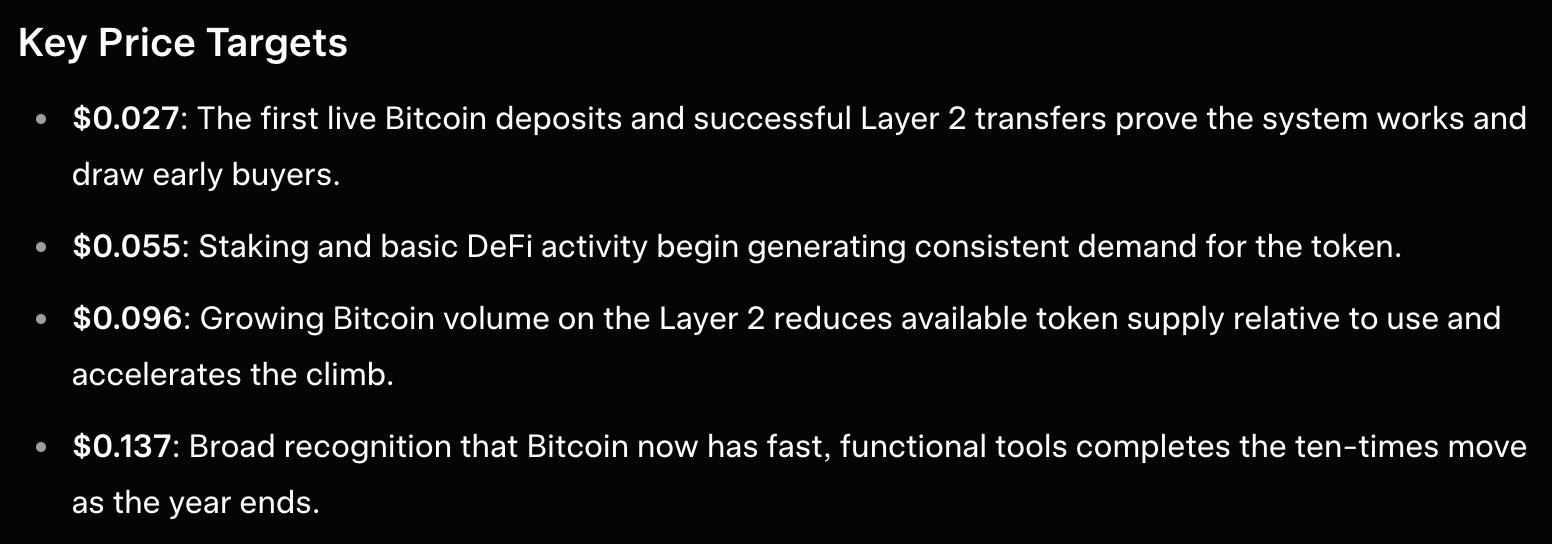
“The HYPER token is also required for holders to generate staking rewards (with a 36% APY rate available during the presale), and for the Layer 2 itself to operate,” Grok explained. “As Bitcoin crosses onto the Layer 2 and people begin using the new features, the need for HYPER grows – and with a fixed total supply of 21 billion HYPER and almost $33 million raised during the presale itself, that rising need could lift the token’s price in a clear and straightforward way, making a 10x possible this year.”
About Author

About Author