

OCC Clears Banks to Hold and Use Crypto To Pay Blockchain Fees
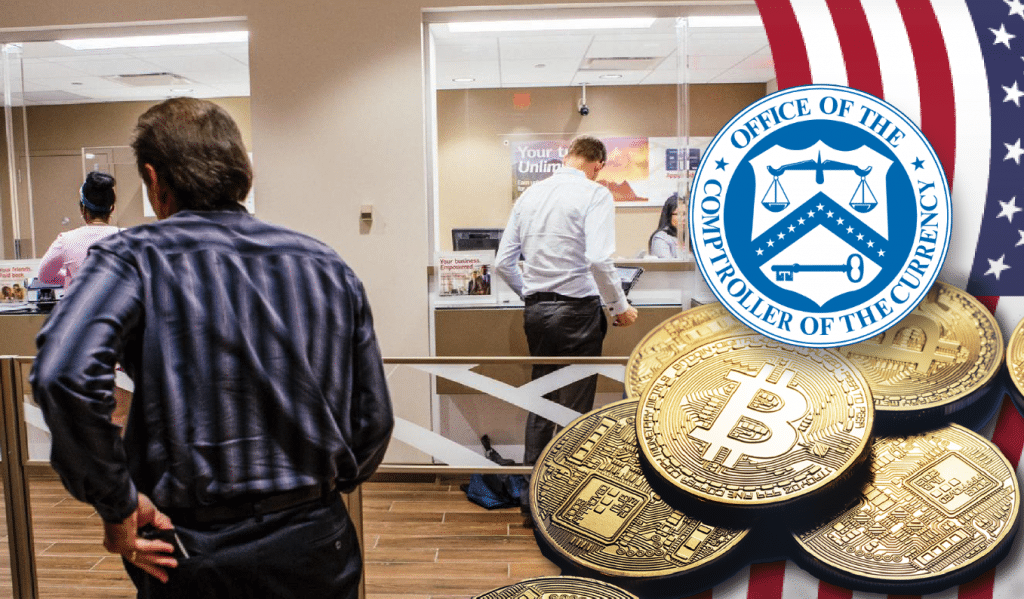
The Comptroller of the Currency (OCC) has permitted banks to hold cryptocurrencies such as Bitcoin, Ethereum, Solana, and XRP in their accounts and use them to pay fees on blockchain networks.
The official announcement contained in Interpretive Letter 1186 explains how banks can use crypto assets in their activities and cautions them to implement measures such as internal controls, cybersecurity protocols, and compliance checks to manage associated risks.
The rules in the letter also cover platforms that use their own token to pay fees, referred to as gas fees. These platforms can now perform and verify transactions on decentralized networks.
Until now, most regulated banks have been able to work with crypto only indirectly through other companies. This is because unclear rules made many banks hesitant to offer crypto services, even though demand was growing.
However, following the OCC’s earlier approval allowing banks to work with stablecoins, they are now permitted to buy and hold certain digital assets directly as long as they are used for legitimate purposes such as settling transactions or testing platforms.
The letter was issued under Comptroller Jonathan Gould, a Trump appointee confirmed in July 2025. Since he took office, OCC has become more crypto-friendly, allowing banks to run blockchain nodes and offer crypto custody services.
OCC Approves Crypto Testing to Boost Blockchain Adoption in Banks
Besides regular operations, the OCC has permitted banks to hold crypto for testing, which helps them start using blockchain in banking. For example, when banks test tokenised services or smart contracts, they can now hold crypto in their custody.
Additionally, allowing banks to hold crypto for operations, along with coordinated efforts by the CTF and SEC, can help speed up blockchain adoption in the U.S financial industry.
The OCC guidance (Interpretive Letter 1186) indicates a shift in rules, suggesting that the government is ready to embrace blockchain technology while still maintaining control over the industry.
About Author

About Author