


Bitcoin News Today Saylor Bitcoin Strategy Shifts: Is HODL Over?
Institutions Are Abandoning Bitcoin’s ‘Never Sell’ Rule

In Bitcoin news today, Strategy, the largest corporate BTC holder in the world, is formally abandoning its ‘never sell’ accumulation doctrine in favor of active balance-sheet management, a structural break that signals Bitcoin’s transition from a passive store-of-value asset to an actively managed institutional instrument.
President and CEO Phong Le confirmed the shift on the company’s Q1 2026 earnings call, stating the firm will now consider selling BTC to purchase US dollars or retire debt when doing so is accretive to bitcoin per share. MSTR shares fell 3% in after-hours trading on the announcement.
The company closed Q1 2026 holding 818,334 BTC, nearly 4% of the total circulating supply, acquired for $61.81Bn at an average cost of approximately $75,500 per coin. That position, built through years of aggressive institutional accumulation funded by equity and debt issuance, generated a $12.5Bn net loss in Q1 after Bitcoin’s price declined sharply at the start of the year.
Bitcoin News Today: From HODL to Active Management and How the Operating Model Is Changing
The practical effect of this shift is significant. Strategy’s original bitcoin strategy was built on a HODL framework, an indefinite hold posture that treated BTC as a deflationary reserve asset rather than a tradeable position. That model propelled MSTR into its role as the dominant single-stock Bitcoin proxy, with its Bitcoin buying spree drawing institutional inflows and retail attention in equal measure.
Le was direct in articulating the new framework on the earnings call: “We will sell bitcoin when it’s advantageous to the company. We’re not going to sit back and just say, ‘We’ll never sell the bitcoin.’ We want to be net aggregators of bitcoin – increasing our total bitcoin, but more importantly, increasing our bitcoin per share because we think that is what is going to be most accretive long term for MSTR.”
The bitcoin per share metric, which tracks how much BTC exposure each MSTR share represents, now functions as the company’s primary performance benchmark, displacing raw accumulation volume as the headline KPI. That distinction matters: it reframes profit-taking not as a retreat from the Bitcoin thesis, but as a capital-rotation tool deployed in service of shareholder BTC exposure.
In December, Strategy established a $2.25Bn US dollar reserve to cover preferred stock dividends and outstanding debt obligations, a move that foreshadowed the operational flexibility now being formalized. Year to date, the company has acquired approximately 63,000 BTC and reported a BTC yield of roughly 9% – the metric measuring growth in bitcoin per share over time.
Explore: High-potential low caps hitting new ATHs
Saylor’s Real Estate Analogy Reframes the Institutional Bitcoin Strategy
Chairman and founder Michael Saylor, the architect of the original never-sell institutional bitcoin strategy, used the earnings call to preempt criticism of the policy change with a real estate development analogy. His framing was pointed:
“If you bought land for $10,000 an acre, and you sold it at $100,000 an acre, and then you bought more land with profit… nobody would say that’s bad for the price of real estate, and no one would say that that proves the business doesn’t work. Real estate development companies literally exist to buy land cheaply and sell it expensively. We’re like a bitcoin development company.”
Saylor’s transmission mechanism highlights that tactical sales at higher prices generate capital for BTC accumulation, which increases bitcoin per share despite temporary declines in total holdings.
This reflects a professional management style akin to that of institutional investors handling large, illiquid assets, rather than signaling bearishness toward Bitcoin.
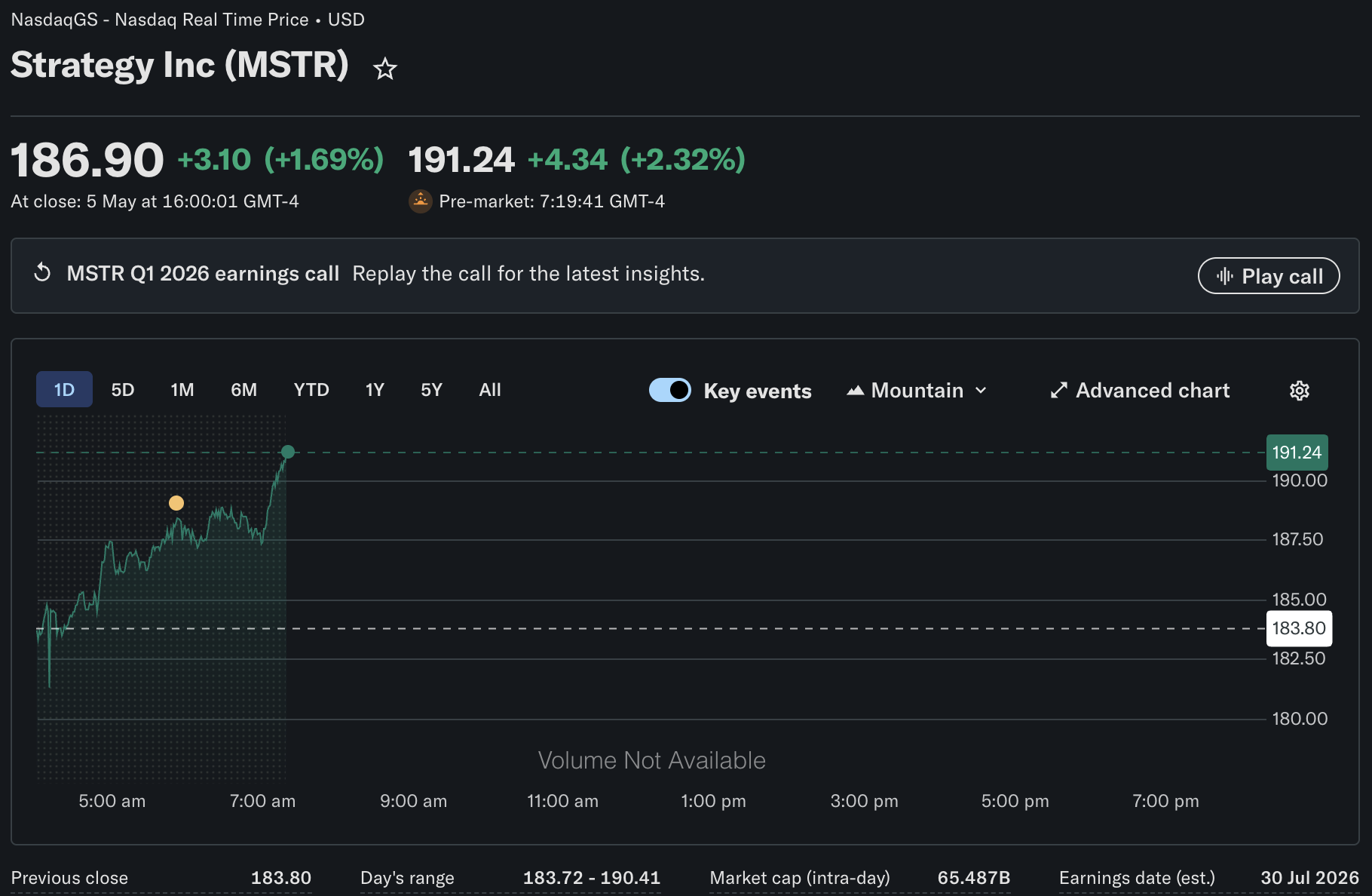
In other Bitcoin news today, Bernstein analysts previously commended this volatility-agnostic accumulation strategy, noting a resilient ownership structure as institutional ETF holders surged from 61 in March 2024 to over 3,300 by mid-February 2025. The recent 3% post-announcement decline in MSTR raises questions about balance sheet discipline versus market adjustments to a new narrative.
From a market-structure perspective, Bitcoin is shifting in institutional portfolios from a reserve allocation to an actively managed position focused on yield optimization, aligning with ETF inflows and macro data analysis. This indicates market maturation rather than capitulation.
Discover: Institutional buy signals for April
Drop CoinNews a Follow on X and Telegram for all of the Latest Crypto Market Updates and Professional Market Analysis.