

GalaxyOne Lets US Clients Borrow Against Crypto Without Selling
GalaxyOne lets eligible US clients borrow against BTC, ETH and staked SOL at a fixed 8.99% APR without selling their crypto holdings.

Galaxy Digital has launched a Crypto Portfolio Line of Credit on its GalaxyOne platform, letting eligible US clients borrow US dollars against Bitcoin, Ethereum, and staked Solana holdings without selling them. The product carries a fixed 8.99% APR with zero origination fees, according to Galaxy.
How the credit line works
The facility is a revolving line, meaning borrowers can draw down and repay flexibly rather than accepting a lump sum with rigid terms. Clients can pledge a combination of BTC, ETH, and staked SOL under a single collateral basket instead of opening separate loans for each asset.
Supplementary reporting from Yahoo Finance and CryptoProwl adds detail Galaxy’s own materials don’t spell out in full: lines reportedly start at a 50% loan-to-value ratio, come with interest-only monthly payments, and offer funding in either US dollars or USDC, typically available quickly after approval. That same reporting says staked SOL can serve as collateral without unstaking, so borrowers keep earning staking rewards while tapping liquidity, and that the product is initially live in 40 US states. Those figures haven’t been independently confirmed against Galaxy’s own launch materials, but they’re consistent with how the product has been described elsewhere.
The tax logic is the real selling point. In the US, selling appreciated crypto triggers capital gains tax, while borrowing against it generally does not under current law. That’s the same mechanism behind securities-based lending in traditional finance, where wealthy clients borrow against stock portfolios to fund real estate or business investments while deferring tax and keeping upside exposure. A fixed rate also removes the volatility that plagues DeFi borrowing, where costs can swing sharply with pool utilization.
From institutional lending to retail ambitions
Galaxy has run institutional lending since 2018, but GalaxyOne, which launched October 6, 2025, marked its first serious retail push, initially offering trading services and cash yields up to 8% APY for accredited investors. The platform added SOL staking on March 31, 2026, with variable rewards up to 6.50% and platform commissions waived through the end of 2026 – a detail that dovetails with Solana’s broader push into mainstream financial products as the network matures into blue-chip collateral status. Earlier this year, Galaxy also introduced GOFR, a managed lending program aimed at institutions, accredited investors, and high-net-worth clients, extending the firm’s balance-sheet lending function beyond its core institutional desk.
Adding staked SOL to the collateral list is notable given the different risk profile involved – unbonding periods and distinct liquidity characteristics separate staked SOL from spot holdings, something Galaxy will need to manage carefully as loan volumes scale.
A crowded, still-recovering lending market
Galaxy isn’t entering an empty field. Crypto lending has been rebuilding since the 2022 collapses of Celsius, BlockFi, and Voyager, which left borrowers and depositors scrambling and pushed the sector toward more conservative, non-custodial-style structures. Supplementary market data cited in coverage of the launch pegs total centralized crypto lending volume at roughly $23.3 billion in Q1 2026, with Tether controlling around 68% of outstanding loans and Coinbase and Galaxy each holding a mid-single-digit share, alongside smaller specialists like Ledn – figures that, if accurate, underscore how concentrated this market remains even as new entrants launch products.
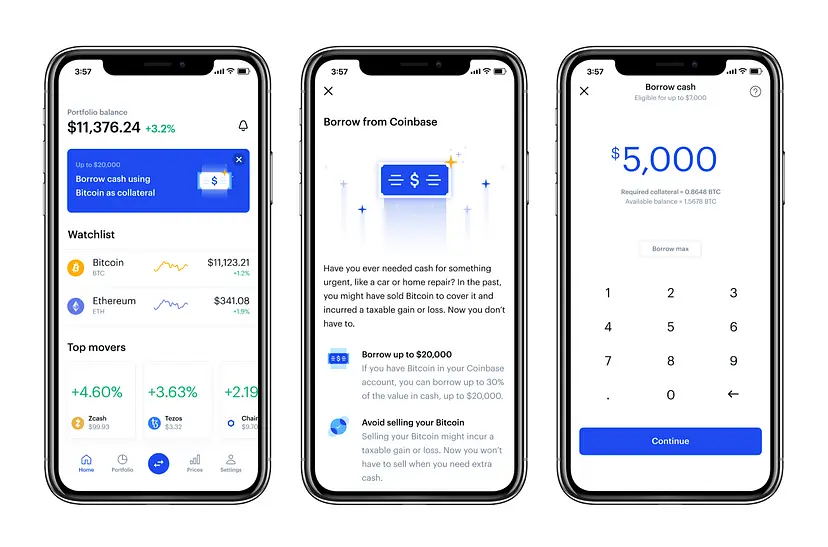
Coinbase rolled out its own crypto-backed loan product for US customers (excluding New York) in late 2025, and that move is widely read as part of the same push toward regulated, collateralized borrowing that Galaxy is now extending into. The competitive pressure isn’t limited to crypto-native firms, either – traditional banks have started building access to Bitcoin, Ether, and Solana directly into their own platforms, and the broader trend toward bundling lending, custody, and wealth management under one roof is playing out across other crypto platforms expanding into banking-adjacent services. By bundling BTC, ETH, and staked SOL into one facility, Galaxy is effectively signaling which assets it considers reliable enough to lend against at scale.
What to watch
Galaxy hasn’t disclosed adoption numbers or lending volume targets alongside the launch, which is standard for a new product but leaves the real test ahead: how much demand shows up once the initial coverage cycle fades. An 8.99% fixed rate is competitive against some alternatives, but it’s still a meaningful cost of capital, and borrowers will be weighing it against the tax deferral benefit rather than treating it as free money.
Worth tracking going forward is how Galaxy’s retail credit pricing compares with the funding rates flowing through its institutional GOFR program, and whether rivals like Coinbase or Ledn respond with rate or term adjustments of their own as competition for crypto-collateralized lending intensifies. For readers with concentrated BTC, ETH, or SOL positions, the product adds a real alternative to selling – but the mechanics, especially around staked SOL’s unbonding risk, deserve scrutiny before drawing down a line.
Follow CoinNews on X and Telegram for ongoing coverage of crypto lending and market structure.