


Gravity Bridge Drained of $5.4 Million in Fresh Cosmos Ecosystem Security Scare
Gravity Bridge Drained of $5.4M in Cosmos Exploit
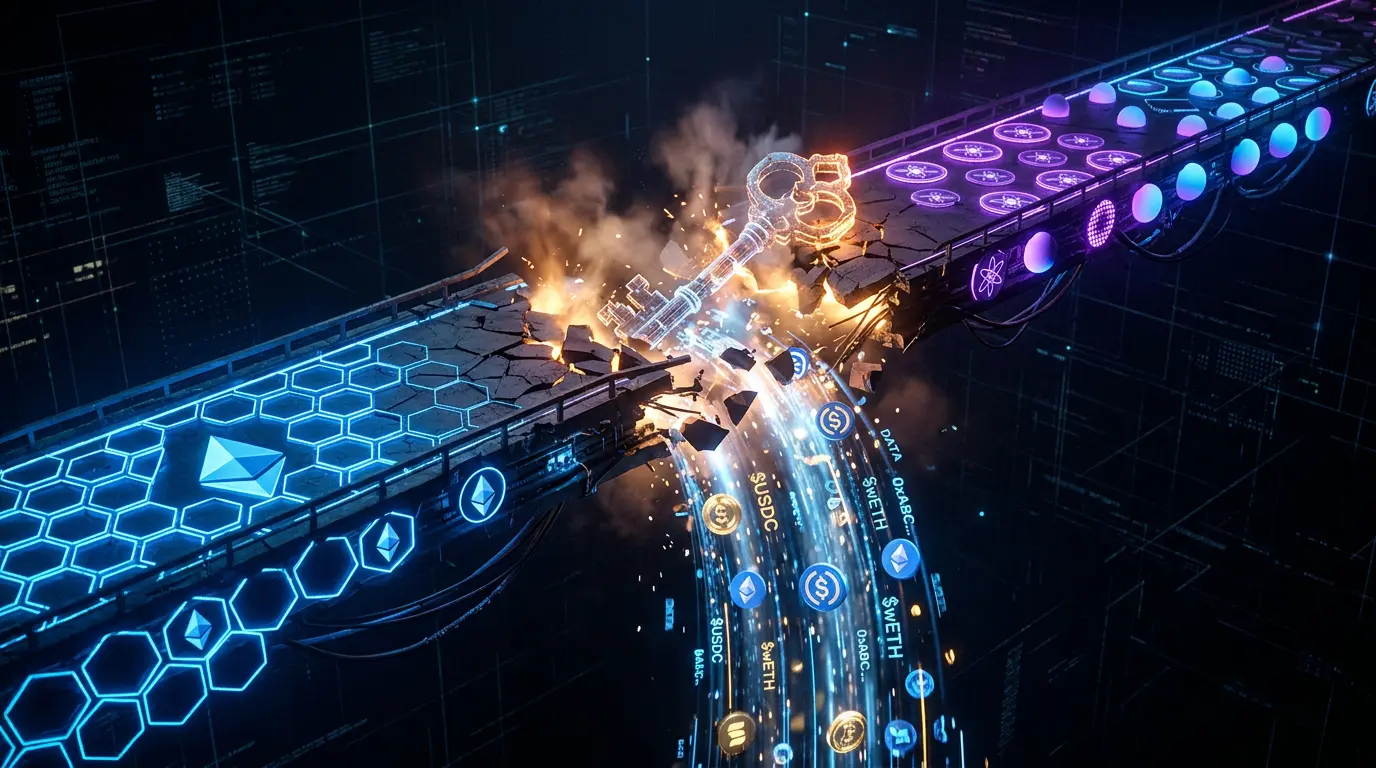
Gravity Bridge, one of the primary infrastructure routes connecting Ethereum-side assets into the Cosmos ecosystem, was drained of approximately $5.4 million on-chain after what PeckShield and independent on-chain analyst Specter have characterized as a signing-key compromise on the Ethereum side of the bridge – not a smart-contract logic exploit, but a direct authorization failure that allowed an attacker to issue fraudulent withdrawal instructions the protocol had no mechanism to reject. The attacker’s primary theft wallet, identified by Specter as ending in 0x…7C62da1F9, received assets drained from a Gravity Bridge Ethereum-side contract ending in 0x…1F2D906, and the subsequent fund movement pattern – rapid stablecoin-to-ETH swaps followed by routing through ChangeNow and Binance – confirms a laundering sequence optimized for exit velocity rather than concealment sophistication. The governing question the Cosmos ecosystem now faces is whether this represents an isolated operational security failure at the key-management layer or a structural signal that cross-chain bridge infrastructure connecting Ethereum liquidity to Cosmos DeFi chains carries systemic authorization risk that no amount of smart-contract auditing can address.
$5.4 Million Drained: How the Signing-Key Compromise Built and What Assets It Hit
PeckShieldAlert broke down the asset composition of the drain with forensic precision: approximately $4.3 million in USDC, 274 wETH valued at roughly $553,000, $434,000 in USDT, and 14.16 PAXG worth approximately $64,000 – all extracted from the Ethereum-side bridge contract in a sequence consistent with an attacker holding valid signing authority rather than exploiting a reentrancy loop or oracle manipulation. Specter’s on-chain analysis, published shortly after the drain was detected, wrote explicitly that “the @gravity_bridge bridge contract key may have been compromised,” framing the event as an authorization failure rather than a protocol bug – a distinction that carries significant implications for how validators and bridge operators should model their threat surface. The attacker consolidated the haul, swapped the majority of stablecoins and PAXG into ETH to reduce traceability across multiple asset types, and routed portions through ChangeNow and Binance; blockchain investigators reported the primary theft wallet holding approximately 2,100 to 2,102 ETH – roughly $4.2 million at time of reporting – shortly after the drain concluded, indicating that a meaningful share of the stolen value remained stationary in the primary wallet even as laundering activity was underway.
The Gravity team’s operational response moved immediately: validators and orchestrators received direct instructions to halt operations, and bridge functionality was fully paused pending a formal incident investigation and post-mortem. The team stated explicitly that the issue appears tied to authorization and signing infrastructure rather than a systemic flaw in the bridge protocol itself – a framing that, while operationally accurate, does not diminish the exposure that bridged-asset holders and Cosmos DeFi protocols dependent on Gravity-sourced liquidity now face. The Polymarket $520K exploit, which similarly demonstrated how authorization-layer failures can bypass otherwise sound contract logic, established the same pattern: the attack surface in cross-chain and prediction-market infrastructure increasingly runs through key management and signing authority, not bytecode.
Signing-Key Exposure Was Already a Known Bridge Attack Vector: What the Pre-Existing Structural Weakness Actually Shows
The Gravity Bridge drain is not landing on a resilient ecosystem structure. The broader cross-chain bridge category has absorbed some of the largest individual protocol losses in DeFi history – Ronin in 2022, Nomad in 2022, and Multichain in 2023 together accounted for hundreds of millions in losses – and in each case, the transmission mechanism was not a novel smart-contract exploit but a failure at the validator, admin-key, or signing-authority layer that the underlying bridge logic was architecturally incapable of defending against. Gravity Bridge launched in late 2021 as a permissionless route for ERC-20 assets into Cosmos DeFi and has served as critical liquidity infrastructure for IBC-connected chains; its role as a primary on-ramp means the bridge’s TVL represents not just locked value but active collateral and trading liquidity across multiple Cosmos-native protocols.

PeckShieldAlert’s framing of this event as another demonstration that “signing key compromise can be as dangerous as smart-contract exploits” is not a novel observation – it is a restatement of a structural reality that bridge operators have repeatedly failed to operationalize into hardened key management practices. The exploit fits a mechanical pattern where the audit surface that receives scrutiny – the on-chain contract code – is not the surface that fails; the failure occurs at the off-chain operational security layer where signing keys are generated, stored, and managed, a layer that no third-party audit report can fully assess and no on-chain transparency mechanism can fully monitor. The broader risk-off sentiment already pressuring crypto markets compounds the confidence erosion for Cosmos ecosystem participants evaluating bridge exposure.
The Recovery Case Requires Confirmed Key Isolation and TVL Stabilization – The Risk Case Is Already Printing
The cascade risk from the Gravity Bridge drain extends beyond the $5.4 million in directly stolen assets. Gravity Bridge functions as a liquidity conduit, meaning that protocols, pools, and collateral positions built on Gravity-bridged assets – USDC, wETH, USDT, and PAXG positions that transited through the bridge – face a confidence withdrawal that operates independently of whether those specific assets were among those drained. The market’s demonstrated capacity for fear-driven liquidation cascades when bridge or protocol security events materialize means that even users with no direct Gravity Bridge exposure may reduce IBC-connected positions preemptively, compressing Cosmos DeFi TVL through mechanical withdrawal rather than any deterioration in protocol fundamentals.
The containment conditions are specific and observable: a formal post-mortem that credibly isolates the key compromise to a single signing credential, on-chain confirmation that no additional contracts or signing authorities were accessed, exchange freezes on the identified theft wallet addresses that interrupt the ETH consolidation, and a bridge restart timeline that gives validators and liquidity providers a concrete re-entry anchor. The escalation conditions are equally specific: any evidence of additional unauthorized withdrawals, failure to identify and rotate the compromised key before restart, or propagation of the confidence shock into IBC-adjacent liquidity pools producing measurable TVL outflows that Cosmos DeFi metrics confirm rather than merely suggest. The governing condition for the next move is whether the Gravity team’s post-mortem can demonstrate that the compromise was operationally isolated and that key management infrastructure has been restructured before bridge operations resume – and until that confirmation materializes with on-chain verifiability rather than team assertions alone, the path of least resistance remains toward continued outflows, with Cosmos DeFi TVL stability as the next structural level the market will be forced to price. Follow CoinNews on X and Telegram for real-time Cosmos ecosystem updates and bridge security alerts.