


US merchants can now accept payments in Bitcoin, Ethereum, and more via PayPal
PayPal has launched “Pay with Crypto” for US merchants, allowing payments in 100+ cryptocurrencies, with low fees and instant conversions to fiat or stablecoins.
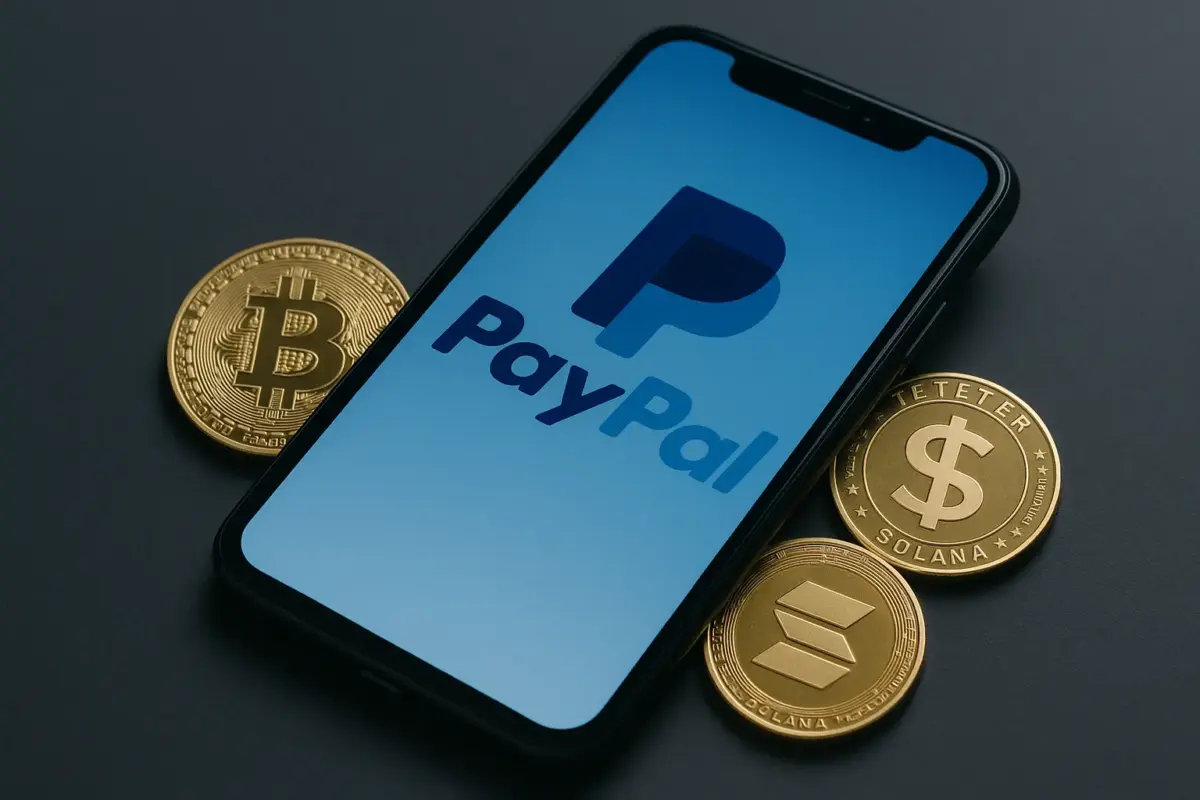
PayPal has recently unveiled a new feature that allows US merchants to accept payments in more than 100 cryptocurrencies.
This new service aims to simplify global payments, reduce transaction fees, and provide a straightforward way for businesses to tap into the rapidly growing world of digital assets.
By supporting major cryptocurrencies, as well as popular stablecoins, PayPal is making it easier for businesses to accept crypto payments while offering more benefits than traditional payment methods.
Called “Pay with Crypto”, the new feature to help US businesses accept a wide range of digital currencies.
Merchants can now receive payments in popular cryptocurrencies such as Bitcoin ($BTC), Ethereum ($ETH), Solana ($SOL), and major stablecoins like $USDT and $USDC.
In addition to these coins, PayPal also supports various smaller and memecoins, such as $TRUMP and $FARTCOIN, showing its commitment to providing businesses with flexibility in the types of crypto they can accept.
This service works by allowing businesses to connect their PayPal accounts to popular crypto wallets like Coinbase, MetaMask, Binance, and Phantom.
PayPal then converts the digital currencies into local fiat currencies or its own stablecoin, $PYUSD, automatically at checkout. This means merchants don’t have to deal with the complexities of holding or managing cryptocurrencies themselves.
Instead, they get paid in a stable form of currency, reducing the risks that come with the price fluctuations often associated with crypto.
To attract merchants, PayPal is offering a promotional rate of just 0.99% for transaction fees during the first year. This is significantly lower than the 1.57% average fee charged by traditional credit cards.
This fee reduction is an important benefit for businesses looking to lower costs, particularly those that handle international payments, which can often be costly and slow through traditional methods.
How the new feature benefits merchants
One of the key advantages of PayPal’s new “Pay with Crypto” feature is the substantial savings it offers on transaction fees.
With a 0.99% fee for the first year, US businesses can save a considerable amount, especially when compared to the average fees charged by traditional credit cards.
Cross-border payments, in particular, often come with high fees and lengthy settlement times. PayPal’s service removes these barriers by providing businesses with a quicker, cheaper, and more efficient way to accept payments from global customers.
The service also makes it easy for businesses to manage crypto payments. When a business receives a cryptocurrency payment, PayPal automatically converts it into local currency or the company’s own PYUSD stablecoin.
This eliminates the need for merchants to worry about price swings or the complicated process of exchanging crypto for fiat. It also removes the need for businesses to set up complex systems to accept or store cryptocurrencies. Everything is handled automatically by PayPal.
Furthermore, PayPal’s “Pay with Crypto” service supports more than 100 cryptocurrencies, offering businesses access to a wide range of assets, including well-known coins like Bitcoin and Ethereum, as well as less traditional options.
This variety is important because it allows merchants to cater to a wider range of customers who may prefer to pay using different types of digital currencies.
Another perk for businesses is the ability to store funds in PYUSD, PayPal’s own stablecoin. By doing so, merchants can earn up to 4% annual yield (APY) on the funds held in their PayPal account.
This feature provides an additional incentive for businesses to use PayPal’s platform, especially when compared to the limited earning opportunities offered by traditional bank accounts.
PayPal’s push to make digital payments more accessible
PayPal’s new service fits into its larger strategy of integrating digital assets into everyday commerce. The company is looking to expand the use of cryptocurrencies and stablecoins, and “Pay with Crypto” is an important step in this direction.
By making it easier for businesses to accept crypto payments, PayPal hopes to foster wider adoption of digital currencies and create a more seamless experience for global transactions.
The CEO of PayPal, Alex Chriss, highlighted the company’s vision for the new service, saying, “Using PayPal’s open platform, businesses can accept crypto for payments, increase their profit margins, pay lower transaction fees, get near-instant access to proceeds, and grow funds stored as PYUSD at 4%”.
This shows how the new service is designed not just to help businesses accept crypto but also to offer financial incentives through higher yields and lower fees.
As businesses start using the “Pay with Crypto” service, they will benefit from faster transaction processing. Traditional payment systems often involve lengthy settlement times, especially for cross-border payments.
With PayPal’s service, transactions are settled almost instantly, which can help businesses streamline their operations and manage cash flow more effectively.
Moreover, PayPal’s decision to support a wide range of cryptocurrencies means that the service is not limited to only the largest and most well-known digital assets.
PayPal’s integration with wallets like MetaMask, Coinbase, and Binance means businesses can accept payments in everything from Bitcoin to niche altcoins.
This broad acceptance is likely to attract businesses that previously didn’t consider crypto payments due to the limited options available.
Impact on the crypto market and blockchain infrastructure
PayPal’s decision to support over 100 cryptocurrencies is expected to have a broader impact on the crypto market and blockchain infrastructure.
As more businesses start accepting crypto payments through PayPal, blockchains such as Ethereum, Arbitrum, Solana, and Stellar could see increased transaction activity.
PayPal’s stablecoin,$ PYUSD, also relies on these blockchains for transaction settlement, which could lead to more users and higher levels of network activity.
For Solana, in particular, the integration of its network into PayPal’s platform could lead to a surge in transaction volume. Solana has been gaining traction due to its fast transaction speeds and low fees, and with PayPal now supporting it, the network may see further adoption.
PayPal’s support of memecoins also highlights the company’s willingness to support a wide range of digital assets, regardless of their market status.
The inclusion of these lesser-known coins in PayPal’s service may boost their demand as they are now seen as viable payment methods. This could bring fresh utility to coins that have traditionally been used more for speculation rather than actual transactions.
By broadening the range of supported cryptocurrencies, PayPal is helping to integrate these digital assets into the real-world economy, potentially expanding their use beyond just trading or investment.
PayPal’s new service also strengthens the role of stablecoins, particularly PYUSD, in the global financial system.
Stablecoins have become increasingly important due to their ability to offer stability in value while still benefiting from the advantages of blockchain technology.
As more businesses use PYUSD, its role as a key asset in global commerce could continue to grow, making it a more integral part of PayPal’s strategy to transform digital payments.
The introduction of “Pay with Crypto” is just the beginning for PayPal in its efforts to bring digital currencies into mainstream use. As more businesses adopt the service, it could lead to a shift in how global payments are made.
With lower fees, faster transactions, and more options for businesses, PayPal’s new crypto payment system has the potential to revolutionise how companies operate on the global stage.
In the coming weeks, PayPal will begin rolling out the “Pay with Crypto” feature to US merchants, and it is expected to expand to other regions in the future.
With over 650 million crypto users worldwide, the service has the potential to drive significant growth for businesses that choose to embrace it.
About Author

About Author