


Taiwan Prepares to Evaluate Bitcoin for National Reserve as Lawmakers Push for Diversification
Taiwan has prepared a report on its Bitcoin holdings as officials weigh adding BTC to national reserves, following U.S. and global digital asset trends.
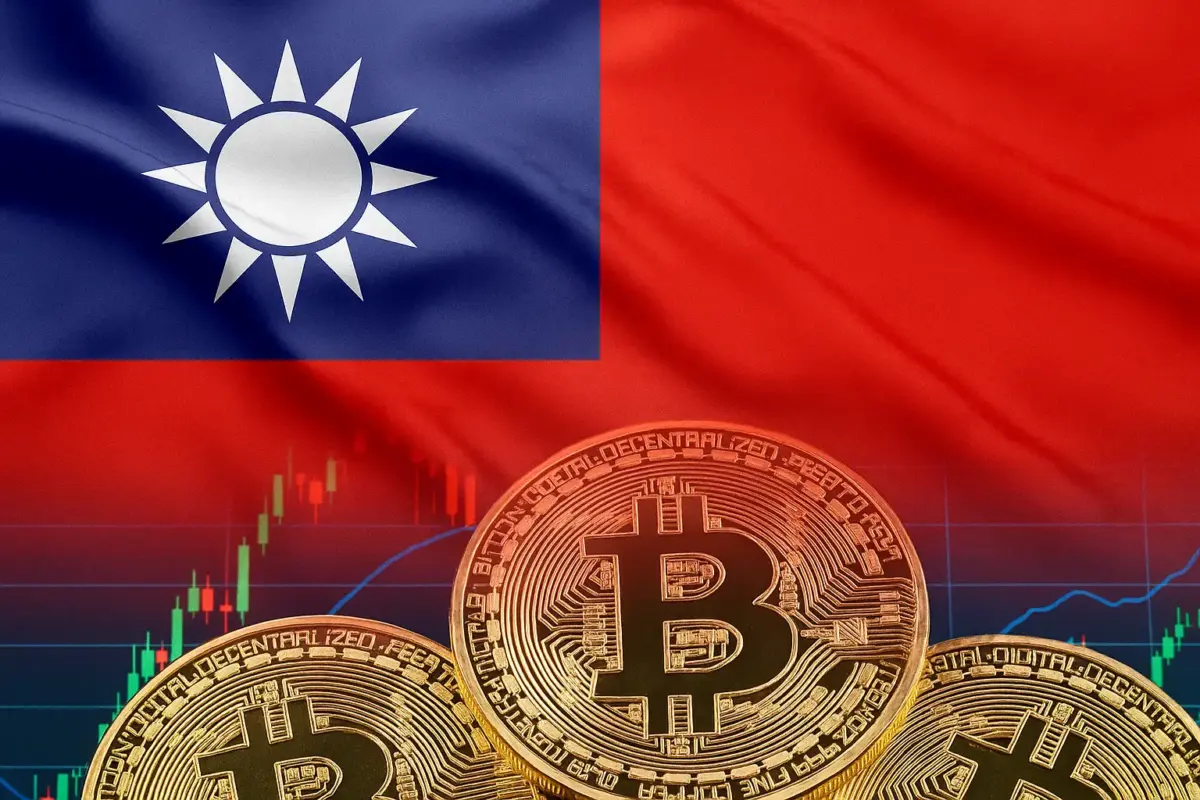
Taiwan’s government is preparing to release a detailed report on the country’s Bitcoin ($BTC) holdings, marking its first step toward evaluating the cryptocurrency as part of its national reserve strategy.
The initiative signals growing interest among Taiwanese policymakers in following the United States and other nations that have begun integrating Bitcoin into state financial systems.
Premier Zhuo Rongtai of the Republic of China (Taiwan) announced that his administration is finalizing a comprehensive report to determine the total amount of Bitcoin seized by government agencies. The document, which will be published before the end of the year, will also include an assessment of whether Bitcoin could serve as a strategic reserve asset for Taiwan.
The announcement came during a legislative fiscal inquiry session with the Finance Committee on Tuesday. When asked about the fate of the confiscated Bitcoin, legislator Ge Rujun suggested that the government should “hold it unchanged” until a decision is made.
According to local outlet Blocktempo, the suggestion involved keeping the digital assets intact rather than liquidating them or auctioning them off as has been done in the past.
Premier Rongtai confirmed that the forthcoming report would include a section outlining the “pros and cons” of establishing a Bitcoin reserve. This marks the first time Taiwanese officials have publicly acknowledged Bitcoin as a potential component of the country’s reserve assets.
During the session, Rongtai also pledged to “study” Bitcoin’s suitability as a strategic reserve and to develop more Bitcoin-friendly regulations over the next six months. Lawmaker Ko Ju-Chun described the move as a “breakthrough” for Taiwan, noting in a post on X that the decision represents a turning point for the government’s approach to digital assets.
Interest in Bitcoin at the governmental level has surged since March, when U.S. President Donald Trump signed an executive order creating a Strategic Bitcoin Reserve. That initiative, which involved using cryptocurrency forfeited in criminal cases, served as a global signal that Bitcoin was being recognized as part of broader financial policy.
Joe Burnett, head of market research at Unchained, called the U.S. development “the first real step toward integrating Bitcoin into the fabric of global finance, acknowledging its role as a foundational asset for a more stable and sound monetary system.”
While Taiwan has not yet made a formal decision, the discussion around digital reserves is gaining traction among lawmakers. In May, Legislator Ko Ju-Chun urged the government to consider adding Bitcoin to Taiwan’s national reserves during a speech at the National Conference.
He cited Bitcoin’s fixed supply and decentralized nature as potential safeguards against economic instability. Ko proposed that up to 5% of Taiwan’s $50 billion reserve could be allocated to Bitcoin.
Evaluating Bitcoin’s Role in Taiwan’s Financial Strategy
Taiwan’s government has already begun formal steps to explore Bitcoin’s potential role in its financial infrastructure. Both the Executive Yuan and the Central Bank have agreed to participate in evaluations of Bitcoin as a strategic reserve asset.
The proposal includes pilot programs using confiscated Bitcoin currently held by authorities. Under existing procedures, such assets would typically be sold through auctions. Instead, they may now be retained for experimental use in the reserve study.
Lawmaker Dr. Ju-chun Ko is leading the initiative with support from international Bitcoin advocates. Samson Mow, CEO of Bitcoin infrastructure firm JAN3, publicly backed the proposal, describing it as a forward-thinking move that could influence other countries in the region. Bitcoin Magazine confirmed that legislative discussions are ongoing as the proposal advances through the policymaking process.
Taiwan currently maintains approximately $577 billion in foreign exchange reserves, with 92% invested in U.S. Treasury bonds. The country also holds around 423 metric tonnes of gold. Dr. Ko has argued that this concentration creates vulnerability. The New Taiwan Dollar has faced single-day fluctuations of up to 5%, reflecting broader global financial instability.
According to Ko, Bitcoin could complement existing reserves rather than replace traditional assets. He emphasized that Bitcoin’s decentralized structure and fixed supply make it an effective hedge against inflation and central bank-driven monetary risks. “Bitcoin operates outside the control of any central authority, and that independence can strengthen Taiwan’s resilience,” Ko said.
The central bank’s feasibility studies will examine operational procedures, custody models, and regulatory safeguards. Authorities are expected to test risk management frameworks using seized Bitcoin in controlled pilot programs.
Although no definitive timeline has been announced for implementation, the evaluation process represents one of the most significant government-level explorations of Bitcoin in Asia. Financial observers in neighboring markets are watching closely as Taiwan takes its first steps toward potential adoption.
The Financial Supervisory Commission (FSC) has already laid groundwork for broader crypto engagement. In October 2024, the agency launched a trial allowing financial institutions to offer cryptocurrency custody services. Earlier that same year, the FSC authorized professional investors to buy foreign Bitcoin and cryptocurrency exchange-traded funds. These measures reflect Taiwan’s gradual shift toward accommodating institutional crypto investment while maintaining strict oversight.
However, the local crypto market still faces challenges. Regulatory inconsistencies and enforcement gaps have occasionally exposed investors to fraud. In August, prosecutors charged 14 individuals with running a NT$2.3 billion ($71 million) cryptocurrency scam.
The group operated more than 40 fake exchange franchises under names like CoinW and BiXiang Technology, deceiving over 1,500 victims. Authorities later seized more than NT$100 million ($3.1 million) in assets, including cash, digital currencies, and luxury goods.
Officials said the fraud exploited loopholes in Taiwan’s evolving crypto regulations. The case reinforced the urgency of stronger rules to prevent misuse while ensuring legitimate market growth.
Global Context and Taiwan’s Emerging Position
Taiwan’s move comes amid a wave of international developments that are redefining how governments view digital assets. The United States recently established its Strategic Bitcoin Reserve, holding roughly $17 billion in confiscated cryptocurrency. The initiative has been described by market analysts as a milestone for integrating Bitcoin into official financial policy.
Countries like El Salvador and Argentina have also embraced Bitcoin as part of their fiscal systems. El Salvador recognized Bitcoin as legal tender in 2021, while Argentina introduced frameworks that allow tax settlements and contracts denominated in Bitcoin. Both nations cited inflation protection and reduced reliance on centralized banking as motivations for adopting the cryptocurrency.
For Taiwan, the challenge lies in balancing innovation with financial prudence. The Central Bank’s data from September 2025 shows the country’s foreign reserves at $602.94 billion. More than 90% of those assets are held in U.S. dollars, leaving Taiwan exposed to shifts in U.S. monetary policy.
During a session of the Legislative Yuan on November 11, lawmaker Ko warned that “overreliance on dollar-denominated assets could erode the purchasing power of our reserves” if the dollar depreciates or the New Taiwan Dollar strengthens unexpectedly.
Ko has urged the government to audit all Bitcoin assets currently in state custody, including the roughly $146 million worth of cryptocurrency seized in 2024 during a major fraud case. He argued that these holdings should not be sold but instead evaluated for potential inclusion in a strategic Bitcoin portfolio.
Prime Minister Cho Jung-tai responded that while the U.S. dollar remains dominant in global trade, the government is open to studying digital currencies as part of future reserve strategies. Central Bank Governor, Yang Chin-long, confirmed that a detailed Bitcoin reserve report will be presented by the end of 2025.
Bitcoin advocate, Samson Mow, praised Taiwan’s proactive stance, calling it “a sign that more governments are beginning to recognize Bitcoin as a serious financial tool.” Mow, who previously advised El Salvador on its Bitcoin integration, said that Taiwan’s potential inclusion of Bitcoin in its reserves “could be a turning point for Asia.”
If Taiwan proceeds with the plan, it would become one of the first Asian economies to officially explore Bitcoin at a sovereign level. Analysts believe such a move could influence other financial centers in the region, including Singapore, South Korea, and Japan, to reevaluate their own digital asset policies.
For now, Taiwan’s government is moving carefully. Officials emphasize that the evaluation process will be data-driven, transparent, and aligned with international best practices. Still, the discussion itself marks a pivotal moment, one where digital assets are no longer viewed solely through the lens of speculation but as potential instruments of national financial stability.
About Author

About Author