


Best Altcoins to Buy in 2026: Technical Analysis & Data-Driven Rankings
Bitcoin Hyper, MaxiDoge, BMIC Token, Ethereum, Solana, and XRP stand out as the best altcoins to buy in 2026 after our review of 75+ projects. Bitcoin dominance hovers near 59% as of early February, and mixed altcoin season signals favor selective picks over broad market bets. On-chain metrics, technical indicators, and market structure separate long-term winners from temporary pumps.
We evaluate each altcoin based on network utility, supply dynamics, security posture, and risk-adjusted potential. Coverage spans across presale opportunities and established tokens, complete with risk scores and allocation guidance.
Asymmetric upside from early-stage projects and deep liquidity from battle-tested networks both deserve a spot in a balanced 2026 portfolio.
▪️ Bitcoin dominance sits at 59% as of early February 2026. Capital flows into alternative tokens after BTC consolidates, and selective rotation favors projects with proven fundamentals over speculative plays.
▪️ Altcoin season needs multiple confirmations, which include falling BTC dominance, ALT/BTC ratio uptrend, and liquidity expansion. Single-asset pumps don’t qualify. Duration typically spans 4 to 12 weeks.
▪️ We pair established large-caps for stability with presales for asymmetric upside. Each category carries distinct risk profiles with clear labels.
▪️ CMC Altcoin Season Index registers 28 as of early February, after Bitcoin’s flash crash to $77,000. Top performers in DeFi, Layer-2 scaling, and real-world asset tokenization build value independent of short-term index swings.
▪️ Technical ratings, risk scores, and portfolio allocation percentages help translate each pick into actionable decisions.
▪️ Institutional capital enters through Bitcoin ETF rails first. Second-order flows reach Ethereum and Solana due to deep liquidity and institutional-grade infrastructure, especially as regulated DeFi products gain traction.
What Are Altcoins? Concept and Examples
Altcoins represent every cryptocurrency besides Bitcoin and form a diverse category within the best cryptocurrencies to invest in, built to address technical limitations or deliver new capabilities. Millions of tokens exist across dozens of networks, yet only approximately 10,000 maintain active liquidity and consistent development support. Ethereum, Solana, and XRP lead by market capitalization and network activity.
Networks focus on programmable smart contracts, payment speed, or real-world asset tokenization based on their design objectives. Roughly 64% of new launches now occur on high-throughput chains like Solana compared to traditional Ethereum alternatives.
Classification debates exist around Ethereum’s status within the altcoin category. Bitcoin and Ethereum together account for nearly 70% of total market capitalization, and institutional platforms often classify both as market leaders instead of speculative alternatives. Utility matters more than labels, as each project serves distinct technical and financial purposes.
Altcoins vs. Bitcoin: How Altcoins Differ From Bitcoin
Bitcoin functions as a store of value with limited programmability. Its fixed 21 million supply and proof-of-work consensus created the “digital gold” narrative among institutional allocators. Altcoins serve different purposes across multiple use cases.
Smart contract platforms like Ethereum and Solana enable decentralized applications, while payment tokens such as XRP prioritize settlement speed. DeFi protocols facilitate lending and trading without intermediaries. Gaming tokens power virtual economies.
Bitcoin offers relative stability within crypto’s volatile context, though altcoins present higher growth potential with significantly larger drawdown risk. Most altcoins drop 40% to 80% during bear markets, and many fail to recover previous highs.
Top New Altcoins to Buy in 2026
Presales offer the most asymmetric risk-reward profile in altcoin markets, as early-stage tokens lack established liquidity and face execution challenges. Projects below passed our selection criteria for transparent tokenomics, audited contracts, and realistic roadmaps.
1. Bitcoin Hyper (HYPER) – Bitcoin Layer-2 Infrastructure With High-Speed Execution

Bitcoin Hyper adds a Layer-2 network to Bitcoin that handles speed while the base layer retains full security. Final settlement still occurs on Bitcoin’s proof-of-work consensus, yet transactions are processed at rates comparable to the fastest networks in crypto.
A Solana Virtual Machine adaptation powers the network and pushes throughput above 65,000 transactions per second. Users move BTC onto the network through a canonical bridge, and all transfers are completed without third-party custodians in control of funds. Wrapped BTC flows freely between layers as Bitcoin handles final security.
| 💸 Current Presale Price | $0.013675 |
| 📈 Funds Raised | $32.01M |
| 🗓️ Launch Timeline | Mainnet Q1 2026 |
| 💳 Payment Methods | ETH, USDT, USDC, BNB, SOL, card |
| ⚠️ Risk Rating | Very High |
| 📌 Why It Made Our List | Addresses Bitcoin’s scalability constraints while presale metrics demonstrate strong early market validation |
HYPER fits aggressive allocation strategies as a speculative satellite holding. Keep exposure below 2-3% of your total crypto portfolio. Bitcoin L2 narratives carry momentum, but solutions like Lightning and Stacks hold multi-year head starts.
Pros & Cons
✅ High TPS claims address Bitcoin’s scalability bottleneck directly
✅ Presale attracted 105,000+ wallets and demonstrates early community support
✅ Wrapped BTC mechanism eliminates third-party custody risk
✅ 21 billion token cap creates defined supply economics
❌ 30% presale allocation concentrates early supply
❌ No mainnet launch date confirmed at presale stage
❌ Cross-chain bridge exploits cost $2.5B+ across crypto in 2023-2024
Resources
Website | Whitepaper | Coinsult audit | Official X / Telegram
2. Maxi Doge (MAXI) – Meme Token Built for High-Risk Traders
Maxi Doge serves traders who thrive on volatility and use meme narratives for speculative gains. Built on Ethereum, the project excludes venture capital allocations entirely, so no unlock events create sell pressure from institutional early investors.
Holders access Community Alpha, a platform for strategy discussion and ROI-based trading competitions. Prize structures reward actual performance rather than wallet size, and the MAXI Fund functions as a community treasury with governance-controlled capital deployment. Members vote to direct funds toward buybacks, token burns, or ecosystem expansion as market conditions shift.
| 💸 Current Presale Price | $0.0002802 |
| 📈 Funds Raised | $4.96M |
| 🗓️ Launch Timeline | TBA |
| 💳 Payment Methods | ETH, BNB, USDT, USDC, card |
| ⚠️ Risk Rating | Very High |
| 📌 Why It Made Our List | Zero VC allocation removes scheduled dump pressure |
MAXI represents pure meme exposure without the VC overhang common in the category. Treat this as a lottery ticket within an aggressive allocation, with allocation size under 1% of total portfolio value.
Pros & Cons
✅ Zero VC allocation eliminates cliff unlock events that plague most 2026 meme launches
✅ Community Alpha platform creates utility beyond pure speculation
✅ MAXI Fund governance gives holders direct capital deployment control
✅ Skill-based competition structure attracts active traders over passive holders
❌ Competition prizes require sustained trading volume to remain viable
❌ No technical advantage differentiates MAXI from hundreds of dog-themed tokens
❌ Community governance can delay critical decisions during market volatility
Resources
Website | Whitepaper | Solidproof audit | Official X / Telegram
3. BMIC Token (BMIC) – Post-Quantum Security for Web3 Transactions
BMIC Token applies post-quantum cryptography to defend blockchain infrastructure against future quantum computing threats. Projects with fixed supply caps attract investors who hunt for the next crypto to hit $1, but market cap fundamentals matter more than unit price alone.
Public keys never appear on-chain, so the system removes the primary vulnerability that quantum computers could exploit to reverse-engineer private keys. Supply caps at 1.5 billion tokens with no inflation mechanism. Users burn tokens to mint BMIC Compute Credits (BCC), and these credits purchase actual quantum computing workloads through the BMIC Quantum Meta-Cloud infrastructure. The Quantum Security Layer unifies wallet security, staking operations, and a planned payment card system under hybrid post-quantum cryptographic keys.
| 💸 Current Presale Price | $0.049474 |
| 📈 Funds Raised | $698.13K |
| 🗓️ Launch Timeline | Q1 2026 |
| 💳 Payment Methods | ETH, USDT, USDC |
| ⚠️ Risk Rating | Very High |
| 📌 Why It Made Our List | Post-quantum cryptography solves a credible long-term security risk |
BMIC represents a thesis on quantum computing timelines. Cryptographically relevant quantum computers do not exist yet, so this functions as a long-term asymmetric investment. Size accordingly within speculative allocations.
Pros & Cons
✅ Post-quantum cryptography addresses the threat before competitors recognize the urgency
✅ Hybrid encryption protects against both current and future attack vectors
✅ IBM and Google quantum advances validate the security threat thesis
❌ Payment card integration sits on the roadmap without a delivery timeline
❌ No major blockchain has adopted post-quantum standards yet
❌ Token burn model reduces circulating supply but fragments liquidity over time
Resources
Website | Whitepaper | Security audit | Official X / Telegram
4. LiquidChain (LIQUID) – Layer-3 Network Connecting Bitcoin, Ethereum, and Solana
LiquidChain addresses fragmented liquidity through a Layer-3 network that unifies Bitcoin, Ethereum, and Solana into a single execution environment. Users pay all cross-chain transaction fees with LIQUID tokens instead of ETH, SOL, and BTC separately across different networks.
Supply totals 1 billion tokens, with 350 million allocated to presale participants. Trust-minimized cryptographic proofs verify state across all connected blockchains and eliminate the multisig validator dependencies that caused $2.5B+ in bridge exploits during 2023-2024. Atomic settlement protocols guarantee that cross-chain trades either complete fully or revert entirely and prevent the stuck-fund scenarios that plagued earlier bridge designs like Wormhole and Ronin.
| 💸 Current Presale Price | $0.0135 |
| 📈 Funds Raised | $670.08K |
| 🗓️ Launch Timeline | Mainnet Q2 2026 |
| 💳 Payment Methods | ETH, USDT, USDC, BNB, SOL, card |
| ⚠️ Risk Rating | Very High |
| 📌 Why It Made Our List | Solves liquidity fragmentation across Bitcoin, Ethereum, and Solana ecosystems |
LIQUID represents infrastructure exposure to multi-chain futures. Layer-3 adds complexity and potential attack vectors, so allocation sizing should reflect the early stage. Suitable for aggressive portfolios under 2%.
Pros & Cons
✅ Single-token fee payment simplifies the multi-chain user experience significantly
✅ Trust-minimized cryptographic proofs eliminate multisig vulnerabilities
✅ Addresses real pain point as $50B+ sits fragmented across isolated chains
✅ 350M presale allocation limits immediate dilution compared to typical launches
❌ Layer-3 architecture introduces an additional smart contract attack surface
❌ Network functionality depends on simultaneous uptime across Bitcoin, Ethereum, and Solana
❌ Cross-chain message verification adds latency compared to single-chain transactions
Resources
Website | Whitepaper | CertiK audit | Official X / Telegram
5. SUBBD Token (SUBBD) – AI-Powered Creator Economy Platform

SUBBD challenges legacy subscription platforms as it processes payments on-chain and cuts middleman fees from 30-50% down to minimal gas costs. Smart contracts settle creator earnings directly without platform intermediaries like Patreon or OnlyFans.
Over 2,000 influencers have signed partnership agreements, with combined audiences above 250 million users. AI automation handles repetitive production tasks like video cuts, thumbnail design, and social media captions. Creators focus on content strategy while the platform manages technical execution. Integrated features combine subscription tiers, micropayment tips, and token-gated premium access within one dashboard.
| 💸 Current Presale Price | $0.0574875 |
| 📈 Funds Raised | $1.61M |
| 🗓️ Launch Timeline | Q1-Q2 2026 |
| 💳 Payment Methods | ETH, USDT, BNB, card |
| ⚠️ Risk Rating | Very High |
| 📌 Why It Made Our List | Solves the high-fee extraction problem that plagues independent content creators |
SUBBD combines a clear value proposition with execution risk. Creator economy thesis holds merit, but product delivery and user adoption remain uncertain. Consider within moderate-to-aggressive portfolios at 1-2%.
Pros & Cons
✅ AI automation tools solve the real creator pain point of repetitive production tasks
✅ On-chain settlement cuts platform fees from 30-50% to near-zero
✅ Token governance allows creators to control fee structures and feature priorities
❌ AI-generated content raises authenticity concerns among engaged audiences
❌ Claimed influencer partnerships remain unverified by third-party sources
❌ Creator onboarding requires technical knowledge of wallets and gas fees
Resources
Website | Whitepaper | Solidproof audit | Official X / Telegram
6. Little Pepe (LILPEPE) – Meme Coin With Its Own Layer-2 Chain

Little Pepe launched a dedicated Layer-2 blockchain built specifically for meme token ecosystems and high-frequency trades. EVM compatibility allows developers to deploy Ethereum-based contracts directly, while zero buy and sell taxes let traders retain full profits without transaction fees that plague other meme chains.
Anti-sniper technology blocks bot wallets that attempt to front-run token launches and creates fairer distribution for retail participants. Chain reserves (30% of supply) fund ecosystem grants for meme projects that build on the infrastructure. Stake mechanisms reward holders with 13.5% of the total supply distributed over time, while cross-chain bridges connect the L2 to Ethereum, BSC, and Polygon for asset transfers.
| 💸 Current Presale Price | $0.0022 |
| 📈 Funds Raised | $28.78M |
| 🗓️ Launch Timeline | Early 2026 |
| 💳 Payment Methods | ETH, BNB, USDT, card |
| ⚠️ Risk Rating | Very High |
| 📌 Why It Made Our List | Built a dedicated Layer-2 chain specifically for meme token trading with zero-tax architecture |
LILPEPE combines meme appeal with infrastructure ambitions. Substantial presale activity suggests market confidence, but custom L2 chains need developer adoption to justify their existence. Aggressive portfolios only, under 1%.
Pros & Cons
✅ Anti-sniper protection prevents bot manipulation during early launch phases
✅ Dedicated L2 infrastructure reduces congestion and gas costs for traders
✅ EVM compatibility enables direct deployment of proven Ethereum contracts
✅ Cross-chain bridges connect to Ethereum, BSC, and Polygon ecosystems
❌ Custom L2 success depends entirely on developer adoption and project launches
❌ Original PEPE commands a $4B+ market cap and a dominant community mindshare
❌ 30% chain reserves create potential supply overhang without clear vesting
Resources
Website | Whitepaper | CertiK audit | Official X / Telegram
7. VFX Token (VFX) – Solana-Based Trading Yield Token
VFX Token connects broker rebate revenue from a licensed forex operation directly to token holders through on-chain reward distribution. Parent company VFX Global manages over $40 million in client assets and redirects 50% of trade rebate income toward token buybacks and holder rewards.
Built on Solana for fast settlement and low transaction costs, the platform processes yield distributions automatically through smart contracts without manual intervention. Licensed forex operations provide the core revenue stream and create a bridge between traditional financial services and crypto yield mechanisms. Holders track real-time rebate accumulation through dashboard interfaces that display trade volume, rebate generation, and personal reward allocations.
| 💸 Current Presale Price | $0.355 |
| 📈 Funds Raised | $2.21M |
| 🗓️ Launch Timeline | Q1 2026 |
| 💳 Payment Methods | ETH, USDT, BNB, USDC |
| ⚠️ Risk Rating | Very High |
| 📌 Why It Made Our List | Direct forex rebate revenue share from licensed broker operations |
VFX represents yield exposure tied to one firm’s trade performance. Licensed status requires verification against actual regulatory registries. All profit distribution flows from a single firm and creates concentration risk. Limit to under 1% in speculative portfolios only.
Pros & Cons
✅ 50% of broker rebate revenue flows directly to token holders and buybacks
✅ Licensed forex firm with $40M+ in managed client assets provides revenue-based
✅ Solana settlement delivers fast yield distribution with minimal gas costs
✅ Dashboard transparency shows real-time trade volume and rebate accumulation
❌ Forex rebate agreements can terminate or reduce rates without token holder input
❌ Single-firm dependency creates existential risk if VFX Global operations cease
❌ Licensed status claims require independent verification through regulatory databases
Resources
Website | Whitepaper | SolidProof audit | Official X / Telegram
Best Established Altcoins to Invest in 2026
Established altcoins offer deeper liquidity, longer track records, and broader exchange access compared to presales. Large-cap alternatives still experience significant drawdowns, yet their market structure proves more predictable. Investors access entry points with clearer historical data and established network effects.
1. Ethereum (ETH) – Smart Contract Settlement Layer With the Deepest Developer Ecosystem
Ethereum functions as the settlement layer for $50B+ in Layer-2 activity, as rollups like Arbitrum and Base handle the majority of daily transaction volume. L2BEAT data shows rollups now process far higher daily throughput than Ethereum L1 by unique operations per second.
ETH has no fixed maximum supply, so token dynamics depend on issuance versus fee burn. The value proposition in 2026 centers on security, settlement, and data availability demands as L2 usage grows. US access remains broad on regulated venues, and ETH typically offers among the most liquid markets globally.
| 💸 Current Price | ETH live price |
| 📈 Market Cap | $289.55B |
| 🏷️ Category | Smart Contract Platform |
| ⚠️ Risk Rating | Low to Medium |
| 📌 Why It Made Our List | Settlement layer for the largest smart contract ecosystem |
ETH fits conservative to moderate allocations as core alt exposure. Target range sits at 10-25% of total crypto portfolios based on BTC allocation size. Value accrual debate intensifies as execution moves to L2s, but Ethereum remains the default settlement layer across most categories.
Pros & Cons
✅ Deepest liquidity across spot, derivatives, and lending markets globally
✅ Dominant developer ecosystem with 4,000+ active monthly contributors
✅ L2 scaling delivers 90%+ of transaction volume while ETH captures settlement fees
❌ L2 migration reduces mainnet fee revenue and complicates the value accrual thesis
❌ ETH underperformed BTC by 40%+ during 2025 risk-off periods
❌ Staking withdrawals can create selling pressure during market downturns
Resources
Website | Whitepaper | Contract adress | Official X
2. Solana (SOL) – High-Throughput Platform Optimized for Speed and Low Fees
Solana delivers high throughput and fees below $0.01 for consumer-scale applications across DeFi, payments, and retail products. Network architecture makes micro-transactions economically viable at costs Ethereum L1 cannot match.
REX-Osprey launched SSK in July 2025, creating the first US-listed ETF that combines SOL exposure with native stake rewards. Product approval signals institutional acceptance of Solana as an investable asset class. Capital expansion past BTC and ETH will likely flow to SOL first due to liquidity depth, established infrastructure, and $3.3T annualized DEX volume through platforms like Jupiter.
| 💸 Current Price | SOL live price |
| 📈 Market Cap | $58.07B |
| 🏷️ Category | Smart Contract Platform |
| ⚠️ Risk Rating | Medium |
| 📌 Why It Made Our List | High-performance execution with institutional productization |
SOL suits moderate to aggressive allocations as high-beta platform exposure. Conservative portfolios hold 2-8%. Moderate portfolios allocate 5-15%. Aggressive strategies treat SOL as the primary investment bet with strict size limits. Historical network reliability concerns persist in market memory, so size accordingly.
Pros & Cons
✅ Transaction costs below $0.01 enable micro-payments and high-frequency applications
✅ Jupiter dominates the Solana DEX market with 95% share and $3B TVL
✅ First US staking ETF (SSK) launched July 2025 with institutional distribution
❌ SOL declined 34% in late 2025 while BTC held resilience during risk-off periods
❌ Network suffered 14+ major outages between 2021 and 2023, creating reliability concerns
❌ Memecoin speculation drives significant volume, creating ecosystem sustainability questions
Resources
Website | Whitepaper | Contract adress | Official X / Telegram
3. XRP (XRP) – Payments-Focused Asset With Strong Liquidity
XRP focuses on payments and settlement use cases through the XRP Ledger ecosystem and maintains its status as one of the most liquid altcoin assets globally. Ripple’s payment network uses XRP as a bridge currency for cross-border transactions, with approximately 300 financial institutions integrated into the system.
The payments thesis differentiates it from smart contract platforms, yet utility versus speculation debates remain active as adoption metrics lag significantly behind institutional integration claims.
| 💸 Current Price | XRP live price |
| 📈 Market Cap | $95.66B |
| 🏷️ Category | Payments / Settlement |
| ⚠️ Risk Rating | Medium |
| 📌 Why It Made Our List | High liquidity with a distinct payments narrative |
XRP provides payments narrative diversification within conservative portfolios as a niche exposure. Moderate and aggressive profiles can treat it as a tactical sleeve with aggressive rebalance schedules due to headline sensitivity.
Pros & Cons
✅ Consistently ranks in the top 5 by trading volume across major exchanges
✅ Ripple network integrates 300+ financial institutions for cross-border payments
✅ SEC litigation resolved with programmatic sales classified as non-securities
❌ Adoption metrics lag significantly behind institutional integration marketing claims
❌ Token not required for RippleNet usage, limiting mandatory utility
❌ Only around 300 institutions use XRP versus 11,000+ on the SWIFT network
Resources
Website | Whitepaper | Contract adress | Official X
4. Chainlink (LINK) – Oracle Infrastructure Connecting Smart Contracts to Real-World Data

Chainlink provides a decentralized oracle infrastructure that feeds off-chain data into on-chain applications, and DeFi protocols rely heavily on Chainlink price feeds for accurate asset valuations. Real-world asset tokenization expands demand for verified data inputs as traditional finance moves on-chain.
Supply caps at 1 billion LINK tokens. RWA growth and institutional on-chain finance make reliable data and oracle infrastructure increasingly central to crypto adoption. Infrastructure tokens tend to be less reflexive than application or meme tokens, but volatility remains significant when risk-off conditions dominate.
| 💸 Current Price | LINK live price |
| 📈 Market Cap | $6.79B |
| 🏷️ Category | Infrastructure / Oracle Network |
| ⚠️ Risk Rating | Medium |
| 📌 Why It Made Our List | Infrastructure role with broad applicability |
LINK fits as infrastructure diversification alongside platform bets. Conservative portfolios allocate small infrastructure exposure. Moderate portfolios pair infrastructure sleeves with ETH/SOL. Aggressive strategies use “picks and shovels” exposure instead of direct app investments.
Pros & Cons
✅ CCIP cross-chain protocol enables interoperability infrastructure revenue
✅ RWA tokenization demands verified data feeds that Chainlink already provides
✅ Institutional partnerships include SWIFT messaging pilot and ANZ bank integration
❌ Token economics unclear on how node operator payments translate to LINK value
❌ Pyth Network and Chronicle Labs compete directly on price feed services
❌ Major protocols could build proprietary oracle solutions to reduce dependency
Resources
Website | Whitepaper | Contract adress | Official X / Telegram
5. Cardano (ADA) – Research-Driven Smart Contract Platform
Cardano takes a research-first approach to smart contract development with peer-reviewed protocols and formal verification methods, and offers an alternative to Ethereum and Solana with distinct design philosophies.
Platform exposure away from ETH/SOL concentration attracts investors who seek diversification. Ecosystem activity can be cyclical, and higher uncertainty exists compared to larger platforms, yet the research-driven approach appeals to certain investor profiles.
| 💸 Current Price | ADA live price |
| 📈 Market Cap | $10.3B |
| 🏷️ Category | Smart Contract Platform |
| ⚠️ Risk Rating | Medium |
| 📌 Why It Made Our List | Platform diversification with research-driven development |
ADA serves as a smaller platform diversification. Avoid heavy allocation unless you hold a strong thesis on Cardano-specific developments. Suitable for moderate portfolios that seek platform variety.
Pros & Cons
✅ Peer-reviewed protocol development reduces technical risk from rushed upgrades
✅ Formal verification methods provide mathematical proof of smart contract correctness
✅ Lower fees ($0.16 average) compete favorably against Ethereum L1
❌ TVL sits at $500M versus Ethereum’s $50B+ and Solana’s $8B+
❌ Research-first approach delays feature launches compared to move-fast competitors
❌ dApp ecosystem remains limited with few breakout applications or protocols
Resources
Website | Whitepaper | Contract adress | Official X / Telegram
Best Altcoins Comparison Table
This table summarizes the key elements investors need to evaluate for the best altcoin investments in 2026.
| 🪙 Altcoin | 🔤 Ticker | 📂 Category | 🔄 Stage | 📊 Market Cap | 🎯 Risk Level |
|---|---|---|---|---|---|
| Ethereum | ETH | Smart Contracts | Established | $289.55B | Low-Medium |
| Solana | SOL | Smart Contracts | Established | $58.45B | Medium |
| XRP | XRP | Payments | Established | $95.66B | Medium |
| Chainlink | LINK | Infrastructure | Established | $6.79B | Medium |
| Cardano | ADA | Smart Contracts | Established | $10.3B | Medium |
| Bitcoin Hyper | HYPER | Bitcoin L2 | Presale | N/A | Very High |
| Maxi Doge | MAXI | Meme | Presale | N/A | Very High |
| BMIC | BMIC | Quantum Security | Presale | N/A | Very High |
| LiquidChain | LIQUID | Layer-3 | Presale | N/A | Very High |
| SUBBD | SUBBD | Creator / AI | Presale | N/A | Very High |
| Little Pepe | LILPEPE | Meme / L2 | Presale | N/A | Very High |
| VFX Token | VFX | Trading Yield | Presale | N/A | Very High |
Data as of February 1, 2026. Presale market caps are N/A until exchange listing.
Understanding Altcoin Season: Is 2026 the Year?
Altcoin season occurs when a broad basket of alternative tokens outperforms Bitcoin on a relative basis over sustained periods. Single-asset pumps do not qualify. Confirmed altcoin seasons need three elements to align: Bitcoin dominance must fall, ALT/BTC ratios must rise, and liquidity must expand across multiple sectors simultaneously.
Bitcoin dominance measures BTC’s share of total crypto market capitalization, and capital rotates into altcoins when this metric declines. Altcoin Season Index tracks how many major tokens outperform Bitcoin over specific timeframes. Readings above 75 signal a confirmed altcoin season, while the current 27 reading classifies the market as a Bitcoin Season.
Altcoin Season Outlook
ALT/BTC ratio technical indicators suggest a potential bottom formed in Q4 2025, with RSI at historic oversold levels and MACD turning green after 21 months of bearish readings.
Russell 2000 broke above all-time highs in Q4 2025, a pattern that preceded major altcoin rallies in both 2017 and 2021. Improved liquidity conditions and potential regulatory clarity could support selective capital rotation into altcoins.
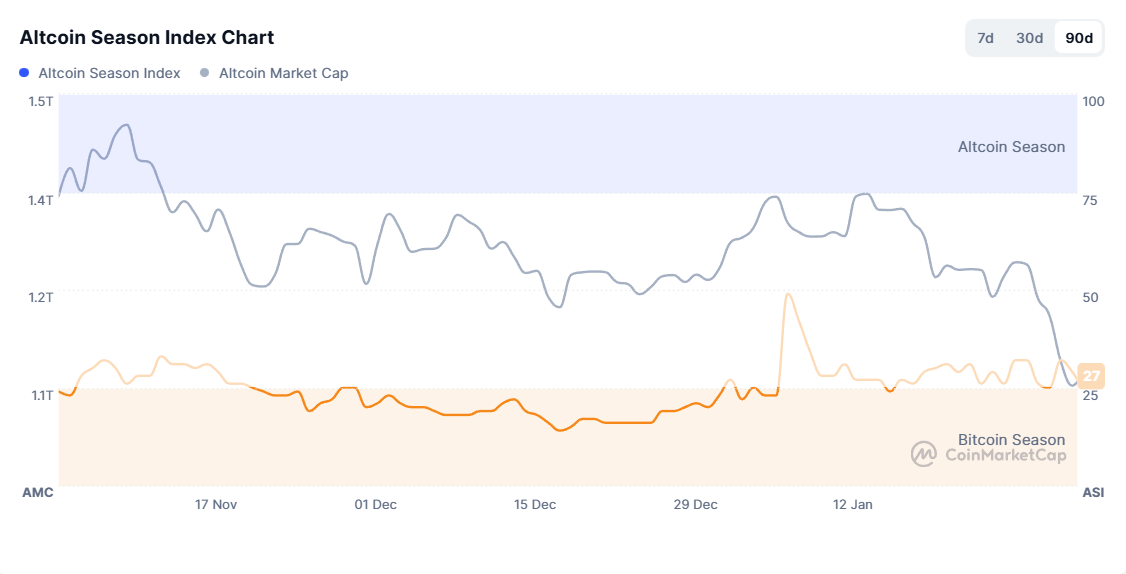
A broad altcoin season remains unlikely in 2026, as capital continues to flow into established major cryptocurrencies. Bitcoin ETF rails favor BTC and ETH, with spot ETFs that hold over $130 billion in assets and limit spillover to smaller tokens.
Structured altcoin growth through RWA tokenization, DeFi infrastructure, crypto presales, and specific narratives presents the most likely scenario. Utility-focused projects should outperform reflexive speculation. Sector-specific strength appears more probable than a uniform market lift.
Selective allocation based on fundamentals and liquidity matters more than momentum chases. Investors who prepare frameworks will benefit more than those who attempt to predict specific dates.
2026 Altcoin Market Trends: What’s Driving Performance
Macro and technical factors shape altcoin performance as 2026 unfolds, with liquidity conditions, regulatory developments, and institutional adoption patterns creating distinct opportunities across different sectors.
Institutional Adoption & ETF Momentum
Bitcoin ETF assets stand at $117 billion and account for 6.53% of Bitcoin’s total market cap, while Ethereum ETF assets reached $19.1 billion at 5.06% of ETH’s capitalization. Record outflows hit $4.57 billion across November and December 2025, yet early January reversed course with $697 million in fresh inflows.
Multiple Solana staking ETFs now trade on U.S. markets, including VanEck’s VSOL and Bitwise’s BSOL. Grayscale recently distributed Ethereum staking rewards to shareholders, a first for U.S. crypto ETPs.
Bitcoin ETF assets could reach $180 billion to $220 billion by year-end as Bank of America, Wells Fargo, and Vanguard open distribution to clients. Bitcoin receives risk-on flows first, followed by ETH, with second-order allocations that move into large-cap alternatives. Volatile recent flows suggest tactical reallocation over wholesale exits.
Macro Factors: Liquidity, Interest Rates & Global Debt
The Federal Reserve cut rates three times in 2025, and further cuts appear likely in 2026, a shift from the tight monetary policy that drove the 2022 crypto winter.
Markets expect U.S. policy rates to drift toward the low 3% range by year-end as the Fed ends quantitative contraction. U.S. national debt hit $38.5 trillion with a debt-to-GDP ratio over 123%, and elevated debt levels with potential fiscal dominance could push central banks to maintain lower rates, a backdrop favorable to risk assets.
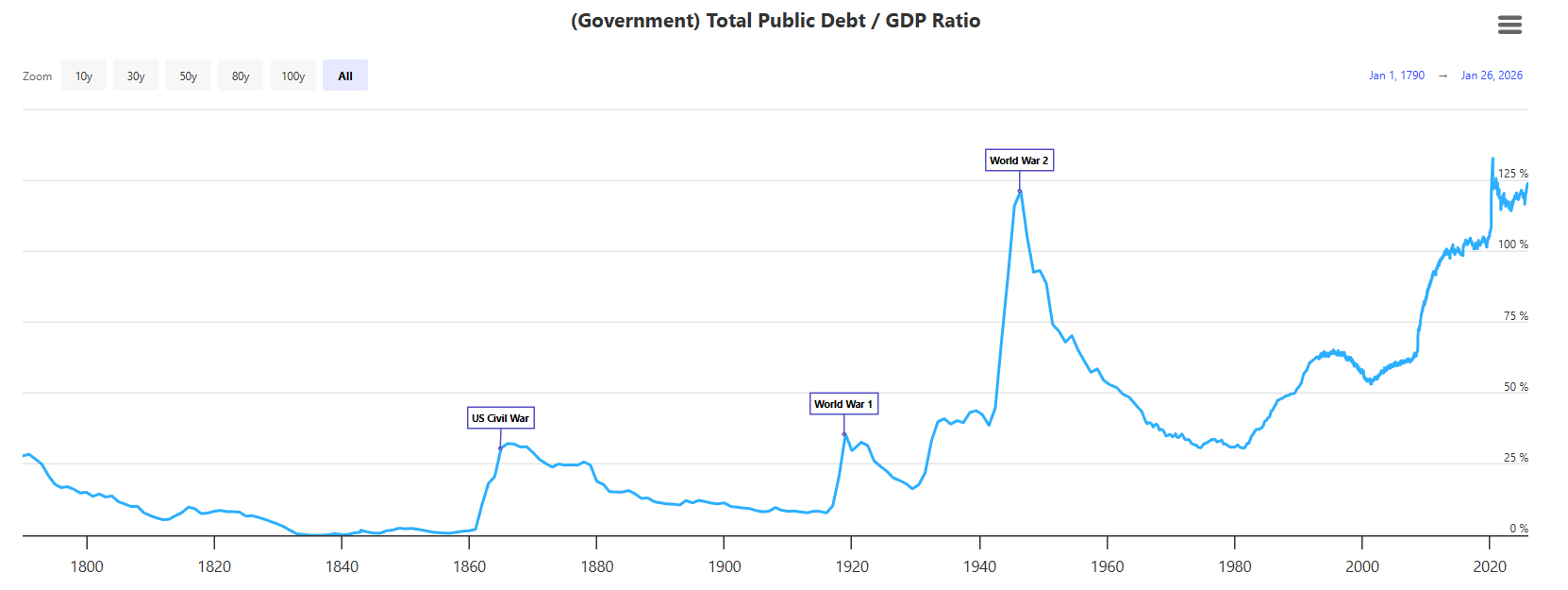
Fears of currency erosion drove gold 60% higher in 2025, while lower rates and accommodative policy unlocked liquidity for digital assets.
Crypto functions as a high-beta risk asset. Fresh inflation data triggers immediate volatility in digital asset markets as traders recalibrate Fed rate expectations. Capital rotation typically starts in BTC/ETH, then expands to altcoins when financial conditions ease.
Technology Improvements: Layer 2s & Faster Chains
Ethereum Layer-2 solutions dropped transaction costs to an average of $0.005 on Arbitrum after the Dencun upgrade, with throughput above 20 TPS. Layer-2 networks now process over 90% of Ethereum’s total transaction volume, with daily activity on rollups past 2 million transactions. Base dominates retail transaction volume with rapid growth, while Arbitrum commands approximately $18 billion in TVL.
Solana targets early 2026 deployment of Alpenglow, its largest-ever core upgrade, to achieve block finality in approximately 150 milliseconds, down from 12 seconds. Infrastructure upgrades like these position high-performance chains as potential candidates among the next exploding cryptos as institutional adoption accelerates. Firedancer validator client reached over 1 million transactions per second in tests, and Solana processed $3.3 trillion in annualized trade volume as institutional participation grew.
Jupiter controls approximately 95% of Solana’s DEX aggregator market share with over $3 billion in TVL. Uniswap integrated Solana support via Jupiter’s Ultra API, which grants access to over 1 million SOL-based tokens. Advanced liquidity aggregation delivers tighter execution for traders across decentralized venues.
Types of Altcoins Explained
Altcoins serve different functions and fall into multiple categories based on utility and consensus mechanisms, from infrastructure protocols to the best meme coins that drive retail speculation.
| 📂 Category | 📄 Description | ⚠️ Risk Level | 👥 Investor Profile |
|---|---|---|---|
| Utility Tokens | Power specific platform features (Chainlink, BNB) | Medium | Infrastructure-focused |
| Payment Tokens | Facilitate transactions and settlements (XRP, Litecoin) | Medium | Payments thesis |
| Smart Contract Platforms | Enable decentralized applications (Ethereum, Solana, Cardano) | Low-Medium | Core alt exposure |
| Stablecoins | Pegged to fiat currencies (USDT, USDC) | Low | Capital preservation |
| Meme Coins | Community-driven cultural tokens (Dogecoin, Maxi Doge) | Very High | Speculation |
| DeFi Tokens | Power decentralized finance protocols (Aave, Uniswap) | Medium-High | DeFi participants |
| Layer-2 Solutions | Scale existing blockchains (Bitcoin Hyper, Arbitrum) | High | Infrastructure bet |
| Real-World Assets (RWA) | Tokenized bonds, real estate, and private credit (Ondo, Centrifuge) | Medium | Institutional & Income-seekers |
| Crypto AI | Decentralized AI compute, data provenance, and autonomous agents (Bittensor, Fetch.ai, Render) | High | Tech-forward / Growth |
Many tokens fit multiple categories, as a single project might offer utility features, DeFi integration, and Layer-2 capabilities simultaneously. Primary use case identification helps with portfolio allocation decisions.
The Risks of Investing in Altcoins Listed
Altcoins carry materially higher risk than Bitcoin, and informed decision-making requires explicit risk disclosure.
Volatility and Price Swings
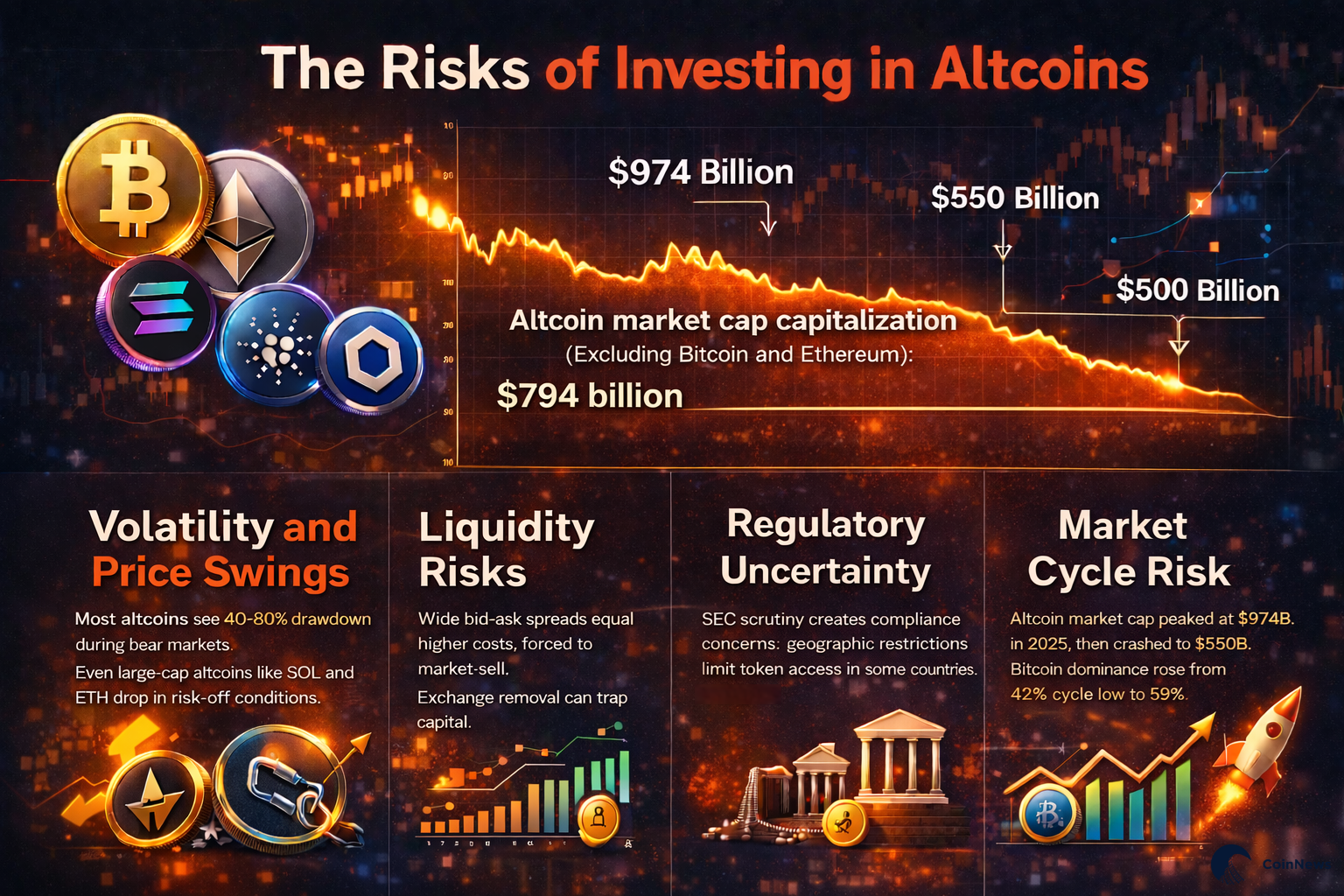
Most altcoins experience 40-80% drawdowns during bear markets, and even large-cap alternatives like ETH and SOL see significant corrections during risk-off periods. Newer projects can deliver explosive gains or total losses. Careful position size balances safety with upside potential. Price manipulation occurs in low-liquidity markets, as large holders can move prices significantly with relatively small trades in thin order books.
Liquidity Risk
Smaller altcoins may prove difficult to sell during market downturns, as wide bid-ask spreads translate to higher transaction costs. Exchange removal can trap capital in assets with no clear exit path. Presales lack meaningful secondary liquidity until exchange debut. The time between presale purchase and live asset trade creates execution risk that established tokens avoid.
Regulatory Uncertainty
Altcoins face structural limitations, including volatility, fragmentation, and regulatory ambiguity, while compliance risks contrast with Bitcoin’s clearer regulatory status in most jurisdictions. SEC scrutiny on certain tokens raises securities classification concerns. Geographic restrictions ban or limit some tokens in specific countries.
Project-Specific Risks
Token unlock schedules pose significant risks, as hundreds of millions of tokens regularly unlock from various projects and create potential sell pressure. Team abandonment and “rug pulls” remain present in early-stage projects. Smart contract vulnerabilities can result in total fund loss. Competition from better-funded projects can render viable technologies obsolete.
Market Cycle Risk
Total altcoin market capitalization (excluding Bitcoin and Ethereum) peaked at $974 billion earlier in 2025, then dropped to approximately $550 billion by year-end. Broader altcoin market data shows a similar pattern, with valuations that fell from $1.19 trillion to $825 billion across the final months of the year.
Bitcoin dominance now sits at approximately 59%, up from cycle lows and reflects sustained capital concentration in the largest asset. Most altcoins never recover from bear market lows, with median token performance down 79% from peaks and many tokens that face 40-80% drawdowns during market corrections.
Despite significant risks, altcoins offer distinct advantages within a diversified portfolio. ✅ Early-Stage Access: Entry before broader adoption allows investors to capture value as projects scale and attract institutional capital. Projects with proven product-market fit generate asymmetric upside when the fundamental thesis materializes. ✅ Higher Growth Potential: Altcoins can deliver returns that Bitcoin’s larger market cap makes difficult to achieve. Smaller networks experience faster percentage gains as they expand user bases and demonstrate clear compliance frameworks. ✅ Institutional Integration: Regulatory clarity has accelerated institutional altcoin adoption in 2026. The GENIUS Act provides stablecoin frameworks that major corporations now leverage for treasury management. Bank of America, Wells Fargo, and Vanguard have opened crypto distribution channels. ✅ Real-World Asset Tokenization: Altcoins facilitate fractional ownership and efficient settlement of traditional assets such as bonds, real estate, and equities. BlackRock uses protocols such as Ondo Finance to launch tokenized funds with 24/7 settlement and reduced intermediary costs. ✅ Sector-Specific Exposure: Different altcoin categories provide targeted allocation to DeFi, games, payments, and infrastructure verticals. High-throughput chains like Solana serve consumer applications that Ethereum couldn’t handle efficiently due to higher fees and slower speeds. ✅ AI and Blockchain Convergence: Select altcoins power decentralized physical infrastructure networks (DePIN) and verify data provenance to address AI’s centralization challenges. Fetch.ai enables decentralized AI agent economies, while verification protocols ensure data authenticity and model transparency. ✅ Innovation and Technology Access: New technologies typically launch as altcoins before larger networks adopt them, which allows early value capture as innovations scale. Zero-knowledge proof implementations now serve enterprise use cases that require confidential transaction settlement. ✅ Yield Generation: Many altcoins offer stake rewards, liquidity provision incentives, and other yield mechanisms unavailable with Bitcoin. Aave integrates stablecoins such as PayPal’s PYUSD for loan markets, while liquid stake tokens such as stETH provide yield with maintained liquidity. ✅ Portfolio Diversification: Correlation between altcoins and Bitcoin varies by market phase and sector. This variation enables selective exposure to improve risk-adjusted returns. DeFi tokens react to protocol revenue growth, infrastructure tokens benefit from network adoption metrics, and payment assets gain from regulatory clarity. ✅ Governance Rights: Supported projects grant token holders voting power on protocol upgrades, treasury allocation, and strategic direction. Holders align their interests with long-term project success and participate directly in community development decisions. Investors can purchase altcoins through two primary channels, each with distinct trade-offs between convenience and control. Popular platforms include Binance, Coinbase, Kraken, and MEXC. These are the best crypto exchanges that offer high liquidity, fiat on-ramps, and customer support. Exchange control of private keys creates custody risk, while full functionality requires KYC verification. 🟢 Pros: User-friendly interfaces, high liquidity, direct fiat on-ramps, and customer support teams assist with technical issues. 🔴 Cons: KYC verification required, fees can be high across trading and withdrawal operations, and exchange custody means “not your keys, not your coins. ▶️ Best for: Beginners who purchase established altcoins with fiat currency. Platforms like Uniswap (Ethereum), Raydium (Solana), and PancakeSwap (BSC) operate without central custody. Users connect crypto wallets directly and trade peer-to-peer through smart contracts. 🟢 Pros: No KYC verification, access to newly launched tokens, lower fees compared to centralized platforms, and full self-custody of assets. 🔴 Cons: Steeper learning curve for wallet management, higher scam risk from unverified tokens, and MEV bot exposure that can frontrun trades. ▶️ Best for: Experienced traders who seek early-stage presales and self-custody control. The purchase process varies slightly between centralized and decentralized platforms, but these core steps apply to both methods. 1. Set up a crypto wallet: Install MetaMask, Best Wallet, or Phantom based on which blockchains you plan to use. Each wallet supports different networks, so match your choice to the altcoins you want to purchase. Our crypto wallets guide compares features, security, and supported networks across leading options. 2. Complete exchange KYC (if using CEX): Provide identification documents as the platform requires. Verification typically takes 24-48 hours, so complete this step before you need to trade. 3. Deposit funds: Choose between bank transfer, card purchase, or crypto transfer based on your preferred method and available options. Bank transfers offer lower fees, while card purchases provide instant access at higher costs. 4. Search for the altcoin ticker: Verify you select the correct token when you check contract addresses on CoinGecko or CoinMarketCap. Scam tokens often use identical names and symbols to legitimate projects, which makes contract verification essential. 5. Review the trading pair and liquidity: Check the spread and order book depth before you execute. Low liquidity results in worse prices and higher slippage, particularly for larger orders. 6. Execute your buy order: Limit orders provide better price control, while market orders guarantee execution. Consider how you split large purchases across multiple orders to reduce market impact and average entry prices. 7. Transfer to self-custody: Move assets to your own wallet for long-term holdings. Security best practice means you should avoid how you leave significant funds on exchanges, as platform hacks and bankruptcies create permanent loss risk. Early-stage tokens often trade exclusively on DEXs before centralized exchange listings. You must connect a compatible wallet directly to the decentralized exchange, find the correct token contract address, and execute a swap through liquidity pools. Risks increase significantly when you purchase unlisted tokens. Fake tokens, liquidity traps, and honeypot contracts exist across DEX platforms. You can reduce exposure through several steps: verify contracts on multiple sources, check audit scope documentation, and start with small test transactions before you commit larger amounts. Strategic allocation, disciplined rebalancing, and clear exit frameworks separate successful altcoin investors from those who experience round-trip losses. A balanced altcoin portfolio demands a structured approach that accounts for growth potential and risk management across different market segments. 1️⃣ Conservative (Low-risk tolerance): 2️⃣ Moderate: 3️⃣ Aggressive: Presales serve as allocation tools for asymmetric upside, not conviction assets. Rebalance schedules matter more than entry timing. Many aggressive portfolios now treat Solana as a third anchor alongside BTC and ETH due to massive ecosystem growth. DCA reduces timing risk in volatile, reflexive markets like crypto. Most retail drawdowns occur from front-loaded lump sum entries near local tops, particularly during selective rotations when Bitcoin dominance at 59% suppresses broader altcoin momentum. DCA aligns better with uncertain macro conditions and staggered altcoin rotations expected in 2026, especially as the Fed maintains a “wait and see” pause on rate cuts. CoinNews Insight: A lump sum makes sense only with clear structural trend breakouts, liquidity expansion, and compressed volatility before major moves. Use DCA for core infrastructure assets (ETH, SOL, LINK) that offer deep liquidity and institutional product rails. Reserve tactical lump sums for high-conviction setups with predefined exits during confluence events, such as sustained Russell 2000 strength alongside global M2 liquidity expansion. Altcoins routinely experience 30-60% retracements even during bull phases, making exit plans essential to avoid round-trip losses. Stop-loss placement typically sits 15-25% below entry for volatile alts. Wider stops require smaller allocation sizes to maintain portfolio risk targets. Professional traders risk no more than 1-2% of total capital per trade. Scale out profits at predetermined multiples (partial exits at 2x, 5x, 10x) to protect against narrative reversals. Trailing stop-losses adjust upward as prices rise and lock in gains. Profit-taking functions as risk management, not as a bearish stance. Quarterly reviews are standard for volatile portfolios, while biannual reviews suit conservative profiles. Many professionals combine time-based schedules with threshold triggers and rebalance only when assets drift 10-15% from target allocations. Rebalance to cut exposure to fading narratives, prevent winners from creating concentration risks, and force discipline during euphoric phases. Tax considerations apply, as rebalance actions may trigger taxable events depending on the jurisdiction. Consult a tax professional for guidance specific to your situation. Effective altcoin analysis requires specialized platforms that track price data, on-chain flows, security risks, and market sentiment across multiple chains. 🔍 Price & Market Data: CoinGecko for price, market cap, and circulating supply. CoinMarketCap for historical rankings and liquidity snapshots. 🔍 On-Chain & Flow Analysis: Glassnode for macro on-chain trends. Nansen for wallet behavior and smart-money tracking. Dune Analytics for custom dashboards. 🔍 Technical Analysis: TradingView for indicators and trend structure. DEXTools for DEX liquidity, volume, and token launch monitoring. 🔍 Tokenomics & Unlock Schedules: Tokenomist.ai tracks upcoming token unlocks to anticipate selling pressure. DefiLlama Unlocks Feature provides vesting schedules across DeFi protocols. 🔍 Security Monitoring: CertiK Skynet offers real-time smart contract security scores and rug-pull risk detection. 🔍 Portfolio & Tax Management: Koinly syncs data from 400+ exchanges to generate tax reports. CoinStats aggregates assets across 300+ platforms for real-time P&L tracking. 🔍 Altcoin Season Indicator: Blockchain Center Altcoin Season Index measures the percentage of top 100 tokens that outperform BTC over rolling windows. 🔍 News Aggregation: CoinNews.com and CryptoPanic for market updates and sentiment tracking. Indicators signal conditions, not guarantees. Use multiple data sources for confirmation before you act on any single metric. ➡️ 1. Network Utility and Real Use (20%): Active users, transaction volume, and developer commits reveal if a project solves real problems or depends on marketing alone. On-chain data helps us distinguish functional networks from empty hype. ➡️ 2. Liquidity and Market Access (20%): Exchange coverage and order book depth affect how easily you can exit trades without major losses. Our 2% market depth tests measure how much a $1 million sell order moves the price. High slippage signals high risk, no matter what charts suggest. ➡️ 3. Token Supply Dynamics (15%): Inflation rates, unlock schedules, and vested allocations create supply pressure and erode value over time. A large gap between the current market cap and fully diluted valuation (FDV) points to massive future dilution. ➡️ 4. Security Posture (15%): Audit scope, architecture choices, and past incident response reveal protocol maturity. Reputable firms should have reviewed 100% of the codebase, and the upgrade authority should rest with decentralized, time-locked governance rather than a small group of insiders. ➡️ 5. Regulatory Exposure (15%): US access, securities classification risk, and geographic restrictions all shape addressable markets. Howey Test exposure deserves careful attention because the CLARITY Act debate has turned securities classification into the central legal concern for 2026 altcoins. ➡️ 6. Relative Performance (15%): Returns against BTC and ETH benchmarks indicate if an asset gains ground when conditions turn favorable or loses value against safer alternatives. ‼️ Presale Inclusion Criteria: Our list only includes presales with transparent tokenomics, fully audited smart contracts, and clear risk disclosures. Projects that promise guaranteed returns, claim unverifiable partnerships, or rely solely on social media metrics fail to qualify. Rankings depend on timeframe, risk tolerance, and market structure. By market cap, Ethereum, XRP, Solana, BNB, Cardano, Dogecoin, TRON, Avalanche, Chainlink, and Polkadot typically appear in top-ten lists. Large caps dominate long-term survival rates. Research favors liquidity, fundamentals, and risk-managed exposure over momentum chases. This guide covers ETH, SOL, XRP, LINK, and ADA as established options, with seven presales for aggressive allocations. Avoid all-in bets on any single narrative. Connect a compatible wallet (MetaMask, Best Wallet, Phantom) to a decentralized exchange that operates on the relevant blockchain. Find the correct contract address on CoinGecko or CoinMarketCap. Execute a swap through available liquidity pools. Start with small test transactions. During consolidation phases, not euphoric spikes. Relative strength versus BTC provides a key signal. DCA approaches reduce entry risk. Technical breakouts with volume confirmation offer better entry points than FOMO purchases. Any cryptocurrency except Bitcoin qualifies as an altcoin. Ethereum, Solana, XRP, Cardano, Chainlink, and thousands of others fall into this category. Some analysts exclude Ethereum due to its size, but technically, it remains an alternative to Bitcoin. Use cases span smart contracts, payments, DeFi, games, infrastructure, governance, and more. Each category serves different functions: Ethereum enables decentralized applications, XRP facilitates settlements, Chainlink provides oracle data, and meme coins primarily serve community engagement. Altcoins operate on blockchains as native currencies or as tokens on established networks. They use various consensus mechanisms (proof-of-stake, delegated proof-of-stake, etc.) to validate transactions and secure networks. Smart contract platforms enable programmable transactions through code execution. Yes, but price alone provides no investment signal without supply context. A $0.50 token with a 100 billion supply has a $50 billion fully diluted valuation. Market cap and supply dynamics matter far more than unit price. Many quality projects trade under $1, while many worthless tokens trade above $1.What are the Advantages and Benefits of Investing in Altcoins?
Where to Buy Altcoins
Option 1: Centralized Exchanges (CEXs)
Option 2: Decentralized Exchanges (DEXs)
How to Buy Altcoins: Follow These 7 Simple Steps
How to Buy Altcoins Not Listed on Major Exchanges
Altcoin Investment Strategies for 2026
Portfolio Allocation Framework
70% BTC/ETH, 20% large-cap alts, 10% stablecoins, 0-2% presales (optional)
50% BTC/ETH, 35% mid-cap alts, 10% small-cap/presales, 5% stablecoins
30% BTC/ETH, 40% mid-cap alts, 25% small-cap/presales, 5% stablecoins Dollar-Cost Averaging (DCA) vs. Lump Sum
Setting Stop-Losses and Taking Profits
Rebalancing Your Altcoin Portfolio
Tools for Tracking Altcoin Performance
How We Selected the Best Altcoins: CoinNews Methodology Explained
FAQs About The Best Altcoins to Buy Now