


Fed Policy, Not the Halving, Will Decide Bitcoin’s Next Move — Grayscale
Grayscale’s Zach Pandl argues Bitcoin’s 49% drawdown may be over if the Fed holds rates, with ETF inflows backing the macro-bottom thesis.

Grayscale head of research Zach Pandl published a Wednesday note arguing that Bitcoin’s bear market may already be over – a conditional bottom call tied entirely to Federal Reserve policy, with the asset currently trading roughly 49% below its October 2025 peak of approximately $126,000, having clawed back more than 10% from its early-July low of $57,717 to hover near $65,000, while spot Bitcoin ETFs have logged nearly $1 billion in net inflows across seven consecutive sessions – a flow signal that Pandl frames as consistent with the macro-driven thesis that Bitcoin has matured beyond its old halving-cycle mechanics and now trades as a rate-sensitive, macro-correlated asset whose next directional leg depends less on the halving calendar and far more on whether the Fed raises rates.
Two Competing Frameworks, One Decision Point
Pandl’s note organizes the current Bitcoin market around two mutually exclusive interpretive frameworks, and the choice between them carries materially different price targets for the months ahead.
The first is the four-year cycle view, which treats Bitcoin halving events – the roughly every-four-year supply-reduction events coded into Bitcoin’s protocol that cut mining rewards in half – as the primary engine of price cycles. Under this model, Pandl writes, Bitcoin’s price has historically bottomed approximately one year after the cyclical peak and roughly 2.5 years after each halving event, with cumulative drawdowns averaging around 80%.
Applied to the current cycle, that framework implies a bottom somewhere in September or October of this year – and, if the historical drawdown percentages hold, the upcoming months could take Bitcoin near $50,000 before gaining in value again before the next sustained advance begins. With Bitcoin currently trading around $65,000, meaning the four-year model implies a further decline of roughly 15% from current levels before the cycle resets.
Grayscale rejects that framing entirely. Pandl’s alternative thesis positions Bitcoin as a macro asset – something closer in its market behavior to gold or a long-duration rate-sensitive equity than to a speculative retail instrument driven by supply halvings. The transmission mechanism Pandl identifies is real interest rates: the actual return on government bonds after stripping out inflation. Past Bitcoin bear markets, the note observes, have coincided with slowing economic growth and rising real rates, and the current drawdown fits that pattern precisely.
The nomination of Kevin Warsh as Fed chair – the hawkish pick that rattled the debasement trade underpinning Bitcoin’s bull run – triggered a sharp reversal. Bitcoin briefly fell below $58,000 in early July before recovering. Under Pandl’s macro model, that move was not the beginning of a multi-month cycle bottom process; it was a policy-expectation repricing event, and it can reverse just as mechanically once those expectations shift back.
The Fed Pivot Scenario and Its Structural Logic
The conditional in Grayscale’s bottom call is load-bearing. Pandl writes that if the Fed forgoes rate hikes and economic growth holds up, Bitcoin’s price may already have bottomed. That is not a hard call; it is a scenario in which the macro inputs that produced the drawdown simply stop deteriorating.
The Fed’s next rate decision lands The Fed announces its next rate decision in six days.. If the committee holds rates and signals that , the primary headwind Grayscale has been identifying since at least its June 26 research note – the sharp reversal in U.S. rate-cut expectations – would begin to ease. , removing the mechanical pressure on risk assets that trade as alternatives to yield-bearing instruments.
The reverse scenario is equally mechanical. A rate hike, or language that reopens the door to further tightening, would extend real-yield pressure. Under Pandl’s framework, that outcome would not just cap a recovery – it would invalidate the macro-bottom thesis entirely and potentially validate the four-year cycle model’s lower-low prediction.
Grayscale’s key summary, as Pandl framed it, is direct: the four-year cycle view predicts lower lows for Bitcoin’s price, but a macro perspective suggests the bottom may already be in. The distinction between those two outcomes is, at this precise moment, a Fed announcement.
ETF Inflows as a Structural Corroboration Signal
The flow data running alongside Grayscale’s analytical argument is not inconsequential. Spot Bitcoin ETFs – exchange-traded funds backed by actual Bitcoin and accessible through standard brokerage accounts – have logged nearly $1 billion in net inflows over seven consecutive sessions as of the time of the report. That is the kind of sustained institutional demand that the four-year cycle model, which treats Bitcoin primarily as a retail-driven speculative instrument, does not have a clean mechanism to explain.
The inflow streak carries structural implications beyond headline dollar figures. ETF inflow data alongside declining exchange balances – it is moving into custodied institutional holdings, effectively tightening available spot supply at a moment when Grayscale is arguing the macro environment may be turning less hostile.
The ETF channel’s importance to price discovery is a structural shift that postdates the prior bear markets the four-year cycle model uses as its reference points. , introducing a regulated institutional access point that did not exist during the 2018 or 2022 drawdowns. The flow dynamics that accompanied those historical cycles – dominated by retail positioning, over-leveraged crypto-native platforms, and largely unregulated offshore exchanges – are categorically different from the current environment, where institutional fund flows, real yield spreads, and equity-market correlations are increasingly visible as mechanical inputs to BTC price structure.
Bitwise has been making a structurally similar argument, framing the current period as a macro-driven reset rather than a cycle-driven bear market, with institutional holders absorbing supply in a way that creates a different kind of floor than retail-led accumulation zones historically provided.
Where the Four-Year Cycle Argument Still Has Purchase
Grayscale’s dismissal of the four-year cycle framework does not mean that framework has no current adherents with data behind them – and intellectual honesty about the counterargument matters for anyone sizing a position around the macro-bottom thesis.
21Shares, the exchange-traded product issuer, had previously predicted the four-year cycle would be over by now, but conceded in June that price action still looks familiar – an acknowledgment that the halving-driven pattern has not yet been cleanly broken by the current cycle’s behavior. The price trajectory from the October 2025 peak, a roughly 49% drawdown over multiple months, fits within the historical range of post-peak corrections even if it has not reached the average 80% cumulative drawdown the model would project as a full cycle bottom.
CryptoQuant placed the true bear market floor at $55,000 in February, based on the realized price – the average cost basis of all Bitcoin currently in circulation – ; sustained trading below that level tends to produce forced selling as holders move into unrealized loss at scale, while recovery above it historically stabilizes sentiment through the same mechanical channel in reverse.
Bitcoin’s early-July low of $57,717. Whether that near-test of the realized price floor constitutes the macro bottom Pandl is describing, or merely a temporary hold before the four-year model’s deeper correction plays out, is precisely the question the July 29 Fed decision will begin to answer.
It is also worth noting that Bitcoin remains on a weakening monthly bearish trend that, technically, could extend for another couple of months without violating the parameters of the cycle model. The 10% recovery from the July low is meaningful, but it has not reset the monthly structure – the four-year thesis requires a sustained break of that structure, not a bounce from a near-term low, to be fully invalidated.
The Clarity Act: A Secondary Catalyst With Its Own Hard Deadline
Grayscale frames a second near-term catalyst running in parallel to the Fed decision: the Clarity Act, a sweeping U.S. crypto market structure bill that . Understanding why that date matters requires a brief look at the bill’s mechanics.
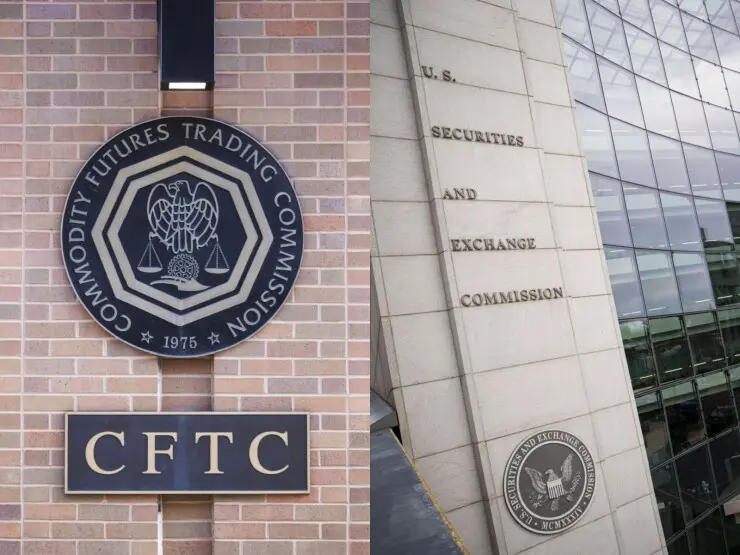
The Clarity Act would divide regulatory oversight of crypto assets between the SEC, which polices securities and investment products, and the CFTC, which oversees commodity derivatives markets. The current absence of that division , and which regulatory framework governs their trading, custody, and issuance. That uncertainty has been a structural overhang for institutional adoption because it creates legal risk for exchanges, custodians, and asset managers that a clear statutory framework would remove.
If the Clarity Act advances through the Senate and is signed into law, some market participants believe Bitcoin – and the broader crypto market – could bounce. The mechanism is straightforward: reduced regulatory risk could lower the discount rate applied to crypto assets by institutional allocators, the same transmission channel through which any reduction in regulatory or legal uncertainty tends to support asset prices.
Conversely, a Senate stall or failure on the August 7 deadline would . Pandl’s framing positions the Clarity Act alongside the Fed decision as the two events most likely to resolve the directional ambiguity in Bitcoin’s current price structure over the next few weeks.
What the Macro Maturation Thesis Actually Requires to Be True
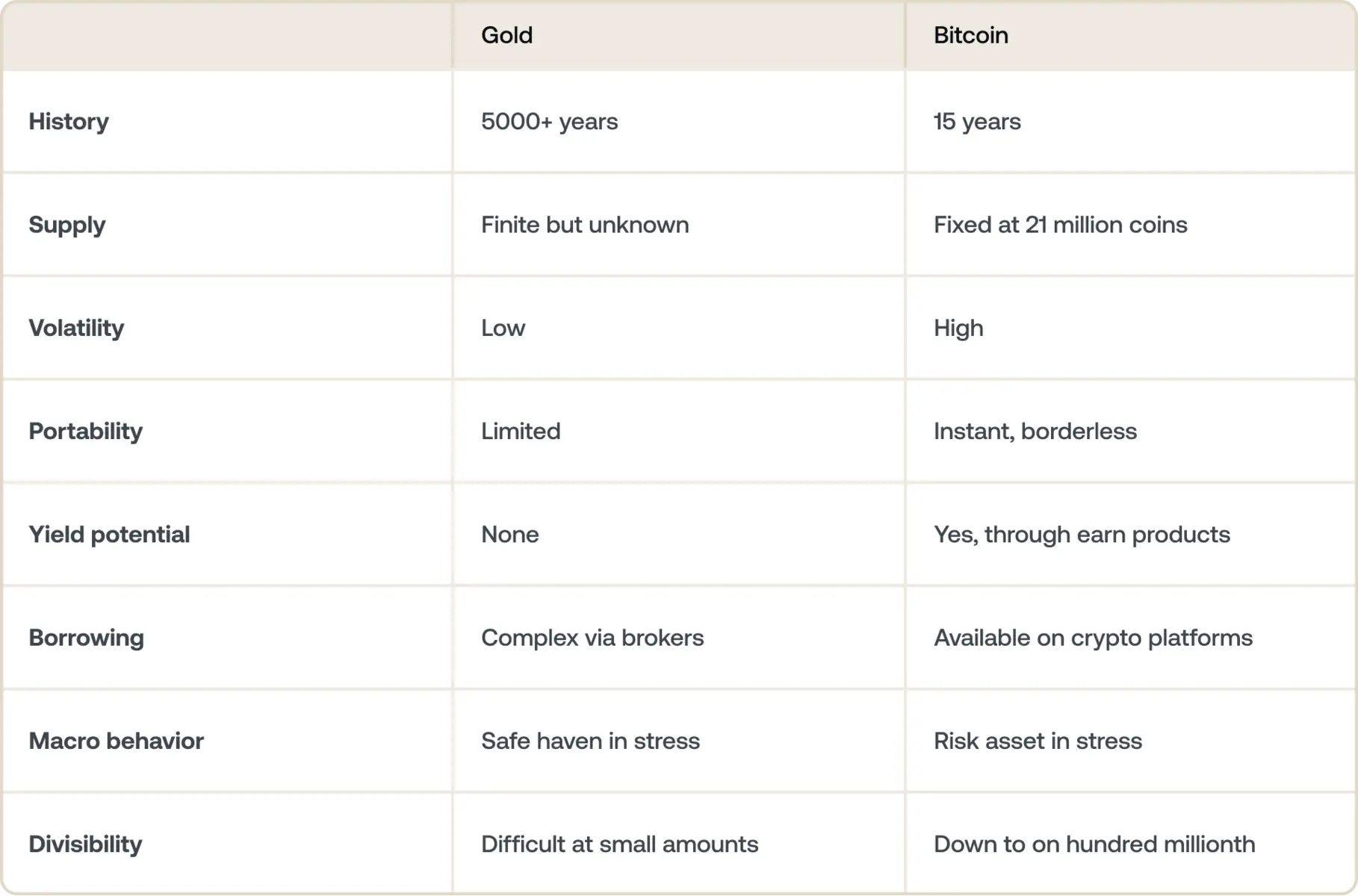
Grayscale’s argument that Bitcoin now trades like a macro asset – closer to gold or a rate-sensitive equity than to a speculative retail instrument – is not a new claim, but it has become a more testable one since the launch of U.S. spot Bitcoin ETFs created a direct, transparent institutional access channel. The thesis requires several structural conditions to hold simultaneously, and they are worth being explicit about.
First, it requires that institutional flow behavior – specifically, the ETF inflow patterns – remains the dominant price-setting mechanism rather than a secondary influence that can be overwhelmed by crypto-native positioning or leveraged speculation. The seven-session inflow streak approaching $1 billion is consistent with that condition holding currently, but it is not a guarantee that the same institutional demand persists through a policy shock or a growth scare.
Second, it requires that the correlation between Bitcoin and real interest rates – the transmission channel Pandl identifies as the primary macro driver – remains stable. That correlation was not consistently strong during the 2018 or 2022 cycles, which were more heavily influenced by crypto-native leverage and retail flows. The current cycle has shown a stronger macro correlation, but correlations in financial markets are regime-dependent and can break down when the dominant marginal buyers or sellers change.
Third, and most practically, it requires that the Fed actually pauses. A rate hike on July 29 would undermine the If the Fed forgoes rate hikes and economic growth holds up well, Bitcoin’s price may already have bottomed, condition in Pandl’s conditional bottom call. , reflecting the genuine uncertainty among institutional desks about whether the Fed tightening cycle is finished or merely paused.
Historical Analog: 2018 vs. the Current Cycle’s Structural Differences
The closest structural analog to the current setup – a Bitcoin drawdown coinciding with a Fed tightening cycle – is the 2018 bear market, where , and consistent with the four-year model’s historical average. The Fed was actively hiking through 2018, and the bottom in Bitcoin prices arrived , with the recovery accelerating once rate-cut expectations began pricing into markets in early 2019.
That analog supports Pandl’s macro thesis directionally – Bitcoin did bottom when the macro headwind reversed – but the 2018 parallel also illustrates where the current analysis breaks down as a clean comparison. The 2018 bear market featured an 80%-plus cumulative drawdown; the current cycle’s drawdown from the $126,000 peak sits at roughly 49% at current prices, well short of that historical average. If the four-year model’s structural logic still applies, the analog would suggest the bottom is not yet in regardless of Fed policy, because the magnitude of the correction has not matched prior cycles.
The structural counterargument – Grayscale’s – is that the 2018 cycle was retail-dominated, institutionally shallow, and driven by speculative dynamics that no longer govern Bitcoin’s price. The presence of regulated ETF products, the scale of institutional custodied holdings, and the direct transmission of macro policy into Bitcoin pricing through the ETF channel all represent genuine structural differences that make a one-to-one comparison to 2018 analytically unreliable. That does not make the analog useless, but it does mean the historical 80% drawdown average carries less predictive weight in the current regime than the four-year cycle model’s adherents assign it.
The Structural Verdict: Fed Decision Sets the Directional Range
The analytical weight of Grayscale’s note rests on a single mechanical claim: that Bitcoin’s bear market was caused by a macro input – a Fed-driven rise in real interest rates and a reversal in rate-cut expectations – and that removing that input removes the structural basis for continued price deterioration. That is a coherent and internally consistent argument, and the ETF flow data running alongside it provides a concrete demand signal that did not exist in prior cycles to either confirm or deny.
The Fed meets July 29, and Grayscale frames the Fed decision alongside the Clarity Act as a key near-term catalyst for Bitcoin. A hold, paired with language suggesting the tightening cycle is over, would mechanically validate the macro-bottom framework and supported by both realized-price analysis and institutional flow data. A hike, or hawkish guidance reopening the door to further tightening, would invalidate the conditional bottom call and as the next structural test.
: Senate progress would add a regulatory-certainty tailwind to whatever macro signal the Fed produces, while a stall would extend the institutional adoption discount regardless of rate policy. Bitcoin is trading lower today than it was yesterday, but is up roughly 4% in the last 30 days of the note’s publication, up approximately 4% over the past 30 days – a range that reflects genuine price ambiguity rather than directional conviction, and one that the market will be forced to price out of one way or the other within the next two weeks.
Follow CoinNews on X and Telegram for real-time updates as the July 29 Fed decision approaches.
About Author

About Author