


Senate’s 4-Day Window Puts CLARITY Act on the Brink, Galaxy Warns
Galaxy Digital cut CLARITY Act passage odds to 30%, warning the Senate has just four working days before August recess kills its near-term prospects.
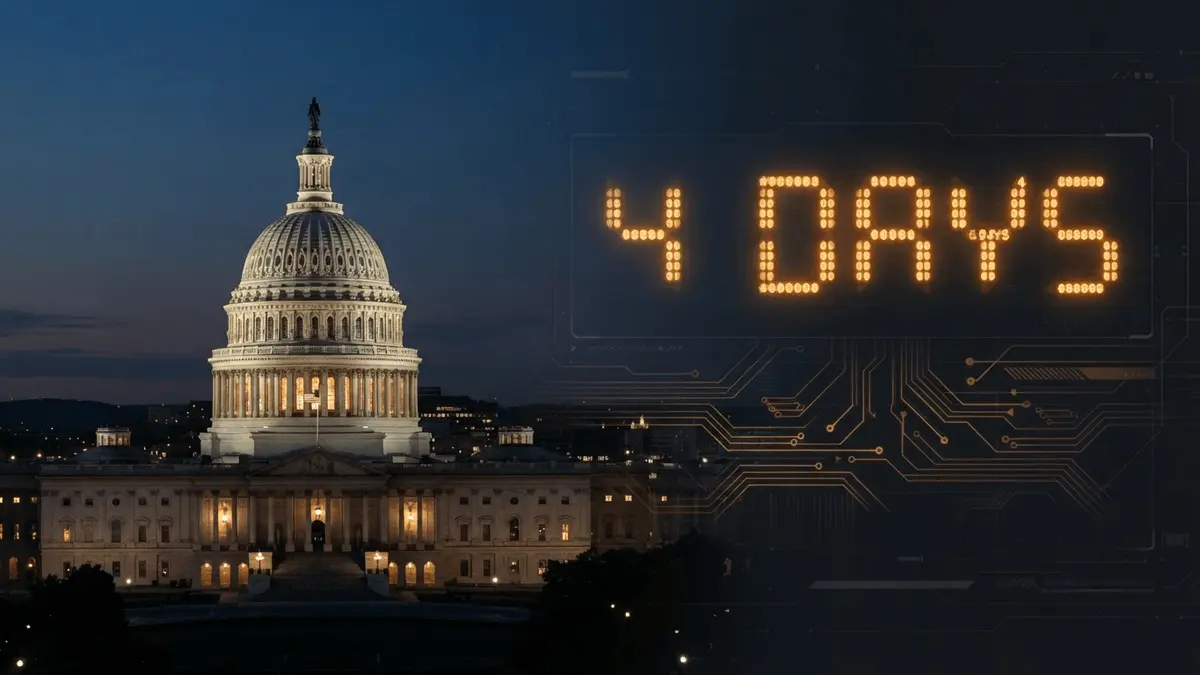
Galaxy Digital slashed its odds for the CLARITY Act passing in 2026 from 50% to 30%, warning in a July 24 note to clients that the Senate has until July 30 to reach a deal – four working days – before the August recess effectively kills the bill’s near-term prospects.
Galaxy Cuts Odds After Updated Draft Fails to Win Democrats
The downgrade from Alex Thorn, Galaxy Digital’s head of research, came two days after Senate Republicans released a revised 616-page combined bill that merges measures previously approved by the Senate Banking and Agriculture committees. The updated text adds government ethics restrictions, expanded law-enforcement provisions, and changes to stablecoin oversight under the GENIUS Act – concessions that were specifically designed to attract Democratic support.
They did not achieve that goal. Seven Democrats central to the negotiations – Sens. Mark Warner, Angela Alsobrooks, Cory Booker, Catherine Cortez Masto, Ruben Gallego, John Hickenlooper, and Raphael Warnock – said the latest proposal still falls short, calling for stronger protections on government ethics, consumer safeguards, illicit finance, conflicts of interest, and market integrity.
Thorn framed the situation in direct terms, writing that the CLARITY Act is a strong bill that improves regulation, protects investors, and promotes innovation, and that the time for incremental negotiations is over – a last-ditch effort is needed.
The Vote Math: Why 50 Republican Seats Is Not Enough
The arithmetic is the structural problem. Republicans hold 53 Senate seats, but the CLARITY Act needs 60 votes to clear a filibuster and reach final passage. Galaxy’s note estimates that bill supporters can count on roughly 50 reliable Republican votes – a figure the firm stressed is based on public statements and reporting, not a confirmed whip count.
The gap comes from three Republican senators: Josh Hawley and Rand Paul are expected to oppose the measure, while Mitch McConnell has not voted since his June hospitalization. That leaves the seven negotiating Democrats as the only realistic path to 60, giving them significant leverage at the worst possible moment in the calendar.
The procedural clock tightens the problem further. Galaxy’s note explained that even if leadership secures an agreement by July 30, the Senate would still need to file cloture, run procedural votes, allow debate on amendments, and move the bill toward final passage – all before senators leave Washington for recess. Analysis of the CLARITY Act’s market impact has shown how much is riding on this specific legislative window, with major crypto companies’ regulatory futures hinging on whether a federal framework clears before the calendar collapses.
Senate Majority Leader John Thune acknowledged this week that he did not expect all pending legislation to clear before the recess but left the door open on CLARITY specifically, saying he would like to at least get CLARITY started and would see where the votes are. That conditional language, from the leader who controls the floor schedule, is the definition of an uncertain outcome.
Industry Groups and Unlikely Allies Push for Immediate Floor Action
Facing a closing window, CLARITY Act supporters have intensified pressure on Senate leadership to begin floor proceedings even without a fully resolved bipartisan agreement. The Digital Chamber, Crypto Council for Innovation, and Blockchain Association sent a joint letter to Thune and Senate Minority Leader Chuck Schumer on Friday, urging them to prioritize floor consideration while negotiations continue in parallel.
The coalition argued the updated legislation strengthens tools for combating illicit finance and creates broader federal consumer safeguards, writing that these improvements reflect engagement with policymakers across both parties – and that waiting for every remaining disagreement to be resolved is no longer viable given the calendar.
Two endorsements have expanded the bill’s political coalition in ways that address specific criticisms of earlier drafts. The National Fraternal Order of Police, representing more than 382,000 law-enforcement officers, endorsed the revised legislation after previously raising concerns that developer protections in earlier versions could constrain criminal investigations. FOP President Patrick Yoes said the revisions satisfactorily addressed those concerns and preserved authorities needed to investigate financial crimes involving digital assets.

The National Black Church Initiative, which says it represents 150,000 African American and Latino faith communities with 27.7 million members, also urged passage before the August recess. NBCI President Rev. Anthony Evans argued that clearer oversight could protect consumers from digital-asset fraud while expanding access to financial services – a framing that directly addresses the consumer protection objections raised by Democratic holdouts.
Jake Chervinsky, chief executive of the Hyperliquid Policy Center, argued that the compromises already embedded in the legislation leave no serious substantive objections remaining and called for every senator who presents as supportive of crypto to be forced to take a position in a floor vote. That pressure campaign is a deliberate attempt to shift the political cost from voting yes to avoiding a vote entirely.
What Slipping Past August Would Mean for the Bill
If the CLARITY Act does not reach the floor before the August recess, the legislative path forward narrows significantly. The September calendar is expected to be dominated by government funding negotiations – the perennial appropriations fight that consumes Senate floor time every fall – alongside the early positioning of election-year politics that shapes every vote in the back half of a congressional cycle.
Even a Senate passage would leave substantial work unfinished. The bill would still need to be reconciled with the earlier House-passed framework before reaching the president’s desk. Coverage tracking CLARITY Act progress and its market impact on crypto assets has documented how legislative milestones have moved individual tokens – the reverse is equally true, meaning a confirmed delay would likely reprice assets that have built in regulatory-clarity premiums.
The most politically sensitive addition in the revised bill – a new ethics package explicitly barring the president, vice president, members of Congress, and federal judges from issuing or sponsoring cryptocurrencies while in office – was designed to neutralize Democratic objections rooted in the Trump family’s crypto holdings. That it has not yet moved the seven negotiating senators suggests the gap is either larger than Republicans assumed or the Democrats see more political value in holding out than in closing a deal before recess.
Galaxy’s 30% odds sit roughly in line with where independent policy analysts and prediction market pricing have landed in mid-July. The convergence of a named research desk, policy analysts, and market pricing on the same number is itself a signal: the structural obstacles – vote count, calendar, and unresolved Democratic demands – are visible to everyone watching, and the market has priced accordingly. Whether Thune files cloture before July 30 is the single near-term data point that will force a re-rating in either direction.
Follow CoinNews on X and Telegram for real-time updates on the CLARITY Act vote count and Senate floor developments.