


Could This Low-Cap Be the Next 1000x Crypto? — Bitcoin Hyper, Caldera, CESS Network

The market is shifting, new projects are trying to stand out, and many traders are searching for the next 1000x crypto while avoiding empty promises. Prices across major assets keep moving, and each new wave brings fresh ideas that aim to solve old problems. That is why a closer look at today’s emerging tokens feels more crucial than ever.
This week brings designs that go beyond hype. Some focus on speeding up older chains, others push new forms of community rewards, while a few take aim at deeper infrastructure issues.
Which Could Be the Next 1000x Crypto?
The five tokens below reveal how different goals, use cases, and design choices shape the direction of today’s market. The next 1000x crypto might be hiding in plain sight.
1. Bitcoin Hyper – A Faster BTC Layer Built for Real Utility
Bitcoin Hyper enters the market at a moment when Bitcoin feels slow and weighed down again. Prices keep hovering near 92k, major assets are pulling back, and the network still struggles with the same bottlenecks it has carried for years. That familiar combination of seven transactions per second, long confirmation times, and fee spikes continues to limit what developers can do with Bitcoin.
What follows naturally is the long-standing gap in on-chain innovation. Bitcoin still lacks native smart contracts, so most new ideas, experiments, and DeFi activity have moved to other networks. The space keeps waiting for an efficient, secure way to use Bitcoin without leaving the ecosystem entirely.
Bitcoin Hyper approaches the problem directly by acting as a Bitcoin-focused Layer 2. It uses a canonical bridge that locks BTC on the main chain and produces wrapped BTC inside a Solana Virtual Machine environment. This design gives users fast settlement, low fees, and smart contract support, while still keeping Bitcoin as the base layer of security.
That said, the network batches transactions, executes them off-chain, then sends the final state back with zero-knowledge proofs. This keeps the chain lean while letting developers build DeFi, NFTs, games, and trading platforms without the limits of Bitcoin’s original design.
Momentum is also helping. The presale has already raised $28 million, with large buyers adding confidence. If the roadmap stays on track, Bitcoin Hyper could appeal to users looking for more than a passive asset. For some investors, Bitcoin Hyper is where a potential next 1000x crypto may emerge.
Check Out the HYPER Presale
2. Caldera – Rollups, Interoperability, and a Mixed Technical Picture
Caldera sits in a tricky part of the market, but the overall structure makes it an interesting rollup project to watch. The technical indicators send mixed signals at the moment. Short-term RSI numbers show neutral movement, while longer readings lean toward oversold territory. However, the MACD histogram pushes upward, hinting at a slow recovery building beneath the surface.
The thing is, earlier listings on major platforms such as Binance, Coinbase, and Upbit generated strong spikes. However, the price has since cooled due to airdrops being sold. The Strategic Reserve did purchase nearly four million ERA to help stabilize the chart. However, it covers only a small slice of the circulating supply.
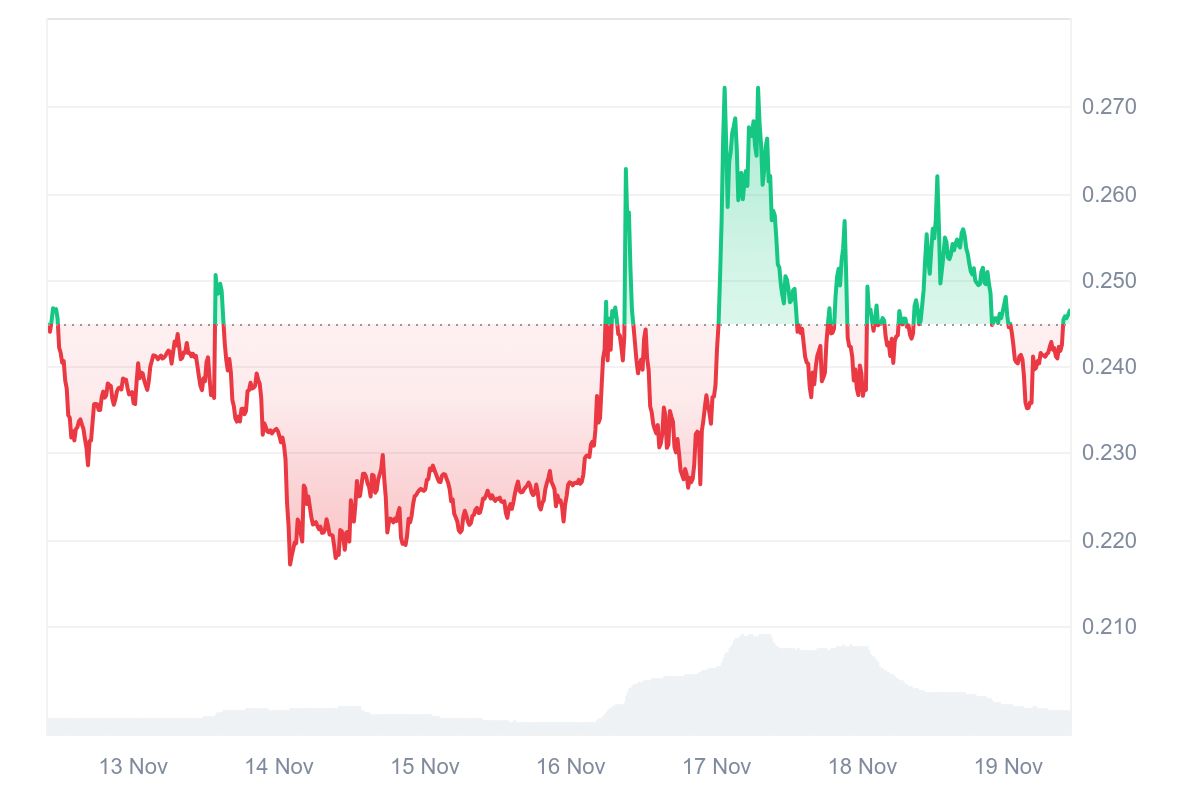
Caldera itself continues to grow through partnerships that support real use cases. Ethena Labs adds stablecoin utility, Mawari introduces streaming and XR functions, and the Metalayer protocol now runs across more than 60 chains. Each chain increases cross-network fees and helps shape ERA into a broader interoperability asset.
Still, token unlocks pose the clearest risk. With only 14.85% of the supply in circulation, new releases could pressure prices if adoption slows. The derivatives market also amplifies volatility, since leverage on futures makes the token sensitive to large liquidations.
What stands out is the project’s ability to keep expanding even during soft market periods. The team remains active, Metalayer continues to scale, and RSI readings indicate the token is moving toward potential relief. Caldera will depend heavily on whether demand outpaces inflation during the next unlock window. If momentum builds, some holders may view ERA as a potential next 1000x crypto.
3. Wall Street Pepe – A Meme Community Turning Into a Trading Hub
Wall Street Pepe is an original meme project with a trading community that aims to produce real value. The token first stood out by tapping into familiar imagery from Pepe the Frog and the culture surrounding financial markets. That combination generated strong early interest and helped the presale become one of the most talked-about launches of the year.
After appearing on major decentralized exchanges, Wall Street Pepe crossed the 25 million market cap and continued to grow its audience. The community built a token-gated trading group where holders receive market insights, chart breakdowns, and trading setups that often circulate before the rest of crypto notices the trend. This consistent flow of information has helped maintain demand.
The project expanded further by launching an NFT collection of five thousand avatars and migrating to Solana. This shift improves speed, reduces fees, and opens doors to new partnerships inside one of the most active ecosystems in Web3. The “WEPE Army” continues to grow on both Telegram and X, where holders share wins, updates, and market commentary.
Wall Street Pepe raised more than $70 million before listing, and that early interest has carried over. New features, such as roadmap updates and site improvements, are expected, and the community continues to monitor every announcement.
Price movement still depends on macro conditions, exchange liquidity, and sustained community engagement. Yet the project maintains a stronger identity than most meme tokens, and its trading-focused features give it a practical layer many competitors lack. In a bullish scenario, WEPE could be the next 1000x crypto.
4. CESS Network – Storage, AI Integration, and a Challenge of Mixed Signals
CESS Network operates in the storage and Web3 infrastructure sectors, which rarely follow hype but often attract steady, long-term users. Recent activity shows a blend of strong signals and caution flags. On the positive side, CESS recorded a 36% price increase while maintaining higher visibility through integrations with Binance Alpha. Its KuCoin giveaway also brought thousands of new participants.
Meanwhile, Toobit’s delisting sparked liquidity concerns. Centralization risks around minting and freezing permissions also remain in focus, particularly for users who prefer fully trustless systems. These issues weigh on sentiment when compared to decentralized competitors like Arweave or Filecoin.
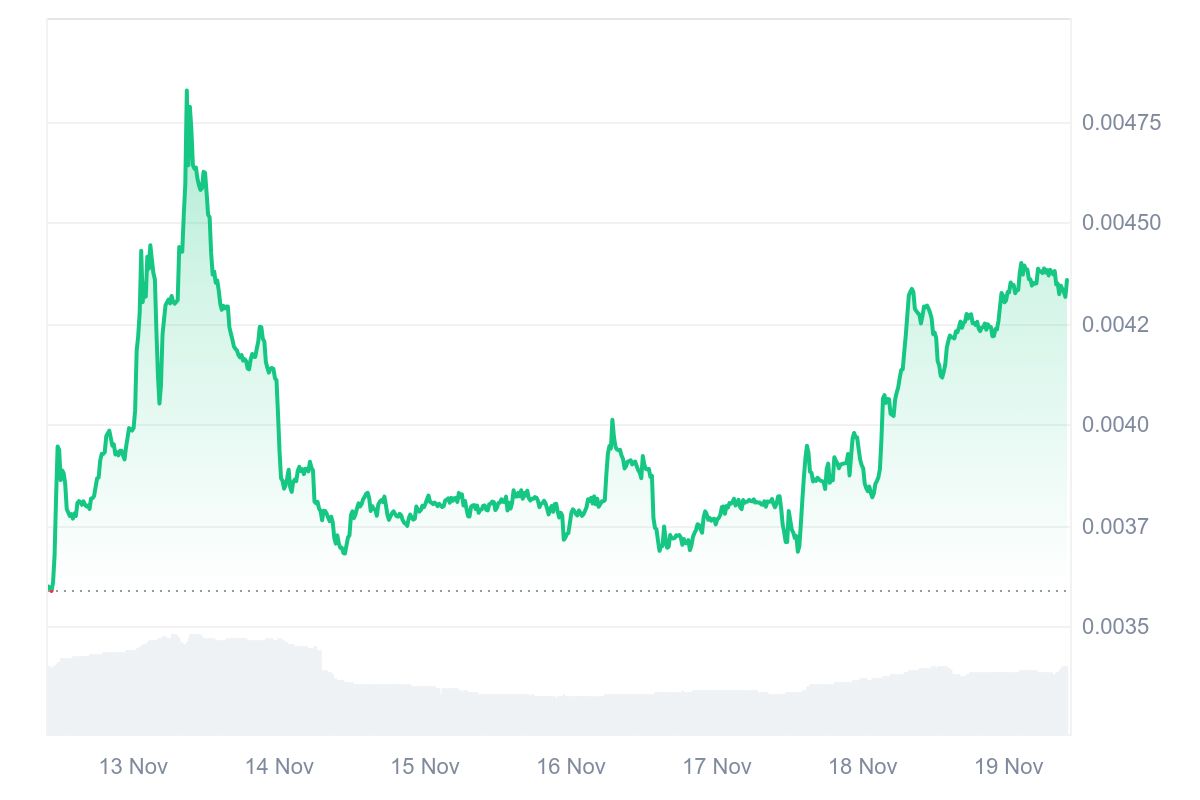
Technically, CESS displays upward momentum. The RSI moves near overbought levels, and the MACD shows a bullish crossover. This suggests strength but also warns of potential short-term corrections if volume weakens. The network’s low daily turnover means prices may react sharply to large orders.
On the development side, CESS aims to deliver a mainnet migration and strengthen its Proof of Data Reduplication model. These upgrades matter because they shift the project from BEP-20 tokens to a complete native chain. Partnerships such as Anon ID also highlight real use cases for decentralized storage in enterprise environments.
Tokenomics introduces further considerations. Almost half of the supply is dedicated to node rewards, creating long-term emission pressure if demand does not rise fast enough. For sustainable growth, the network must attract developers and users who rely on its storage features. CESS remains a project with both promise and risk, where a strong mainnet launch could push it closer to becoming the next 1000x crypto.
5. Pepenode – Gamified Virtual Mining for Meme-Themed Rewards
Pepenode keeps gaining attention because it does something unusual for a meme-related project. It offers a mining system without physical hardware, turning the entire experience into a virtual arcade. Market conditions may remain soft, but newer investors continue to explore the project because it lets users build digital mining rooms, deploy miner nodes, and earn tokens without the overhead of traditional equipment.
The platform distributes rewards in popular meme assets such as Pepe and Fartcoin, giving miners a steady flow of familiar tokens. This structure appeals to community-driven holders who enjoy the humor while also treating the rewards as speculative fuel during market swings. With a 696% staking yield on the site, early users have additional incentives to remain active.
The presale structure helps maintain high interest. Prices increase every 3 days until the sale closes, encouraging quicker participation. So far, the presale has raised more than $2.17 million, and interest remains strong with only a short window left before the token launch.
The maximum supply of 210 billion tokens is split across treasury, rewards, marketing, liquidity, and development. This gives the team room to build without concentrating too much power in a single pool. Buyers can enter the presale using ETH, BNB, USDT, or even a credit card, and new users without wallets are guided toward simple beginner options.
Community growth on X and Telegram continues, and the upcoming token listing is expected to expand visibility. The virtual mining model gives Pepenode a clearer identity than most meme-themed assets.
For speculative buyers, Pepenode provides a creative alternative that some may view as a potential next 1000x crypto.
About Author

About Author