


HTX Faces EU Transaction Ban From August 23 as Wallet Rotation Raises Compliance Alarms
The EU’s 21st sanctions package bans HTX transactions from Aug. 23, while TRM Labs warns wallet rotation across four chains is outpacing compliance tools.

The bloc placed Huobi Global S.A., the entity behind HTX, under a transaction ban in its 21st sanctions package adopted July 23. placing Huobi Global S.A. – the entity behind the exchange – under a transaction ban that takes effect August 23, barring EU operators from transacting with the platform as part of the bloc’s 21st Russia sanctions package.
Transaction Ban, Not Asset Freeze – But the Distinction May Not Matter Much
The EU’s measure stops short of freezing HTX’s assets, a distinction the exchange may try to lean on publicly, but for retail users and counterparty exchanges, the operative constraint is the transaction prohibition itself. From Aug. 23, EU operators will be prohibited from transacting with the exchange, though the restrictions stop short of freezing its assets. which forces brokers, aggregators, and custodians operating under EU jurisdiction to cut exposure before that date.
The action follows Britain‘s May 2026 designation of Huobi Global, which was packaged alongside other crypto platforms accused of supporting Russian sanctions evasion. UK authorities stated they had reasonable grounds to suspect Huobi Global provided financial services to entities linked to Russia’s financial system, including the A7 cross-border payments network. Blockchain intelligence firm TRM Labs identified the exchange as HTX when UK authorities said a major global crypto exchange had channeled more than $1.5 billion toward Kremlin-linked entities.
HTX sought to create distance between the exchange and the named entity, stating that Huobi Global S.A. is distinct from the online HTX exchange. British authorities subsequently made clear they considered HTX covered by the designation – the UK sanctions notice lists both HTX and HTX Exchange among names associated with Huobi Global.
HTX Rotated Wallets Across Four Chains After UK Action
HTX’s operational response to the UK designation illustrates the core compliance problem regulators are now trying to solve. According to a July 21 report from TRM Labs, HTX rotated hot wallets and funding addresses across Tron, Ethereum, BNB Smart Chain, and Solana in the weeks following the UK designation, with some addresses remaining active for only hours before being replaced.
That rotation rate outpaces traditional static blocklist updates, meaning a wallet attributed to HTX could be retired and replaced before compliance providers had identified the new address’s connection to the exchange. TRM said firms screening for sanctions exposure increasingly need to track transaction patterns, funding relationships, and on-chain behavioral signals rather than fixed address lists – a structurally more expensive and technically demanding compliance posture.
Blockchain investigator ZachXBT described the on-chain contamination created by the UK action as catastrophic, arguing that HTX differs from previously sanctioned crypto businesses such as Huione, Blender, and Hydra because the exchange also serves a substantial retail user base in Asia. ZachXBT said he had been forced to disregard the sanctions exposure category when tracing cases, because the volume of addresses carrying HTX exposure had made the risk signal effectively meaningless. He also criticized compliance tools for failing to distinguish activity that predated a designation from transactions conducted afterward – a gap that matters for retail users who held HTX balances before either the UK or EU actions.
The counterparty pressure was already spreading before the EU acted. OKX warned customers who had previously conducted arbitrage between its platform and HTX that continuing to transfer funds between the two exchanges could trigger additional account scrutiny, telling users to avoid the behavior after the UK designation. That kind of secondary-exposure warning has direct implications for any retail investor who regularly moved assets between venues – similar to the dynamic seen when regulatory action forced AscendEX to halt withdrawals under MiCA pressure.
EU’s New Third-Country Mechanism Extends the Perimeter Beyond HTX
The more structurally significant element of the EU’s 21st sanctions package is a new mechanism that goes beyond targeting individual exchanges. For the first time, the bloc has created legal authority to prohibit transactions involving crypto service providers across an entire third country when platforms in that jurisdiction are used to help Russia evade sanctions – a deterrent aimed at governments that host evasion infrastructure rather than just the platforms themselves.
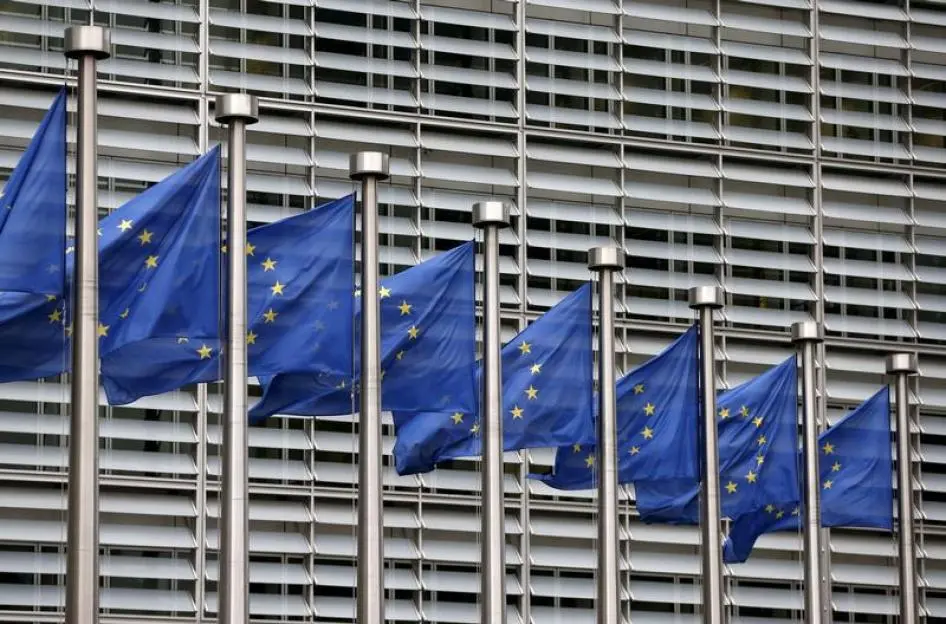
No country has yet been placed under that broader restriction, but the mechanism exists and is operative. The same package extended transaction restrictions to 14 crypto-related service platforms based across Georgia, Panama, the United Arab Emirates, the Marshall Islands, Kyrgyzstan, and Belarus, including EXMO, BitPapa, and Rapira – each of which had already faced action from other Western governments.
The EU also added four designations tied to the A7 network, citing its expansion into Africa. TRM Labs identified A7 Nigeria and A7 Africa among entities covered by the latest measures. According to prior CryptoSlate reporting, A7 claimed to have processed more than $90 billion during 2025 and has since expanded into Lagos and Harare. The network is linked to sanctioned Moldovan politician Ilan Shor and Promsvyazbank, the Russian state-owned lender tied to the country’s defense sector. A7 also operates A7A5, a ruble-backed stablecoin that functions as a primary settlement vehicle within the network – the kind of infrastructure that Russia’s digital asset legal framework has increasingly legitimized domestically while Western regulators push from the outside.
TRM said that following the multinational crackdown on Garantex in 2025, transaction flows shifted toward successor infrastructure and A7 absorbed part of that activity – the same migration pattern the EU’s new country-level mechanism is designed to interrupt before another successor network emerges. The analogy to how UK sanctions against IRGC-linked entities created cascading compliance exposure for crypto exchanges is direct: individual designations move flows rather than stop them, and regulators are now trying to move upstream.
What August 23 Means for Retail Exposure
The immediate date is August 23. Any EU-regulated entity – including exchanges, custodians, payment processors, and brokers operating under EU jurisdiction – From Aug. 23, EU operators will be prohibited from transacting with the exchange. For retail investors holding assets on HTX or using EU-regulated on-ramps that touch HTX, the operational window to act is narrow.
The longer-term watch is whether the EU activates its new third-country mechanism and how aggressively other exchanges extend secondary screening beyond direct HTX interactions. TRM’s finding that funds moving one or two transaction hops from sanctioned platforms can still trigger compliance reviews means the exposure radius extends well beyond users with direct HTX accounts. If screening firms widen their heuristics in response to the EU designation the way they did after the UK action, the blast radius of secondary compliance flags could grow substantially – and the path of least resistance for any EU-regulated exchange is to tighten now rather than adjudicate exposure after August 23.
Follow CoinNews on X and Telegram for ongoing regulatory and market updates.