

BIND’s BEN Platform to Channel USDC Into Argentine Corporate Treasuries
Circle and BIND Group’s alliance routes USDC liquidity into Argentine corporate treasuries via BEN, targeting a market where USDC holds 46% stablecoin volume.

Circle and BIND Group, a large Argentine financial services conglomerate with over $2 billion in total assets, announced a strategic institutional alliance on Tuesday that will route USDC liquidity directly into Argentine corporate treasuries through BIND’s regulated virtual asset platform – targeting a market where USDC already commands 46% of all stablecoin transaction volume, an anomaly in a region otherwise dominated by USDT.
BIND’s BEN Platform Becomes Circle’s Institutional On-Ramp in Argentina
The mechanics of the deal center on BEN, BIND Group’s licensed virtual asset service provider, which operates under Argentina’s national regulatory framework for crypto asset intermediaries. BEN will serve as the compliant infrastructure layer through which Argentine businesses access USDC for payments, treasury management, and digital asset transfers – functions that previously required routing through global exchanges or informal dollar markets.
BIND Banco Industrial, the banking entity at the core of the conglomerate, has historically focused on institutional and corporate clients, meaning the partnership targets the segment most likely to deploy USDC at scale for working capital and cross-border settlement rather than retail speculation. The arrangement gives Circle – whose USDC carries a market capitalization north of $70 billion – a banking-grade distribution channel in one of its most strategically important emerging markets.

According to a press release cited in the original reporting, the alliance positions BIND Group at the forefront of digital asset infrastructure development in Argentina, opening what the company described as “a new chapter in the path we have been building to connect the traditional financial system with new technologies.”
Allaire and Meta on Why Argentina, Why Now
Andrés Meta, Vice President at BIND, framed the partnership in terms of access quality rather than access alone. “Through BEN, we seek to provide businesses with transparent, secure, and efficient access to the digital dollar infrastructure,” Meta stated, per the announcement.
Jeremy Allaire, CEO of Circle, offered the clearest rationale for the geographic focus during a visit to Buenos Aires, telling Argentine outlet La Nacion that the country had become “a much more attractive destination for foreign investment” – and explicitly contrasted that with conditions two years prior. “Two years ago, that wasn’t the case,” Allaire said, a framing that points directly to the macro policy shift under the Milei administration rather than any fundamental change in crypto demand, which has been structurally elevated in Argentina for years.

Argentina’s USDC Position Is an Outlier Worth Understanding
The 46% stablecoin volume share figure for USDC in Argentina comes from Oobit, which published a regional stablecoin report showing that across nearly all other Latin American markets, USDT commands close to 100% dominance. Argentina’s divergence reflects a combination of factors: persistent peso instability that has driven demand for dollar-denominated instruments at every income level, a population with relatively high financial sophistication around FX risk, and the early establishment of USDC as a trading pair on local exchanges.
For Circle, this is not an abstract market share statistic – it is the demand signal that justifies building institutional infrastructure here before other Latam markets. The BIND partnership converts that retail and semi-institutional demand into a bank-grade rails story, with corporate treasuries as the primary target. The parallel institutional push happening across traditional finance – including SWIFT’s moves toward blockchain-based tokenized settlement – underscores that the window for stablecoin issuers to embed themselves in institutional payment flows is narrowing as legacy rails modernize.
Regulatory Timing: Central Bank Policy Is the Swing Factor
The partnership lands against a specific regulatory backdrop that could materially expand or constrain its scope. Argentina’s Central Bank is currently studying whether to lift the existing ban on licensed financial institutions offering crypto-based financial services – a prohibition that currently keeps the country’s traditional bank sector on the sidelines of the stablecoin market. If that restriction is relaxed, BIND would be structurally positioned to move from VASP-only delivery through BEN into full banking integration for USDC products.
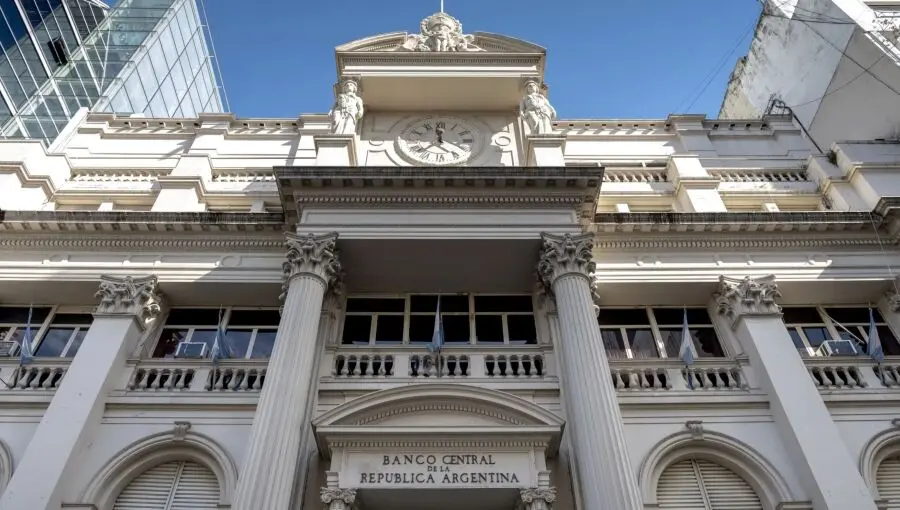
That regulatory optionality is likely part of the strategic calculus. Circle is not simply placing a bet on current demand; it is positioning BEN as the compliant infrastructure that scales automatically if Argentine banking rules shift. The risk is the reverse – Argentina’s policy environment has reversed course sharply in past cycles, and a return to stricter capital controls or FX intervention could undermine the utility case for USDC corporate treasuries if peso-dollar conversion windows close again.
The broader international context also matters for Circle’s positioning: with the United States having effectively foreclosed a federal CBDC pathway – the Federal Reserve’s ability to issue a digital dollar has been legislatively blocked – private stablecoin issuers like Circle operate without the competitive threat of a government digital dollar in their home market, giving them longer runway to establish dominant positions in markets like Argentina before that calculus shifts elsewhere.
What Comes Next for the Circle-BIND Buildout
The announcement is framed explicitly as part of a wider Circle expansion across Latin America, with Argentina designated as a priority hub within that regional push. Near-term, the operative question is how quickly BEN converts institutional interest into live corporate USDC balances – the product categories named (payments, treasury management, digital asset transfers) are directionally clear but the timeline for go-live on each is not specified in the announcement.
Medium-term, the BIND model – a large regulated financial conglomerate using a licensed VASP subsidiary to distribute USDC – is a template Circle could replicate in other Latam markets where it currently lacks a banking-grade local partner. Whether BIND‘s network effects and institutional relationships translate into measurable treasury inflows, and whether the Central Bank’s crypto policy review resolves in a direction that expands or caps that potential, will determine if this partnership becomes a regional playbook or a market-specific arrangement.
Follow CoinNews on X and Telegram for real-time updates on institutional stablecoin developments across Latin America and emerging markets.