


FXRP Brings Permissionless XRP Options Trading to Derive
FXRP now backs XRP options, perpetuals and spot trading on Derive, while XRP stays on the XRP Ledger and traders manage USDC settlement risk.

Flare’s FXRP is now accepted as collateral on Derive, the largest onchain options exchange in DeFi, letting XRP holders trade options, perpetuals, and spot directly from their own wallets while the underlying XRP stays parked on the XRP Ledger. The integration adds a permissionless derivatives layer to the XRPFi stack that Flare has been building around FXRP, with no KYC, no gatekeeper, and no venue deciding who gets to trade.
How the FXRP-to-Derive Flow Works
Anyone holding FXRP can deposit it into Derive on Flare and open an XRP subaccount under the platform’s Portfolio Margin V2 system, according to Flare’s announcement. Options, perpetuals, and spot all draw margin from the same FXRP balance, which makes the strategies capital-efficient rather than requiring separate collateral pools for each instrument.
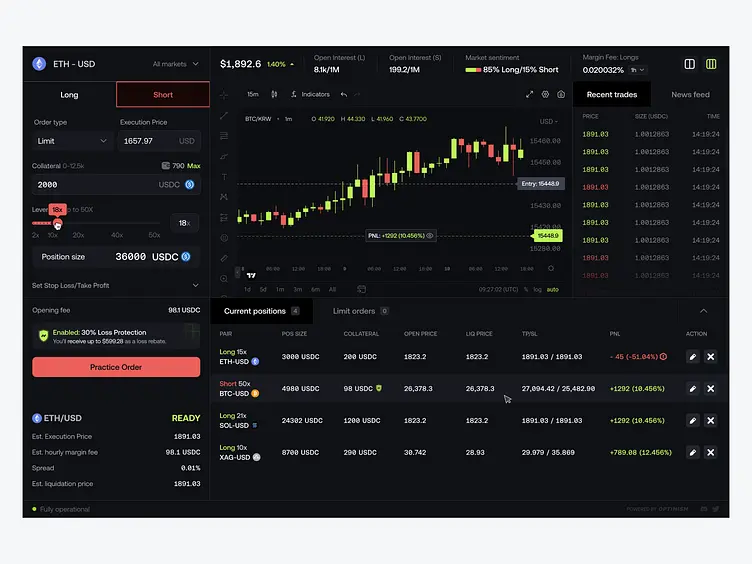
The mechanics matter here: Derive’s XRP options are cash-settled in USDC rather than through physical delivery of XRP. Selling a call or a put is a commitment to trade at a chosen strike, and the premium is earned either way – but any difference at expiry settles in USDC while the FXRP collateral stays in place. Traders opening short positions need USDC on hand for settlement and need to understand margin requirements before committing, since this is income generation against a position rather than a costless hedge.
For holders who don’t yet have FXRP, the path is to mint it first through Flare’s FAssets system, then follow the same deposit and subaccount steps on Derive.
What This Adds for XRP Holders
Flare frames this as the volatility and hedging layer that XRPFi has been missing. FXRP already functions as collateral for spot trading via Hyperliquid, yield tokenization through Spectra, permissionless lending through Morpho, and institutional lending collateral in Sentora’s RLUSD vault. Options close a gap: holders can now sell calls at a strike they’d be willing to exit at, sell puts at a level they’d be willing to buy more at, hedge downside with protective puts without liquidating a single unit, or cap risk using spreads instead of surrendering unlimited upside.
Because perpetuals sit on the same margin engine, traders can also take leveraged directional views from the same FXRP balance used for options – useful for anyone watching how XRP is trading against current support levels and near-term price action, or weighing the thinner liquidity conditions discussed in recent XRP price analysis around the $1.30 breakdown.
Will Procheska, a DeFi analyst quoted in Flare’s announcement, said XRP has one of the most committed long-term holder bases in crypto, and until now they’ve had no permissionless options market to generate yield or hedge against their position, adding that FXRP on Derive changes that while the underlying XRP stays on the XRP Ledger.
Where Derive Fits in the Options Landscape
Derive, rebuilt from Lyra Finance, positions itself as a full options market rather than a single pre-set vault strategy – both sides of the book, a range of strikes and expiries, matched by a central limit order book with professional market makers. The platform has processed over $297 million in perpetuals volume in the past 30 days, according to DefiLlama tracking data, suggesting real trading activity rather than a dormant integration waiting for users.
The timing lines up with a broader shift toward regulated and semi-regulated XRP derivatives. CME listed the first CFTC-approved XRP options in October 2025, and Derive is now bringing that same capability onchain without a custodian – a distinction worth weighing alongside the ongoing debate over how regulators are treating crypto options products across venues.
Nick Forster, founder and CEO of Derive, said options are often the last major market to develop around an asset, and XRP has been waiting for the infrastructure. He added that Flare has done the hard work of making XRP programmable and building the foundation for a real XRPFi ecosystem, and that FXRP gives one of crypto’s largest holder bases a credible path onchain, with capital that can now be hedged, used to earn premium, and traded with the same sophistication available around other major assets.
The Risk Side of the Trade
None of this removes the mechanics of options selling. A short call caps upside at the strike; a short put commits the seller to buy at the strike regardless of where spot has moved. Cash settlement in USDC means sellers need to actively manage margin and hold enough stablecoin to cover settlement, or risk liquidation – this is not a passive yield product, and treating it as one is where retail traders tend to get hurt.
There’s also the layered protocol risk that comes with any wrapped-asset derivatives stack: FXRP minting, Derive’s margin engine, and the options market itself are each separate points of failure stacked on top of one another. Holders comfortable with that stack get a genuinely new tool; holders who aren’t should treat this as an addition to the risk ledger, not a free hedge.
What Comes Next
Flare and Derive both point to structured products as the next step – vaults that run a strategy on a depositor’s behalf so the decision simplifies to depositing FXRP and earning a volatility-driven yield, rather than managing individual strikes and margin manually. The specific strategy curators are reportedly most interested in building is put-selling to accumulate: collecting premium for committing to buy XRP at lower prices, effectively turning a standing bid into income for a holder base that wants more XRP rather than less.
Traders who want to see the mechanics firsthand can review Derive’s documentation before opening any position, particularly around margin requirements and settlement timing.
Follow CoinNews on X and Telegram for ongoing coverage of XRP derivatives and DeFi market structure.
About Author

About Author