


ECB Issues Warning of Potential Threat Stablecoins Pose To Banking Sector

The European Central Bank (ECB) has issued fresh warnings that stablecoins have the potential to disrupt traditional banking funding models within the euro zone. The ECB is concerned that the growth of stablecoins could draw valuable retail deposits away from banks in the Eurozone.
Stablecoin Growth Pose a Threat To Banking Sector: ECB
Since the change in regulatory approach, stablecoins have been growing at a rapid rate. With the likes of Transak, Visa, Stripe, Western Union, Deutsche Börse, and more pushing into the stablecoin market, the market has hit new highs. Between July 1 and November 25, the stablecoin market has increased from $259 billion to $313.3 billion.
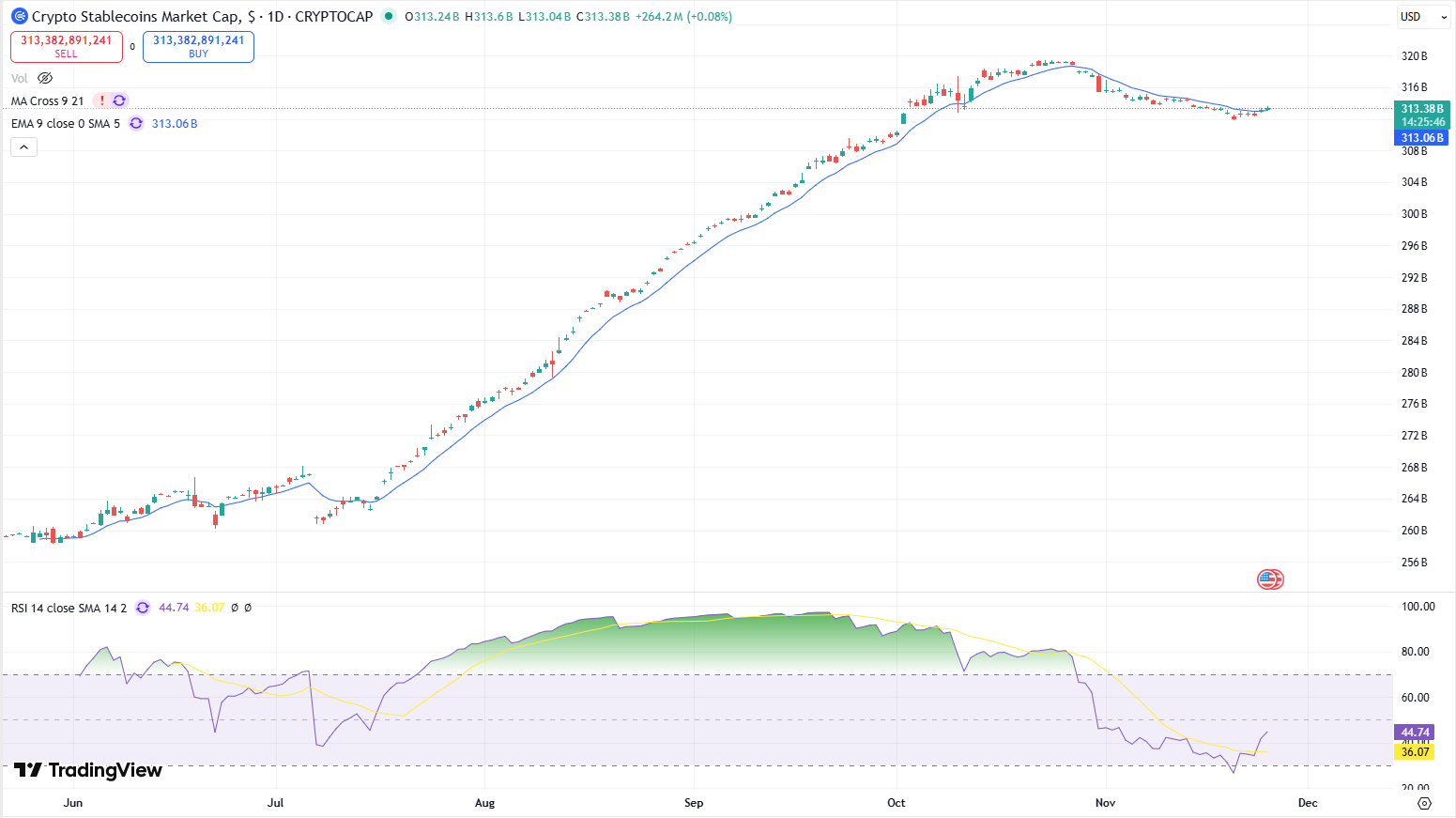
The ECB, in its latest Financial Stability Review highlighted that despite a constant increase in stablecoins, their further penetration in crypto trading and payments may suggest systemic risks.
The key concerns include the risk of stablecoins taking money out of banks, thus, weakening an essential source of funds used to lend out and make payments. The ECB also cautioned that a run on a large stablecoin issuer might lead to fire sales of reserve assets including U.S Treasuries, resulting in liquidity stress in conventional financial markets.
The authorities continued to add that using dollar-pegged stablecoins on a broad scale in the Eurozone may disrupt the transmission of the Euro monetary policy through less dependence on savings and transactions made in euros.
How the Growth of Stablecoins Can Affect Banks and Policies
In the case of eurozone banks, the risks lie in all three funding structures, profitability and customer perception. Should stablecoins substitute deposit funding, the banks might resort to more volatile and expensive wholesale funding to a larger degree.
This may strain margins, limit the availability of credit or even force banks to take on riskier approaches to redress funding difficulties. ECB board member Fabio Panetta has also warned that when banks provide crypto-related services, clients may misunderstand it as a bank-guaranteed or risk-free service.
When this happens, any losses that arise in the event of a crypto crunch will undermine confidence in the wider banking sector. Because of this, the ECB states that stablecoins pose a reputational risk and operational complexity to traditional financial institutions.
How the ECB Can Tackle These Problems With Regulations
Policymaking-wise, the ECB considers that stablecoins, in particular, tokens backed by foreign currency, could be a threat to monetary sovereignty. When eurozone citizens start relying more heavily on non-euro stablecoins in their savings or payments, the ECB might lose control over transferring interest-rate policy and controlling the money supply.
Laws like the Markets in Crypto-Assets Regulation (MiCA) and projects that assist in the creation of a digital euro are some of the regulatory responses. Nevertheless, the ECB still believes that its existing stablecoin regulations are not sufficient to reach large-scale adoption and has urged additional preventive controls to reduce systemic risk.
With the increase in the use of stablecoins, these digital assets could continue to enter the banking network via liquidity flows, funding relationships or operational connections. To this effect, the ECB is expected to come up with clearer guidelines, like the GENIUS Acts of the U.S., to manage the growth of stablecoins in the Eurozone.
About Author

About Author