

KuCoin Secures MiCA License in Austria, Opening Door to Regulated Crypto Services Across Europe
The MiCA license will enable regulated crypto services across 29 EEA nations as part of KuCoin’s growing global compliance push.
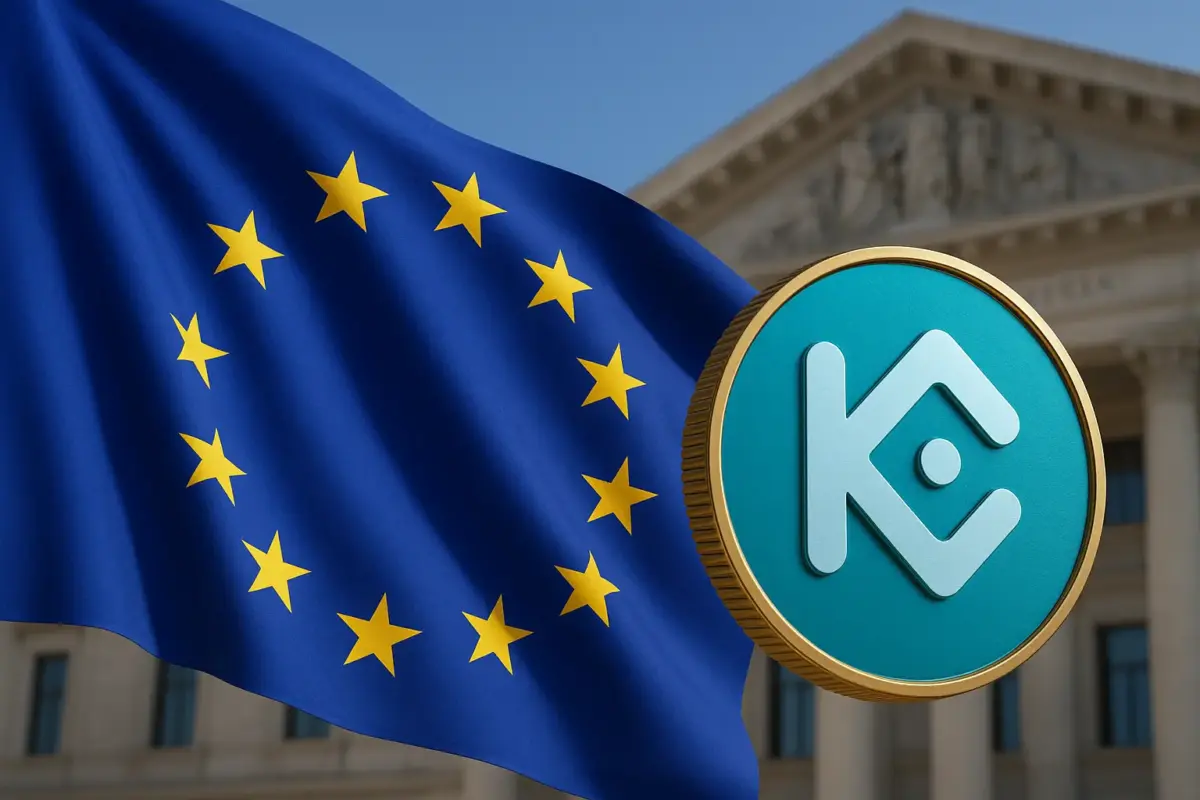
Global cryptocurrency exchange, KuCoin, has taken a major step toward strengthening its presence in Europe. The company’s European entity, KuCoin EU, has obtained a Markets in Crypto-Assets (MiCA) license from Austria’s Financial Market Authority (FMA), giving the exchange the right to provide regulated digital-asset services across nearly the entire European Economic Area.
The approval allows KuCoin EU to operate in 29 EEA countries, with Malta as the only exception. While the license does not cover Malta, it still gives the exchange access to one of the most extensive regulatory footprints available under the new MiCA framework. The authorization becomes one of KuCoin’s most significant compliance milestones to date, arriving just days after the company confirmed its registration under Australia’s AUSTRAC.
KuCoin CEO, BC Wong, called the approval a landmark achievement for the company’s long-term compliance strategy. He described the license as a “defining milestone,” noting that MiCA represents “one of the highest regulatory standards worldwide.” His comments echoed the company’s view that compliance is central to its future.
“Compliance is not simply a regulatory obligation – it is the foundation of our long-term mission to deliver secure, innovative, and accessible digital asset services to users worldwide,” Wong said.
The exchange originally submitted its application in early 2025, following months of preparation as MiCA rolled out across the EU. Several crypto-asset service providers, including Bitpanda, had already received their approvals earlier in the year. KuCoin’s authorization from the Austrian regulator signals that the exchange is ready to align itself with the EU’s first unified digital-asset rulebook.
According to representatives from the company, Austria was selected as the exchange’s base due to the country’s early adoption of MiCA’s accompanying laws and the predictability of its regulatory environment. KuCoin said in an earlier statement that the decision was also shaped by Austria’s strong talent pool and its commitment to providing regulatory clarity to the digital-asset sector.
Why Austria Became KuCoin’s Regulatory Home in Europe
With the new approval confirmed on November 28, 2025, KuCoin EU Exchange GmbH will be headquartered in Vienna. The Austrian capital has become an appealing destination for companies seeking a clear and orderly regulatory structure under MiCA. The exchange emphasized that Austria’s consistent approach to implementing MiCA was one of the main reasons it chose the country as its regional base.
KuCoin also highlighted Vienna’s growing reputation as a crypto-friendly hub and noted that it has already begun hiring for its European operations. The company is building teams focused on compliance, user experience, and platform development, preparing for a fully regulated rollout in the coming months.
“As a globally leading crypto exchange, we place compliance and user experience at the forefront,” Wong said. He added that the license marks “a significant milestone” in KuCoin’s shift toward operating in jurisdictions with strong oversight.
KuCoin has brought in established industry experts to help guide its European expansion. The exchange appointed Oliver Stauber as CEO of KuCoin EU and Christian Niedermüller as COO. Stauber described the approval as “a new era in crypto,” saying the company aims to become “Europe’s premier, regulatory-compliant crypto asset service provider.” Niedermüller, who has spent years scaling exchanges across the continent, said he “couldn’t be prouder” to help lead the company during this transition.
The new Austrian license allows KuCoin EU to provide a wide range of digital-asset services under the MiCA framework. These include custody and administration of crypto-assets, crypto-fiat and crypto-to-crypto exchange services, and the ability to offer placement and transfer services. By aligning these operations with MiCA’s rules, KuCoin can “passport” its services throughout the EEA without seeking separate approvals from each country.
Austria has also authorized five other crypto-asset service providers under MiCA. These include Amina Bank, Bitpanda, Bybit, Cryptonow, and FIOR Digital. KuCoin now joins this group as one of the most prominent global exchanges to receive approval in the country. The company said the license fits into its broader effort to establish a consistent regulatory footprint around the world.
MiCA, Regulatory Pressure, and KuCoin’s Path Forward in Europe
MiCA became law in late 2024, creating the EU’s first unified set of rules for digital-asset service providers. Under this structure, a company licensed in one EU member state can offer regulated services across the entire EEA through passporting. This framework has been viewed as a way to reduce uncertainty for both companies and consumers, establishing baseline requirements for transparency, risk management, and consumer protection.
For KuCoin, the license brings significant operational changes. The exchange confirmed that users in the EEA will no longer onboard through KuCoin Global. Instead, access will shift to the newly regulated KuCoin EU platform, which is expected to launch soon. The move is part of the company’s effort to build a fully compliant operation in the region.
The license also gives KuCoin a competitive advantage at a time when European regulators are increasing scrutiny on unlicensed platforms. Entities that fail to meet MiCA’s standards face penalties or possible revocation of their ability to operate in the region. The pressure has already pushed many exchanges to accelerate their compliance strategies.
In contrast, Malta has taken a different approach to MiCA supervision, which has led to its exclusion from KuCoin’s approved markets. Despite the island’s previous enthusiasm for crypto regulation, it has resisted some aspects of centralized EU oversight. Other companies, including Blockchain.com and the Gemini exchange, have secured MiCA licenses in Malta, highlighting ongoing regulatory differences among member states.
KuCoin’s MiCA approval was confirmed only a few days after the company announced its registration with AUSTRAC on November 25. This back-to-back progress underscores what executives describe as a global compliance push. The company now holds regulatory recognition in major jurisdictions, positioning itself to operate under strict and widely accepted standards.
With more than 40 million users in 200 countries, KuCoin views its MiCA license as a way to support wider blockchain adoption. The exchange says the approval not only strengthens its position in Europe but also reinforces its long-term strategy to build trust through compliant operations.
Once fully launched, KuCoin EU will offer regulated services to both retail and institutional users. These services will include safeguarded custody, transparent asset management, and a range of compliant crypto offerings aligned with MiCA’s consumer-protection and governance requirements.
A recent post from blockchain news source, Wu Blockchain, captured the significance of the moment, reporting: “KuCoin’s European subsidiary has secured a MiCA license in Austria, allowing it to offer regulated crypto-asset services across the entire EEA. Under MiCA’s passporting rules, firms licensed in one EU member state can operate in all 27 countries.”
With this approval, KuCoin is now positioned to become one of the first major global exchanges fully aligned with Europe’s new regulatory framework. The company says it intends to use its new license to support a broader mission of strengthening digital-asset innovation across the region.
About Author

About Author